
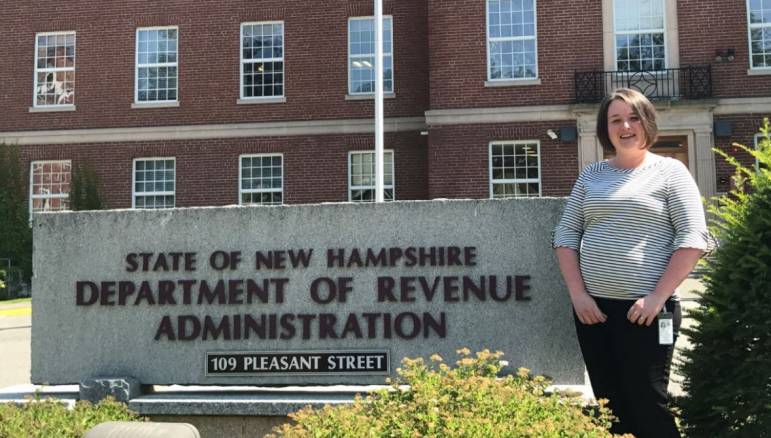
CONCORD, N.H. – As cities and towns across New Hampshire, including Manchester, begin the process of setting local tax rates after the conclusion of local property reappraisals, the New Hampshire Department of Revenue Administration (NHDRA )is looking to serve as a source of answers for New Hampshire taxpayers.
Property value is assessed at the property’s market value on April 1 each year. Real estate values in New Hampshire have been on the rise since 2012, with the most dramatic increase happening between 2019 and 2021. Due to that increase, many New Hampshire property owners are seeing dramatic increases in their assessed valuations.
“We see a rise in taxpayer concerns over property taxes when the department releases municipal tax rates each year,” said NHDRA Commissioner Lindsey Stepp. “We recognize that taxes can be complex and confusing, so along with our objective to fairly administer and collect taxes, NHDRA is committed to educating the public about the taxes they pay.”
James Gerry, Director of the Municipal and Property Division at NHDRA, says that many homeowners ask about the correlation between assessed value and property taxes.
“In short, just because a homeowners’ assessed value goes up does not mean the amount of property taxes they pay will also go up,” said Gerry. “Assessed value (AV) determines who will be paying the property taxes. While an individual’s AV is important, the driving force behind how much any property taxpayer will pay is the relationship between their AV and every other property owner’s AV in the city or town in which they reside.”
“For example, if a taxpayer’s AV in a town increases by 10%, but the town’s overall AV increases by 15%, given that everything else is equal, the taxpayer should see a decline in their property tax bill,” added Gerry. “One way to think about a town’s total AV is to think of it as a pie. Your AV is just one slice of that pie. If your slice goes up by 10%, but the overall pie grows by 15%, your share of the overall pie will decrease.”
Other factors other than AV that impact property taxes include appropriations and non-property tax revenue collected by a municipality. Appropriations are the amount of money a municipal entity is approved to spend each year due to each municipality’s budgeting process while non-property tax revenue, such as grants, fees and other taxes can be put toward lowering property taxes if deemed appropriate by the local elected governing body, such as the Board of Mayor and Aldermen in Manchester.
New Hampshire residents normally will see four tax rates on their property taxes: a municipal tax rate, local school district tax rate, a county tax rate and state education tax rate. These rates are combined, multiplied by the assessed value of the taxpayer’s property and then divided by 1,000 to obtain a tax bill.
To learn more about NHDRA’s Municipal and Property Division, please visit www.revenue.nh.gov/mun-prop.