
MANCHESTER, NH – A lesson yet fully realized in the space where homelessness exists is the difference between the return on investment in doing something meaningful, versus the long-term cost of doing nothing.
It’s a conversation that needs to be had in the wake of the news that the YWCA was unable to secure $550,000 in funding to keep the Brook Street shelter for women going. On Friday Executive Director Jessica Cantin announced they would be forced to close the door on June 30.
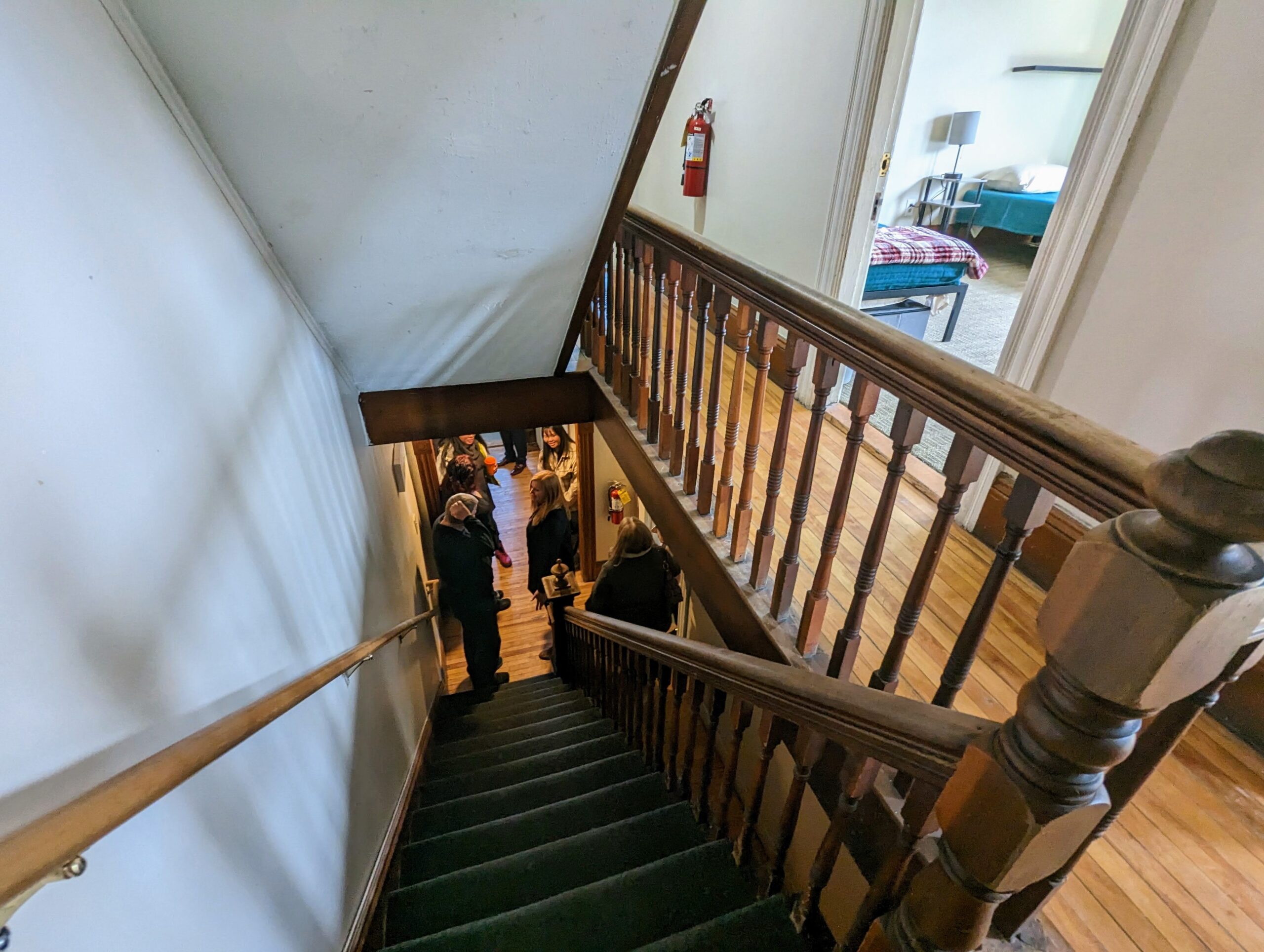
In February the city was granted access to a state-owned house on Brook Street that had been sitting vacant for months after Families in Transition closed a sober home for men that had been operating there. The city provided $247,000 to the YW to operate the Brook Street Shelter from its opening in January until June 30 as a pop-up emergency shelter, but the plan was to keep it going – and expand it – over the next two years.
At a time when the need for winter shelter had reached critical mass – and the specific need for beds for women was identified, the YWCA took a giant step forward to operate a full-service 16-bed shelter for women.
The long-term goal, according to YW Executive Director Jessica Cantin, was to expand to 22 beds and to provide the kind of trauma-informed services the YW specializes in, those that allow women to wade through layers of abuse and neglect that have left them physically and emotionally unable to navigate the world.
Sixteen weeks later, after serving 40 women – at least a 12 of which found their way into addiction treatment programs, 10 into full-time employment, 4 into permanent housing and 4 of the remaining 13 still residing there on their way to qualifying for the YW’s rental assistance program, Cantin announced last week that they could not go on.
“We went to the county for a second round of ARPA (American Rescue Plan Act) funds, putting forward a request for $550,000. That was not funded. We went to some private donors who had already invested and were not able to make additional donations. And we went to the state,” said Cantin, appealing both to the Governor’s Office for Emergency Relief and Recovery (GOFERR) funding and the Department of Health and Human Services.

Although there was no direct feedback from the Hillsborough County commissioners Cantin believes that because the county previously made an investment in Manchester during the second round of ARPA funding, their request for a program that serves only 16 women did not measure up to the need for assistance across the state.
“Funders are forced all the time to make those tough decisions, including where funding can have the most impact. But that goes back to understanding what the real costs involved are in various programs,” Cantin said. Like the difference between a temporary cot and a residential “home” environment in which complicated life stories must be understood and then untangled, one solution at a time.
Cantin even appealed directly to New Hampshire’s U.S. Congressional Delegation while in Washington, D.C., last week for the annual YWCA Capitol Hill Day during which advocates from around the country urge Congress to increase federal funding for childcare, housing, and gender-based violence programs and services.
“I did have a chance to speak with Congressman (Chris) Pappas who has been a strong supporter of the YW’s work and programs and who has highlighted and lifted up this issue,” Cantin said. “He expressed he’s deeply committed to addressing the housing crisis and unhoused crisis, but I don’t think there’s anything more they can do right now for us.”
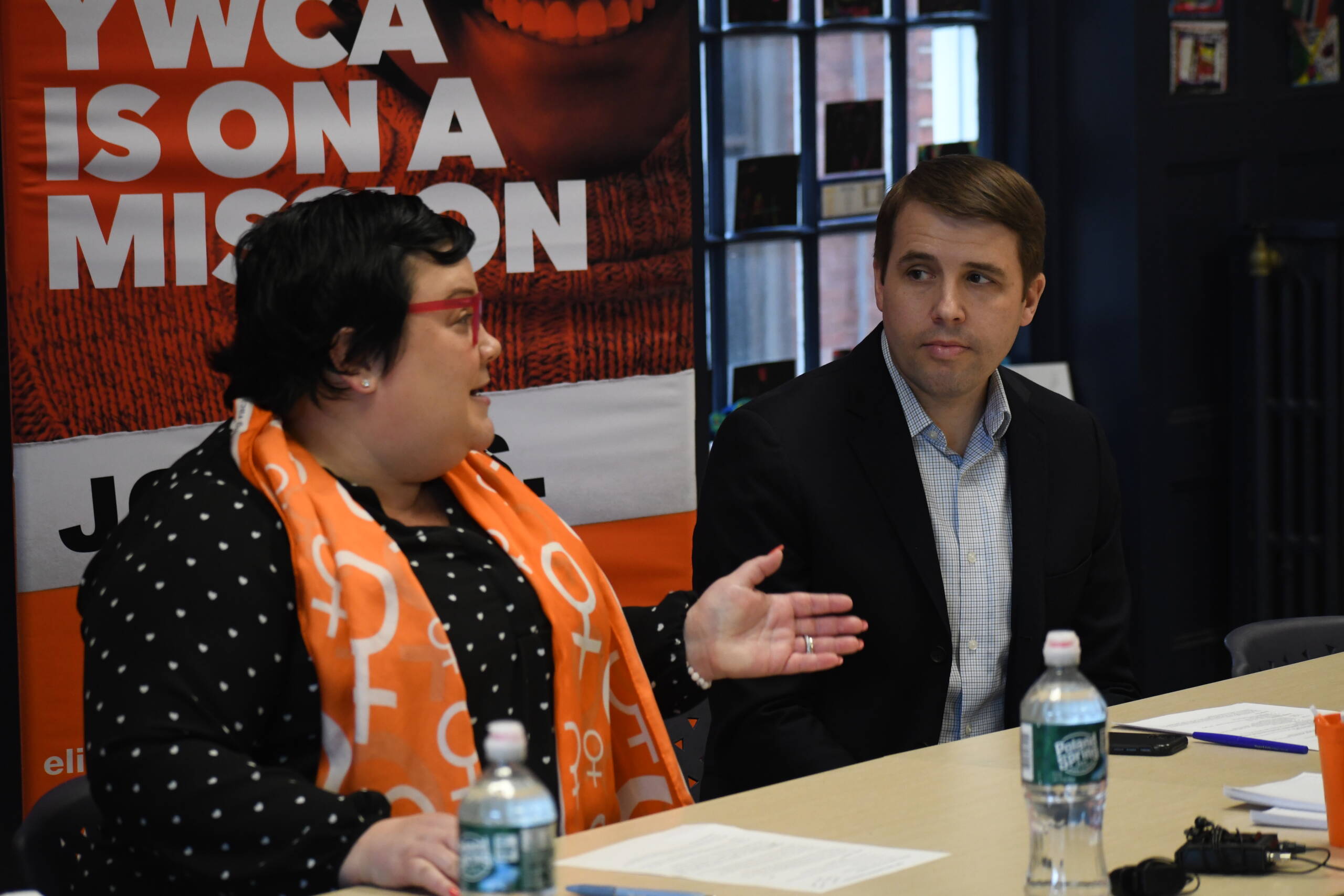
There’s too much competition for what is already an inadequate funding pool, says Cantin. The state reimbursement rate to those providing shelter beds is $8 per day per bed.
“The true cost is somewhere between $107-130 a day per bed, which covers staffing, food and the operational costs of running a shelter,” Cantin said. “Non-profits are being asked to raise philanthropic funds that aren’t covered by grants for things like capital improvements so when we’re forced to use philanthropic dollars to subsidize programs and services, that’s a really big ask for us.”
It’s time for the community at large – from municipalities to the State House – to have a larger conversation around funding, Cantin says.
“There’s a reality to this no one is discussing and that is what is the actual cost of these programs. What I was told is if it’s just a matter of keeping people safe why so much? We have to factor in the costs of these other things – mental health, medical treatment, therapy. It’s not just about being safe; it’s about addressing issues they’re dealing with so they can move on to sustainability and self-sufficiency,” Cantin said.
“This whole unhoused subset of people in Manchester and across the state, to be honest, fall into a category of people who are aging with no relevant earning potential and a slew of health issues,” Cantin says. “The whole thing is a tragedy, really – we’re going to do what we can to ensure the 13 women left at the shelter land in a safe and supportive spot but we’re limited by resources.”
No matter what, the YW will continue to support the women who have come through the Brook Street shelter.

On Friday the city said in a press release that the $100,000 allocated in the 2024 budget for YW to continue operating the Brook Street shelter will go into an RFP in the hope that another provider will come forward to keep the shelter going in some fashion.
“There is no rent for the next 18 months, so it could be a great opportunity for someone to come in and may be more accustomed to doing this service and do it at a better rate,” said Mayor Joyce Craig.
Over the weekend Alderman-At-Large Joe Levasseur sent out a memo to Homeless Initiatives Director Adrienne Beloin and copied it to the full board of Aldermen, calling for Beloin to make the Beech Street shelter a “women’s only” shelter. Wrote Levasseur, “40 beds should suffice this vulnerable population, if there are any beds left, then elderly should be first in line. I would hope all elected city officials would share in this view.”
He did not say where those currently occupying the Beech Street shelter beds should go.
Fellow Alderman Pat Long said one alderman doesn’t have the authority to redirect the current plan for Beech Street, which was recently approved to continue as a 40-bed overnight shelter and a daytime engagement center.
“Levasseur can set up a special meeting if he gets eight aldermen to agree to it,” Long said.
In the meantime, Long said he planned to reach out on Monday to Katie Parent, the YW’s Director of Programs and Community Outreach.
“Prior to the Brook Street shelter these women had no place to go,” Long said. “I want to know how many people they’ve processed, how it’s going and are they at full capacity all the time. If it is, we have to take advantage of that. And shame on us for allowing this to happen.”
He said the YW was “the perfect overseer” for the project and is going to find out what can be done to keep it going. “I’ve got two weeks to come up with $450,000 dollar,” Long said.

Although numbers change daily, last week’s Families in Transition weekly census showed that they were under the 138-bed capacity, fluctuating between 121 and 130 beds filled. Of the 138 beds, 100 are designated for men and 38 for women. Of those beds reserved for women, there were between 3 and 7 open beds at any given point last week.
“We know some of the women aren’t going to want to go to FIT even if there is capacity,” Long said. “Just because the state or the county don’t want to contribute doesn’t mean we shut it down.”
Cantin reiterated that the competition for funding among non-profits is part of the problem. The other problem is that homelessness has become politicized and, in the process, it seems lawmakers and citizens have lost their sense of humanity.
“We’ve politicized these issues but they’re not political, they’re human,” Cantin said. “You have a small group of dedicated people who get that, but there are many others who are still struggling for a variety of reasons to understand what the issues are for these folks – including politicians.”
The level of care needed requires time and intensive “wrap-around” services.
“It’s not just securing safe housing or preventing a fatality. We’re seeing these women in their humanity, meeting them where they are and working with them to get them past their issues to a level of support they are in dire need of,” Cantin said. “The Brook Street project proves that it’s possible to make a difference. First, it takes time to build trust and allow a woman to settle in and feel safe.”
Cantin said the YW is prepared to continue to support the efforts at the Brook Street shelter.
“We’re glad that Mayor Craig will be releasing an RFP for another non-profit to take over at Brook Street, and I’ll welcome supporting that non-profit just as I was supported by others, like Maria Devlin from Families in Transition, Chief Cashin, Director Beloin,” Cantin said. “We want more than anything for these beds to remain open. We tried everything we could and, despite all our efforts, we can’t financially carry the cost right now.”
She says what was accomplished in a time of great need should be recognized.
“I’m very proud of the part we played in these women’s journey for healing and proud of my team who stretched themselves in unimaginable ways day and night so these women could feel safer and protected. I’m moved by these women trusting us to be part of their journey,” Cantin said.
“I’ve been doing this work in New Hampshire for the last 26 years and I don’t feel sad or disappointed. I feel reaffirmed and reenergized that we need to lift up the learning from Brook Street and figure out how we can leverage all the resources out there. We need to get back to that,” Cantin said.
She remains hopeful that this is not the end of the story for the Brook Street shelter or the women who found something there that had been otherwise beyond their reach.
“You can’t dismiss the impact we’ve had even in a short period of time. Forthy women were seen and they found out what unconditional support looks like. We will continue working with people based on their strengths, not their deficits. From an operational standpoint, we need to figure out how to make it more sustainable. It might not look exactly how the YW would do it because we’re experts in trauma-informed care and that might come with a higher price tag. But I believe we can get there as a community,” Cantin said.
Across the city and the state non-profit organizations are all “doing what we can with the resources we have” which means there’s a lot of frustration to go around.
“But we set that frustration aside along with our egos and we got that shelter up in 19 days. That’s where the magic happens in this world, and that’s what keeps me going,” Cantin said.