
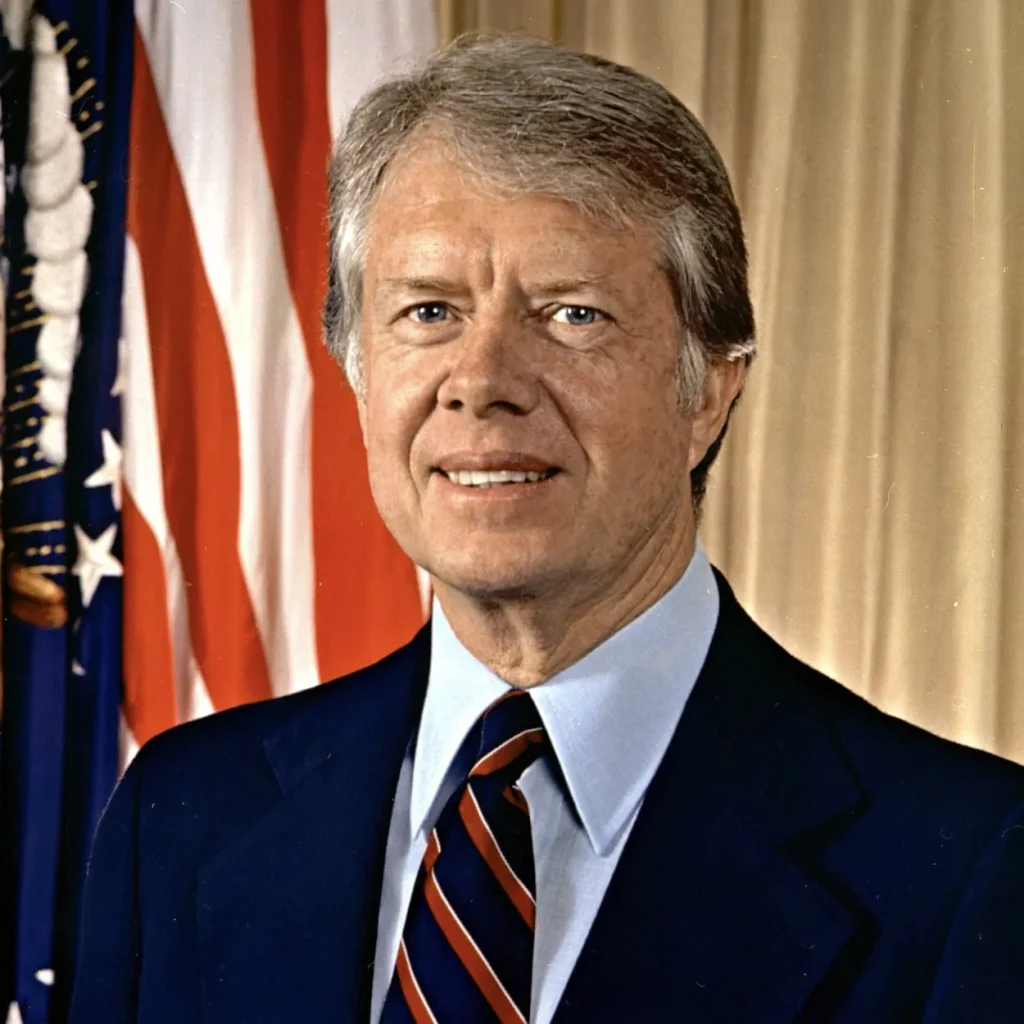
Jimmy Carter, who served one term as the 39th U.S. President, died on Dec. 29. He was 100.
Statements were issued Sunday evening by members of New Hampshire Congressional delegation, including U.S. Sen. Jeanne Shaheen and U.S. Congressman Chris Pappas.
“I’m devastated by the passing of my mentor and friend, Jimmy Carter, and join the nation in grieving the loss of this incredible leader. He led this country with empathy, grace and determination, and I owe my journey in politics to him. From working on his primary presidential campaign in New Hampshire in 1975, I became inspired by his compassion for people and vision to make this country a better place. The values he passionately advocated for inspired my run for office, and I’ve made it my mission in the Senate to take the mantle of fighting for working families and justice. We have lost a titan of American politics, but our country is better for his unwavering service. I join with all Granite Staters in keeping the Carter family in our thoughts. May he rest in peace.” - U.S. Sen. Jeanne Shaheen
“President Carter was a statesman, humanitarian, and dedicated public servant who committed his life to peacemaking, human rights, and bettering the economic and living conditions of those in the United States and around the world. From his humble origins in Georgia, President Carter served his nation in the Navy, as Governor of his home state, and as President. After leaving office, President Carter continued to lead an impactful life of service, advocating for those in need and bringing people together for the common good. Tonight, my thoughts are with his family and those who knew him best.” - U.S. Congressman Chris Pappas
President Carter visited Nashua on Feb. 18, 1978, for a town meeting in the gymnasium of Nashua Senior High School. He was introduced by Mayor Maurice Arel and fielded a series of questions ranging from arms sales in the Middle East, taxes, health care, campaign promises, and more. It’s a true snapshot of the time. You can read the full transcript posted by The American Presidency Project, here.
This WMUR News Vault clip takes a look back at Carter’s unexpected 1976 NH Primary victory.
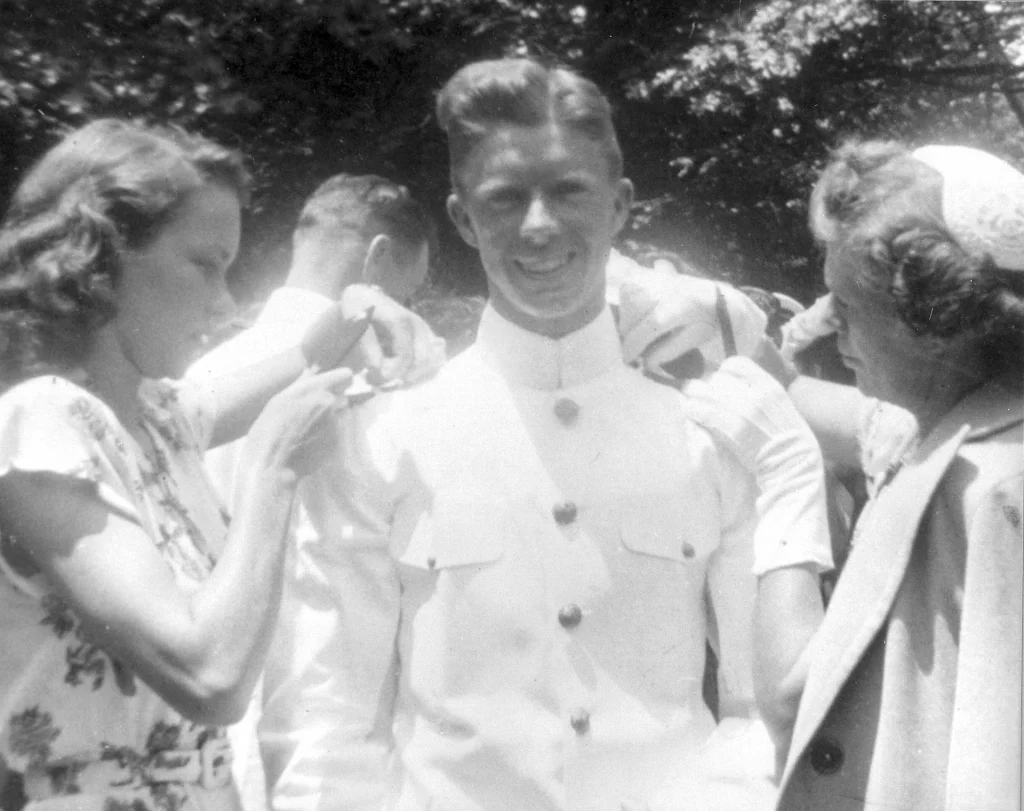
Jimmy Carter (James Earl Carter Jr.), 39th President of the United States, was born October 1, 1924, in the small farming town of Plains, Georgia, and grew up in the nearby community of Archery. His father, James Earl Carter Sr., was a farmer and businessman; his mother, Lillian Gordy Carter, a registered nurse.
He was educated in the public school of Plains, attended Georgia Southwestern College and the Georgia Institute of Technology, and received a B.S. degree from the United States Naval Academy in 1946. In the Navy he became a submariner, serving in both the Atlantic and Pacific fleets and rising to the rank of lieutenant. Chosen by Admiral Hyman Rickover for the nuclear submarine program, he was assigned to Schenectady, New York, where he took graduate work at Union College in reactor technology and nuclear physics and served as senior officer of the pre-commissioning crew of the Seawolf, the second nuclear submarine.
On July 7, 1946, he married Rosalynn Smith of Plains. When his father died in 1953, he resigned his naval commission and returned with his family to Georgia. He took over the Carter farms, and he and Rosalynn operated Carter’s Warehouse, a general-purpose seed and farm supply company in Plains. He quickly became a leader of the community, serving on county boards supervising education, the hospital authority, and the library. In 1962 he won election to the Georgia Senate. He lost his first gubernatorial campaign in 1966, but won the next election, becoming Georgia’s 76th governor on January 12, 1971. He was the Democratic National Committee campaign chairman for the 1974 congressional and gubernatorial elections.
President Jimmy Carter
On December 12, 1974, he announced his candidacy for president of the United States. He won his party’s nomination on the first ballot at the 1976 Democratic National Convention, and was elected president on November 2, 1976.
Jimmy Carter served as president from January 20, 1977 to January 20, 1981. Significant foreign policy accomplishments of his administration included the Panama Canal treaties, the Camp David Accords, the treaty of peace between Egypt and Israel, the SALT II treaty with the Soviet Union, and the establishment of U.S. diplomatic relations with the People’s Republic of China. He championed human rights throughout the world. On the domestic side, the administration’s achievements included a comprehensive energy program conducted by a new Department of Energy; deregulation in energy, transportation, communications, and finance; major educational programs under a new Department of Education; and major environmental protection legislation, including the Alaska National Interest Lands Conservation Act.
The Carter Center
In 1982, he became University Distinguished Professor at Emory University in Atlanta, Georgia, and founded The Carter Center. Actively guided by President Carter, the nonpartisan and nonprofit Center addresses national and international issues of public policy. Carter Center staff and associates join with President Carter in efforts to resolve conflict, promote democracy, protect human rights, and prevent disease and other afflictions. The Center has spearheaded the international effort to eradicate Guinea worm disease, which is poised to be the second human disease in history to be eradicated.
The permanent facilities of The Carter Presidential Center were dedicated in October 1986, and include the Jimmy Carter Library and Museum, administered by the National Archives. Also open to visitors is the Jimmy Carter National Historic Site in Plains, administered by the National Park Service.
White House Achievements, Setbacks
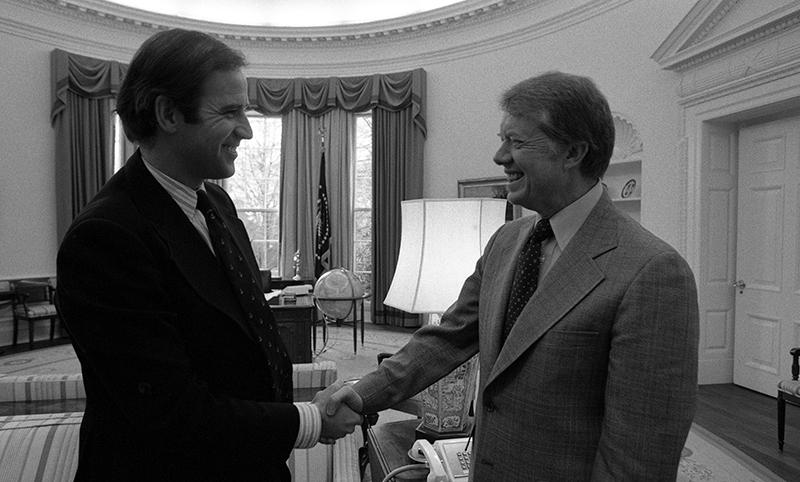
According to his official White House biography, Carter could point to a number of achievements in domestic affairs. He dealt with the energy shortage by establishing a national energy policy and by decontrolling domestic petroleum prices to stimulate production. He prompted Government efficiency through civil service reform and proceeded with deregulation of the trucking and airline industries. He sought to improve the environment. His expansion of the national park system included protection of 103 million acres of Alaskan lands. To increase human and social services, he created the Department of Education, bolstered the Social Security system, and appointed record numbers of women, blacks, and Hispanics to Government jobs.
In foreign affairs, Carter set his own style. His championing of human rights was coldly received by the Soviet Union and some other nations. In the Middle East, through the Camp David agreement of 1978, he helped bring amity between Egypt and Israel. He succeeded in obtaining ratification of the Panama Canal treaties. Building upon the work of predecessors, he established full diplomatic relations with the People’s Republic of China and completed negotiation of the SALT II nuclear limitation treaty with the Soviet Union.
There were serious setbacks, however. The Soviet invasion of Afghanistan caused the suspension of plans for ratification of the SALT II pact. The seizure as hostages of the U. S. embassy staff in Iran dominated the news during the last 14 months of the administration. The consequences of Iran’s holding Americans captive, together with continuing inflation at home, contributed to Carter’s defeat in 1980. Even then, he continued the difficult negotiations over the hostages. Iran finally released the 52 Americans the same day Carter left office.
The Carters have three sons, one daughter, nine grandsons (one deceased), three granddaughters, five great-grandsons, and eight great-granddaughters.
On December 10, 2002, the Norwegian Nobel Committee awarded the Nobel Peace Prize for 2002 to Mr. Carter “for his decades of untiring effort to find peaceful solutions to international conflicts, to advance democracy and human rights, and to promote economic and social development.”

Information included from jimmycarterlibrary.gov and whitehouse.gov