
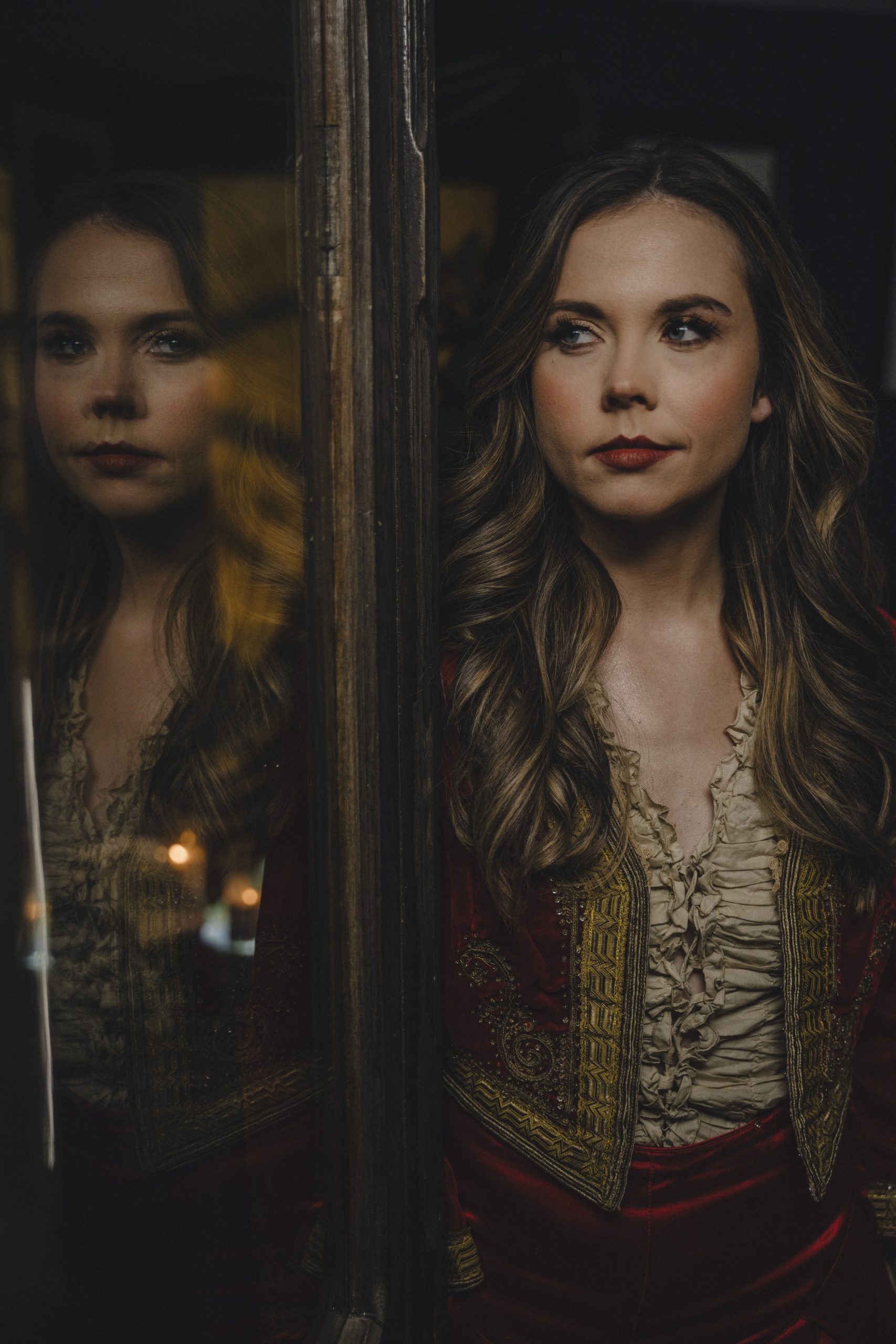
KEENE, NH – There are a lot of talented people in the bluegrass world, but Sierra Hull is an absolute phenom. She’s one of the best mandolinists on the planet, she signed her first record deal with Rounder Records at the age of 13 and she has studied at Berklee College of Music in Boston while winning numerous awards. She also exhibits a very forward-thinking approach, which has garnered her a wide array of collaborations while being part of the central focus for her latest album. It’s called “A Tip Toe High Wire” and it was officially self-released on March 7 by Hull. As part of her tour in support of the full-length, Hull is going to be performing at the Colonial Theatre in Keene on March 21 starting at 8 p.m.
We had a talk ahead of the show about the making of her new record, the inspiration that comes with collaborating, and how she actually got to see one of her friends perform at the Colonial Theatre last year.
IF YOU GO
Website: thecolonial.org
Address: 95 Main St, Keene, NH 03431
Tickets: Sierra Hull – THE COLONIAL THEATRE
Rob Duguay: For “A Tip Toe High Wire”, you handled the production yourself while also releasing it independently without the assistance of a record label. What made you want to go this route? Was it out of necessity or was it for a different reason?
Sierra Hull: It’s just what ended up happening. I didn’t start this record thinking it was going to be independent or feel like it needed to be for any real reason. I just found myself at a moment in time to kind of figure out what was next. I had spent my whole life at Rounder Records, my musical career basically from the time I was 13 and I’m 33 now, so we’re talking 20 years ago. It’s hard to believe since I don’t consider myself to be that old, but it’s because I started so young and it was such a blessing to have that opportunity to record for a label that I dreamed of being on my whole career, when I was a kid at least.
A lot of bluegrass records by a lot of my favorite artists were recorded for Rounder, so it was the label I dreamed of being on. When I finished out that contract and recorded the last album I owed the label, it just felt like a moment of pause. Also, that last record I released with them was right at the beginning of the pandemic, a week later after I released it the world had shut down. I found myself at a crossroads in life, kind of like everybody was at the time. I had a moment of stillness for the first time in my adulthood where I didn’t have to feel like I had to rush into whatever this next chapter was. I continued to write and create, I eventually got into the studio and I had this freedom because I wasn’t tied to any other entity.
I was able to do what I wanted when I felt like it, so I was inspired by the band I had put together in 2021 on the heels of the pandemic. At that point, about a year and a half after that final Rounder release had come out, it was a different creative chapter. I decided to kind of ride that wave while continuing to write and continuing to explore the sounds this particular group of musicians could make together. I found myself getting excited about the thought of getting in the studio to record and capture what was happening without knowing if it would be a full album that would come out independently or if I would work again with a label. When the record was finally done, it was empowering to have ownership of the music and have a direct connection with the fans in a way that I didn’t really have before.
RD: It’s awesome that the process had such a positive effect on you and your mindset. When it came to the recording process, did you work out of a home studio or did you rent one out? What was that experience like?
SH: We tracked in four different major studios in Nashville. I have recorded several things at home and my husband does a lot of recording there as well, but we don’t have a space to track five musicians at one, let alone a drum kit. We wanted to make sure we could go into a proper studio, have the best gear we could have and that kind of thing. I worked with an awesome engineer who I actually worked with on my last couple records named Shani Ghandi, they’re a supremely talented human. Going into it like I do from a production standpoint, she’s just a genius at being able to get great sounds out of acoustic instruments.
Being able to get great tones and all that kind of stuff, I knew we would be in such good hands. We have a really good rapport working together and of course, all of the musicians I chose made it easier because they’re naturally good sounding players too. Combine that with a good studio that has lots of good gear, there was a great vibe.
RD: Very cool. How did you go about bringing Tim O’Brien, Aoife O’Donovan and Béla Fleck into the fold for a few of the songs? Were they all in Nashville with you and your band or were their parts done remotely?
SH: Those were all done separately, all the tracks were all recorded before they guested on them, so the tracks that they were on were part of the bigger album tracking session. Tim was actually in Nashville at my home studio where he later added a harmony. Funny enough, Aoife called me up after I had written the song “Let’s Go” while thinking that she would be the perfect person for it. I swear, I had just finished writing the song and two days later she called asking me to do something for one of her records. I said,”Oh my God, you’re not going to believe this, but I’ve been wanting to call you because I have a song for you.”
At the time, we hadn’t recorded it yet, and she lives in Florida most of the time, so she actually tracked remotely but it was great because modern technology is pretty amazing in multiple ways. We were able to do a Zoom type recording session where I was literally in the room, I could see her singing and as we saw each other while tracking stuff, she would ask me what I thought about this, and I sometimes would suggest something else. It was kind of like being in the room, which is crazy, but I was just in my little office in Nashville and she was down in Florida doing her thing. I had actually recorded Béla while we were on tour together in Minneapolis. We set up a little remote session where I borrowed an interface from my buddy Cory Wong, who was on tour at the time but I took an Uber to his house and his wife loaned it to me.
We had a dash mic on the road that we were using anyway, and Béla and I set up in the dressing room of the Dakota Jazz Club where I recorded his banjo parts on my laptop.
RD: Those situations each sound like they were very unique. Do you feel that this collaborative aspect of the album helped you venture into that different territory you’ve talked about leading up to the release, or did something else fuel that direction?
SH: With each creative endeavor, there’s always some sort of life experience that finds its way in there. Things that you’ve gone through, but also things that have inspired you, and they’re not just musical things, it’s all sorts of things that work their way into whatever the music becomes. It can be hard to put a finger on it, but collaboration is certainly a very big part of it. As somebody who has always had their own band, I’ve never been in another band working for someone else, it’s always been these little collaborative stints where I’m getting to be part of something for a tour for a short amount of time. There’s never been a time where I’ve not done something, so I think there’s a beauty to that, but there’s also something really special about being able to step outside of that.
When that’s all you’ve ever known, it’s an exciting thing to be able to step outside, watch and see how other artists do things, be inspired by the music they’re making and have this up close seat at the table to just learn and be inspired.
RD: You can also take that inspiration with you to future projects.
SH: Absolutely, and the variety of collaborations I’ve had have been very different. A lot of things that I’ve had the opportunity to do over the last few years have been musically varied, so I think that’s been an interesting thing because something I’ve learned may be radically different than from another kind of project. All that stuff has been helpful to what I’ve been able to bring back into my own music.
RD: Being from Tennessee, what are your thoughts on coming up to the New England region to perform at the Colonial Theatre? I know you’ve performed at a few festivals in the region like Newport Folk and FreshGrass.
SH: We were just up in New Hampshire last summer at the Northlands Music & Arts Festival, and funny enough, we finished our set at 7pm or something like that and we heard from our friends in Ricky Skaggs & Kentucky Thunder that they were playing the Colonial Theatre that night. It was the same night we were up there, so I’ve actually been to the Colonial Theatre just this last summer. We met and saw Ricky at his show there and we went up to hang out with those guys to play a little music. It was one of those things where worlds collide while on the road and your friends are nearby, even though we all live in Nashville. I’m looking forward to coming back because of this familiarity I have with the place from hanging out and seeing a show there, which is a unique experience that you don’t always get.
A lot of times you’re performing, but you don’t actually get to see a concert in these spaces we travel to outside of our home area. It’ll be really fun to come back.