
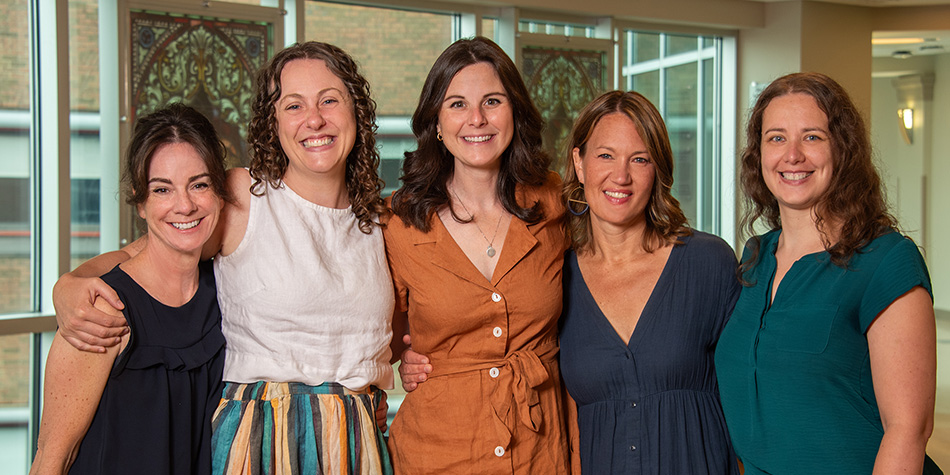
RELATED STORY: Amidst nationwide OB-GYN shortage, CMC midwives enhance maternal care
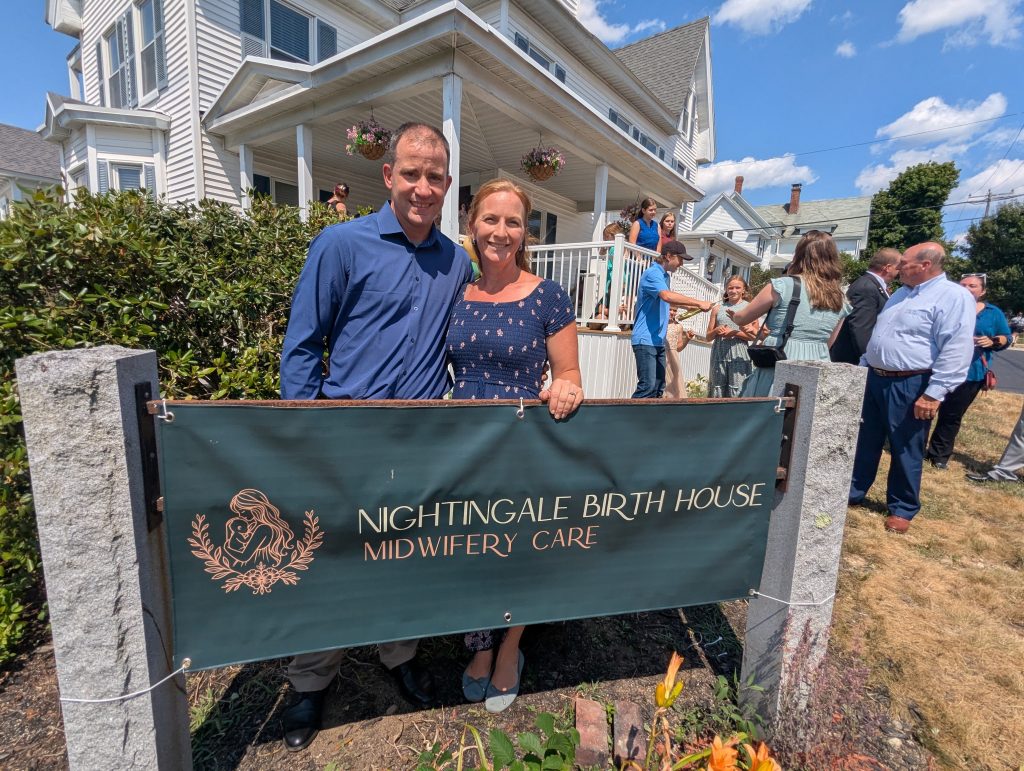
MANCHESTER, NH – It was standing room only for the recent official ribbon-cutting for Nightingale Birth House on Union Street. Although the crowd was full of general well-wishers and city officials, it was impossible not to notice the gathering tribe of mothers with babies in tow who streamed into the multi-story center, a testament to the community that nurse-midwife Jessica Mills has already built around her child-birthing philosophy.
Her business, Call the Midwife, was established in 2018, fulfilling Mills’ vision of providing an alternative to hospital birth in the spirit of the BBC TV program she named her business after.
Fans of the TV show know that it centers around the vital work of nurse-midwives in early 20th-century England, when public health provided services for at-home births at the same time the transition to hospital birthing was happening.
After years of attending home births and witnessing how constrained families’ choices were, Mills has introduced something wholly different: a space that thoughtfully bridges the warmth of home with the expertise of clinical care.
“I wanted to give our community another option—a safe, compassionate, and accessible alternative,” she says, reflecting on those early years. “It took time, but now we’re here—and here to stay.”
Mills has more than 15 years in the nursing trenches, earning her master’s in nurse-midwifery from Frontier Nursing University—the birthplace of nurse-midwifery in the U.S. and the country’s top-rated program in the field. That advanced level of credentialing allows her to deliver women’s health care across Southern New Hampshire and Northern Massachusetts with both confidence and compassion.
She’s also a breech birth specialist, supporting vaginal breech births – a condition that often results in a caesarian section birth in traditional hospital settings.
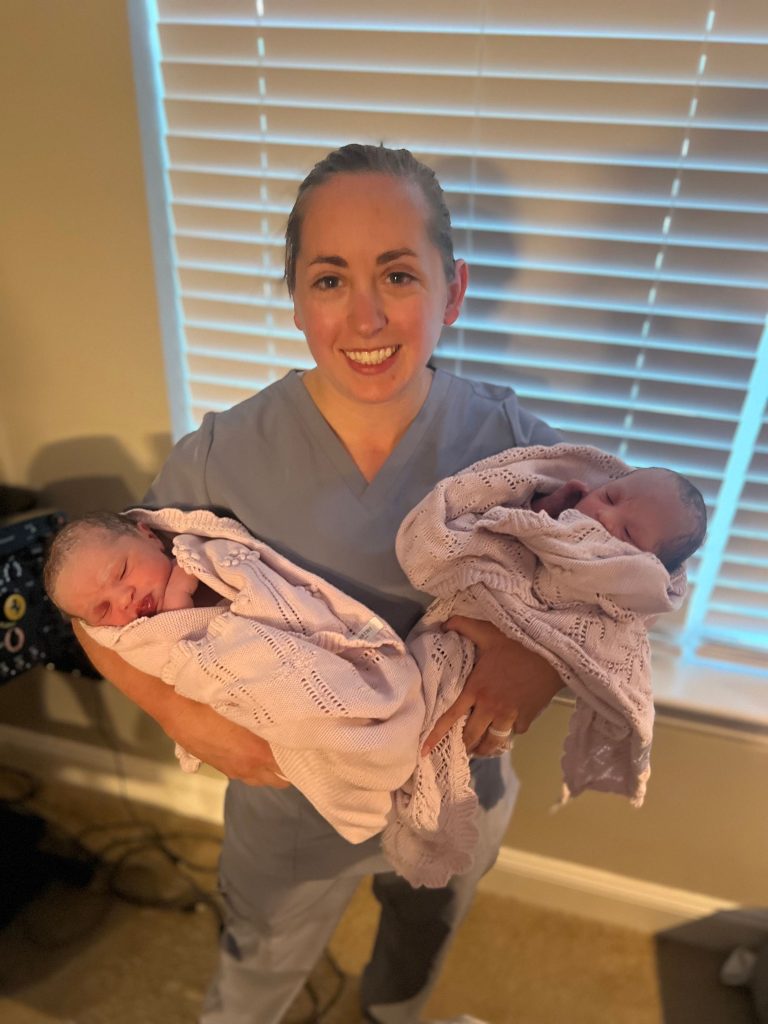
Mills, along with her colleague Ariane Comparetto, also an APRN and CNM trained in Women’s Health, work with apprentice midwife and doula-nurse Sophia Joyal, who also runs her own doula practice and supports families from the front desk to the postpartum period.
As part of their services, Mills and associates include home visits to support breastfeeding and postpartum recovery.
Their ribbon-cutting drew community support—including Manchester’s mayor and local legislators—highlighting the growing recognition of midwifery care as a critical alternative in maternal health.
Mills says midwifery isn’t about rejecting medicine; it’s about using it appropriately.
“We’re experts in normal, physiological birth,” she explains, “which doesn’t mean ignoring risks—it means recognizing when intervention is needed and when it’s not.”
For most low-risk pregnancies, she’s confident midwifery is exactly what families need. While most midwives locally work in a hospital setting at Catholic Medical Center or St. Joseph Hospital, Mills says her residential outpost is about increasing the scope of options for out-of-hospital birth.
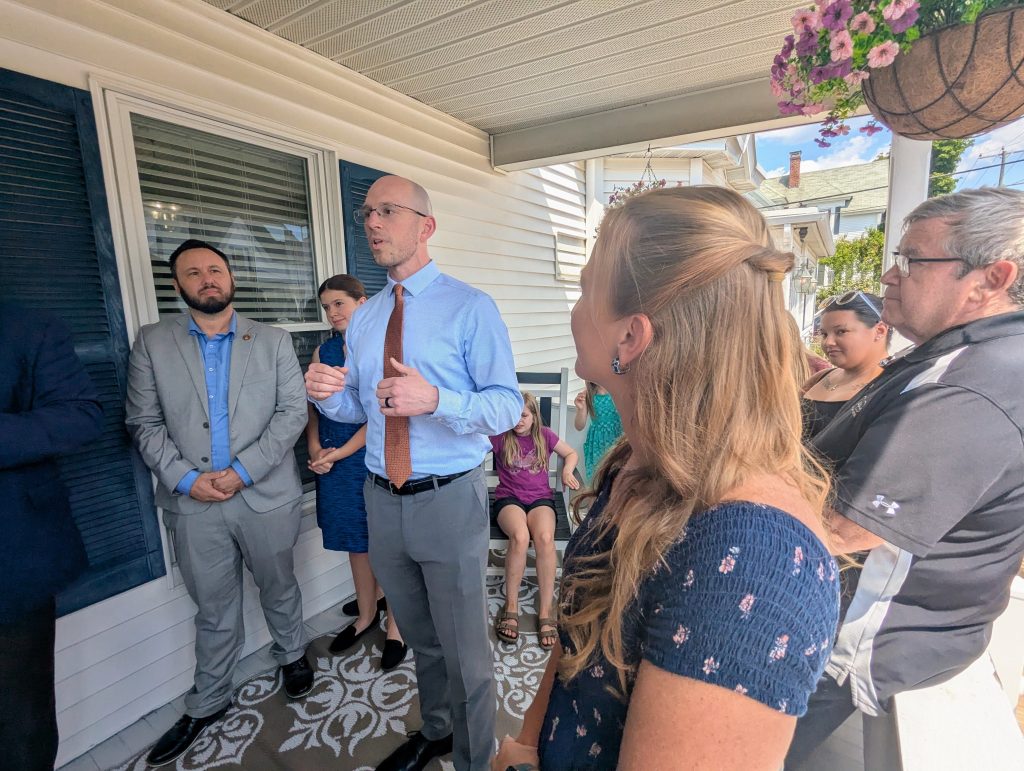
“We spend a lot more time, more education, more one-on-one attention at the bedside. It’s not a ‘call when you see the top of the head’ energy; it’s more sitting with a woman and holding that space for her, giving her time and energy,” says Mills. “I feel we’ve lost the importance of that.”
Ideally, families connect with the center early in pregnancy, but Mills says they also welcome late transfers—even those arriving in the final weeks. “We had someone reach out at 39 weeks whose values just weren’t aligned with her birth team. We were happy to be there for her. We weren’t around in her early months, but we are now.”
While Call the Midwife accepts insurance, Mills candidly notes the systemic challenge: reimbursement models reward volume over depth. Her practice invests more time and emotional energy per family—but the structure doesn’t always value that.
Still, she says, “We hope people see the value in this kind of care”—and many already do.
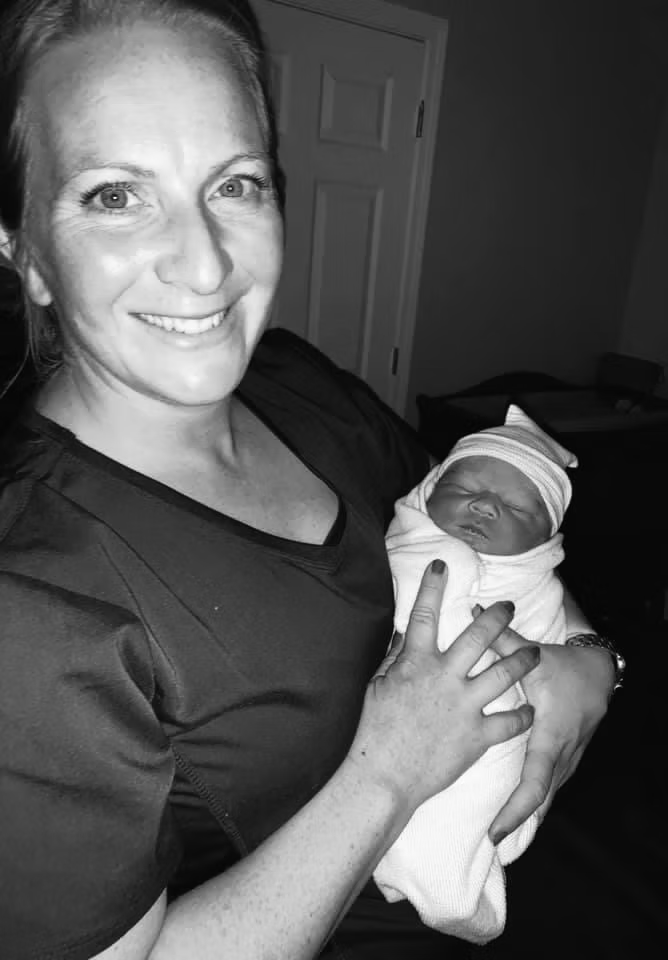
Roots in Personal Passion
Mills’ own journey mirrors the care she provides. As a nurse, she was always attracted to maternal-newborn health. After she became pregnant for the first time she started to dig into the struggles women face and why birth outcomes aren’t always ideal.
“I ended up seeking midwifery care for myself and through that experience with my team I realized it was part of a movement I wanted to be part of, so I made the decision to go back to grad school and get my midwifery license,” Mills says.
She recalls, “Some things were broken in hospital training. I wanted to help recreate something different, something for our community.”
Much like her practice, Mills’ life blends the everyday and the extraordinary. She and her high school sweetheart Jesse (married for over 24 years) are homesteaders who homeschool their five children.
“You know, most babies are born at night,” she laughs. “That makes it easier to balance birth work with homeschooling.”
With Nightingale Birth House now open, Mills hopes the ripple effect will reach beyond each birth she attends. “We can do better,” she says, “and it has to start somewhere. For us, it starts right here—in Manchester, with time, trust, and truly seeing families.”