
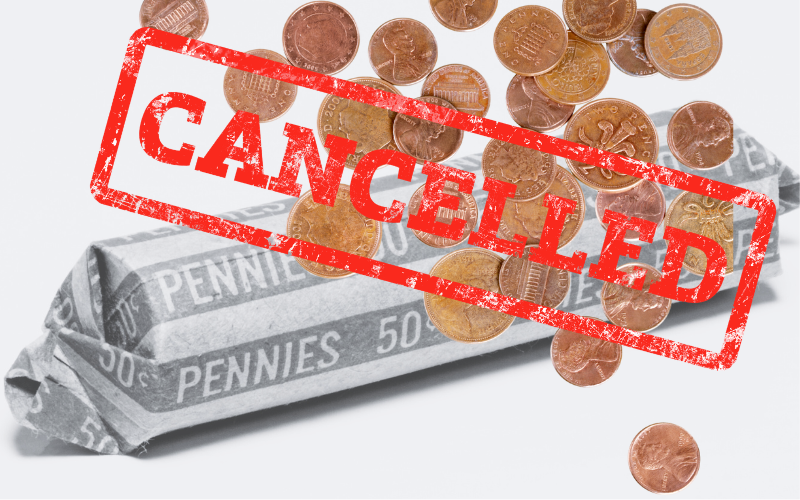
Now that the U.S. Treasury has suspended production of the penny, what to do with all those Lincoln-head coins?
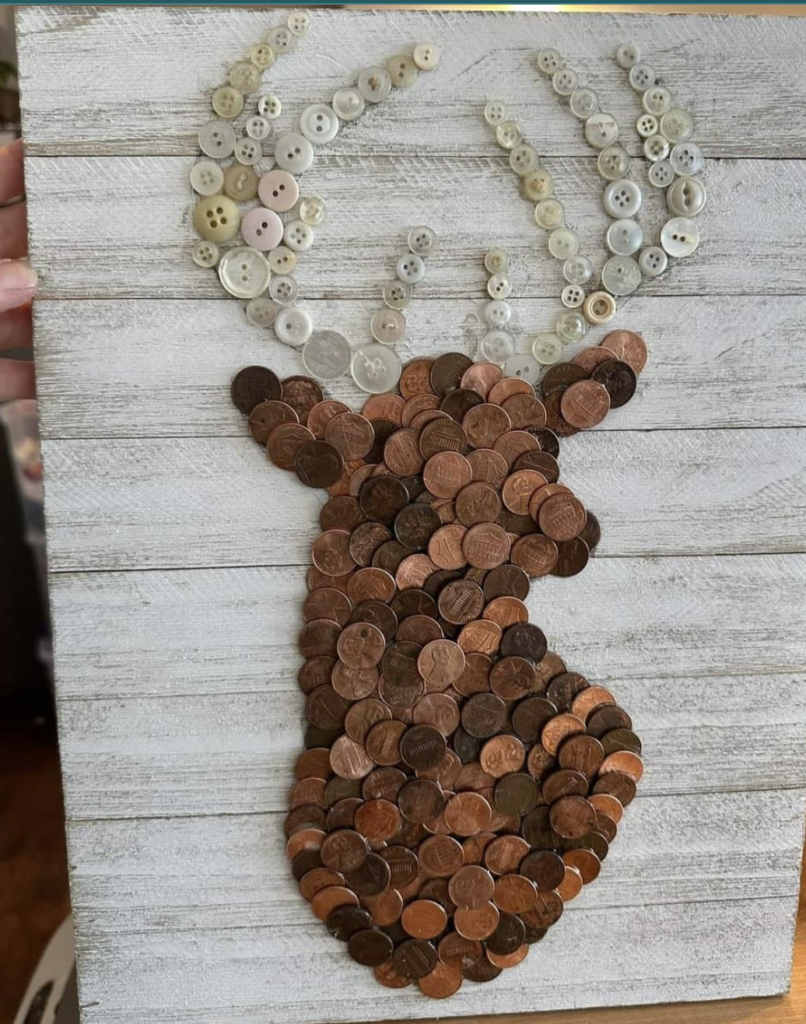
Well, there are plenty of crafting websites with DIY ideas. Better to get creative than to wait for them to become worth more than one cent. According to the treasury there are just too many pennies circulating for them to become more valuable, at least in the near future.
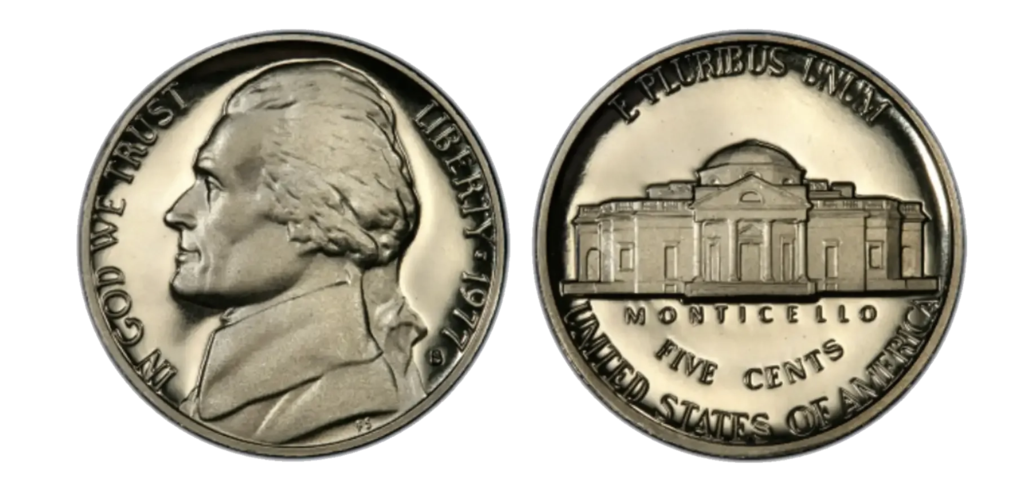
And get this: With the retirement of the penny, the nickel might be the next to go as eliminating the penny could increase demand for nickels, which are even more costly to produce. In 2024, it cost 13.8 cents to mint a nickel — more than double its face value.
And let’s not get into how much the trickle-down effect will cost consumers as businesses adjust pricing so that those paying cash will have to round up instead of rounding down at the cash register.
Below are some answers to frequently asked questions, from the U.S. Treasury – plus some penny history.
1. Why is circulating penny production being suspended?
The Secretary of the Treasury has decided to suspend production of the one-cent coin (penny) upon determining that it is no longer necessary to meet the needs of the United States. The decision was influenced by the rising cost of producing the penny, which has increased 1.42 cents to 3.69 cents per penny.
2. Can I still use my pennies for retail transactions?
Yes. The penny remains legal tender and may still be used for transactions. According to St. Mary’s Bank, some retailers may no longer provide pennies as change. As retailers find it harder to get pennies, cash totals could be rounded to the nearest five cents (for example, $10.02 → $10.00 or $10.03 → $10.05). Digital payments won’t be affected (credit, debit, mobile payments) — they’ll still process to the exact cent.
3. What is the legal authority to suspend penny production?
Under 31 U.S.C. § 5111(a) and § 5112, the Secretary of the Treasury has the authority to mint and issue one-cent coins in amounts deemed necessary to meet the needs of the United States. The Secretary may therefore suspend production upon determining that new coins are no longer needed.
4. Why wasn’t this decision made sooner?
Until now, no Secretary of the Treasury had determined that the production of one-cent coins was no longer necessary to meet the needs of the United States.
5. What are the current costs associated with manufacturing the circulating penny?
As of the most recent estimate, the cost of producing each penny increased from 1.42 cents to 3.69 cents per penny over the last decade.
6. What is the projected cost savings from the penny suspension?
7. How should my business respond as the supply of pennies drops?
As pennies fall out of circulation, merchants will need to round transactions either up or down to the nearest five cents. However, most states require sales tax to be calculated on the final sale price rounded to the nearest penny. How states and localities will ultimately amend their sales tax laws is the right and responsibility of those jurisdictions. Recent guidance from the National Council of State Legislators gives some indication how states may adapt. The NCSL’s November 21, 2025 report entitled Elimination of the Penny: Cents-able Considerations states: “The most recommended form of rounding is symmetrical rounding whereby if the final digit of the total transaction amount (including taxes) is 1, 2, 6, or 7 cents, the amount is rounded down to the nearest multiple of five. If the final digit is 3, 4, 8, or 9 cents, the amount is rounded up. Transactions totaling exactly $0.01 or $0.02 might be rounded up to $0.05. Rounding rules would not apply to payments made via electronic methods, checks, gift cards, or other non-cash instruments.”
Based on the most recent estimates, the Mint expects to save approximately $56 million per year in production savings.
8. What percentage of the Mint’s total circulating coin production is represented by the penny?
In fiscal year 2024, the penny accounted for 57% of the Mint’s total circulating coin production of 5.61 billion coins.
9. How many circulating pennies did the Mint produce in fiscal year 2024?
The Mint produced and shipped approximately 3.2 billion pennies in Fiscal Year 2024.
10. Will any form of the penny continue to be produced?
Yes. The Mint will continue to produce numismatic (collector) versions of the penny in limited quantities.
11. How long is a penny’s typical lifespan, and is it the same for all coins?
A coin’s typical lifespan is 30 years. See https://www.gao.gov/assets/gao-19-300.pdf, page 6.
12. Can pennies be melted?
No. Melting, treating, or exporting pennies and nickels remains prohibited under 31 C.F.R. § 82.2(f), with limited exceptions. All requests for melting licenses must be submitted to: Director, United States Mint, 801 9th Street, NW; Washington, DC 20220-0012. See 31 C.F.R. § 82.2(f).
13. What are the specifications of the 2025 penny?
| Composition | 2.5% Copper, 97.5% Zinc | |
|---|---|---|
| Weight | 0.088 oz | 2.50 g |
| Diameter | 0.750 in | 19.05 mm |
| Thickness | 0.06 in | 1.52 mm |
| Edge | Plain | |
14. What is the current design on the penny?
- Obverse (Heads): Features President Abraham Lincoln, a design first introduced in 1909.
- Obverse Inscriptions: LIBERTY, IN GOD WE TRUST, 2025
- Reverse (Tails): The Union Shield design, introduced in 2010, symbolizes Lincoln’s role in preserving the United States as a single, united country.
- Reverse Inscriptions: UNITED STATES OF AMERICA, E PLURIBUS UNUM, ONE CENT
15. When was the first U.S. penny made?
The penny was one of the first coins produced by the U.S. Mint, authorized under the Coinage Act of 1792.
- Original design: A large copper coin featuring a woman with flowing hair symbolizing Liberty.
- Today’s version: Featuring Abraham Lincoln on the obverse, is a smaller coin composed of copper and zinc.

16. What are some of the early designs that appeared on the penny?
- 1793–1857: Various Liberty designs
- 1857–1858: Flying Eagle obverse with wreath reverse (first “small cents”)
- 1859–1909: Indian Head obverse
17. Why is Abraham Lincoln on the U.S. penny?
In 1909, Lincoln became the first U.S. president to appear on a coin, commemorating his 100th birthday. The reverse has changed several times since.
- Wheat Penny ReverseFrom 1909-1958, the reverse featured the “Wheat Penny” design.
- Lincoln Memorial ReverseThe Lincoln Memorial was featured on the reverse from 1959-2008. Chief Engraver Frank Gasparro created this design for Lincoln’s 150th birthday.
- Lincoln Bicentennial ReverseThe Lincoln Bicentennial One-Cent Program featured four unique reverses in 2009.
- Union ShieldSince 2010, the reverse has featured the “Union Shield” design by artist Lyndall Bass. Mint Chief Engraver Joseph Menna sculpted the coin.
18. Where are pennies minted?
- Philadelphia and Denver Mints: Circulating and uncirculated coins
- San Francisco Mint: Proof coins
- West Point Mint (2019): Special collectible pennies with a “W” mint mark
19. Has the Mint issued any special or unusual pennies?
Yes. Notable examples include:
- 1943 Steel PennyZinc-coated steel pennies were minted in 1943, since copper was diverted for WWII.
- 1943 Copper PennyBefore production switched to steel pennies, the Mint accidentally produced some 1943-dated copper pennies. These rare coins are highly valuable today.
- 2017 “P” PennyPhiladelphia minted pennies in 2017 with a “P” mint mark to celebrate the Mint’s 225th anniversary.
- 2019 “W” PennyWest Point minted collectible pennies in 2019 with proof and reverse proof finishes.
20. What are the different parts of a coin called?
- Obverse: The front side (“heads”).
- Reverse: The back side (“tails”).
- Edge: Outer border of the coin (can be plain, reeded, lettered, or decorated)
- Rim: Raised edge that protects the coin’s design
- Inscription (Legend): Words or lettering on the coin
- Mint Mark: Letter identifying the mint facility such as “P” (Philadelphia), “D” (Denver), “S” (San Francisco), “W” (West Point)
- Relief: Raised parts of the coin’s design
- Field: Flat background area around the design or inscriptions