
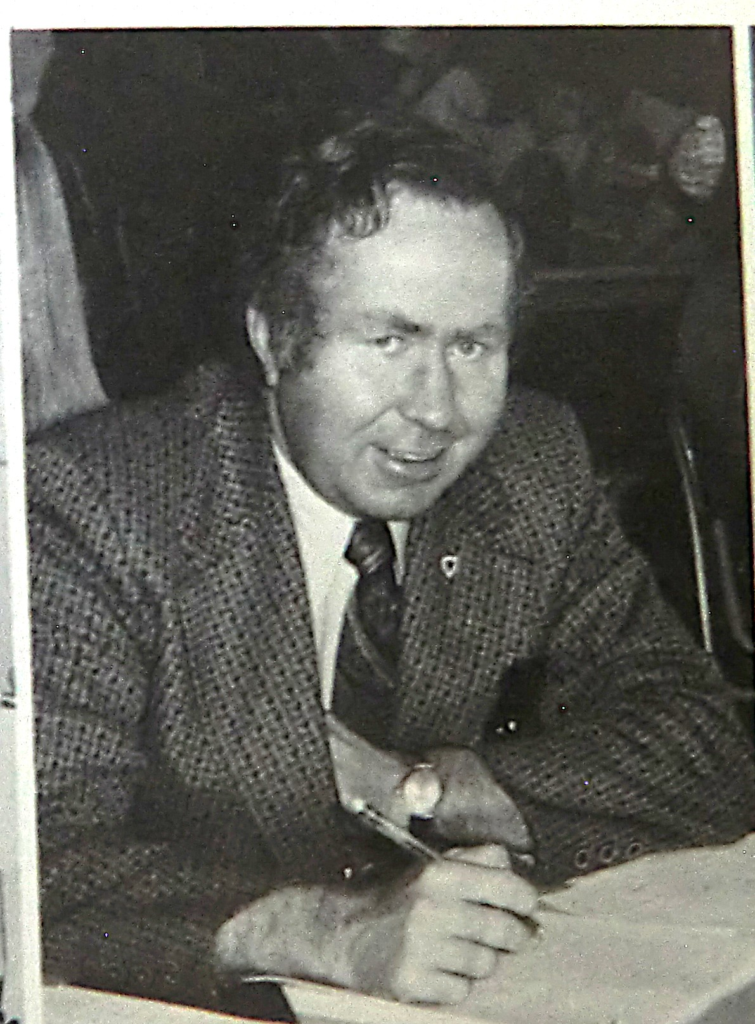

In past issues, I’ve given you updates on people that were talented athletes whose names were often found on the sports pages of our local newspapers. the Union Leader. However, this week’s Manchester Ink Link edition will be different since I’m not only covering a former very talented player, but also a well-known former coach…Pete Poirier.
Though he is best known for his exploits as head of the Manchester Memorial High School basketball team, it should be noted that Pete has coached a variety of other sports including baseball, football, volleyball and softball. His “career” in athletics began quite some time before he “hooked” (pun intended) up with the Crusaders.
As a student at St. Anthony High School, Pete played both baseball (catcher) and football (left tackle). In fact, during his senior year, weighing in at a robust 210 pounds, he was selected as a member of the New Hampshire All-State Football Team.
While we were discussing this feat, he couldn’t resist dropping a few of the names of his teammates – guys like half-backs Bob Campano, Roger Paquette, and Armand Genest, tackle Dick Mathews, center Bob Duvernay and QB Roger Dumas.
His team, under head coach Fred Ranger, went 7-1 that year (’52).
“Most football fans have heard of Billy Pappas from Central and Sonny Cronin from St. Joe’s, but few realize that we had a great one, too, in the person of Campano. All three were always mentioned together. We had about thirty guys at St. Anthony and they all were on the football team. We played an eight game schedule in Class ‘S’ against schools like West, Sanborn Regional, St. Marie, and St. Patrick’s (Watertown, Mass.).”
“West was our biggest rival back then and our only loss during that seven win season was to the Blue Knights. We had a really good team and wanted to play Bishop Bradley, but they were weak that year and didn’t want to do it. Plus, you couldn’t have a one-year contract with a school. It was probably better for us anyway because our program began to decline while theirs got stronger.”
It was during his football years at St. Anthony that he met his most impacting coach, Leo Ouellette, his line coach. “He was a very disciplined guy, a really good teacher. He had one strange characteristic, though.”
“If you didn’t meet his expectations, he wouldn’t talk to you.”
“During halftime of the St. Patrick’s of Watertown, Mass, in 1951, I remember him telling our team – ‘If you guys don’t win this thing, I’m not going to speak to you for the rest of the season!’ We didn’t win – and he didn’t speak to us – for the remainder of the season. Coach Ranger did all the talking.”
Baseball season at St. Anthony was a bit different than it is today. Pete explained that, in addition to games during the week, teams would also play a double-header every Sunday afternoon. “In ‘round-robin’ fashion, four of the five teams involved (Bradley, Central, West, St. Marie, and St. Anthony) would play each other while the fifth club got Sunday off. For instance, we’d play Central, West would play St. Marie, and Bradley had the day off. All the games were at Athletic Field (now Gill Stadium).”
After high school, Pete went on to another St. A – this one being St. Anselm College and graduated with a B.E. He later attended Boston University where he earned a masters degree in education.
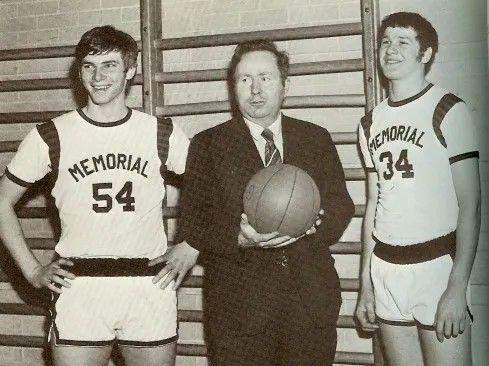
Pete Poirier coaching career
His coaching career began at St. Anthony’s where he headed the baseball team after the departure of head coach Father Leo St. Pierre. Older readers may remember that priest’s name since he also served as head coach of northern New Hampshire hockey powerhouse Notre Dame High School from Berlin.
Pete ended up as member of the faculty at Farmington High School and was their resident “Gil Thorpe”. He served as coach of boys’ basketball, girls’ volleyball, and girls’ softball, each for a period of three years. “The boys’ teams were OK, but the girls were really good. For example, though I had never coached volleyball and, in fact, had never even seen a game, we still had a winning season because the girls were just that good.”
His years at Farmington were also filled with some really unique experiences. Here are a couple.
During one season with his basketball team, none of his games counted. “The NHIAA had raised the dues for membership that year and, in protest, the school wouldn’t pay them. We were allowed to play, but the games only counted for the teams we played against and we were not permitted to be in any tournaments.”
Another – Pete’s explanation – “The town hall had burned down and the gym was a part of it. As a result, we had to travel about 10 miles away to Nute High School in Milton to practice…when we could get the gym.”
Speaking of gyms, some older readers will no doubt remember the gymnasium at Central High. “The band-box at Central was about twice as big as most of the gyms we played in.” The description of one, in particular, left me stunned. I looked at him in total disbelief – to which he responded “Hey, it’s all true. You can’t make this stuff up!”
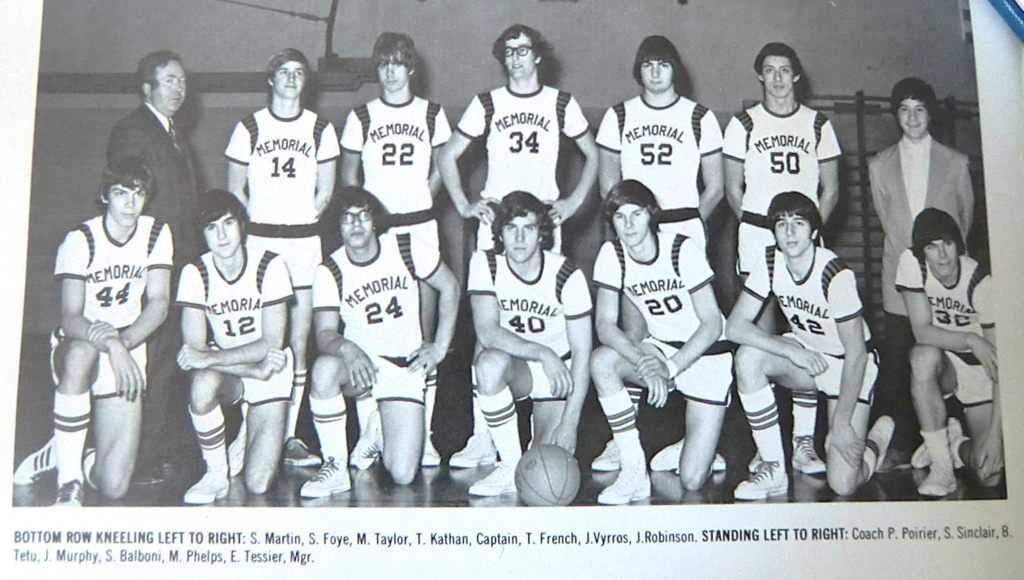
After his departure from Farmington, Pete worked as an assistant coach for Bob Jauron at Memorial in 1961. When Bob stepped down the next year, the job went to Pete and he served as head mentor until his retirement 20 years later in 1982. His clubs won back-to-back state titles in ’70 and ’71 and again in ’82 and, during that tenure, only one team had an under .500 season.
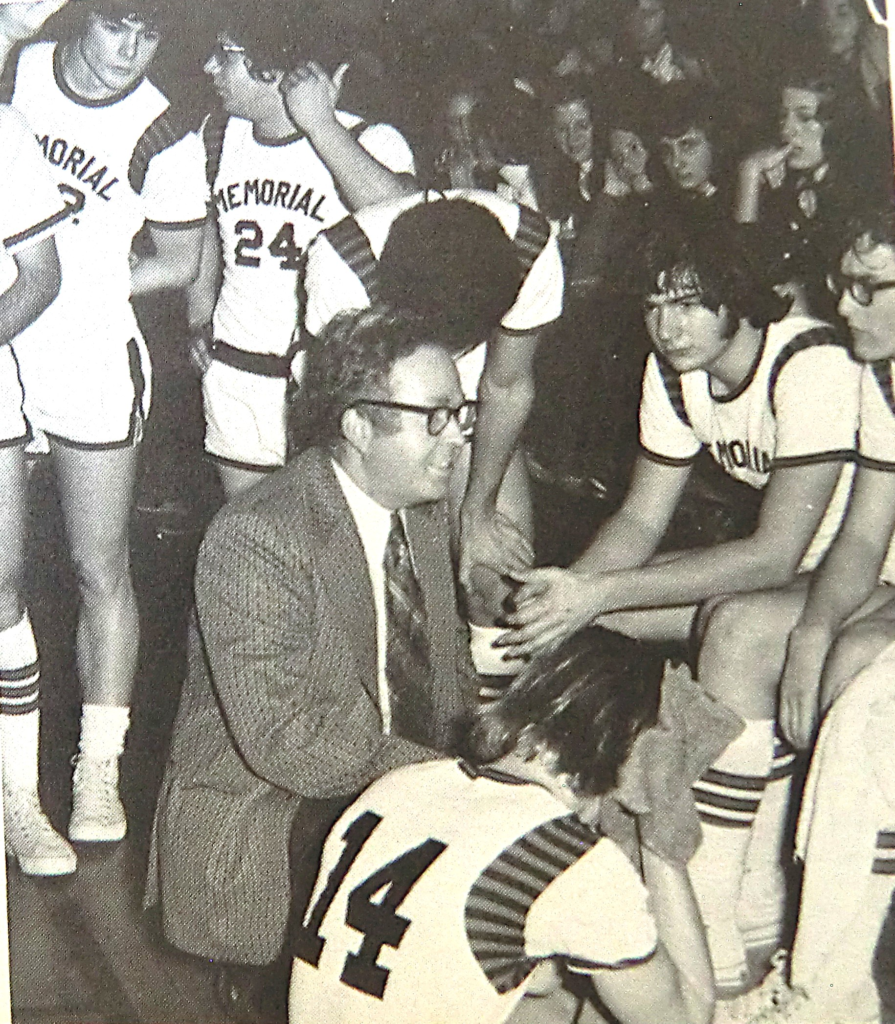
Under Pete’s guidance, his clubs posted a total of nineteen winning seasons!
As we sat there reminiscing, he said that he particularly enjoyed his coaching jousts with Central’s Stan Spirou and Nashua’s Tony Marandos and Al Grenert. “They all really knew the game and it was always a challenge to try to figure out a way to beat them.”
While stating that he had a number of really good clubs, the championship teams of 1970, 1971, and 1982 were the ones he most remembers – winning it all will usually do that.
I remembered a number of “squabbles” he had with his long-time friends Butch Joseph and Mickey Hanagan, so when I asked “Which basketball official did you have the toughest time with?”, I expected one of those two names to surface. He hesitated for a bit – no doubt mulling over a substantially long list (my guess – not his), but ended up selecting one that will have to remain nameless.
“I’m not going to mention his name, but I will tell you that he was from Concord and anybody from that time period will know who I’m talking about.”
While still on the topic of officials, I reminded him of an incident that I had personally witnessed. It involved a medicine kit and his foot. Without skipping a beat, Pete remembered it well and said – “It happened during one of the Christmas Tournament games. An official made a call, but I don’t remember who it was or what it was about.
I do remember that after he made the call, I kicked the medicine kit that was next to our bench. Contrary to popular belief, it was not a pre-set prop to be used for “effect” and it was not supposed to be empty. In fact, it was filled with the ‘normal’ medical stuff. After the ref made the call, I kicked it – HARD. Problem was, the kit didn’t move (it was lodged against one of the bleachers) and for the rest of the game I kept looking down to see if my foot was still there because at first it just hurt…then it got numb.”
During his tenure at the South End school, Pete also served as a “spotter” for the highly successful football program under the leadership of the infamous Chabot-McDonough duo. I had heard much about Pete’s extremely helpful “involvement” with the team, but will let Pete explain it. “I’d be up in roof box and see a possible play from their playbook that might work. When I could get his attention, I’d call it down to Hubie and leave it to him to use it if he wanted. Some of them worked and some of them didn’t.”
Nice try, Pete. Somehow I think your “input” was a little more than just that – otherwise why would they have put you back up in that box week after week after week? Maybe because they kept winning? And maybe because you were a part of that?
Pete also coached a little baseball guiding the Kiwanis “9” for three years. When long-time Babe Ruth Director Louis Basquil stepped down in 1962, Pete stepped up to serve as its Director. “The first year I took over, we lost the state tournament in Laconia, and I felt bad. Previously we had always won the state title, but lost in the regionals. Thankfully, starting in ’65, we won the next four state and regional titles and finished as the national runners-up twice. I called it quits and stepped down after we won the ’76 World Series against Hawaii (under the leadership of manager Don Beleski and coaches Mickey Hanagan and Eddie Collins).”

The now 73 year-old semi-retired landlord (who lives with his wife, Priscilla, in the town of Hooksett) wished to be remembered “as a conscientious coach, always striving to be the best that I could be, trying to get my teams to perform at 100%.”
When I asked what he had learned about himself from his years in coaching he answered – “I always tried to get the best advice possible and then move on. I learned to be persistent and took my job really seriously, perhaps too seriously.”
The last question I had for him was the most difficult…and one I thought he wouldn’t answer. This is what I asked. “From all the guys that played for you over your 20 year coaching span, if you had to put the top five on the floor – an All-Memorial Fab Five – who would those players be?”
He hesitated for a few minutes, then, to my surprise, he named his starting five. I had seen all of them play and every one of them was really talented. As I copied the names down, he explained why he picked each one for each position – and his reasoning was solid.
The more I looked at the names, the more I knew there would be some controversy. Because I knew Pete was completely sincere in his choices, I didn’t want him to get any grief, I asked him if I could end his story differently. He agreed and I promised him his choices would remain with me only.
So, instead, I’m leaving it up to you, the reader. From the list below (and the names – listed alphabetically – are from me, not Pete), put your final five choices beside the respective positions.
- Mike Applegate, Jim Baroody, Ron Beaurivage,
- Brad Cone, Dick Daigle, Tom Dickson,
- Dick Dubois, Mike Flanagan, Tom French,
- Brian Lass, Bill Lucci, Chuck Maturo,
- Jim Masson, Mike O’Neil, Tom Pappageorge,
- Dave Puchasz, Wally Rozmus, Chuck Smyrl,
- Bill Tetu, Stan Urban, Other (your choice)
_______________________________ Forward
_______________________________ Forward
_______________________________ Center
_______________________________ Guard
_______________________________ Guard
For many of you, the first two or three names you put on the list may have been easy choices, even “automatic”, but after that – ???
I’m definitely interested in which players MIL readers will choose. If you’re interested, too, send me your selection and I’ll reveal them in a later issue.
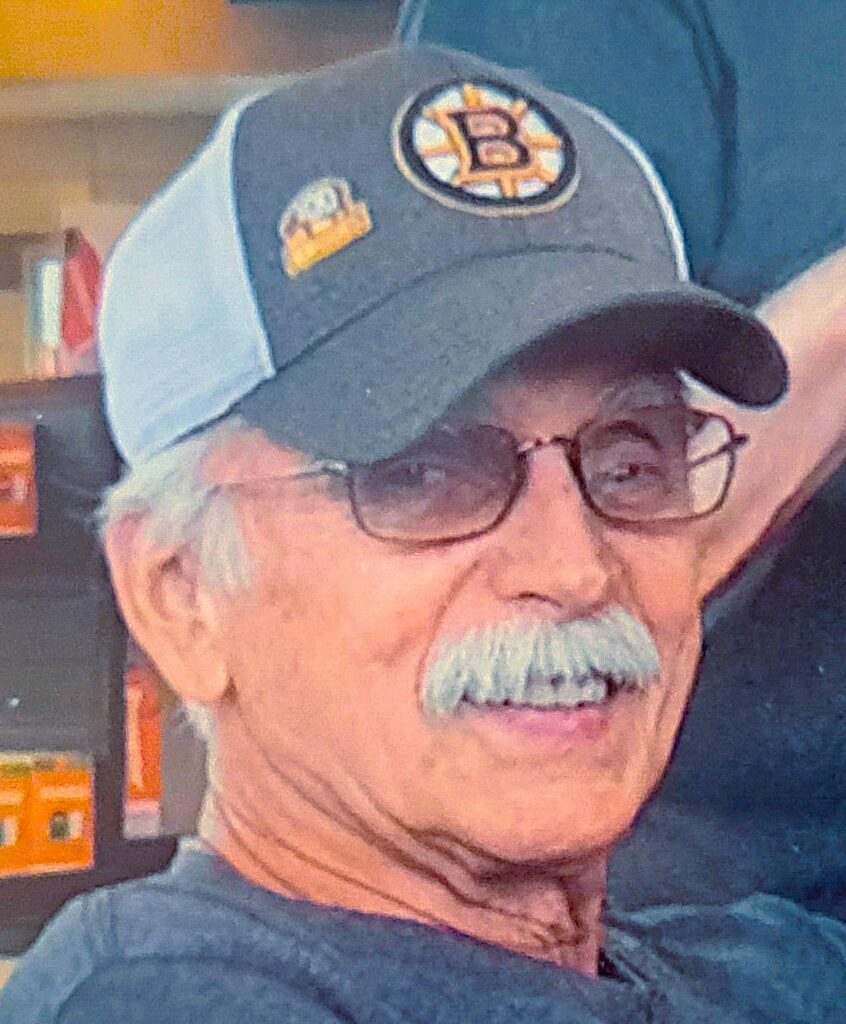
Ted Menswar Jr. is a life-long resident of the Queen City and a retired member of the English Department of Memorial High School who has been involved in local sports for 70 years as a player, a coach, a mentor and a fan. He can be reached at tedmenswarjr@gmail.com