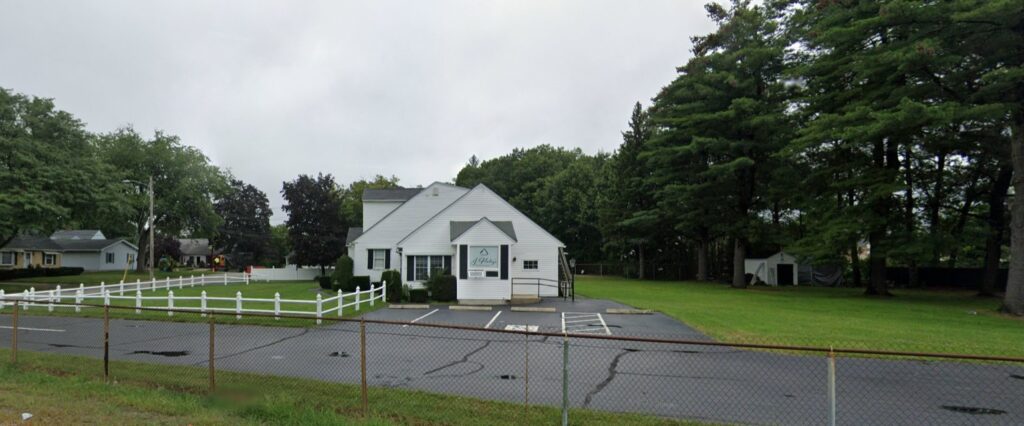
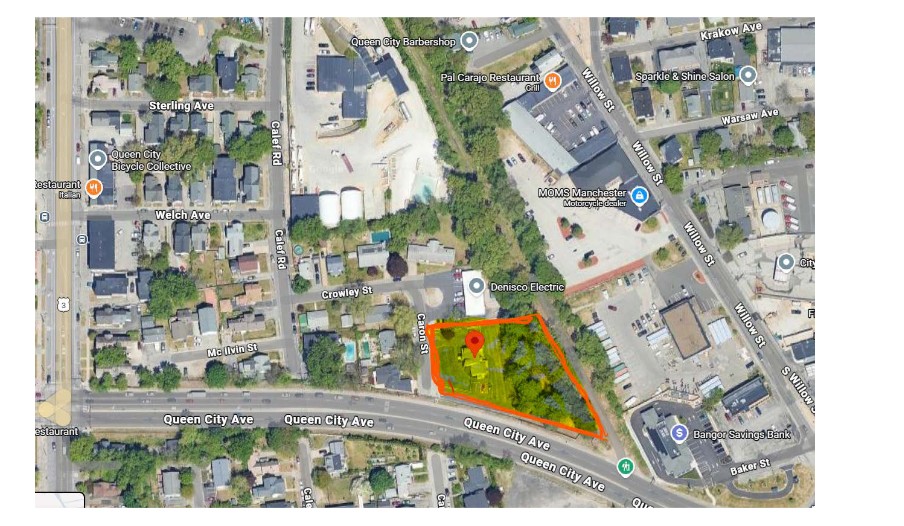
MANCHESTER, N.H. – There is a property nestled between Queen City Avenue, a rail trail and one of the most unique neighborhoods in New Hampshire’s largest city. Developers who want to remove a single-family home on that property and replace it with an apartment building received positive news after receiving several variances from the Manchester Zoning Board of Adjustment during their June 2026 meeting.
Located at the end of Caron Street, the single-family home at 51 Caron St. was built in 1949, about a decade before Queen City Avenue was extended to connect Elm Street and South Willow Street. That extension of Queen City Avenue separated Calef Road and Caron Street into two parts bisected by the new arterial throughfare, with 51 Caron St. now just north of the expanded Queen City Avenue. There had been plans to construct a new small multi-family building on the site until a new state law capping local parking requirements and the city’s new zoning ordinance came into effect earlier this year transitioning the neighborhood’s zoning from residential to mixed-use, bringing plans for development back to the drawing board.

During the June 2026 meeting, attorney Andrew Sullivan, architect Anne Ketterer and surveyor Joe Wichert came before the zoning board with such a new proposal, seeking relief from portions of the zoning ordinance relating to the maximum number of units in small multifamily home, principal entrance location, parking setbacks and parking lot perimeter landscaping.
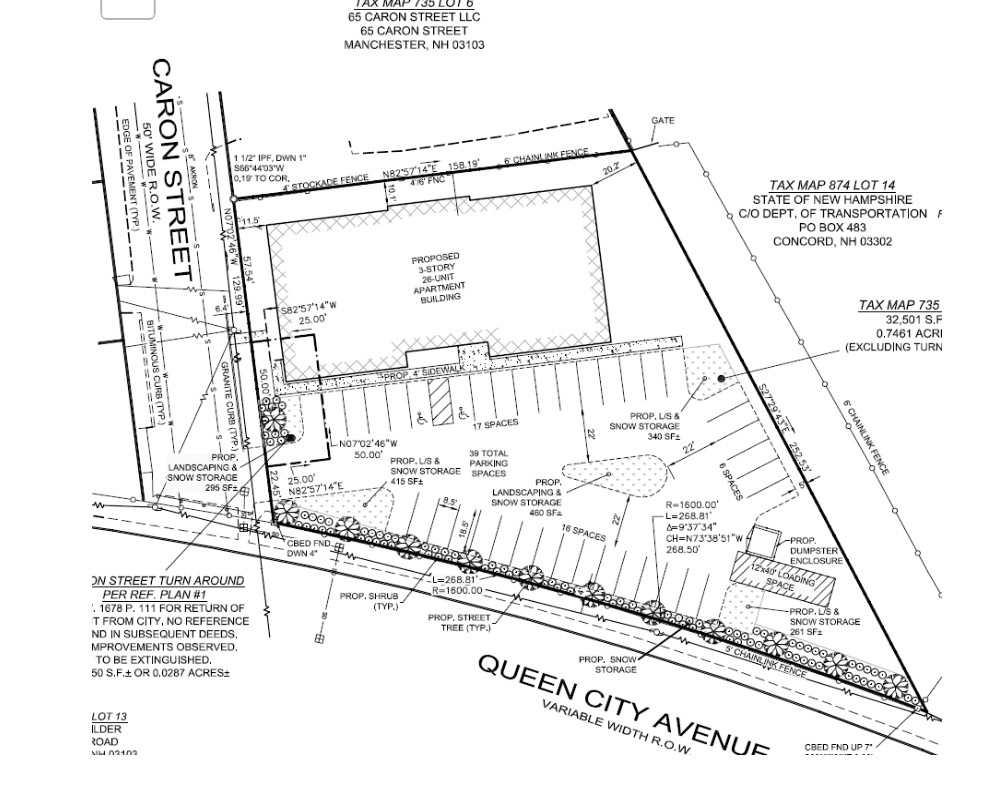
Under the city’s zoning ordinance, a maximum of nine units can be placed within a building and 23.88 units can be placed in total in a property with the type of zoning and lot size now found at 51 Caron St. The property itself is large enough for developers to construct three buildings by right under the new zoning ordinance: two buildings with nine units and one building with five units.
Representatives of the applicant argued that a three-building plan would make it difficult to create enough parking for the new residents on the site, which would force residents to park on the street and disrupt neighbors. Planning on the site is further complicated by a rare subterranean easement along the rail trail.
Thus, the new plan merged the three allowable nine-unit buildings into one three-story, 26-unit building, giving each unit exactly 1.5 parking spaces, or 39 total for the property. To make the parking locations work while having the building away from the noise and car lights of Queen City Avenue, plans required a lack of required buffers along the rail trail and Queen City Avenue borders of the property. This made the primary entrance face southward toward the parking lot rather than Caron Street, with the zoning ordinance requiring the main entrance to be pointed toward the principal street of the property.
Several neighbors expressed concerns regarding potential increased traffic and the impact on property values that the change in density may present. In response, representatives of the applicant stated that the expected increase in vehicle traffic will be an average of six cars per hour, mostly concentrated during rush hour periods. They also argued that the one-building plan would be less harmful to nearby homes than a multi-building proposal with fewer parking spots that they could build without variances. Wickert noted that in the previous version of the ordinance, a total of 21 units in one building could have been constructed on this site without a variance.
Zoning Board Member Kathryn Beleski asked if the applicants could accept a building with 23 units rather than 26, with Wichert asking if it would be more appropriate to round up to 24 since the limit is 23.88 under the ordinance. There was also discussion on whether the easement could change that calculation.
The four variances were granted unanimously with a limit of 23 units and agreed that a re-examination of calculations for a request of 26 units could come before the board again without a new application if that was the wish of the applicant.