
O P I N I O N
NOT THAT PROFOUND
By Nathan Graziano

Last week, one of my lesson plans ended early so we had 15 minutes to kill at the end of class . Earlier that morning, I was reading about Governor Kelly Ayotte’s proposal for a statewide ban on smartphones in public classrooms, grades K-12, so I decided to float the idea to my students and see what they thought about it.
It was the first thing that I had said in more than an hour that got them to lift their heads from the small screens they had been furtively staring it—rather, they believed that they were being furtive.
One student looked aghast. “They can’t do that,” they said. “That’s against our First Amendment rights.”
I pointed out that a ban on smartphones in a public classroom didn’t have much to do with their freedom of speech, religion or press, and it wouldn’t directly affect their rights to peacefully assemble or petition the government while at school. I also reminded them that the Supreme Court has ruled that student publications don’t have full First Amendment rights in their 1988 decision on Hazelwood School District vs. Kuhlmeier.
Another student raised their hand. “What if there is an emergency, and our parents have to get in touch with us?” they asked1.
I pointed to the landline phone on the wall in my classroom. “They can certainly call the school, and the secretary will immediately put that call through to my room,” I said. “If there is an emergency, we will let you know.”
Still, the students weren’t buying it. To them, not having their phones within an arm’s length posed a grave existential threat to their human rights and well-being.
But they were also unwilling to admit to the real problem: Many of them are addicted to those devices.
Let me start by saying that I don’t always agree with Governor Ayotte’s politics, but I admire her for putting forth such a bold proposition. Every school district in the state is fighting the smartphone battle with students and parents, and we’re all largely losing.
If this issue were to be legislated on a state rather than municipal level then it will make the rules exponentially easier for individual schools to enforce.
However, getting back to the issue of smartphone addiction, we also need to address this problem for the sake of our children. Their learning is suffering because they simply can’t tear themselves away from these devices that can be as addictive as drugs, alcohol or gambling. Yet we don’t allow any of the latter in our classrooms.
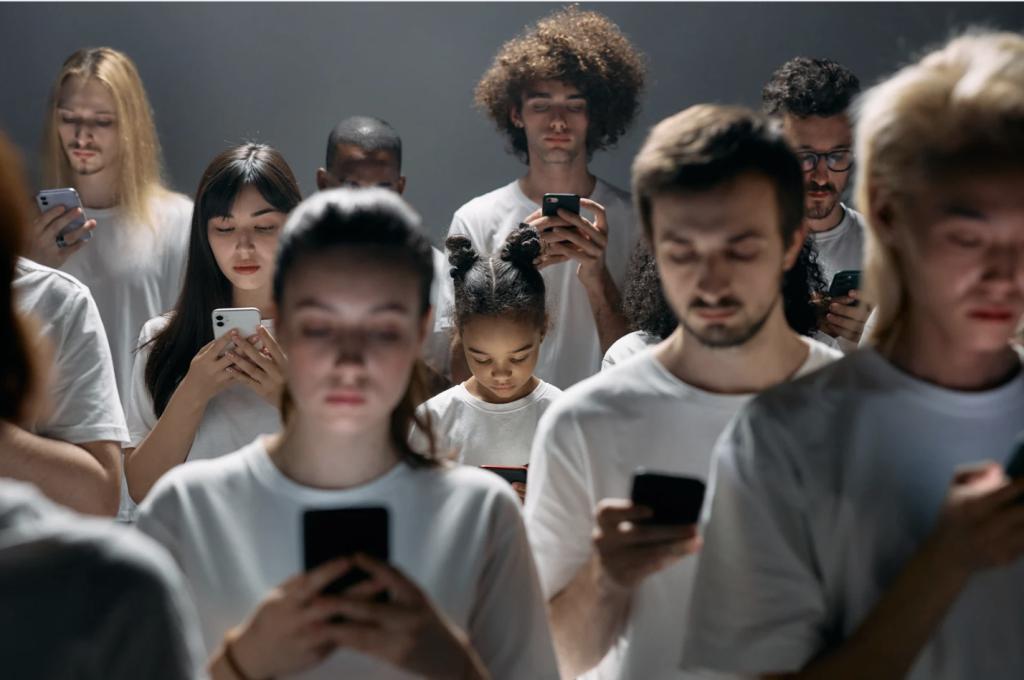
As with any addiction, it is important not to moralize. It doesn’t make you a bad person if you can’t put down your phone. In fact, the major tech companies know that smartphones—and social media by extension—are addictive and these companies continue to invest billions of dollars to make them more so.
Some experts have also pointed out that these devices are making people, especially teenagers, largely miserable. The collective mental health of Gen Z is in a precarious place to begin, particularly after a pandemic that made them entirely reliant on these devices to learn and socialize. Now their phones are exacerbating these mental health problems.
While there is plenty of dissent on the issue, the research on the topic is compelling enough to give pause. A lot of studies now show that smartphones and social media, in particular, are making our kids more anxious, more depressed, and generally more unhealthy.
And from a pedagogical standpoint, they’re also affecting a student’s ability to concentrate and retain the information being presented in their classes. While there are times in some lessons when the phones can be used as educational tools, for the most part, those lessons are isolated.
It is, therefore, the duty of the adults to assure that our kids are put into positions where they can learn and grow.
Admittedly, a ban on smartphones in public classrooms will not singlehandedly solve a myriad of woes that education faces today. AI has become ubiquitous in our schools; there is a genuine dearth of critical thinking across the board; and low salaries and political attempts to vilify teachers and administrators has resulted in fewer and fewer young people entering the field.
Public education in this state—and across the nation—faces an uphill climb in the future.
However, that doesn’t mean that we shouldn’t try to make it better in the present, and Governor Ayotte’s proposal to ban the phones in public classrooms is a fine place to start.
- Somehow, generations of students prior to the advent of the smartphone were able to make it through school alive. Praise be. ↩︎
If you want to talk about this with Nathan Graziano further, don’t call; just shoot him an email at ngrazio5@yahoo.com