
- Immigrants Among Us: Why they come to America
- Video: Conversations about becoming and being an immigrant in New Hampshire
- Liliya Mayevsky: Her parents brought her to the U.S. to live in a country free of persecution
- Sebastian Fuentes: ‘The dream of coming to America is definitely a hard one that few people can achieve’
- Glory Wabe: Proudest of her contributions to nursing in New Hampshire
- Geshe Gendun Gyatso-Konchuck: ‘People should see a wider perspective of other countries and other people’
- Ekoue Abroussa: ‘The people who are giving education, they are the best people in New Hampshire’
- Ali Sekou: ‘If you want to change things then be the ambassador of that change’
- Snizhana Riabko: ‘We are very happy that we have been welcomed like this’
- Maria Elena Letona: ‘I’m actually very scared for the United States as a country’
- Caroline Oguda: A lot of immigrants come because they are forced by circumstances
- Kateryna Nazaroya: ‘We are very thankful for everything’
- Sarah Walker: ‘We are good people’
Country of origin: UKRAINE
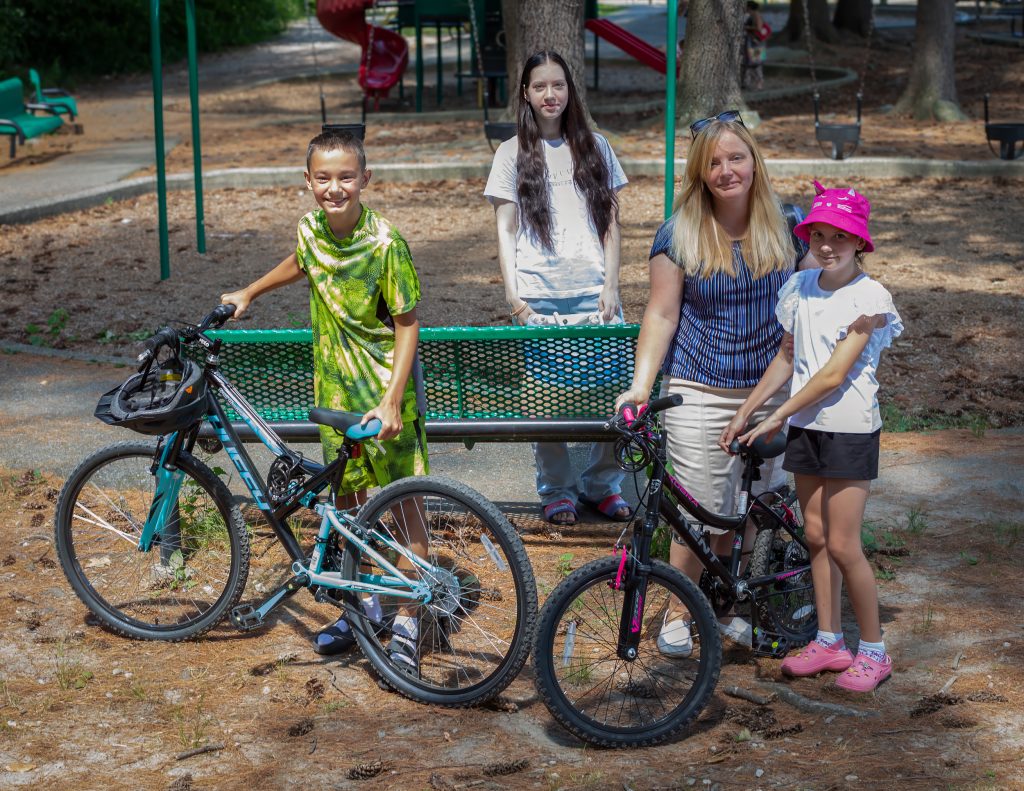
Snizhana Riabko and her husband are war refugees who arrived in Manchester with their three children in the spring of 2024, a 16-year-old, a 9-year-old daughter, and an 11-year-old son.
They have been driven out of their home twice by the Russians. First in 2014 when she lived with her infant children in the Donetsk region of eastern Ukraine during the first invasion of Crimea. The second at the start of this war was from the city of Kharkiv where they resettled after the first invasion.
“We did not plan to move anywhere. Only because of the war, we moved,” Riabko says.
They have been residing in refugee camps in Poland and Germany since the war broke out in Ukraine. They were granted visas to the United States through the USCIS Uniting for Ukraine program. The experience in refugee camps was stressful and challenging for the family.
On getting asylum in the US she said, “Because of our moving to Poland, to Germany, new countries, we were afraid. But when we came here, this move exceeded our expectations. It was much better. The communities welcomed us very well. We felt very welcomed.”
The language barrier is larger for the parents. She and her husband are taking English language classes so they can get jobs. They are grateful for the resettlement services and the help they have had in New Hampshire
“Yes, we are very happy that we have been welcomed like this. Even though we don’t know the language, they try to understand us with their hands and gestures, Americans try to understand us using sign language, like speaking with your hands,” she said.
Her children are adjusting fast and her son serves as a reliable translator for the family. The children are enrolled in Manchester public schools
After the war and the camps, Snizhana says this about New Hampshire: “The kids love it. Yes, the language for kids is much easier. They love being in school. They have a lot of friends. The schools welcome them very well. They love it.”
When asked about her home country she was overcome with emotion. The trauma of narrowly escaping with her husband and children, literally being bombed out of two homes is too fresh.
“Because we lived so close to the zone where the bombing and shelling were, it’s hard to talk about the motherland, I’ll just cry,” she said.