
- Immigrants Among Us: Why they come to America
- Video: Conversations about becoming and being an immigrant in New Hampshire
- Liliya Mayevsky: Her parents brought her to the U.S. to live in a country free of persecution
- Sebastian Fuentes: ‘The dream of coming to America is definitely a hard one that few people can achieve’
- Glory Wabe: Proudest of her contributions to nursing in New Hampshire
- Geshe Gendun Gyatso-Konchuck: ‘People should see a wider perspective of other countries and other people’
- Ekoue Abroussa: ‘The people who are giving education, they are the best people in New Hampshire’
- Ali Sekou: ‘If you want to change things then be the ambassador of that change’
- Snizhana Riabko: ‘We are very happy that we have been welcomed like this’
- Maria Elena Letona: ‘I’m actually very scared for the United States as a country’
- Caroline Oguda: A lot of immigrants come because they are forced by circumstances
- Kateryna Nazaroya: ‘We are very thankful for everything’
- Sarah Walker: ‘We are good people’
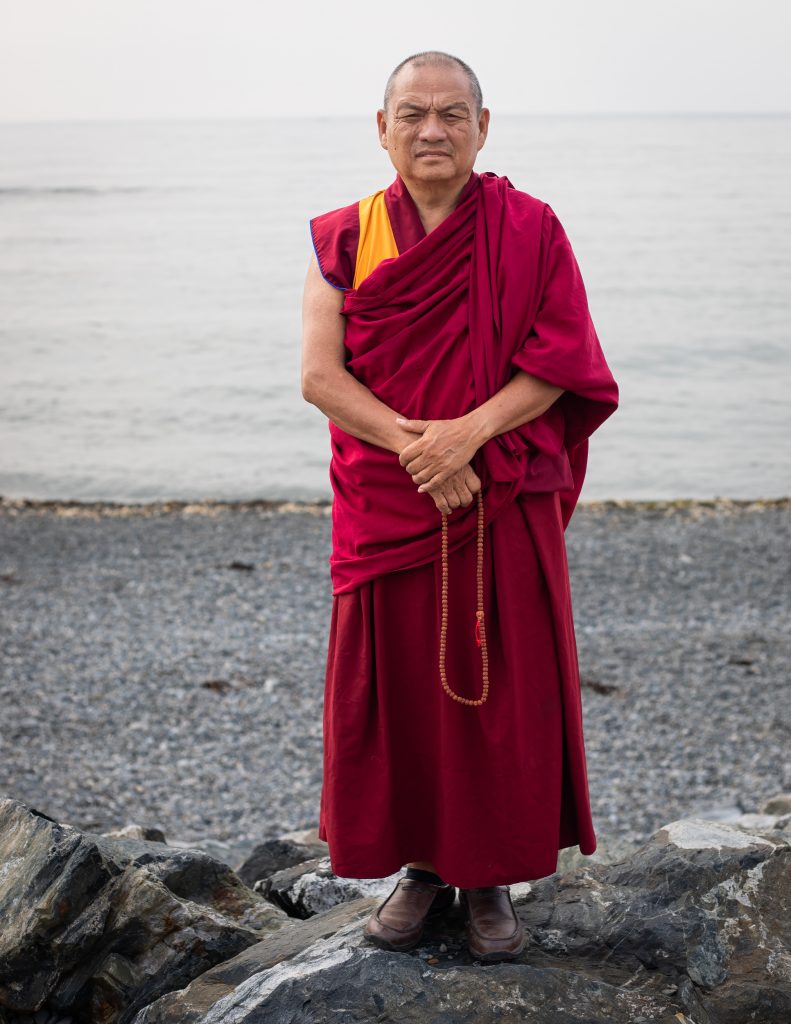
Country of origin: Tibetan-Indian
Geshe Gendun Gyatso-Konchuck’s family was exiled from their native Tibet by China into India. They lived initially in a refugee settlement in the north before settling in Southern India. He entered the Sera Je Monastic University at the refugee settlement his family lived in, in India, as a boy and began his religious studies. The monastery at that time had 3,000 monks and was historically connected to the original Sera Je in Tibet, which was founded in the 15th century.
In 1990 he received an English-language school scholarship to a school in Norwich England – the Bell School, for six months. He first came to the United States in 1990 to help staff a Tibetan Buddhist temple in Madison, Wisconsin, for six months. After that, he returned to the monastery in India for continued studies and to achieve his advanced Geshe degree. [Geshe is a title earned through an academic degree for monks and nuns in Tibetan Buddhism.]
Beginning in the mid-’90s and over the next decade he returned several times to the U.S. to work as a teacher of the Buddhist way of life in communities around the country. He was traveling on a series of R-1 visas which permit religious workers temporary permission to work in a religious capacity.
After the 9/11 attacks temporary visas became more restrictive so he applied for permanent resident status. After interviews and background checks, he received his green card in 2013. He returned to live in the US working as a hospital chaplain and establishing a Dharma teaching center in Massachusetts.
He gained his US citizenship in 2018. He operates a small gift shop at Hampton Beach in the summer along with his teaching practice. Each winter he returns to India and his Monastery to continue his theological studies.
Compassion is a primary principle of Buddhist philosophy. With that in mind, he offered this insight to Americans who are uncomfortable or unfamiliar with all of the new immigrants: “People should see a wider perspective of other countries and other people, you know, to know more about other humans. Not like just living in your town and your state without knowing any other country, or how they live; that leads to just a lot of ignorance, you know, and then that ignorance brings fear and makes you judgemental. You think you’re from this country, you own this land, you know, but you’d forget you’re from immigration, too. So that’s very important to know.”