
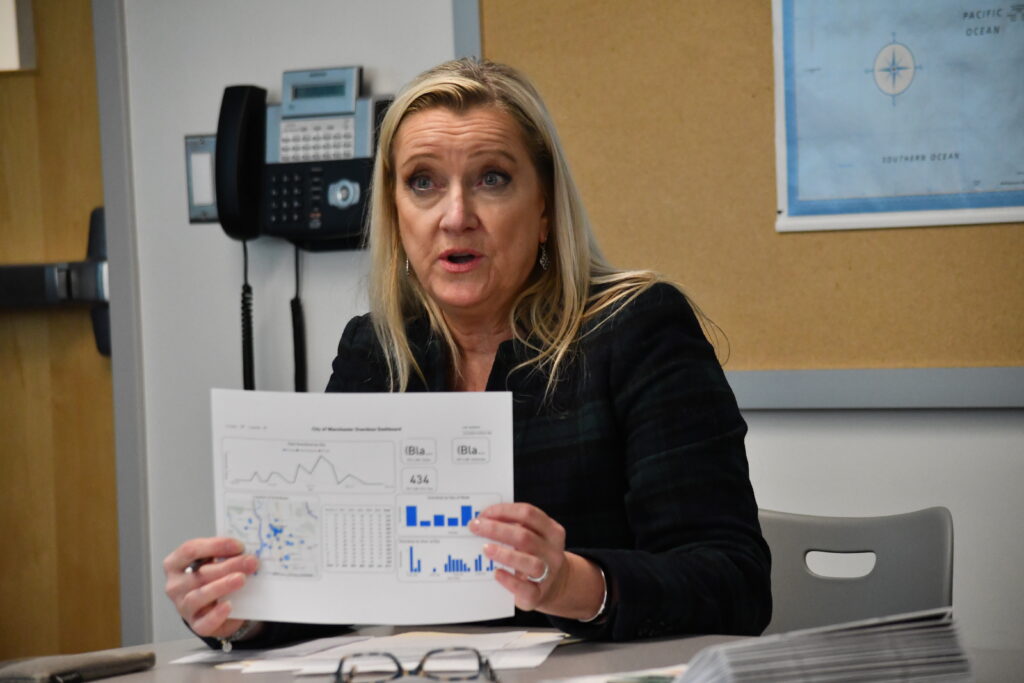
MANCHESTER, N.H. – It might sound cliché to say that it takes a community to tackle any pervasive problem that a city faces, but the effort to reduce opioid overdoses and deaths in Manchester truly has taken a community if this month’s Manchester Police Department Community Advisory Board discussion was any indication.
The Dec. 3 meeting focused on the Manchester Community Response Unit or CRU, a partnership started in 2020 between the Manchester Police Department and Manchester Health Department reaching out into the community to help individuals suffering from opioid overdoses in the past 24-to-72 hours, particularly following localized spikes in overdoses.
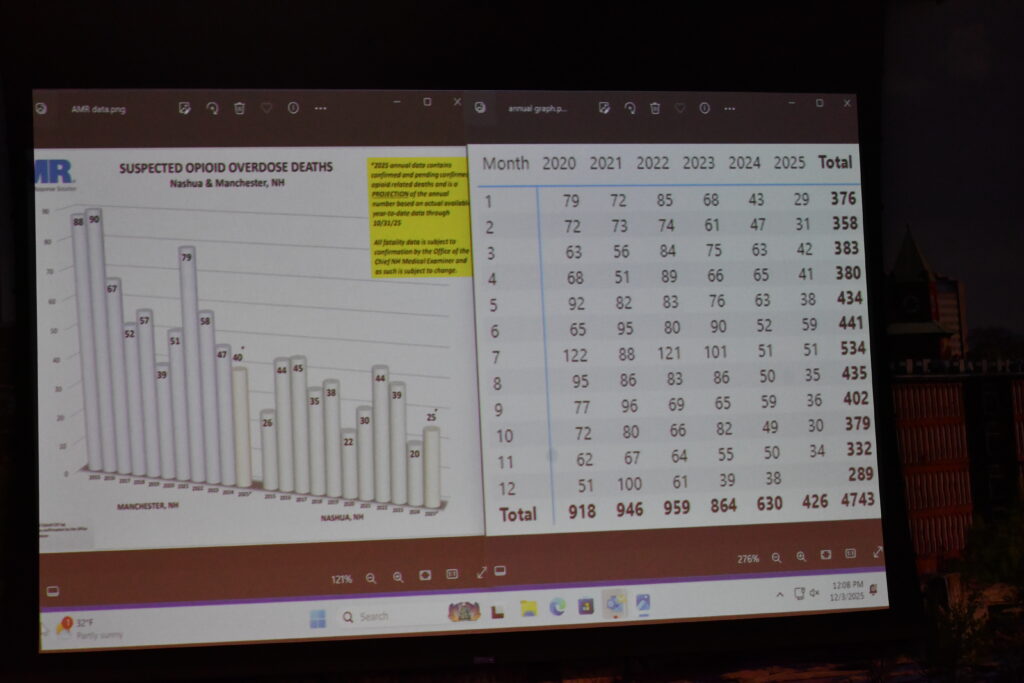
Organizers of the meeting reported that opioid-related deaths in Manchester could dip to their lowest numbers since the COVID epidemic while opioid-related overdoses continue to fall toward their lowest level in a decade, with the efforts of CRU potentially playing a key role in this trend.
If CRU is indeed one of the key factors in reduction of opioid deaths and overdoses in Manchester, it is due in large part to the addition of Andrew Warner in 2022. Warner became the city’s overdose prevention coordinator with experience from a variety of overdose prevention programs across New England as well as personal history of recovery from drug addiction that gives him credibility with those facing opioid addiction.
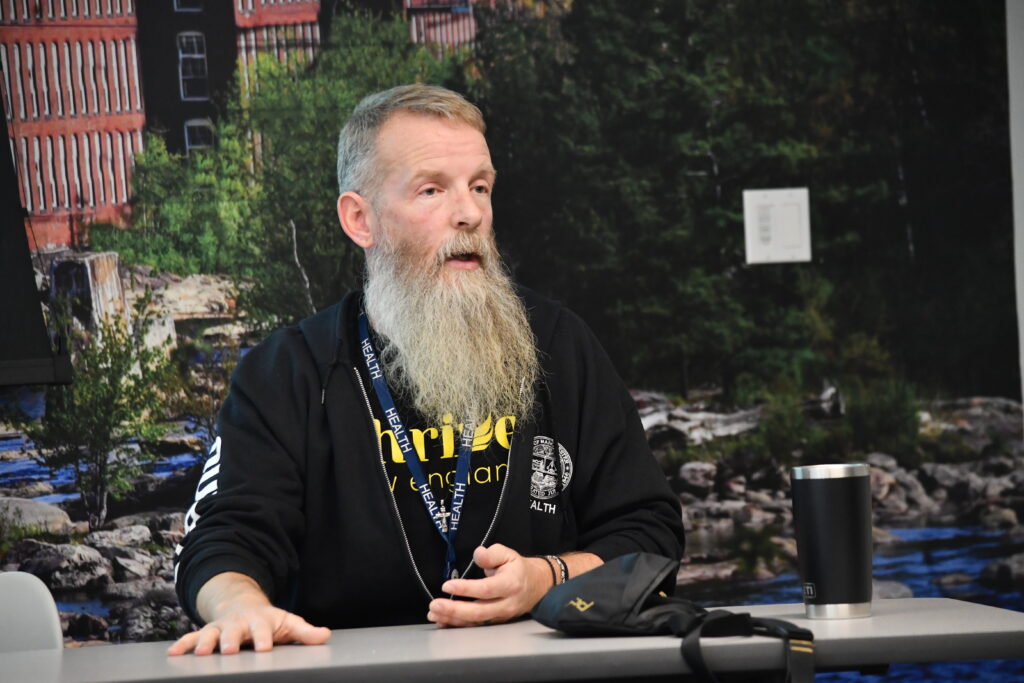
Manchester Health Department Director Anna Thomas cited the recent snowstorm as an example, as Warner sought to head out and make sure that the city’s population of homeless individuals also facing recovery from substance abuse would be safe.
“This guy will just go out again and again. He’s not looking for recognition, he just does it because he knows that somebody may potentially lose their life the day he doesn’t get to them,” said Thomas.
The proactive care approach is shared with other similar initiatives in the city dating back to the Manchester Fire Department’s groundbreaking Safe Stations program, which eventually was replaced the Doorway. At the heart of that approach is the belief that those seeking to get help must receive it immediately when they are most open to change.
Warner shared stories of individuals he reached at key moments of desperation such as a man addicted to fentanyl that was going to jump off a bridge the next day and another man who didn’t believe he was addicted to drugs but found himself at Valley Street Jail the next day, where Warner was able to convince him toward a path where he wouldn’t return to jail.
“When someone is ready for treatment, it is essential to get them in the door, because if you don’t do it right away, you will lose them,” said Thomas.
Another factor in the impact of CRU came shortly after the addition of Warner, when Thomas reached out to the U.S. Centers for Disease Control to learn about best practices toward approaching the opioid epidemic from a local level. Following the request, the CDC sent doctors and other officials in their rapid response team to help Manchester and the state as a whole adopt new tactics. Those interactions helped establish a opioid fatality review commission that can better understand why particular opioid fatalities occur and the beginning of compassion fatigue training, to help overburdened first responders avoid shutting down emotionally in the middle of supporting someone in crisis.
The program also found that coordination is an important part of success. Warner noted that similar programs elsewhere in New England had not found the same level of success due to the fact that in those areas, there was often little communication between first responders and social workers.
During the discussion, there was also talk of Nashua seeking to start its own version of CRU, although smaller towns in the area do not have enough resources to begin comparable programs and often Manchester has been helping people from those towns in any case.
Community Advisory Board meetings such as this one occur in the first floor meeting room at the Michael Briggs Public Safety Building at 405 Valley St. at noon on the first Wednesday of each month except for July.