
O P I N I O N
NOT THAT PROFOUND
By Nathan Graziano
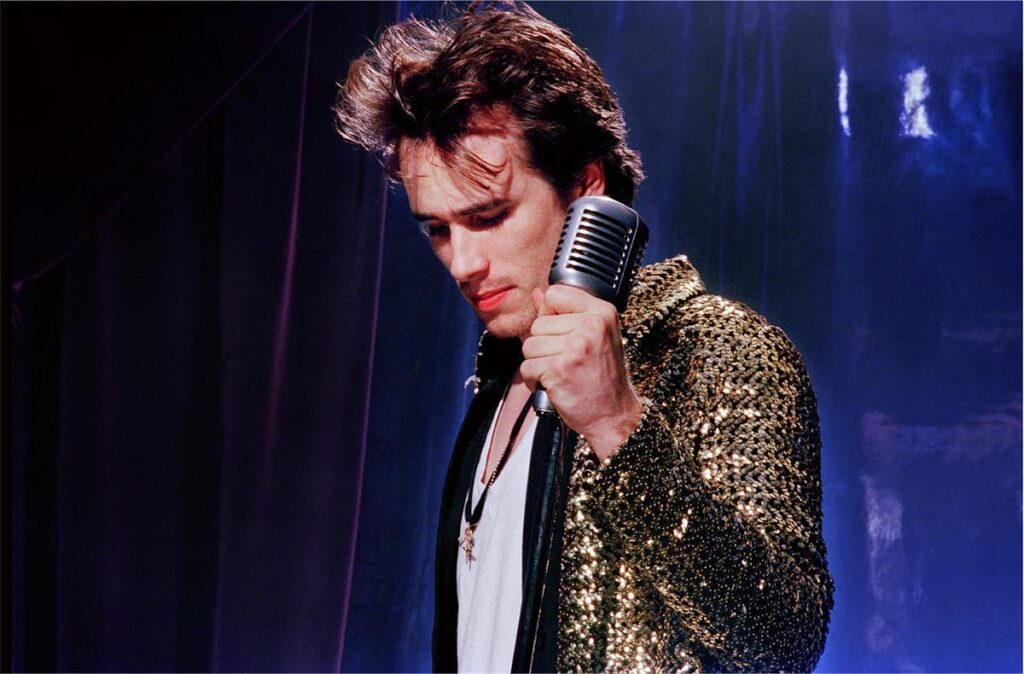

An ex-girlfriend gave me my first copy of Jeff Buckley’s stunning debut album “Grace” as a birthday gift.
It was one of those young relationships, in the late-90s, that felt significant at the time, but with hindsight, I’ve come to realize that we were both just learning how to navigate relationships.
But you couldn’t have convinced me of this at the time, when I was living in Las Vegas and entirely infatuated with this woman. She, however, wasn’t that into me, and as often happens when there is a gross imbalance of affection, my heart was trampled when she broke it off.
For my birthday that year—after she broke it off—she bought me the CD of “Grace,” which had somehow escaped my radar when it was first released in 1994.
There are few albums in a person’s life that change the way they listen to music. “Grace” was one of those albums for me. When I first listened to it, I thought my ex-girlfriend was taunting me, rubbing it in my face as Buckley rendered sonic heartbreaks with tunes like “Last Goodbye” and “Lover, You Should’ve Come Over.”
Then came Buckley’s cover of Leonard Cohen’s “Hallelujah,” which decimated me with its doleful beauty.
Sadly, The Mississippi River took Jeff Buckley from the world entirely too soon on May 29, 1997, while Buckley was finishing his follow up to “Grace,” titled “My Sweetheart the Drunk.” Buckley was 30 years old.
The unfinished album, along with other songs that Buckley was working on at the time, was posthumously released in 1998 with the permission of his mother and titled “Sketches from My Sweetheart the Drunk.”
Last August, a documentary film titled “It’s Never Over, Jeff Buckley” was released in theaters. The film is produced by Brad Pritt, and directed and co-produced by Amy Berg, whose 2006 documentary “Deliver Us from Evil,” about the sex abuse cases in the Catholic Church, earned her an Academy Award nomination.
“It’s Never Over, Jeff Buckley” features interviews with Buckley’s mother, Mary Guibert, as well as ex-girlfriends, Rebecca Moore and the musician Joan Wasser, along with fellow musician friends Ben Harper, Aimee Mann and the late-Chris Cornell.
And, let me tell you, this stunning film will find dozens of ways to break your heart, even if you’re not familiar with Buckley’s seemingly-supernatural talent. It broke mine all over again.
And for Buckley’s fans, who may have also spent many dog-faced nights trying to heal a broken heart with “Grace” playing in the background, the music and footage serves as a time machine, bringing you back to that beautiful devastation.
The film also takes viewers through Buckley’s childhood in Southern California, being raised by his adoring mother, after being abandoned by his musician father, the late-Tim Buckley, who died of a heroin overdose in 1975.
“It’s Never Over, Jeff Buckley” follows Buckley’s rise to fame, from playing at a cafe in the East Village in the early-90s to the release of “Grace,” the album that catapulted him to stardom—more so in Europe and Australia than in the United States—an the album that David Bowie once called “the best album ever made.”
Without sugarcoating, the film also frankly tackles Buckley’s struggles with mental illness, his gender-fluid relationships, and his struggle to love himself.
It also contains a plethora of unreleased interviews and home videos with Buckley while he tries to stay grounded in the face of fame. “Without ordinary life, there is no art,” Buckley says in an interview.
While it certainly sucked being dumped and licking my wounds in that small apartment in Sin City in 1999, I owe a debt of gratitude to that ex-girlfriend for introducing me to one of the finest musicians of our time—or any time, for that matter.
You can reach Nate Graziano at ngrazio5@yahoo.com