
By Ted Menswar Jr.

“I” on Sports
by Ted Menswar Jr.
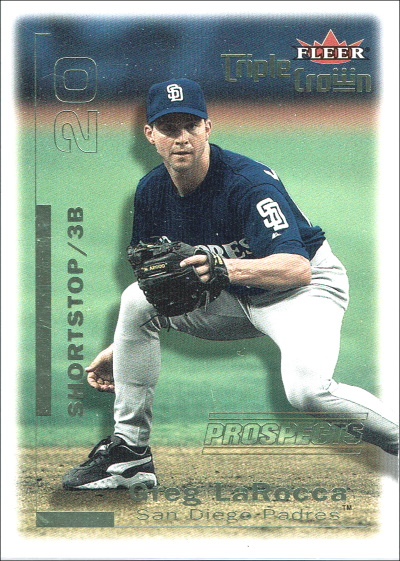
Flashback to the second installment of this piece about Manchester West High School grad Greg LaRocca, born November 10, 1972. It takes a look at his baseball career, from childhood, including high school and American Legion ball, which led him to a stint in Major League Baseball, originally published in 2007.
LAROCCA’S MOST EMBARRASSING MOMENT
“During a game in Japan, I was playing first base and caught a drive hit to me. I remembered there was a man on first, but thought there were two outs and, after making the catch, nonchalantly tossed the ball into the stands as I jogged off the field. A definite double-play ball and I blew it!”
PEOPLE WHO MOST IMPACTED GREG LAROCCA
First, his high school coach, Bob Kerrigan:
“As a sophomore, Mr. Kerrigan saw something in my playing ability that caused him to take a senior out of the shortstop position and put me in that spot. Here I was, having been cut from the freshman team, and now I was replacing a senior. He took a risk to let me play MY position…and I’ll never forget that.”
Second, his minors coach in 1995, Marty Barrett, from the Rancho Cucamanga Quakes.
“I grew up watching Marty play. Everything he said to me just re-enforced everything I believed in. He taught me how to work through adversity,”
I stopped at this point to ask Greg about something that stood out to me like a neon sign.
My question: “Greg, you referred to your high school coach as Mr. Kerrigan, yet you called your ‘pro’ coach ‘Marty’. Any reason why?”
His answer…“I connected with Marty as a player. Mr. Kerrigan was always my coach.”
I LOVED it.
COLLEGE BALL VS. THE MINORS
While college ball provided him with his most favorite time in sports since it allowed him to develop relationships and completely enjoy the “team” atmosphere and attitude, it has been pro ball that has turned him off, calling it “too individualistic”.‘
“Minors was the toughest because it really doesn’t permit the ‘team’ mentality. Minors does not allow ‘team’ sport for one simple reason…everybody’s out for himself. If you want to make it, you have to be.”
As a professional in Japan (where baseball is #1), Greg has made six All-Star teams and been named “Best at Position” in the celebrated BEST 9.
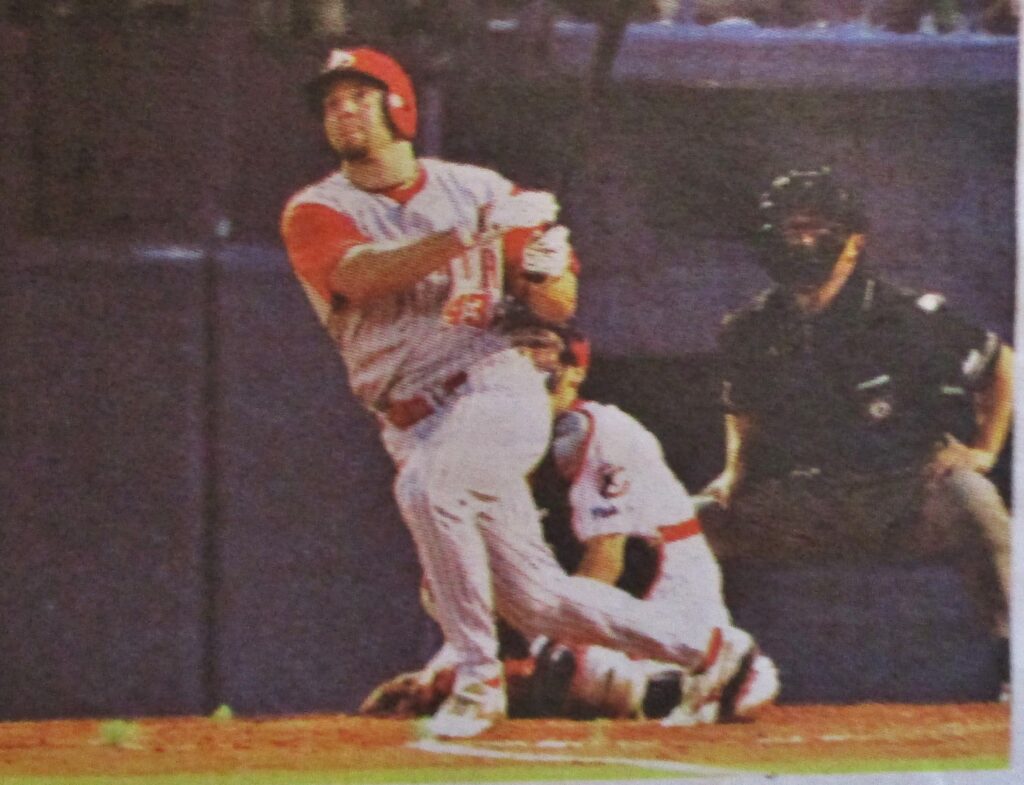
LAROCCA’S COMMENTARY ON “TRANSITIONING” TO JAPAN
“Over there, you’re treated differently.”
“As a baseball player, you’re put on a pedestal. But not so the average ‘foreigner’.”
“In fact, if you’re a woman, instead of holding the door for you, they push you out of the way.”
“My wife, Amanda, is from New York and, having been an inner-city school teacher, she can be tough when she needs to be. I proposed to her at the All-Star break and, after we got married, she came to Japan to live with me. However, she didn’t know the ‘baseball life’ – one day off a month – 140 games in five months.”
“She was alone a lot…and that was hard for her, particularly as a foreign woman in Japan. An experience she had is a perfect example.
Pregnant with our son, she got on a city train. There were seven men in business suits that were sitting down and, even seeing her ‘condition’, not one of them offered to give her his seat. However, if they had known her husband was a pro baseball player in Japan, I have no doubt that every one of them would have fought over which one would give up his seat to her. She knows better now and isn’t afraid to play the ‘baseball card’ because, sadly, but fortunately, it works!”
While he has literally given his life to baseball, I wondered what baseball had given to him.
“A great work ethic. How to set, work for, and reach goals. A sense of direction to be able to succeed in life. Without sports, there’s so much to distract a person which creates thoughts like ‘Why should I work hard? I can make it doing little.”
Only those closest to him know that he had been considered for the USA Olympic baseball team, but eliminated that possibility due to one critical fact. Because he made less than $10,000 a year during his first six years, he needed to see “green” (as in job) more than he needed to see “red, white, and blue” (as in uniform). Had it been offered, he would have turned it down.
And that had to kill him knowing how much he loves the game. Perhaps it can be better stated by his thoughts on what upsets him most about sports today, particularly baseball.
“There’s a lack of respect for the game itself.”
“The game will go on forever, you won’t. I like the guy who plays for the game and not the glory…as in the ballplayer who lingers too long at the plate to appreciate the home run he just hit or the relief pitcher who triple-pumps his fist because he just put a third strike by a hitter. What glory is there in showing up another player? If you hit a home run or struck a hitter out, all you did was your job. Just run the bases or head for the dug-out and act like you’ve done it before.”
What does he want to do for his son, Caden?
“I want to coach him…give him what my Dad gave me. I want to teach him how to win with respect and how to lose with respect. Though life is filled with people who have lost, I don’t want him to be a quitter. I want him to know that quitters are the only real losers.”
THE MOST IMPACTING PLAYER LAROCCA’S EVER SEEN OR PLAYED WITH:
“Carl ‘Toughie’ Rhodes. Best I’ve ever played with, hands down. He’s 40 years old and has spent the last twelve years in Japan and speaks the language fluently. He started with the Cubs, hitting three home runs in the season-opening game at Wrigley and now is the all-time hit leader in Japan.”
Impacting moment for Greg:
“Toughie, while experiencing a brief hitting slump, came up to me and asked what he was doing wrong. After I helped him, all I could think about was the fact that here’s one of the best hitters in Japanese pro ball and he asked ME for help! That made me feel good, REAL good.”
SOME OF LAROCCA’S RANDOM THOUGHTS:
“I loved my college teams.”
“The relationships formed I still have and will forever. I still have player-friends from high school, but for the most part, we had different goals. They played baseball for fun. I played for a career.”
“When I started I wasn’t big or strong. I wasn’t a ‘natural’.”
“I’ve had nine surgeries since I’ve been in pro ball, and I’ve played through them all. With each one, I’ve always refused to accept the thought that I might never play again…thanks to my Dad who taught me how to work through adversity.”
“Most importantly, I met my Dad’s expectations. His love, and mine, has always been baseball. Ever since that day he shook my hand, it seems like he’s finally enjoying it more and I’m glad that I had a part in that.”
AND JAPANESE BALL AS COMPARED TO THAT IN THE USA:
“In the states, as a hitter, you’ll only see the pitcher’s best pitch.”
“Over there, they force you to adjust. If you hit their best pitch, you probably won’t see it again. And, because of that, over there you have to think more.”
“Over here, you’re hitting against a pitcher’s strength. Over there, they pitch to your weakness…and when you play the same five teams 140 times, they find them.”
Now 35, and joined by an understanding “gem” of a wife (or as he put it “When I saw how patient she was, I knew she was the perfect woman for me!) and an active son, he’s begun to put his degree in business and marketing to good use. Now that he’s finally accepted the fact that he can’t play forever, he’s partnered with friend and trainer, Rocco Boulay, investing in Integrity Health Support for Women, located in Bedford, NH.
THOUGH STILL YOUNG, HOW DOES HE WANT TO BE REMEMBERED?
“As somebody who always respected the game…a hard worker, a good husband, a good Dad…as a person who’s still amazed at what has happened to me and still appreciating it.”
“Hey, I’m still playing a kid’s game and making money doing it. As if that’s not enough, people still want my autograph.”
And speaking of autographs, when you see Greg again, ask him about the guy in the expensive business suit who wanted his “John Hancock” and where he wanted him to sign it.
Amazing…just like his family, just like his life.
ADDENDUM:
As I mentioned in the opening of his story, Greg and Amanda made me feel like a member of their family and I’ve never forgotten that.
I’ll also never forget the way he treated his favorite coach, Bob Kerrigan, when Frank Harlan and I took Bobby to visit Greg at his home.
Bob’s health had been declining and I remembered the impact he had on Greg’s baseball life so Frank and I asked Greg if we could stop by.
Greg, you probably didn’t notice, but as the four of us sat on the patio sharing stories, I occasionally glanced at you as Bob looked at pictures of a couple teams he had coached in his youth.
The way you looked at him and listened to him impacted me greatly because it was one of both respect and admiration.
Your story is one of my favorites and my only regret is that I wish I could have been one of your coaches. If you’re wondering why, it isn’t because you were such a good player. It’s because I sincerely believe you are the kind of player that makes a team better and makes a coach better.
Bob left an indelible mark on my life and through your story, so have you.
Two men that I admire and respect, and will forever.
Ahh – I know Bob’s probably looking down at this so, Thank you… both!
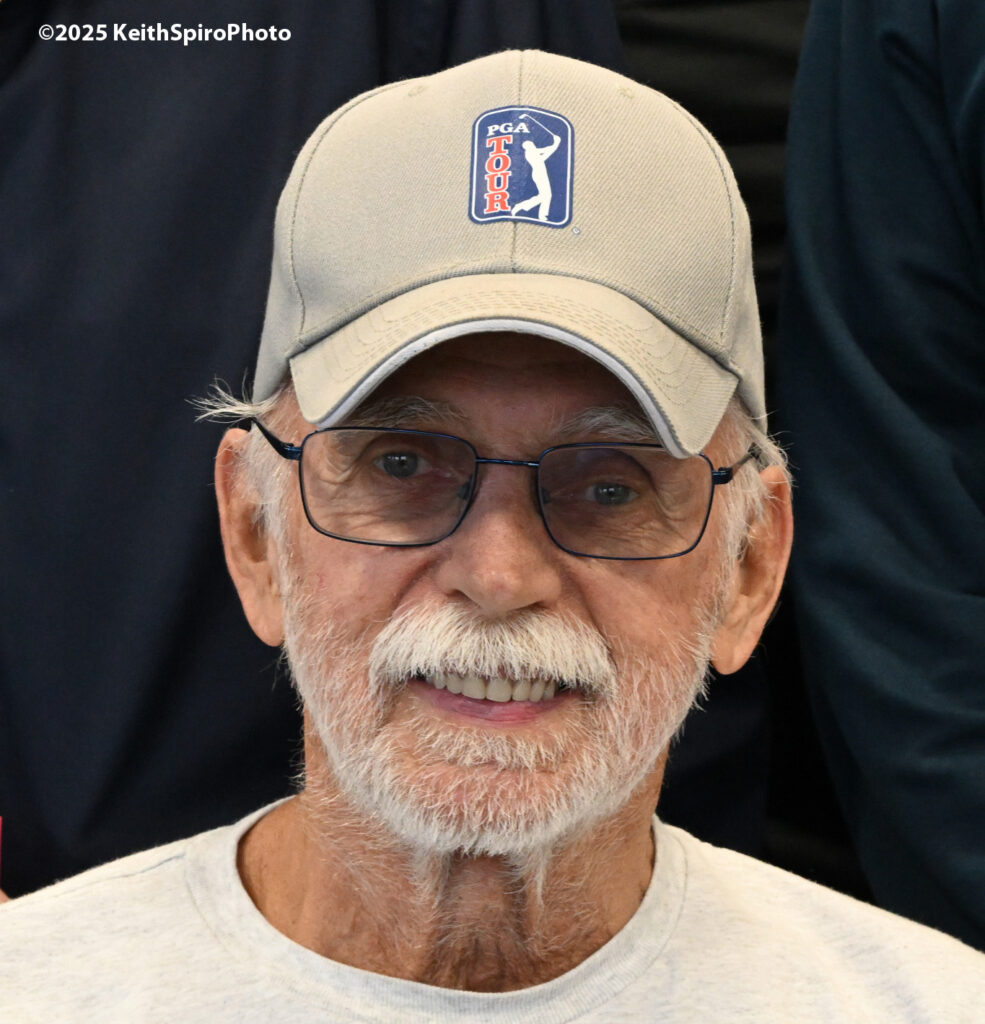
Ted Menswar Jr. is a life-long resident of the Queen City and a retired member of the English Department of Memorial High School who has been involved in local sports for 70 years as a player, a coach, a mentor and a fan. He can be reached at tedmenswar@outlook.com