
MANCHESTER, NH – Full disclosure: I am a baseball purist.
In other words, I believe baseball should be played as close as possible to the way that it was designed in 1846 when the first recorded game at the Elysian Fields in Hoboken, New Jersey, took place.
As a purist, I don’t particularly care for many of the rule changes in the MLB that have been enacted lately. While I understand why the pitch clock was instituted1, the pace of play never bothered me. In fact, one of the things I love about the sport is the fact that it is untimed.
I also like the fact that baseball is a quieter sport with its pastoral rhythms that force players and fans alike to navigate the pauses between pitches and action.
So when I first saw the segment about the Savannah Bananas on “60 Minutes”—years after the first official Banana Ball game was played at Grayson Stadium in Savannah, Georgia, in 2020—it is fair to say I was dubious, and that is probably putting it gently.
My initial assumption was that Banana Ball wasn’t a sport at all, rather a performance under the cloak of an athletic contest with a bunch of dancing, skits, tricks, flamboyant costumes and other sundry distractions to mollify fans who don’t have the attention spans for baseball.
The Savannah Banana’s founder and the inventor of Banana Ball, Jesse Cole, a native of Scituate, Mass., saw it differently. “We were delivering the baseball product people had always wanted,” he wrote in a 2023 piece for Esquire titled “The Improbable Story of How the Savannah Bananas Changed Baseball.”
So when Banana Ball pulled into Manchester for three sold-out nights at Delta Dental Stadium, hosted by the New Hampshire Fisher Cats, and I was offered the opportunity to cover a game, I decided to reserve my initial presumptions and experience it for myself.
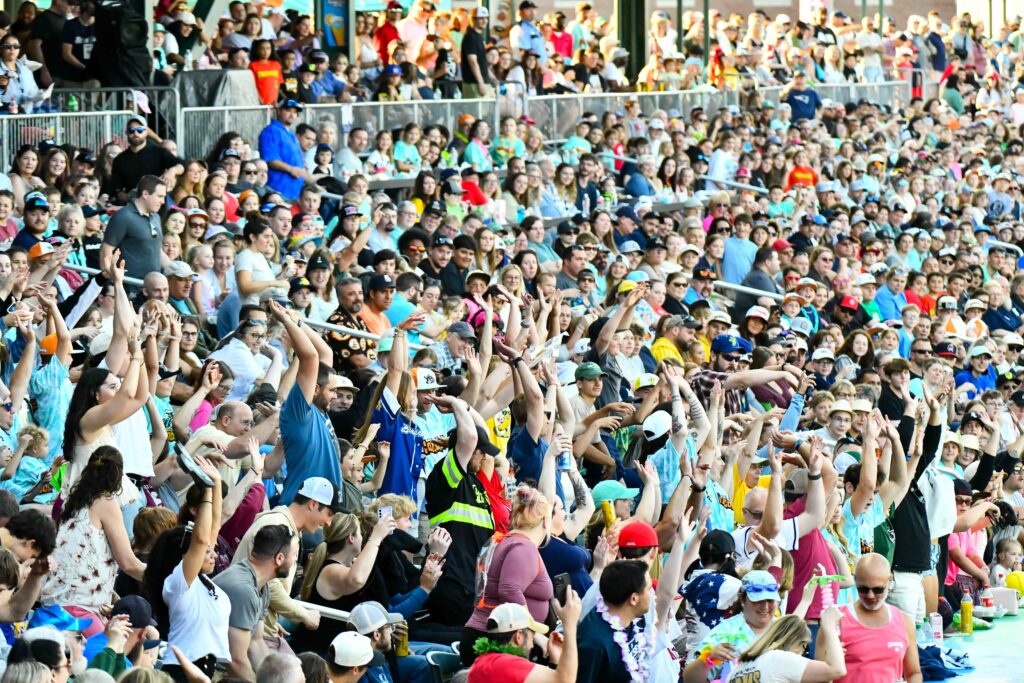
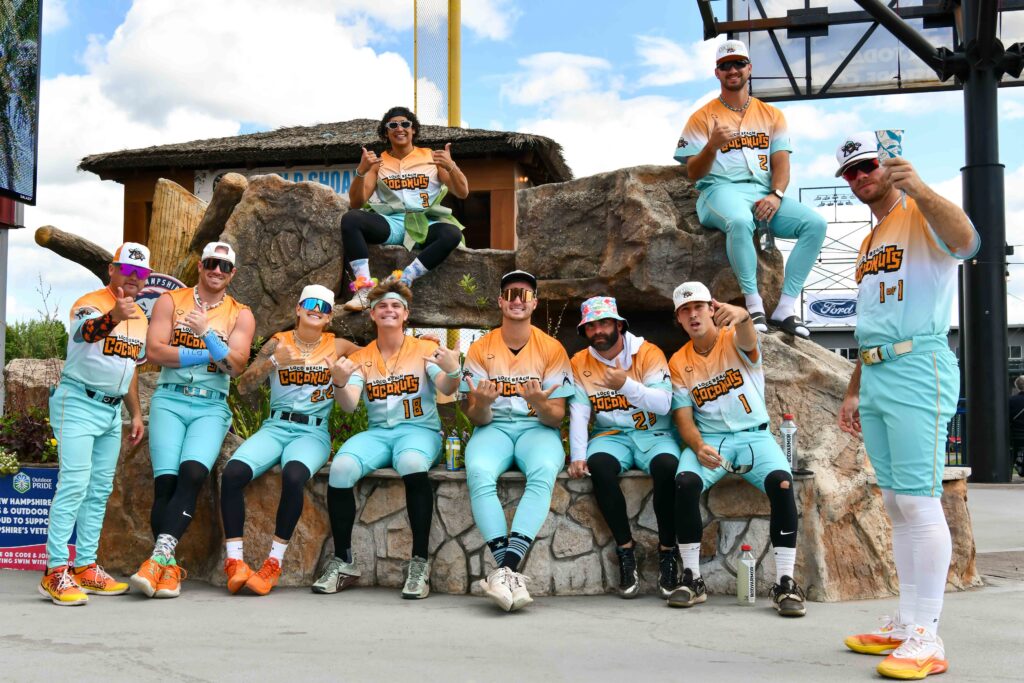
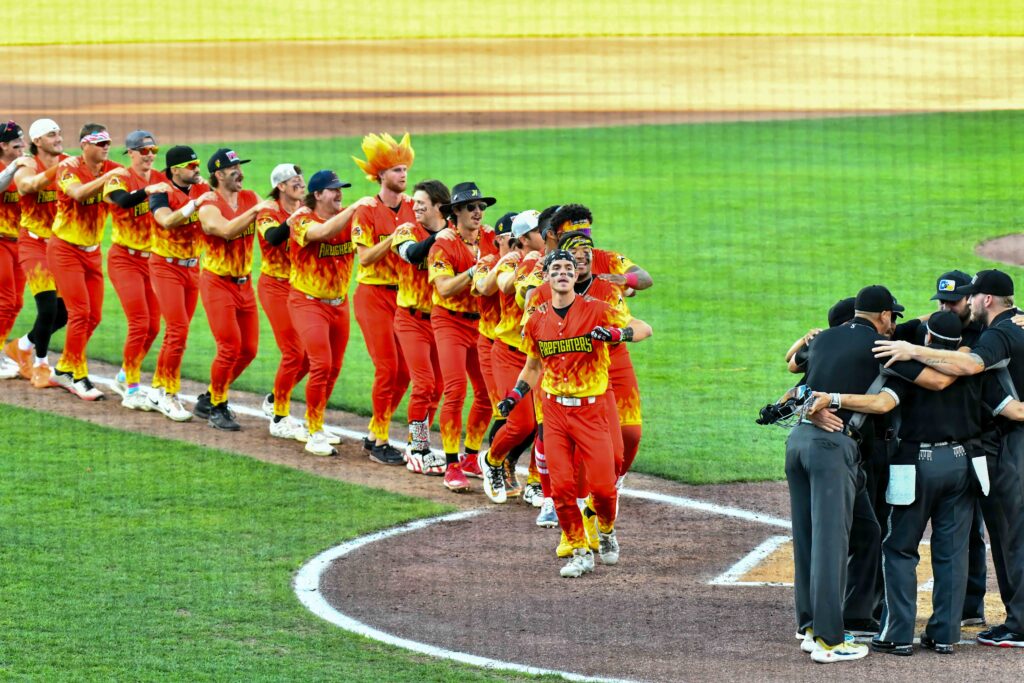
From June 18-20, fans packed the stadium to watch The Firefighters take on the Loco Beach Coconuts, two of the six teams that compete in the Banana Ball Championship League. In the three nights, 21,600 fans attended, which was an unprecedented number of ticket sales, according to sources with the Fisher Cats.
On Saturday, June 20, I attended the rubber match of the three-game series, keeping an open mind and trying to understand this phenomenon.
For starters, I wanted to understand the rules of the game, and the things that made it different from traditional baseball.
“It is a completely different sport,” said Matt Taddei, who works in media relations for Banana Ball.
Before you can understand the game, you need to understand the 11 Rules of Banana Ball that structure the sport, all of which were designed to make the game more fan-friendly and interactive, while addressing what some perceive as baseball’s interminable pace.
For example, there are no mound visits, bunting, walks or stepping out of the batter’s box in Banana Ball. Also, each game is timed and strictly limited to two hours. A new inning cannot begin after the one hour and 50 minute mark.
Additionally, Banana Ball really builds on a “fans-first” approach, appealing to children and adults who might not want to sit through nine innings of a four-hour baseball game.
In Banana Ball, for example, fans can make outs by catching foul balls. Then there is the Fan Challenge Rule, where one fan is chosen before each game to represent the crowd in challenging a call on the field. On Saturday night, there was a belly flop competition between two men rocking Dad-bods and jumping into a kiddie pool on the field to earn the honor of being the representative, with the crowd choosing based on applause.
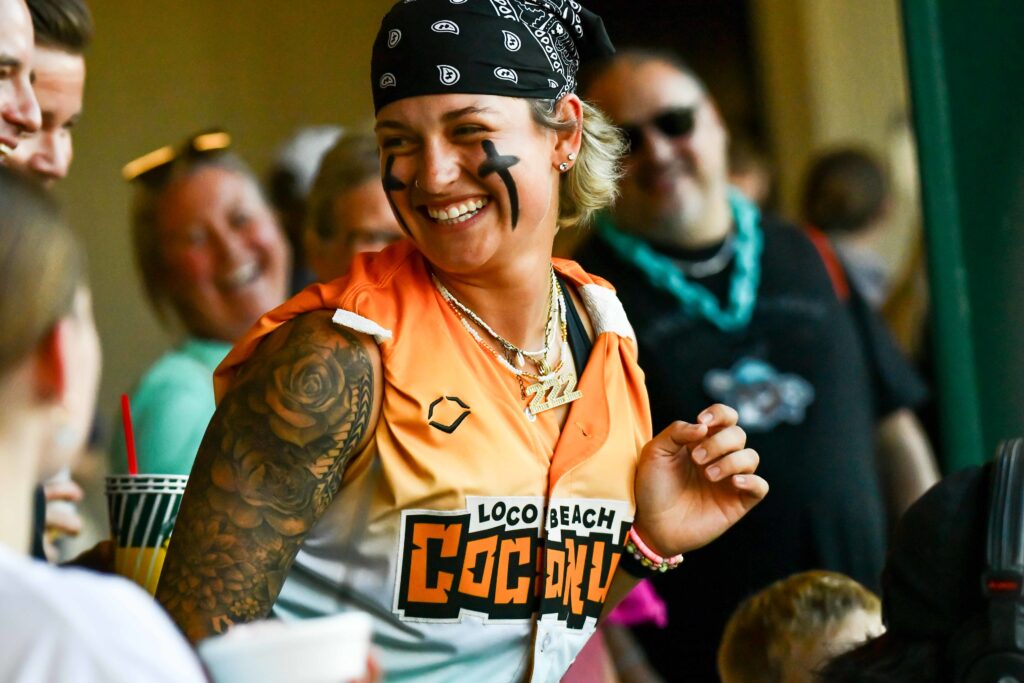
There are also plenty of on-field performances between innings and during the game where the players engage in choreographed dances on the baselines or around home plate.
But, I wondered, who are these players? Are they athletes or performers? How does one become a Banana Ball player?
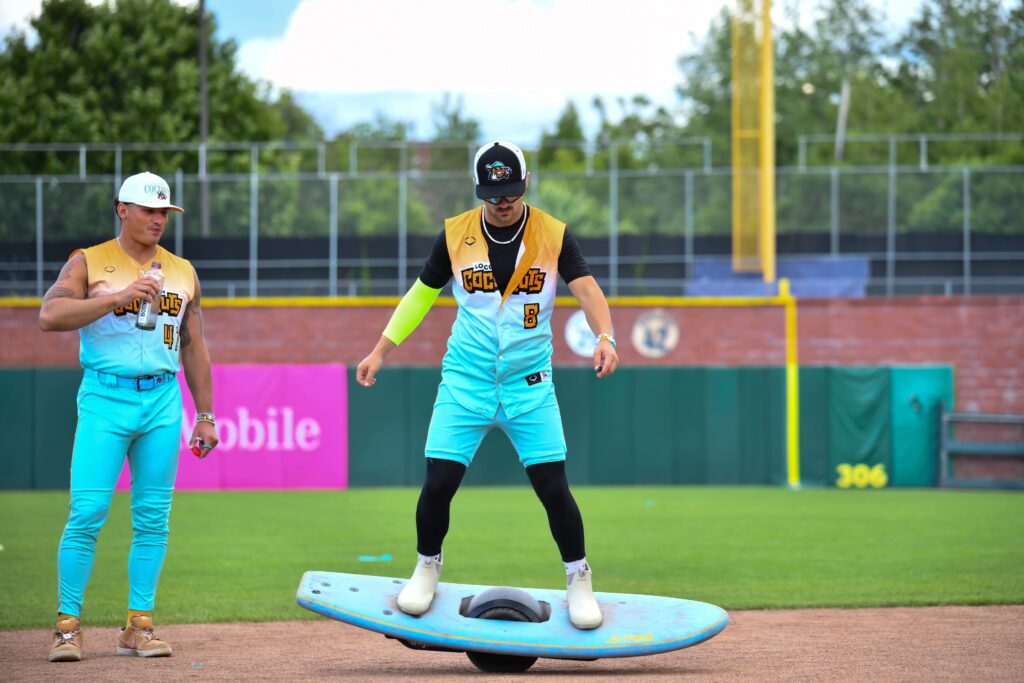
“These are not singers and dancers. They’re professional athletes, and they’re no joke,” said Taddei. “But they have big personalities, and they’re authentically themselves.”
In fact, most of the players have played either minor league or Division I college baseball. A handful of former MLB players have shown up as guest players, including the former Red Sox Jake Peavy, Johnny Damon and Jonathan Papelbon.
Currently, former Red Sox Gold Glove centerfielder Jackie Bradley Jr. plays for the Indianapolis Clowns.
Photos gallery from the weekend Banana Ball festivities by Stacy Harrison
Click photo to enlarge.
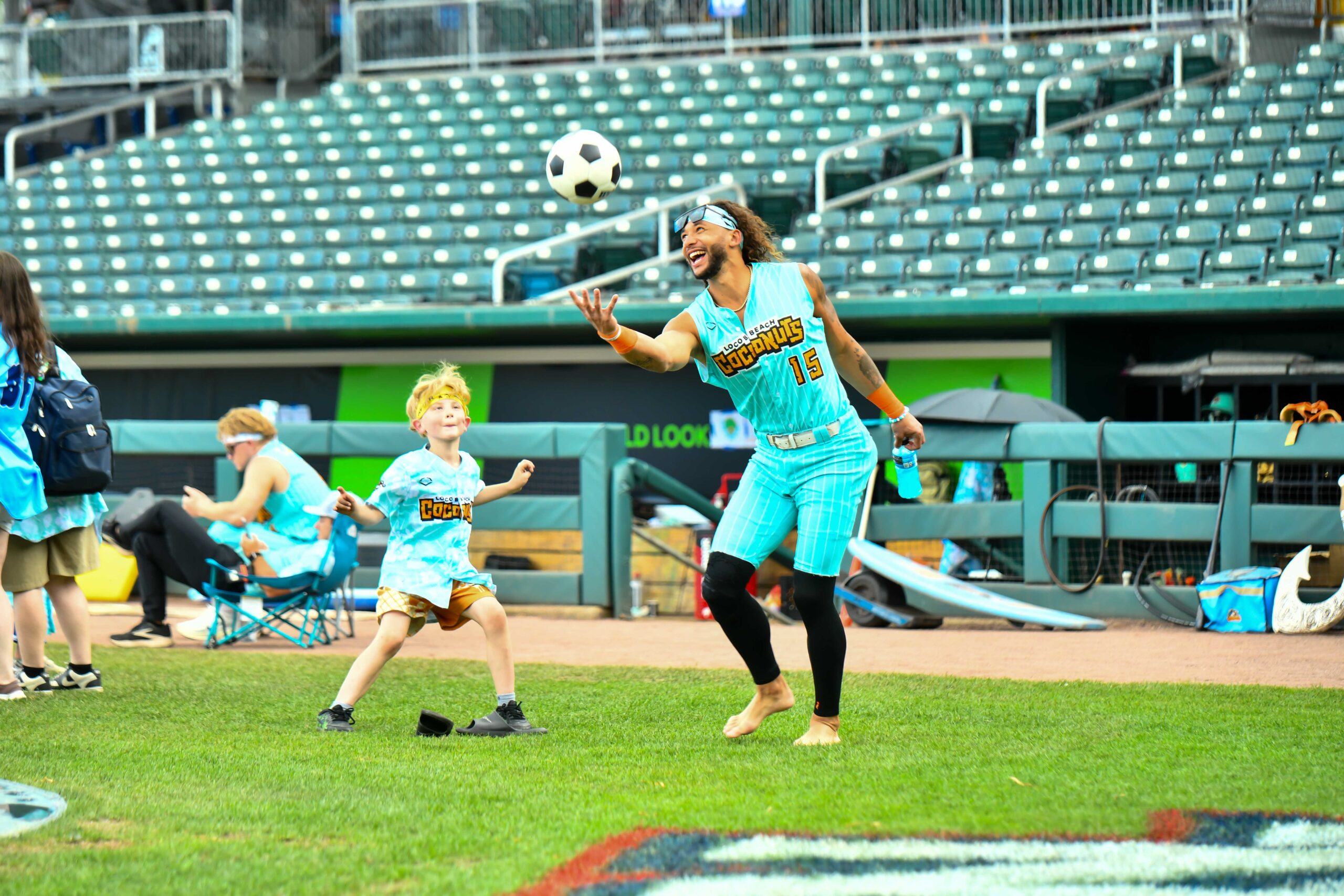
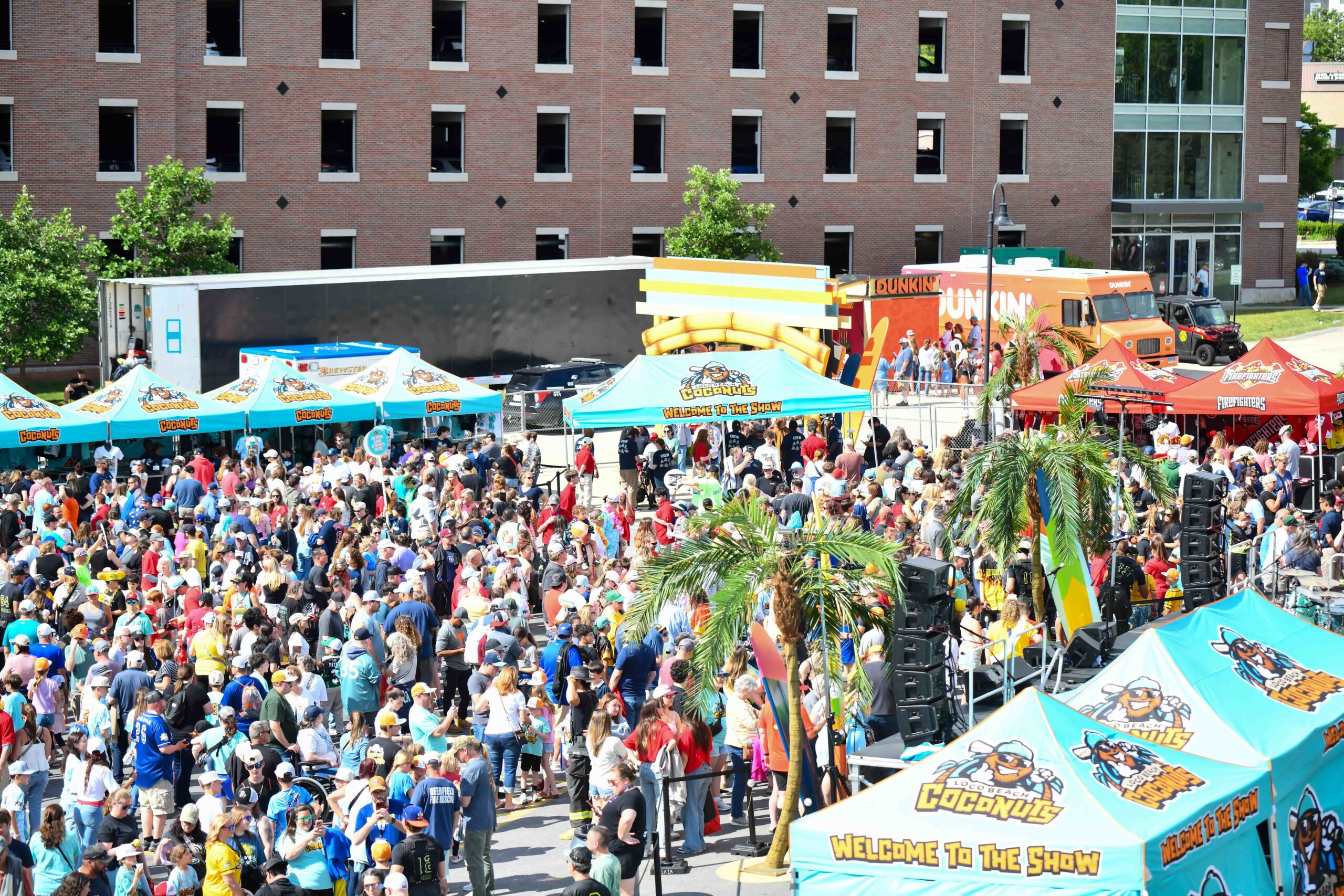
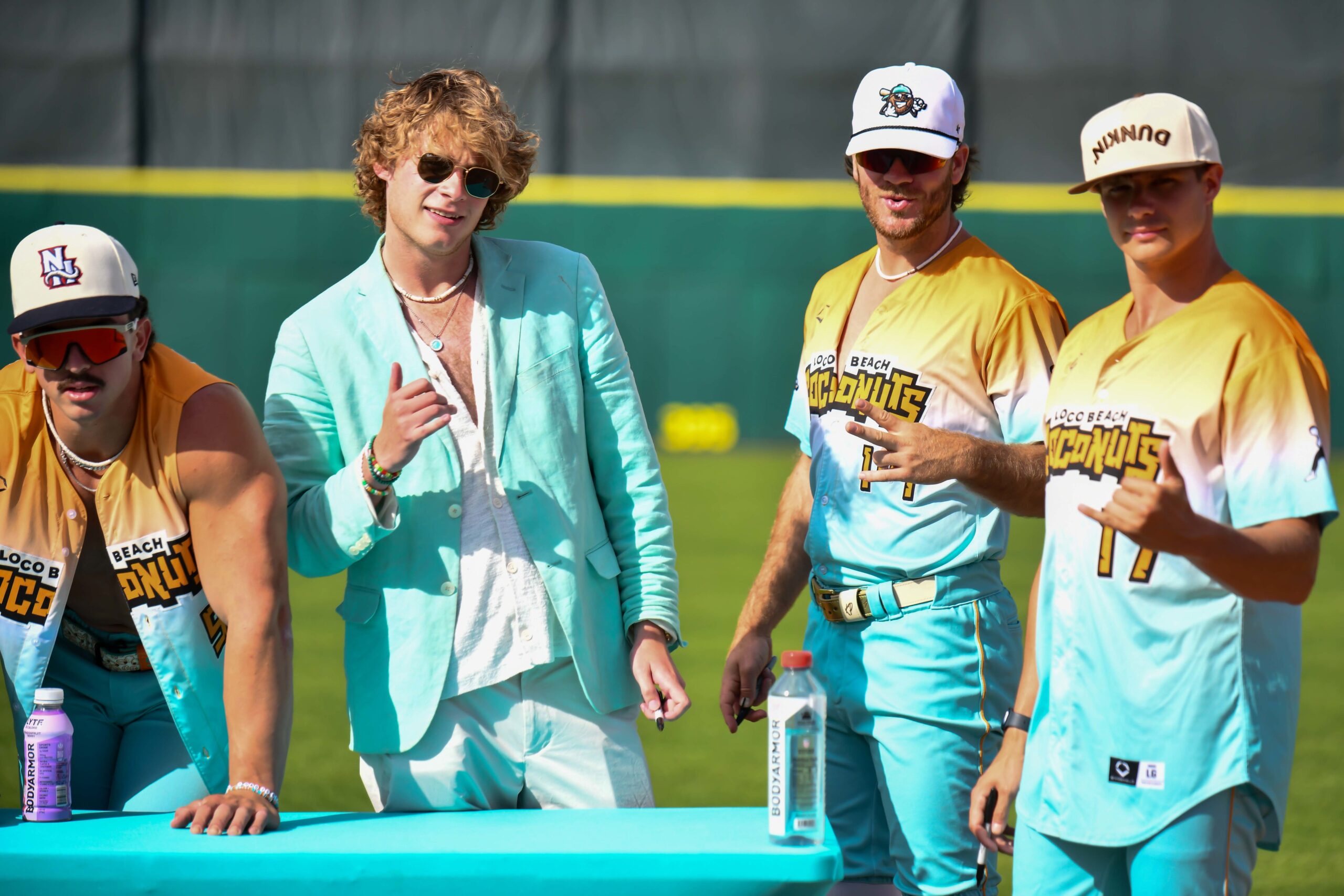
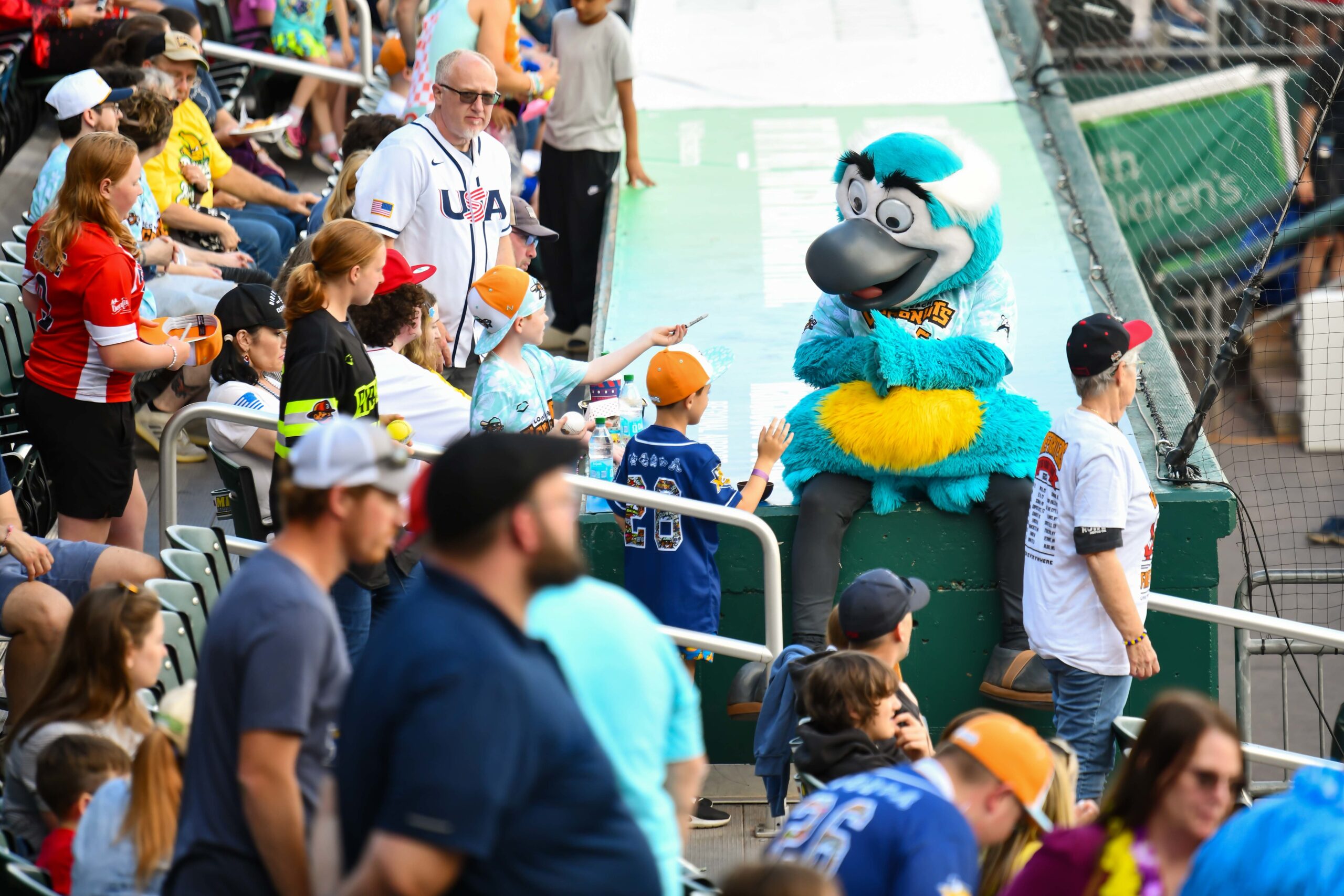
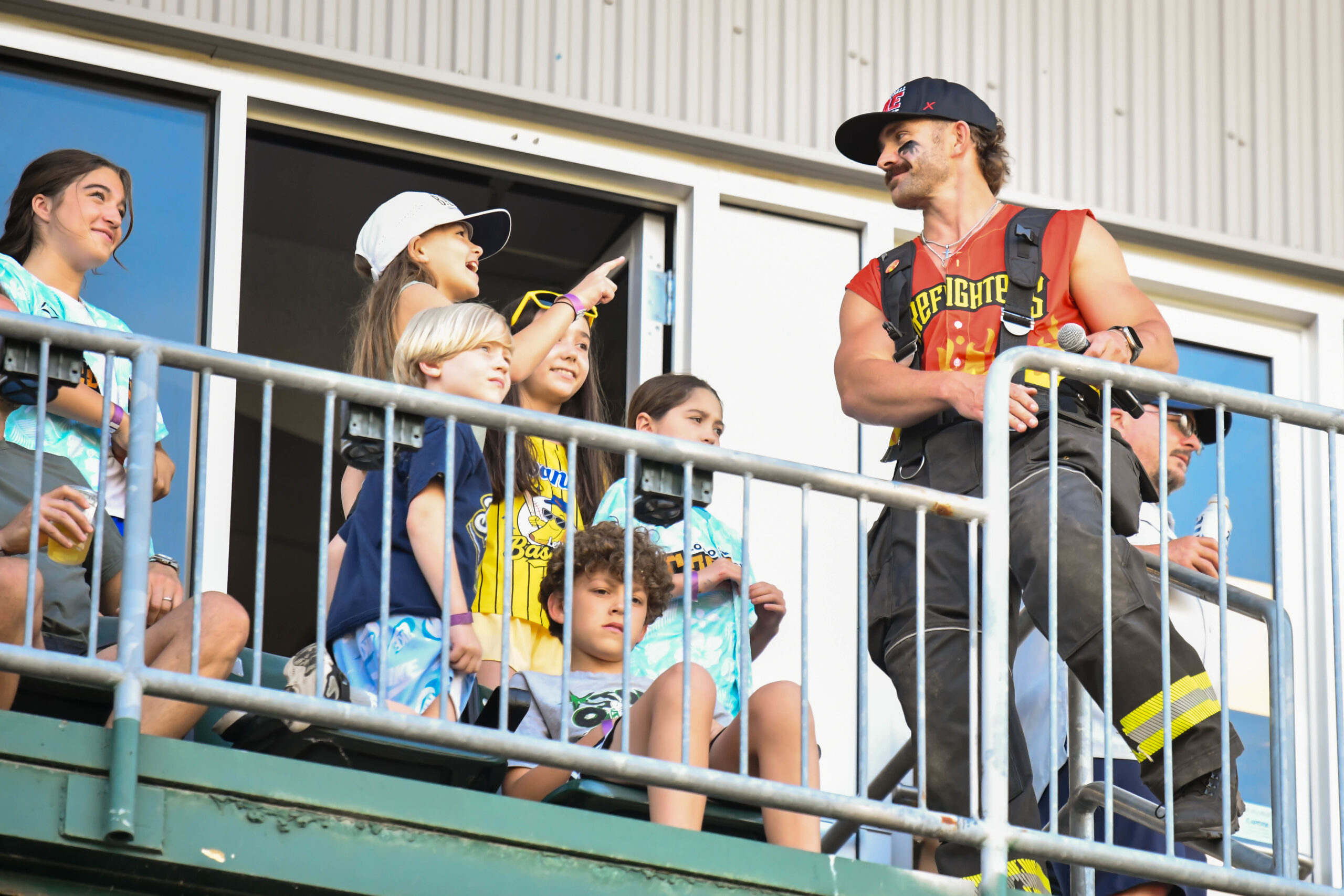
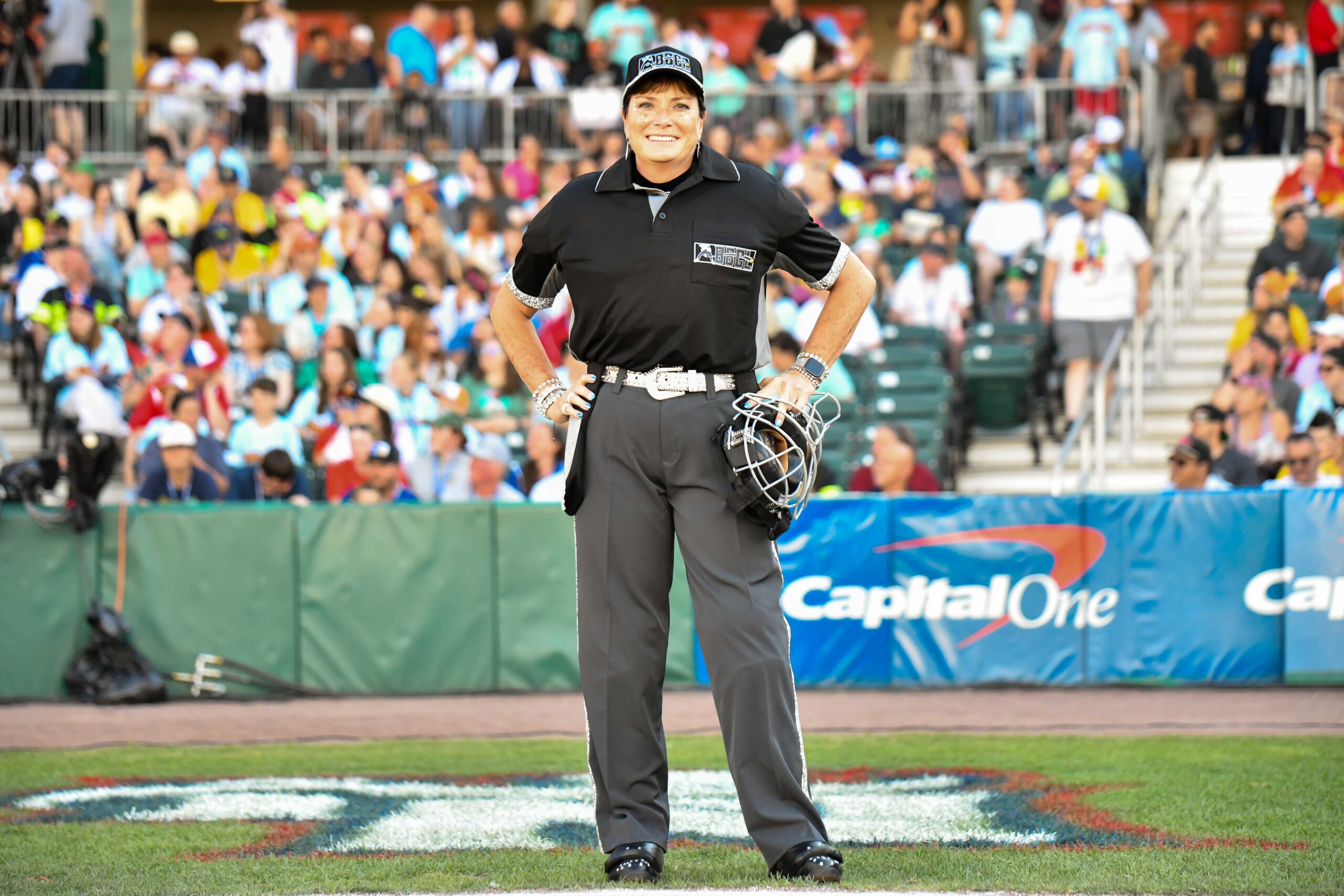
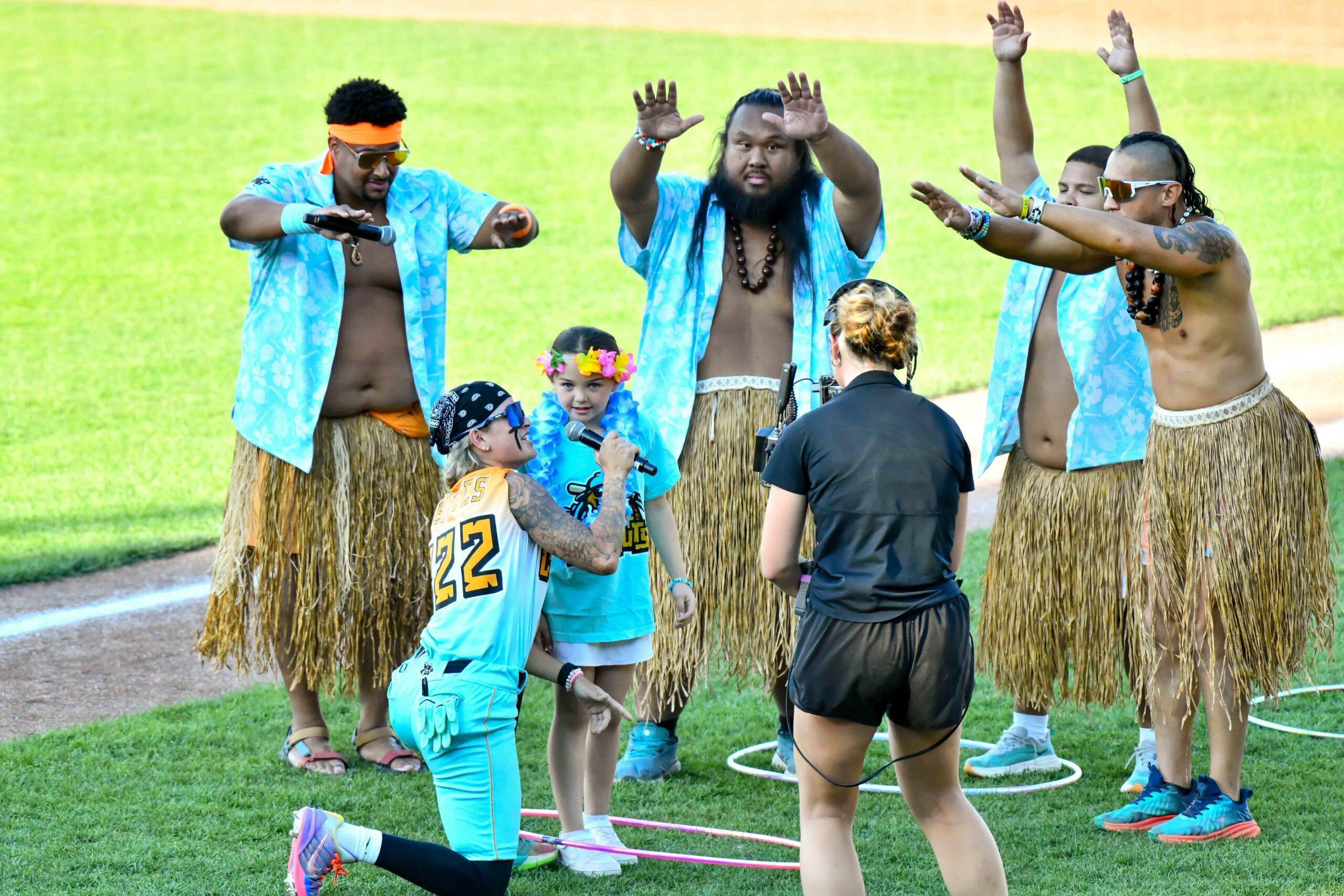
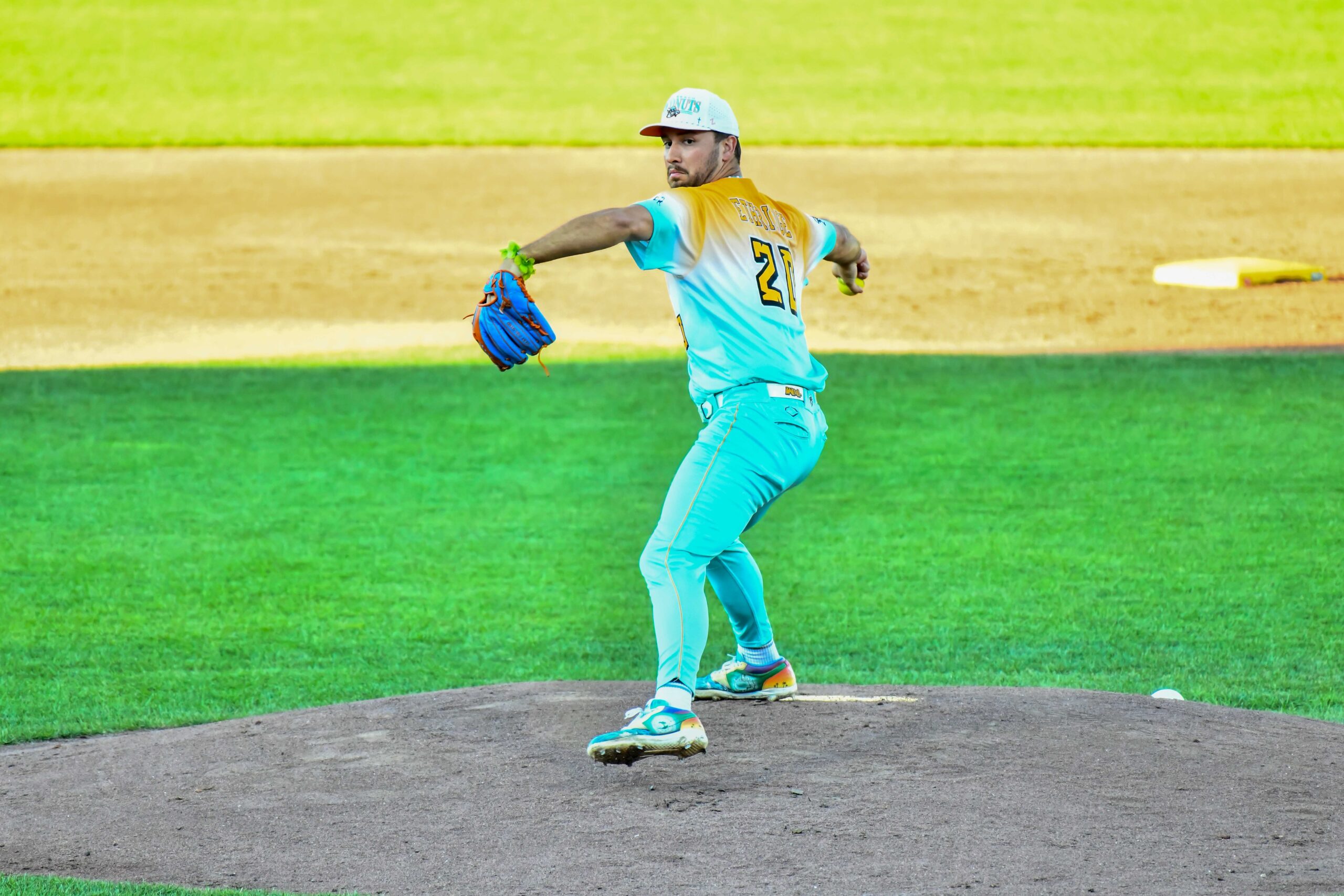
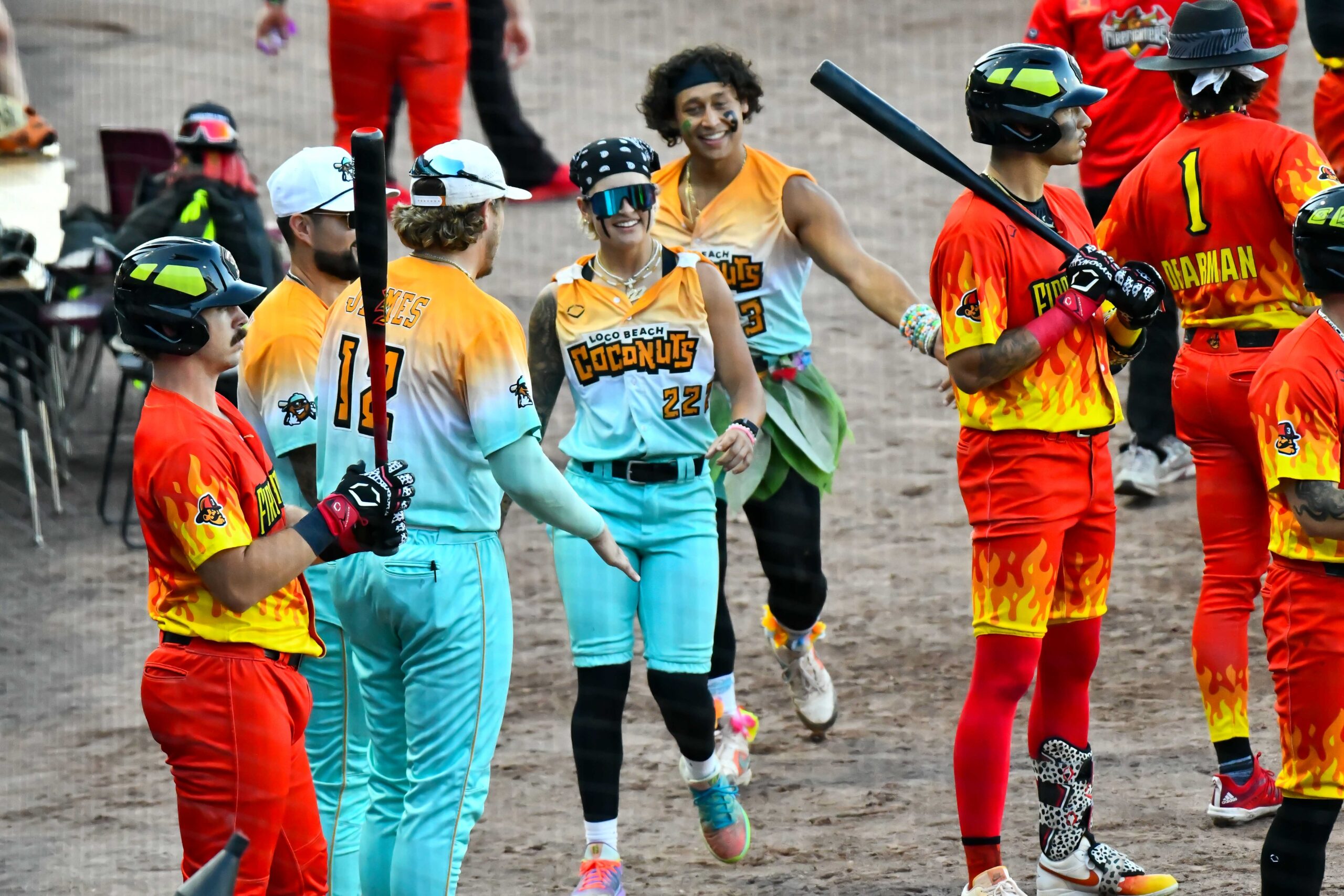
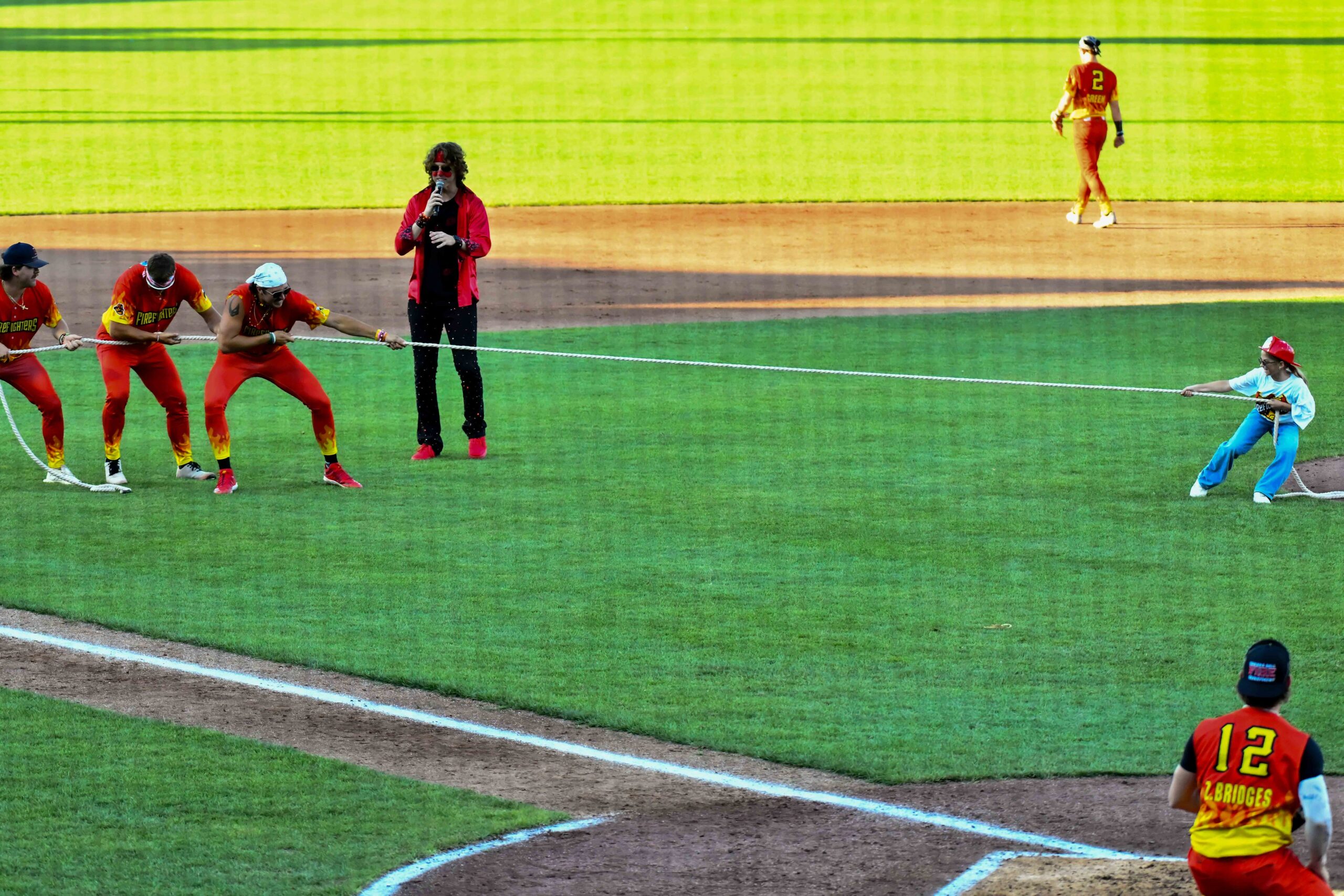
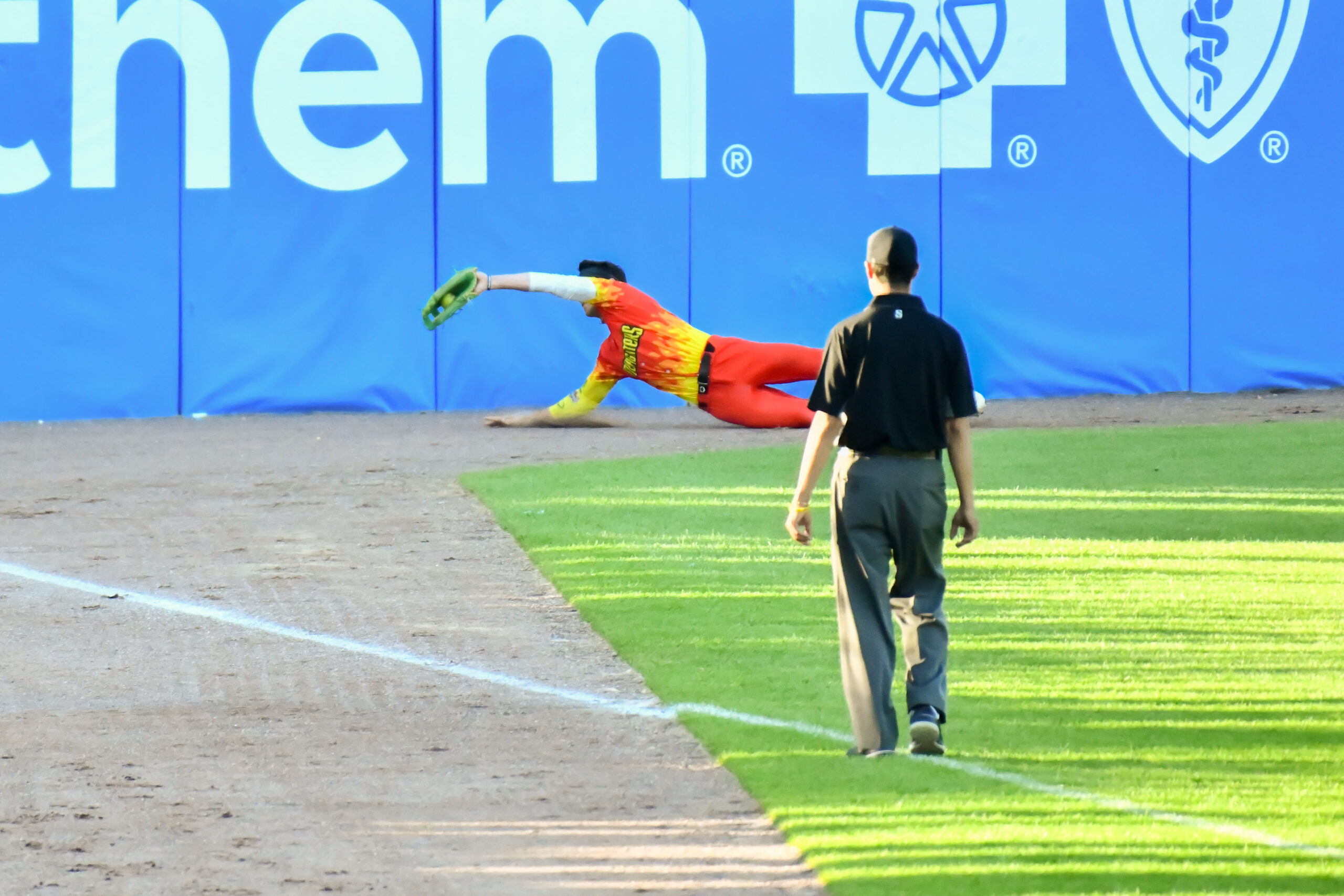
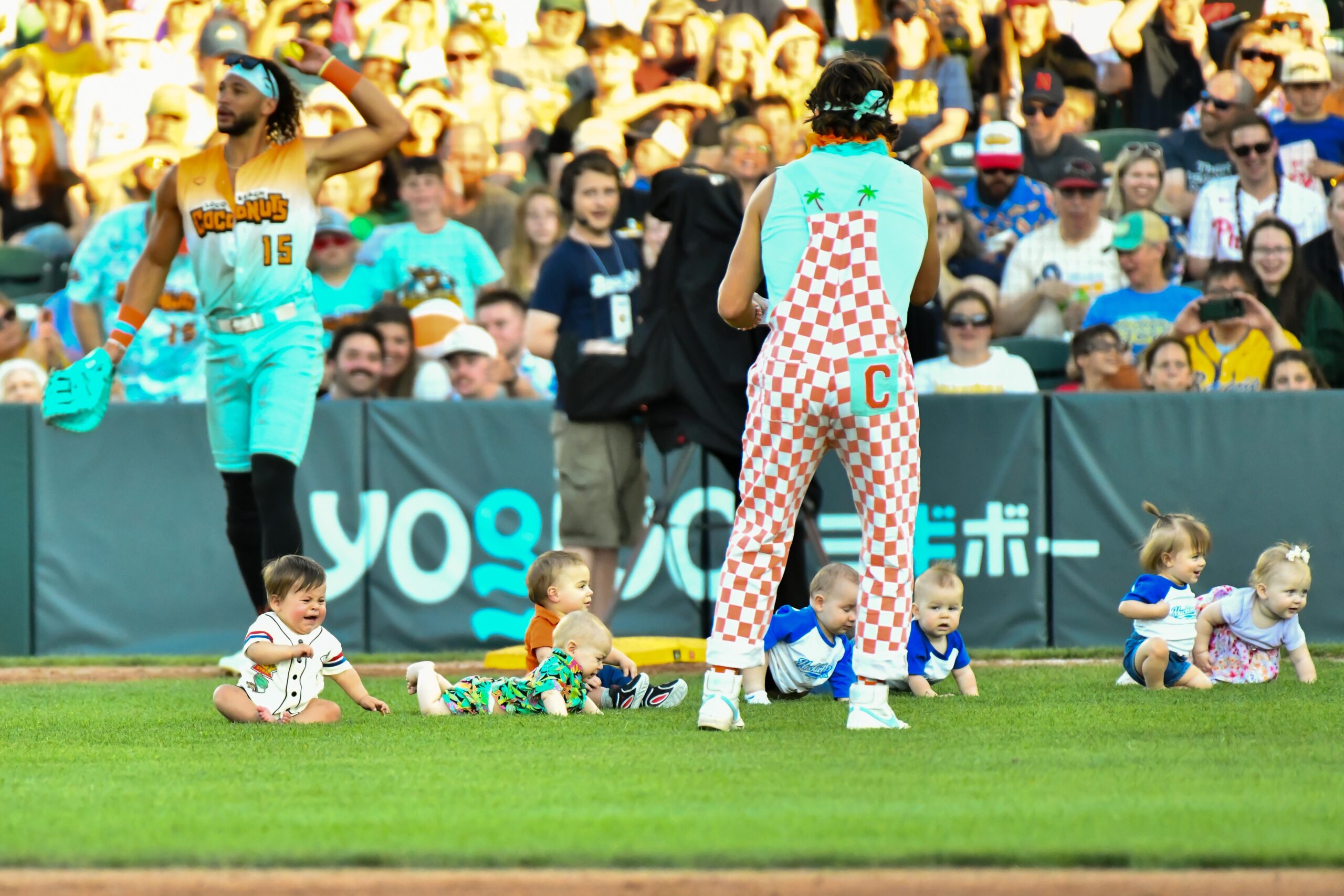
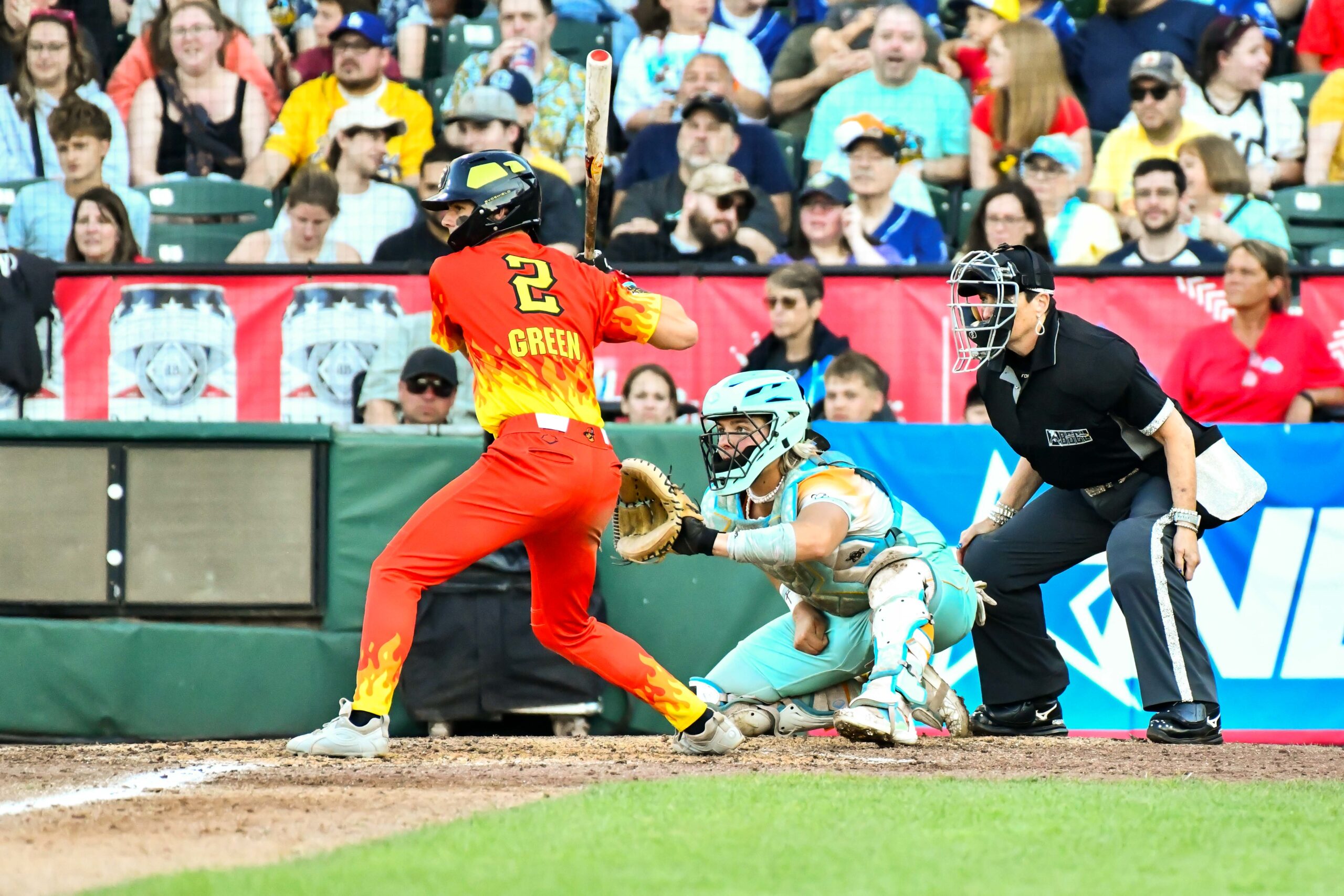
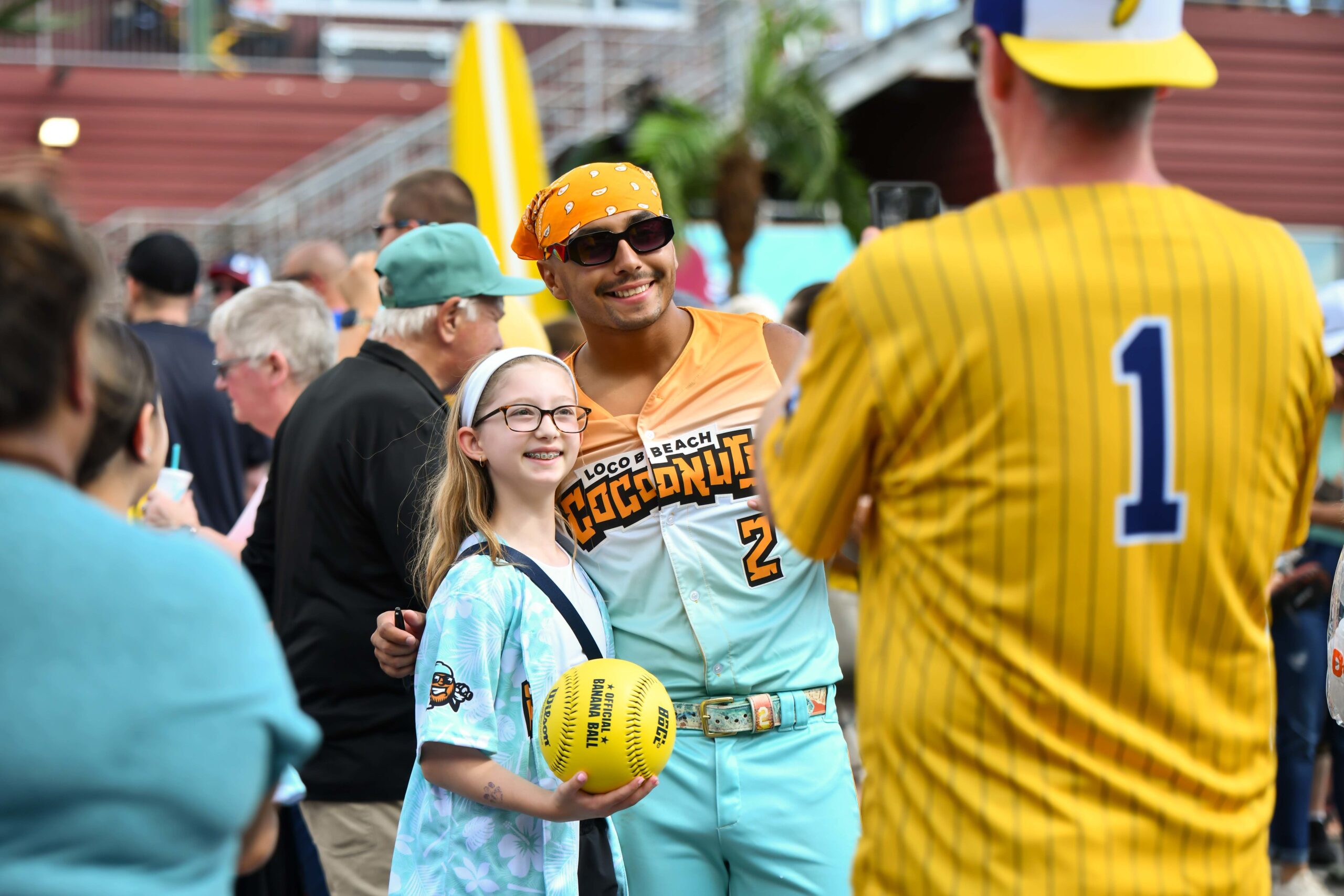
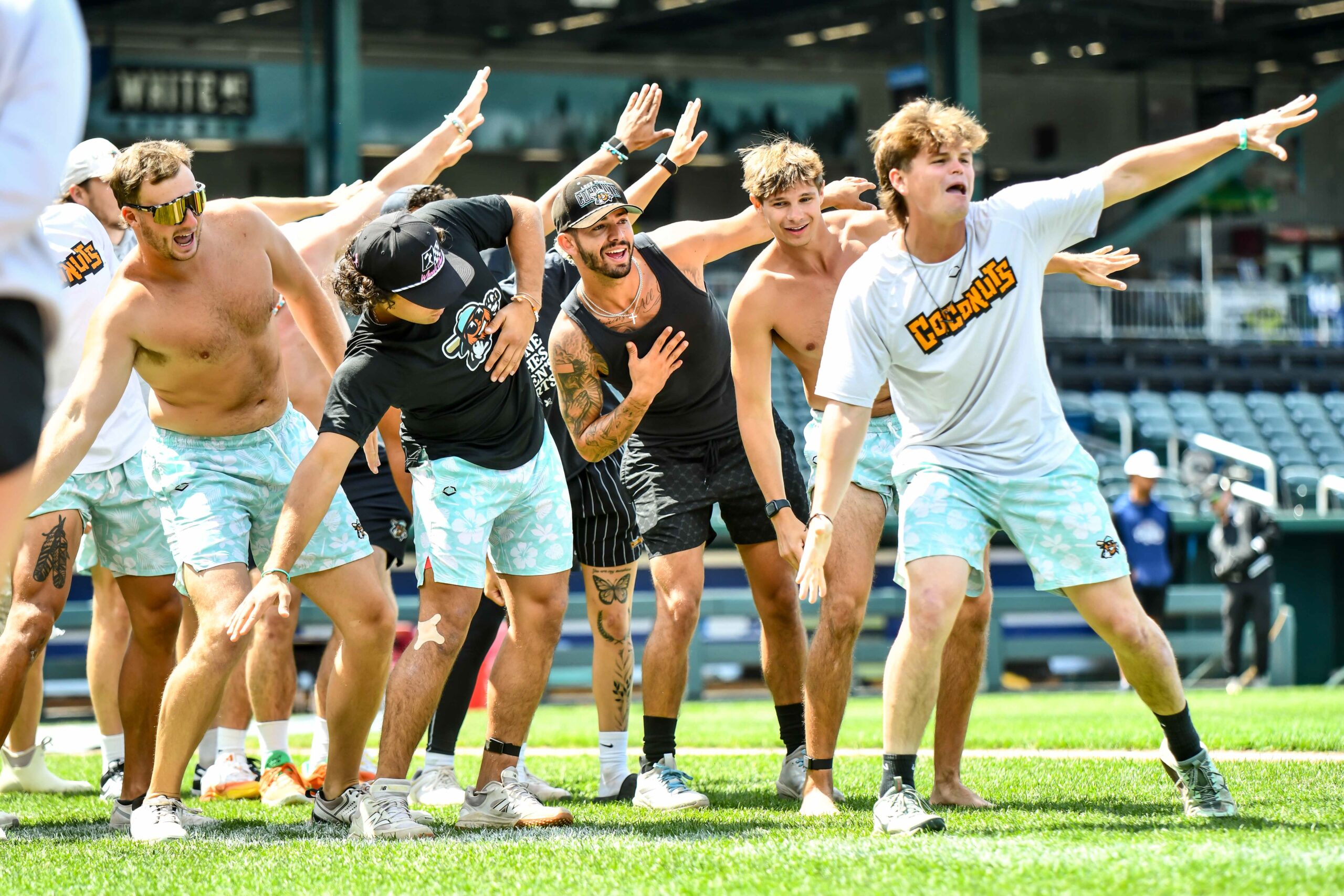
Banana Ball is also scored differently, where the team who wins the inning wins a point, meaning if the visiting team doesn’t score in the top half of any inning, and the home scores a run, they move on to the next inning. The exception is the ninth inning where each run counts as a point, so comebacks are possible.
The Loco Beach Coconuts edged out The Firefighters 2-1 on Saturday night, taking the series, as the Banana Ball Championship pulled out of the Queen City for their next barnstorming destination.
For me, this old purist/curmudgeon, I enjoyed the game much more once I was able to see it separately from my beloved baseball, and I could see Banana Ball as just plain fun. And, besides, watching so many people come to Manchester and enjoying themselves at the ballpark where I spend parts of each summer made my small heart grow three sizes.
But will the game ever replace baseball for me? Well, that’s just bananas.
- Most baseball fans can remember waiting for Josh Beckett to bake a souffle between pitches. ↩︎
Reach Nathan Graziano at ngrazio5@yahoo.com