
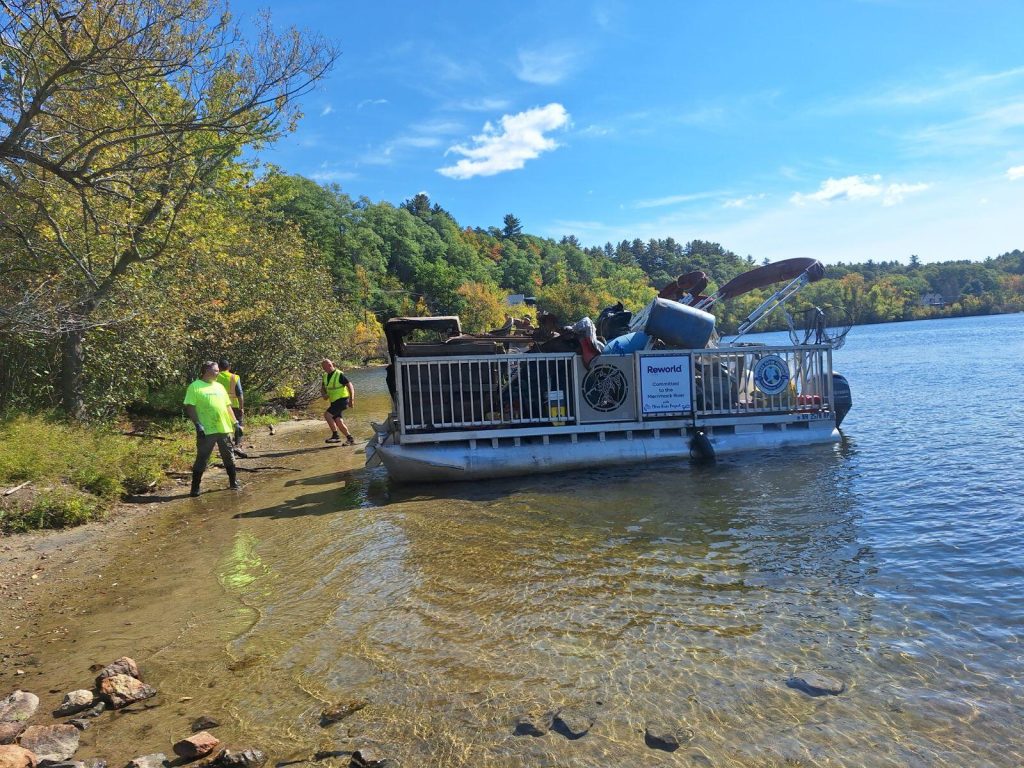

MANCHESTER, NH – Recently, I spent a day on the Merrimack River right here in Manchester with Rocky Morrison, a riverkeeper whose life’s purpose is to keep it clean and protect it from further pollution.
The man and the river were meant for each other. Barring ‘ice in’ he removes garbage daily, year round, including weekends- furniture, appliances, toys, hundreds of tires, bicycles and old cars, phone booths, water soaked clothing, shopping carts and thousands of plastic bags along with used needles and other refuse. The booms he installs along the shoreline collect trash which is then loaded by cranes onto his custom made pontoon boats made from recycled material and outfitted with ropes, nets and hooks for easier collection and then transported to his headquarters in Methuen, Mass., to be inventoried, sorted and recycled with the help of school groups, businesses and neighborhood watch teams, all volunteers.
We enjoyed beautiful autumnal weather with a splendid display of fall foliage and were accompanied by a sturdy team of volunteers from the Watts Water Company decked out in waders and wind breakers.
Rocky is a born leader – gregarious, friendly, personable and motivating. Goading the ‘boys’ to compete, ‘whoever collects the most garbage wins’, he’d say teasingly and we spent the next three hours delighting in his easy laughter and encouragement. The morning’s worth of tonnage collected, often dumped from shoreline encampments or thrown over bridges, was both rewarding and abhorrent.
For over the 21 years Rocky has been hauling water waste. New Hampshire municipalities have contracted with him to clean out streams, lakes and ponds. The Merrimack is the primary drinking source for over 600,000 people. Though Manchester residents have become more aware of the harm resulting from its pollution, removal of trash dumped decades ago is ongoing. Education is key. Plastics in the river break down into smaller particles called microplastics that contain dangerous amounts of toxics, especially PFAS, otherwise known as ‘forever chemicals’ that compromise our endocrine system.
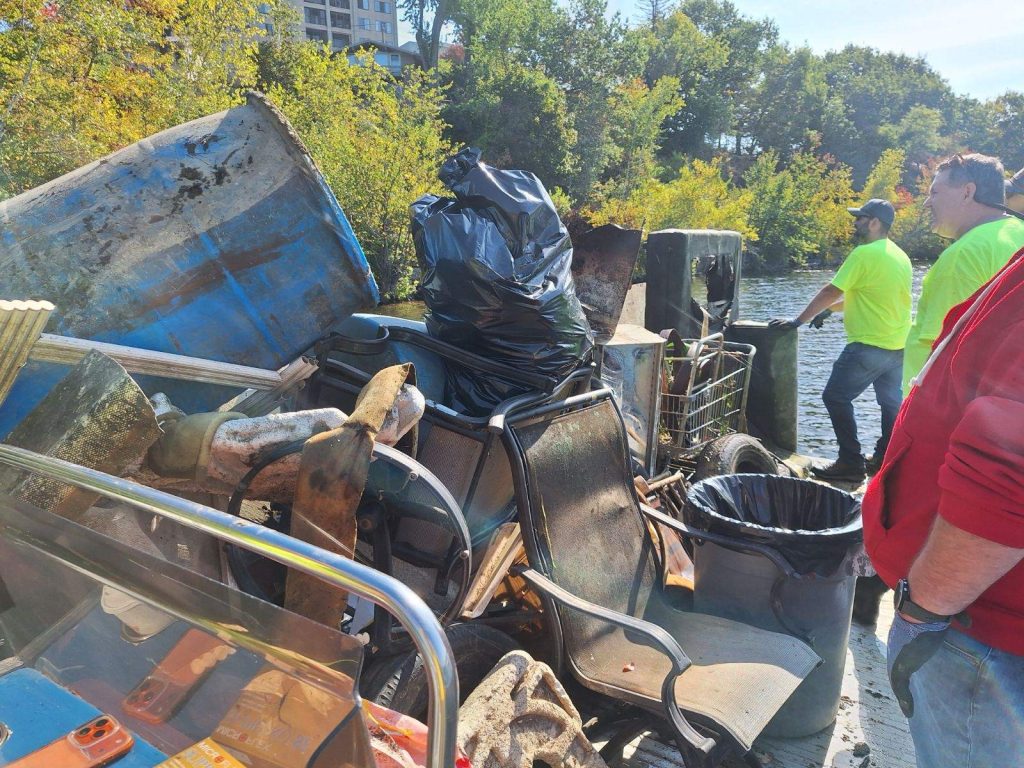
Our crew returns to shore, weary but satisfied with their haul. Tomorrow a group will tally, sort and recycle tires, scrap metal, plastic furniture and bags with a better understanding of what Rocky has known intuitively since boyhood- the river is a living ecosystem that has as much of a right to thrive as we do. In fact, human survival depends on healthy ecosystems such that protection of nature’s rights, in turn, advances human rights and well being.
A new movement is gaining worldwide recognition. Called “Rights of Nature” it ‘describes inherent rights as associated with ecosystems and species, similar to the concept of fundamental human rights The rights of nature concept challenges 20th century laws as grounded in a flawed frame of nature as ‘resource’ to be owned, used and degraded’. Proponents argue that laws grounded in rights of nature direct humanity to act consistent with the theory that humans and the natural world are intimately interconnected.
Simply put, we need to keep the Merrimack alive because we can’t live without it.
Fish, bald eagles and so many other species who have returned in abundance to a cleaner river are forever grateful to Rocky, his helpers and their mission.
Ann Podlipny of Chester is a member of the NH Network Plastics Working Group. She can be reached at apodlipny57@comcast.net