
Story Produced by the Concord Monitor, a Member of

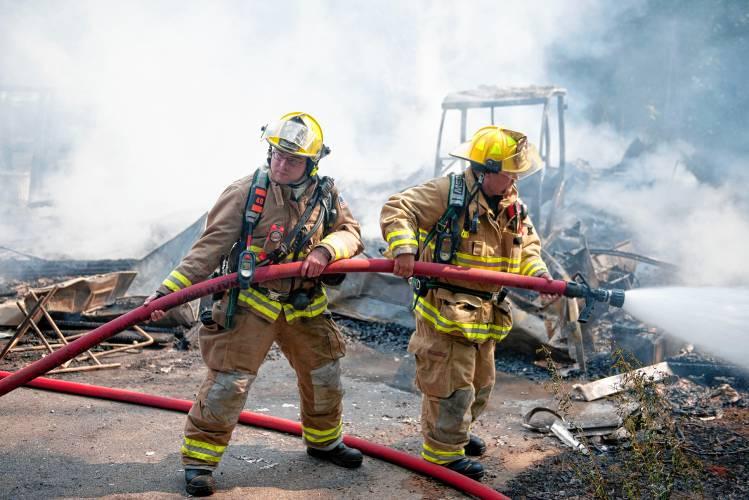
CONCORD, NH – Researchers are requesting the participation of New Hampshire firefighters, especially volunteer firefighters, in a huge study about the health risks of toxins, smoke and other carcinogens encountered on the job.
“We don’t fully understand firefighters’ risk of cancer, the specific types of cancers that are elevated, how it varies among all the different types of firefighter and what factors affect that risk,” said Kenny Fent, PhD, leader of the National Firefighter Registry for Cancer.
The online registry asks firefighters of all types to log in and give information about their work so it can be correlated with cancer cases.
“It can be any type of firefighter, whether active or retired; structural, wildland; with or without cancer; experienced or new, they’re all eligible,” Fent said.
As of this month 42,729 firefighters have registered for the study, but only a bit over 200 participants are from New Hampshire, and the National Institute for Occupational Safety and Health is trying to get more interest. The state does not have any “gold-helmet departments,” those that have gotten at least 50% of their members to register.
This shortfall may be in part because the majority of New Hampshire fire departments are staffed with on-call volunteers. “They’re a little bit less organized, a little harder to reach. And a lot of volunteers think, ‘Is this for us, or just for career firefighters?’” said Fent.
Getting volunteers to sign up is particularly important, he said, because studies that have linked firefighting to bladder cancer and other potential cancers have used data from paid fire departments in large cities.
“We know less about [volunteers’] cancer risk because they haven’t been included in previous studies,” he said.
There are a number of reasons why firefighters face an elevated risk of cancers: the smoke they breathe in and that comes into contact with their skin, the toxins that are released when a building burns, the fumes they inhale from idling fire equipment and the sleep deprivation caused by the erratic nature of the job, especially for on-call volunteers.
The International Agency for Research on Cancer in 2022 classified firefighting as a known human carcinogen with direct evidence of increased bladder cancer and limited evidence for five other cancers.
To learn more, go to the Centers for Disease Control website. Firefighters can register for the study at National Firefighter Registry.

These articles are being shared by partners in the Granite State News Collaborative. Don’t just read this. Share it with one person who doesn’t usually follow local news — that’s how we make an impact. For more information, visit collaborativenh.org.