
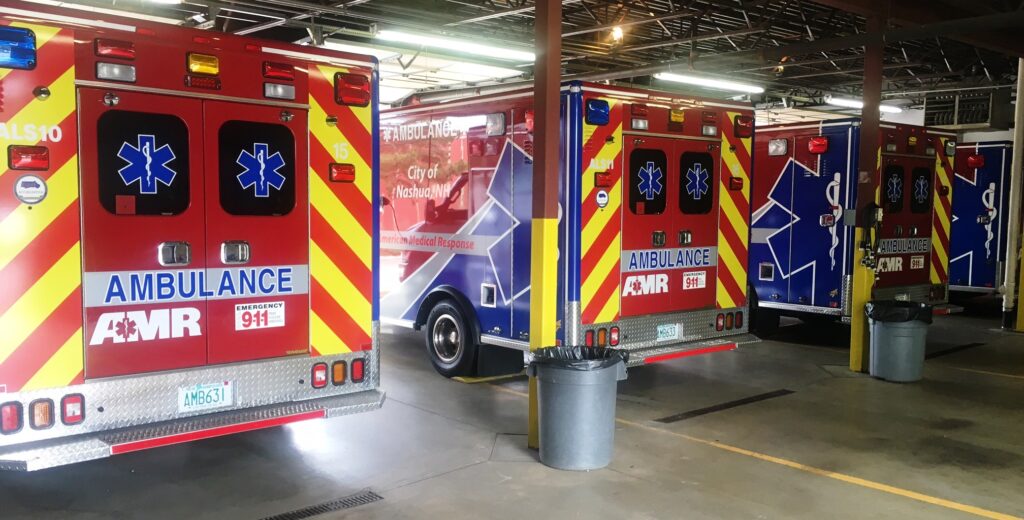
American Medical Response shares flu season guidance as illnesses and hospitalizations rise nationwide.
MANCHESTER, NH – American Medical Response (AMR) Manchester, set a new 24-hour transport record in Manchester on Tuesday, responding to 70 patients as responders see flu-like illnesses continue to surge. The increase aligns with widespread circulation of Influenza A (H3N2), a strain historically associated with higher transmission rates and more severe illness, particularly among older adults and individuals with underlying health conditions. National surveillance data show this variant is contributing to millions of reported cases and a significant rise in hospitalizations across the United States.
“Most cases of influenza can be effectively managed at home through rest, adequate hydration, and the use of over-the-counter medications. However, given the CDC’s data indicating a notable increase in hospitalizations—predominantly among individuals over 65 years of age and children under four—it is crucial for the community to remain vigilant,” stated Associate Chief Medical Officer Dr. Gerad Troutman. “Prompt medical attention should be sought if symptoms become severe or escalate rapidly, particularly for vulnerable populations.”
When to Seek Emergency Medical Attention
“If your symptoms are mild and stable, driving yourself to your doctor or an urgent care center may be suitable,” Dr. Troutman advises. “However, if symptoms are severe, worsening, or you are unsure about severity, calling 911 ensures you get immediate and appropriate help. Early intervention can make a significant difference in outcomes.”
- Difficulty breathing or shortness of breath
- Chest pain, pressure, or tightness that does not go away
- Sudden dizziness, confusion, inability to stay awake, or severe weakness
- Severe or persistent vomiting, especially if unable to keep fluids down
- Flu symptoms that improve but then return with a high fever or worsening cough
According to Dr. Troutman, “These warning signs can signal serious complications such as pneumonia, respiratory failure, or dehydration—delaying emergency care in these situations can quickly become life-threatening.” He emphasizes that Emergency Medical Services (EMS) personnel can begin critical treatment on the scene, provide oxygen or necessary medications, monitor vital signs, and alert hospital staff to prepare for your arrival.
When in doubt, do not hesitate to call 911. Trained dispatchers will guide you and help determine the safest and most effective response for your situation.
Steps to reduce the risk of severe flu illness
- Get vaccinated. Annual flu vaccination remains one of the most effective ways to reduce severe illness and hospitalization.
- Practice good hygiene. Wash hands frequently or use alcohol-based hand sanitizer.
- Cover coughs and sneezes. Help limit the spread of respiratory illness.
- Stay home when sick. Avoid work, school, and gatherings until symptoms improve and fever resolves.