
Before the Board of Mayor and Aldermen hold their April 7, 2026 meeting, they will also hold several committee meetings to review a variety of topics. Here is a look at a few of those topics the Aldermanic committees are set to review.
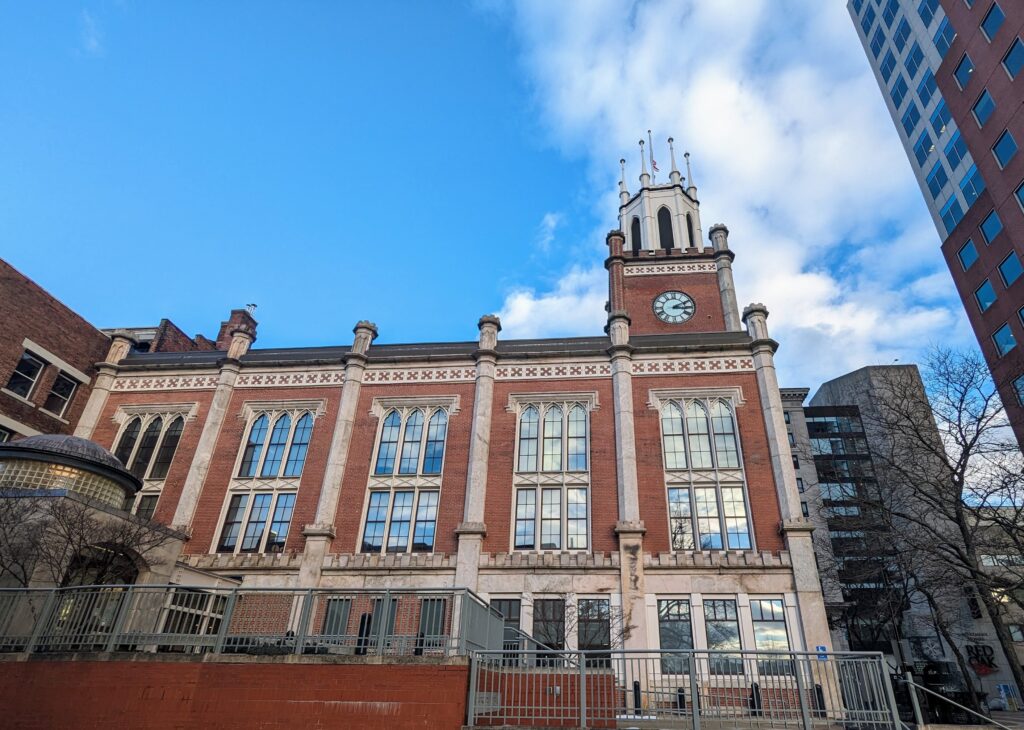
City Employee Tattoos
The Human Resources Committee received a communication updating the city’s dress code policy for city workers. Within the policy there is now a prohibition of visible tattoos that have what are considered to be inappropriate slogans as well as demeaning, discriminatory or profane images or messages that do not promote a safe and productive workplace environment. The update also recognizes tattoos as a form of self-expression and does not mention explicit boundaries between acceptable and unacceptable visible tattoos.
Clothing that is torn, frayed or overly revealing is now also prohibited.
These two new additions join three previously prohibited groups of clothing
- Items meant for non-work activities, such as athletic or sleep wear, unless authorized for a specific City or Department occasion or event.
- Items that include prominent advertising of non-City-related endeavors, unless authorized for a specific Department occasion or event.
- Items with references to, or innuendoes of, profanity, violence, vulgarity or any unlawful activity.
The Manchester School District addressed its last dress code policy update in 2025.
Who oversees shoveling the sidewalks?
Ode Way resident Troy Micklon has a proposal to clarify an age-old question: who is supposed to shovel a sidewalk after a snow storm?
According to Manchester City Ordinance Chapter 150.061, the answer for residential buildings is the owner of building adjacent to that sidewalk. However, according to New Hampshire Revised Statute Annotated Chapter 231:113, the answer to that question is the city or town where the sidewalk is located. The New Hampshire Supreme Court has also ruled that it is the responsibility of municipalities to clear sidewalks. First in the 1898 case State v. Jackman, which preceded the current state law’s creation in 1941. This principle of municipal responsibility was upheld in the 2009 New Hampshire Supreme Court case Tinker v. Tilton.
During the March 3, 2026 Board of Mayor and Aldermen Meeting public comment period, Micklon recommended that the word “sidewalks” in the city ordinance be replaced with the phrase “private sidewalks and walkways located on the property,” referring to the dwelling units referenced currently in that ordinance. That proposal will be before the Board of Mayor and Aldermen Committee on Public Safety, Health and Traffic (PSHT) on April 6.
In a letter to PSHT Chairman Norm Vincent, Manchester Planning and Community Development Director Jeff Belanger said that the title of Chapter 150, “Maintenance of Premises,” stating that the section already only applies to private property and adds that the Manchester Department of Public Works already clears sidewalks in the public-right-of-way. However, Belanger said that the wording from Micklon’s recommendation would not have any negative impact on his department’s administration of the city’s housing code and would be consistent with current practices.

Requiring windows for all new homes
Speaking of Chapter 150, Ward 1 Alderman Bryce Kaw-uh has proposed a new ordinance within Chapter 150 to require any rental dwelling created after July 1, 2026 to contain at least one window installed in a vertical wall with a minimum four square feet of clear, non-tinted, glazed area that allows natural light to enter the dwelling unit.
This proposal will be going before the Manchester Board of Aldermen’s Committee on Bills on Second Reading, which has jurisdiction over planning and zoning issues as well as ensuring any proposed ordinances are consistent with all federal,state, and local laws as well as other proposals brought before the Aldermen.
During his time on the Manchester Planning Board, Kaw-uh asked developers presenting proposals with apartments that did not have windows to modify their requests to remove those window-less units.
If the proposal receives a positive recommendation from the committee and that recommendation is accepted by the full Board of Mayor and Aldermen, the legislation would then be referred for review by the Committee on Accounts, Enrollment and Revenue Administration.