
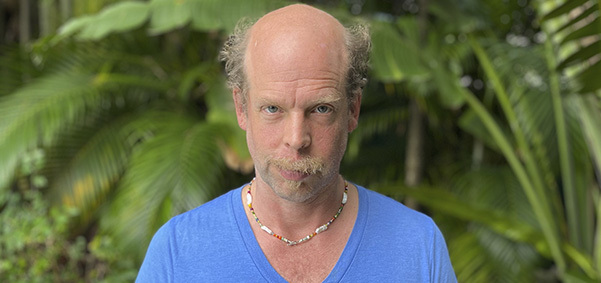
PORTSMOUTH, NH – Will Oldham has had a very interesting creative career ever since he began acting as a teenager during the late ‘80s. During the beginning of the following decade, he decided to pursue music under the names Palace, Palace Brothers, Palace Songs, Palace Music, and currently Bonnie “Prince” Billy. Oldham has a unique take on folk and country music, which is echoed in his latest album “The Purple Bird” that came out during the beginning of the year. As part of his tour in support of it, he and his band are going to be performing at The Press Room in Portsmouth on August 10. The show starts at 7pm with Bhutanese improvisational guitarist Tashi Dorji opening things up.
Oldham and I had a talk ahead of the performance about the making of his new full-length, being both an actor and a musician, a unique story he has about playing in Portsmouth years ago, and how he and his band craft a setlist.
Rob Duguay: For the making of “The Purple Bird”, it was only the second time in your career where you worked with a producer with David Ferguson serving that role. How did you and David initially link up to make this happen?
Will Oldham: We originally linked up when I met him at Rick Rubin’s house in Los Angeles back in 2000 or 2001. I initially went there to sit and witness a Johnny Cash recording session, and “Ferg” was Cash’s right hand man as an engineer, sometimes a producer and always a friend. He made a big impression on me at the time, we became close friends, and we’ve worked together a bunch over the years, but this was the first time where he really sat down with me as the “recording artist” and him as the “producer”.
RD: What was the songwriting and recording process like with David being brought into the fold on the production side of things?
WO: Rather than David being brought into the fold, he sort of brought me into the fold. This is his world and how he moves, shakes and understands, beginning with the songwriting process, which is sitting down at a table with a couple of songwriters with their instruments, notebooks and pencils in hand. For a designated time on a designated day, we’re coming up with a song, which is not something that I can think of ever having done before other than for this record. At the same time, they built it to this kind of thing where, for them, this structure is liberating. Once they knew exactly the whens and the wheres, they could kind of go crazy, but they also know that there’s this beautiful parallel with time where the song itself is something that proceeds through time as much as anything.
The process of writing a song and coming up with a song is ultimately this time art practice as well because they know that during the sessions from 10 to 12, there’s going to be a song at 12. They know all along the way how long things should be nebulous, when things need to take form, when things need to be accepted and when things need to be rewritten over the course of two hours. If you haven’t got a song at the end, then it wasn’t a session. He invited me to participate after I called him to say that I wanted to come see him to do a songwriting session, and he scheduled a bunch of them. It was all new to me and it carried on through the recording process.
RD: Very cool. Along with being a musician, you’ve been an actor while having roles in various films like “Thousand Pieces of Gold”, “Junebug”, “The Guatemalan Handshake” and “The Bikeriders”. How have you been able to establish these two different careers in music and acting without having it overwhelm you? When it comes to being part of a film, do you make sure to schedule yourself way in advance and the same goes for booking a tour or making a recording?
WO: The big reason why I don’t do more acting is because the scheduling is completely different between music and film. Film is far more last minute and music is far more planned in advance, so usually someone will come, pitch me the film and ask if this is a character that I would consider playing. I’d say, “Tell me when”, they’d say when and I’ll say that I can’t because I got shows, but I first pursued film when I was a teenager, and I explored what I could do or wanted to do for my life and my living. As I got more into it, I realized that I didn’t really like the moviemaking business, but everything else I was doing was music related at the time. I then realized that I could take a lot of the basic core things that I learned from doing theater and doing film, with the discipline that’s involved and the relationships to both the text and colleagues in front of the audience behind the scenes, and translate it to what I saw my community do with forming bands, making records and mounting tours.
It’s part of recorded history, people who make up songs and make up records while being endlessly enthralled with that process, so it just seemed to make sense to make music. We are our own bosses more in music than in the other fields of creative expression, and I appreciate the independence. I appreciate the ability to constantly reinvent what it is I do on a daily basis.
RD: That’s a cool perspective to have. What are your thoughts on performing at The Press Room? I know you have a connection to the New England area due to attending Brown University in Providence, but what are your feelings when it comes to playing shows in this particular region?
WO: Where I am in Louisville, we had a piano teacher when I was a kid around the age of eight years old or something like that. For some reason, my parents became close with them and they had a family connection to a house near York Harbor in Maine. We started going up there during the summer, and it was the first thing I started doing outside of Kentucky, and for some reason, that part of the world specifically right across the river there from Portsmouth. It kind of became a foundation for how I’ve approached my experiences with the rest of the world and it’s a place that I definitely idealized. Musically, I’ve had two really good times there.
One of my favorite tours ever was when I was asked by my friend Thomas Campbell, who is a painter but also kind of an esoteric surf filmmaker. He toured a film of his, I think it was called “The Seedling”, or it might have been “The Sprout”, around to movie theatres and community centers all over the country. Each stop with me as the opening act with musicians, so one of the shows we did was there in Portsmouth in an old movie theater downtown. Traveling with these surfers was just a ball, there’s a guy named Dan Malloy who’s a super surfer. He’s a very introverted kind of soul surfer and we were out in the waves there at York Beach with little kids with their high pubescent voices asking, “Are you Dan Malloy?”.
He said, “Yeah!”. He’s so sweet and for me, the things that we do during the day and the night when you’re on tour, making a record or doing anything, it fills the music with a kind of energy. It has me thinking about how exciting those days were and it’s such a strong memory, that Portsmouth show.
RD: That’s a great story. When it comes to making a setlist these days, how has it been with intertwing the new batch of tunes from “The Purple Bird” with your older material? I know you have a very prolific discography going back to your Palace days, so how has it been with finding a cohesiveness?
WO: I’ve actually been putting together a masterlist, which consists of about 40 or 50 songs from throughout the last 35 years, I guess. Each night, we pull a notebook out, somebody starts the setlist, passes it to the person on the left, and it just goes around in a circle until we’ve got 15 or 20 songs on there. Then we try to figure out how to make a show out of that crazy set.