
CONCORD, NH – A bill that would have allowed New Hampshire employers to set their own minimum pay policy for workers, skirting the state’s two-hour requirement, died in the state Senate after passage by the House two months ago.
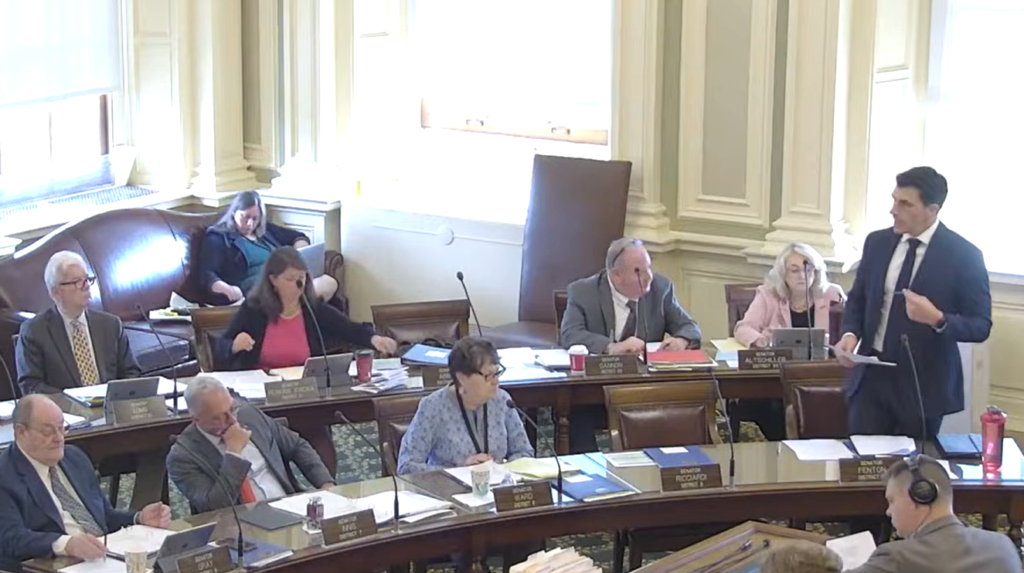
The bill failed by a 12 against, 9 for, vote in the Senate after senators from both parties spoke against it on May 7.
By New Hampshire law, an employee must be paid for a minimum two hours if they’re sent home with less than two hours on the clock. HB 1043 would have let employers establish their own minimum pay policy, with the two-hour requirement only in play if the employer has no policy.
The Senate vote against passing the bill came after a voice vote was ruled in favor of ought to pass by Sen. Daryl Abbas, R-Salem, who was acting as president pro tempore. Sen. Rebecca Perkins Kwoka, D-Portsmouth, moved for a division vote, in which the bill failed.
The bill, sponsored by Rep. Brian Labrie, R-Bedford, passed the House by a 189-155 vote in March. The Senate Commerce Committee had narrowly voted ought to pass, 3-2.
In 1985, New Hampshire law RSA 275 was amended to require that “any day an employee reports to work at an employer’s request, he or she shall be paid not less than 2 hours’ pay at his or her regular rate of pay,” with some exceptions, including county and municipal employees. HB 1043 didn’t repeal that amendment, but further amended it so that an employer could set a policy that overrode the two-hour minimum pay.
“This is not a reduction in worker protections, but rather a shift toward a more adaptable regulatory environment that recognizes the ability of employers and employees to reach mutually beneficial arrangements,” said Labrie said at the March 12 House session.
Sen. Keith Murphy, R-Manchester, at the May 7 Senate session, said the change offers more options for employers and employees and sets clear expectations for employees. He noted that 42 other states have similar laws.
But the bill came up against bi-partisan opposition on the Senate floor, where those who spoke against it said it hurts workers.
Sen. Donvan Fenton, D-Keene, said the bill isn’t about changing whether employees are paid for the work they do, but rather it’s about what happens when an employee shows up to work at their employer’s request and is sent home early.
“For 40 years, New Hampshire has had a simple, clear standard,” Fenton said. “If you ask someone to come in, you guarantee them at least two hours of pay. That standard isn’t about wages alone, it’s about predictability, it’s about fairness, and it’s about respecting people’s time.”
He said that showing up to work means putting gas in the car, getting child care, turning down other opportunities and more. “Right now, our law recognizes that.”
As a business owner who employs 175 workers, Fenton said, he understands the challenges of scheduling and margins, “But I also understand this, that when you ask someone to show up, you’re asking them to commit part of their day and that comes with responsibility.”
He said that HB 1043 allows flexibility for employers, but not for workers, shifting the risk to people who often can’t afford it.
“The concern I keep coming back to is, if you are living paycheck to paycheck, and many Granite Staters are… losing even a couple hours of expected pay is not theoretical,” he said. “It matters, it affects whether you can cover your groceries, childcare or even a bill that’s due that week.”
While there are concerns about remote work and other modern schedule changes, he said that those should be addressed directly if they’re an issue.
“We shouldn’t remove a clear longstanding protection for everyone,” he said, adding that HB 1043 creates a patchwork of “less clarity, more inconsistency.”
“This is not about whether someone gets paid for the minutes they work, it’s about whether we continue to recognize that being asked to show up to work has value in itself,” Fenton said. “For 40 years, New Hampshire has said, yes, it does. HB 1043 says that’s optional.”
Also speaking in support was Republican Sen. Bill Gannon, of Sandown, who said that paying workers for showing up is the least an employer can do.
Gannon said his daughter gets up at 6:15 a.m. on weekends to be at a restaurant job at 6:45 a.m. She makes the $3.36 tipped wage.
“If they send her home early, she’s not going to make any tips,” Gannon said. “She should at least get the $6.72 (for two hours’ work) for putting in her time. The least her employer can do is give her that minimum time for showing up.”
After the bill failed in the division vote, a voice vote tabled the bill, which means that it can come up in a future legislative session.