
BELGRADE, Maine – New England may get its third National Monument – and Maine its second – as an effort to honor Frances Perkins, the first female U.S. cabinet member picked up steam Thursday with a visit from U.S. Secretary of the Interior Deb Haaland.
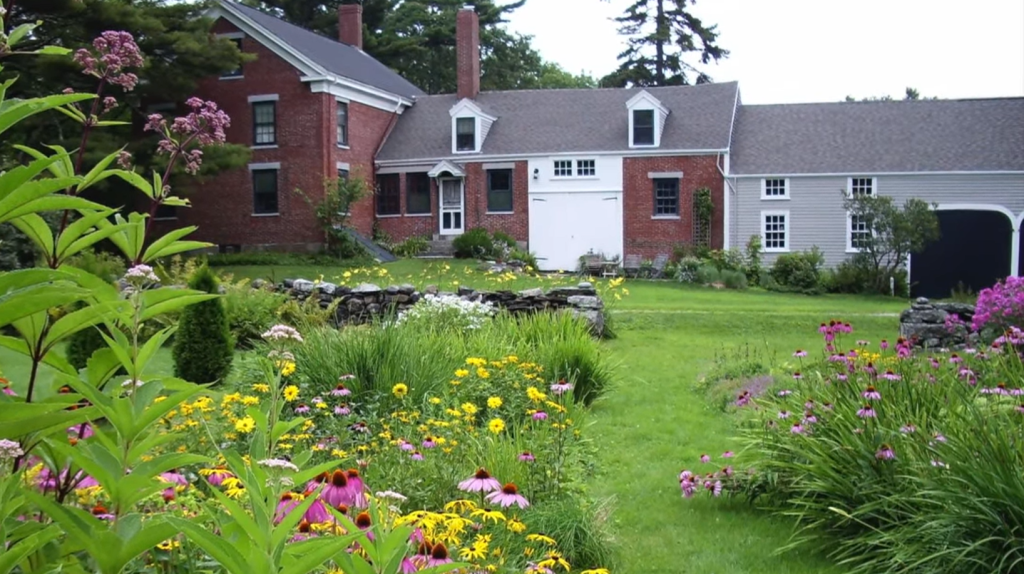
Haaland visited the Frances Perkins homestead in Newcastle, on the banks of the Damariscotta River, as part of a push by Maine state leaders that began a little more than a week ago to get the site, already a National Historic Landmark, to be recognized as a National Monument.
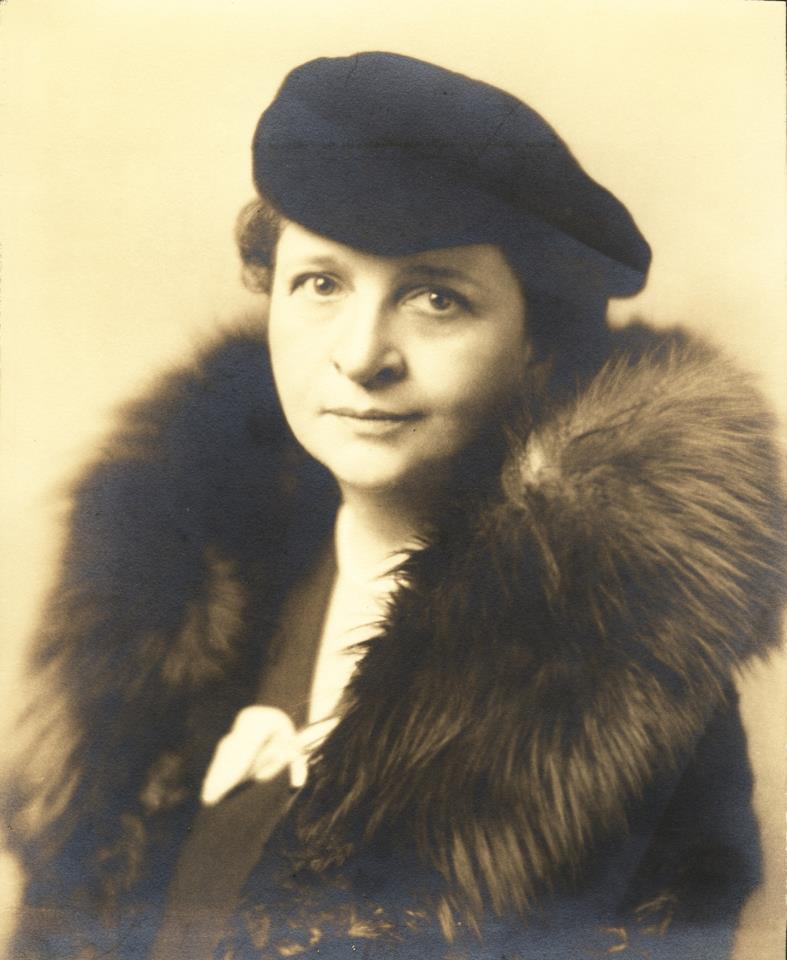
Perkins was a trailblazer for labor rights and other social advances as President Franklin D. Roosevelt’s secretary of labor from 1935 to 1946. This included creating and pushing for the Social Security Act, the Fair Labor Relations Board, the minimum wage and the 40-hour work week.
Perkins also played a role in New Hampshire history, pushing Roosevelt to appoint John G. Winant, who’d just finished his third term as the state’s Republican governor, the first director of the Social Security Board.
National Monuments are similar to National Parks, but usually smaller, and aim to protect land or buildings of significant historic or natural value. They are traditionally designated by a presidential proclamation. They can also be designated by an act of Congress, but while Congress has used its authority a few times to decertify National Monuments, it has not established one.
Most of the 133 National Monuments are overseen by the National Park Service, many of them in the Southwestern United States. The only National Monuments in New England are Katahdin Woods and Waters, in north-central Maine, and the Northeast Canyons and Seamounts Marine National Monument in Massachusetts, off the coast of Cape Cod.
The push to make the Perkins Homestead a National Monument came earlier this month, after President Joe Biden in March signed an executive order directing the U.S. Department of the Interior to identify and recognize the contributions of women in U.S. history and to strengthen the National Park Service’s recognition of women’s history.
“Women are still woefully under-represented in many places in America, including in our history books and our national parks,” Haaland said Thursday in a roundtable discussion at the Frances Perkins Center. “We are now undertaking a deliberative process to explore how the National Park Service can better tell the story of women and girls who have made significant contributions to our nation.”
Haaland, a member of the Puebla of Laguna Nation, is the first indigenous person to hold a cabinet position. “I feel her legacy in this position that I have right now and feel grateful for standing on her shoulders,” she said.
U.S. Rep. Chellie Pingree, of Maine’s 1st District; Rachel Talbot-Ross, the first Black woman to hold the position of Maine Speaker of the House; Penobscot Nation Ambassador Maulian Bryant and Maine Secretary of State Shenna Bellows also spoke. Dozens of Maine politicians, nonprofit representatives and area residents attended the event.
Haaland was accompanied on her visit by Assistant Secretary of the Interior for Wildlife, Fish and Parks Shannon Estenoz, who said that her staff was “giddy” at the level of preservation at the site.
“Nothing gets a historian giddy like walking through a place and seeing the typewriter this person typed on and holding a book that this person held and looking into a bible that this person read,” she said.
A monument to Frances Perkins
Perkins’ 57-acre Maine property on the Damariscotta River, including the 1837 homestead – known as the Brick House—has been in the Perkins family since 1750. They ran a saltwater farm and brickyard on the property for much of that time.
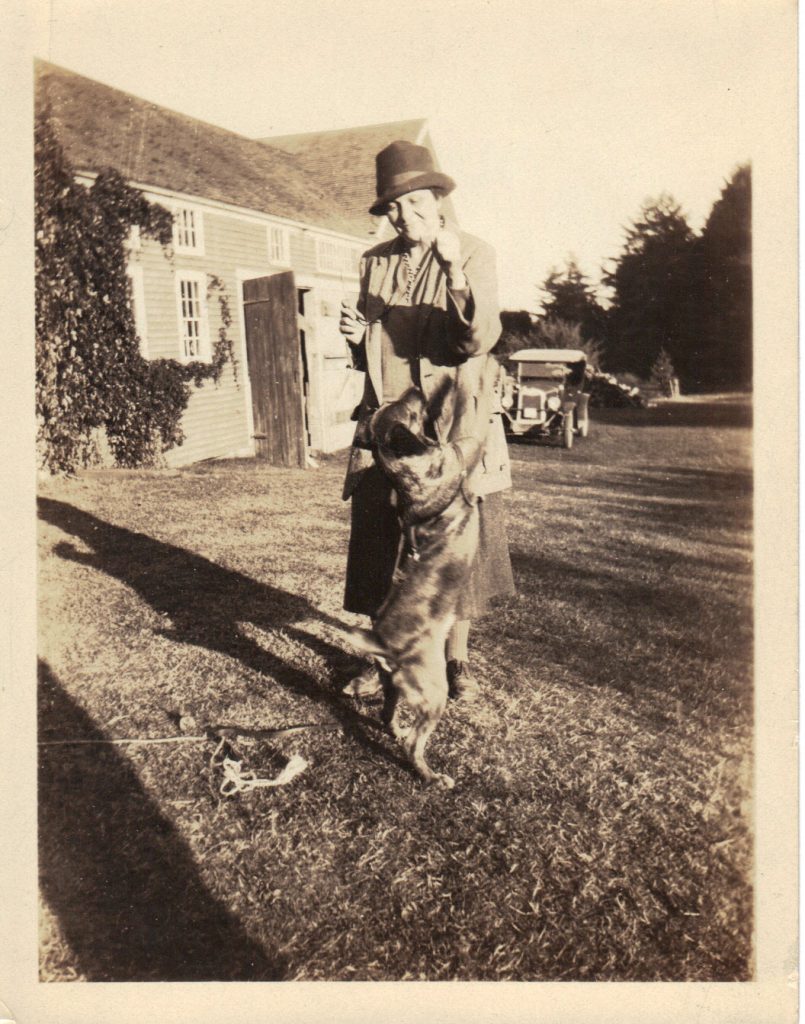
Perkins, who died in 1965 at the age of 85, grew up in Worcester, Mass., but spent summers at the farm with her grandmother, Cynthia Otis Perkins, and considered it home.
“I am extraordinarily the product of grandmother” who was “an extremely wise woman – worldly wise as well as spiritually wise,” Perkins is quoted as saying in the NPS National Register entry.
“Her undying belief in America’s greatness and goodness were rooted in her concept of what makes America unique — and these views were formed at and by that home in Maine,” Kirstin Downey wrote in her 2009 biography of Perkins, “The Woman Behind the New Deal.”
In 2009, Tomlin Perkins Coggeshall, Perkins’ grandson, and his husband, Christopher Irvine Rice, the last people to live in the house, founded the Frances Perkins Center at the site, which was locally designated part of the historic Brickyard District.
The property was added to the National Register of Historic Places and designated a National Historic Landmark in 2014. Despite that, it was listed on Maine Preservation’s 2018 Most Endangered Properties List.
“Although the homestead’s significance was now recognized, years of deferred maintenance and alterations needed to be addressed,” Maine Preservation said on its website. “The roofs had deteriorated, window and door openings were compromised, various elements of its structure were unstable, and all systems were antiquated.”
A $5 million capital campaign allowed the Francis Perkins Center to buy the site from the family in 2020 and begin a restoration. Earlier this year, the Francis Perkins Center was named a Maine Preservation 2024 Honors Award recipient.
If the property were to be named a National Monument, the Francis Perkins Center would donate it to the federal government. The initial donation would include the Brick House, the barn and adjacent land. The Francis Perkins Center would maintain ownership of land to construct a private education center, according to an Aug. 8 news release about the effort.
The move would “finally provide Frances Perkins with the recognition she earned as a national leader,” the website to promote the National Monument status says. “The Center would become the official interpretive and philanthropic partner upon designation to help support projects and programs at the site.”
The website also includes a petition, with an Aug. 20 deadline, to show support for making the site a National Monument.
Frances Perkins and New Hampshire
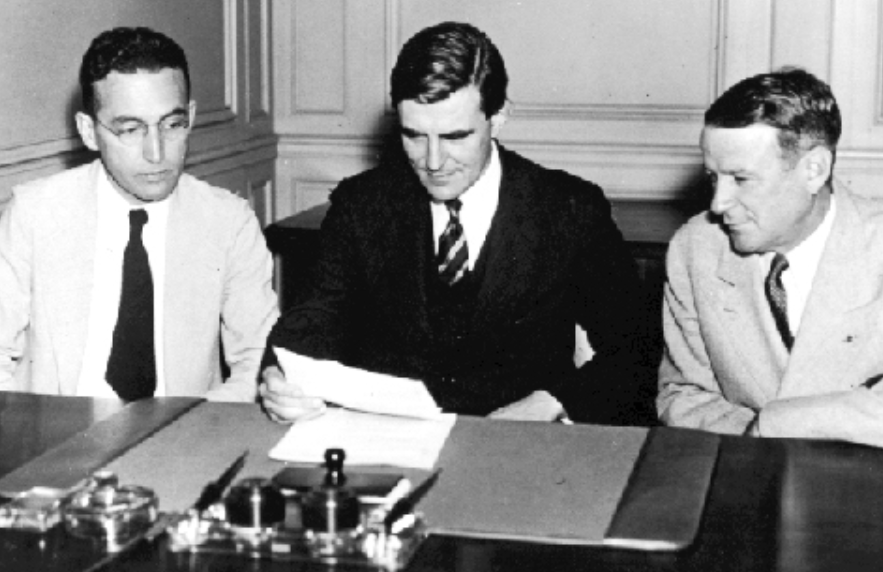
Winant, a Republican, was in his third term as New Hampshire governor (1925-27, 1931-35) when Roosevelt appointed him to head a three-person board that would mediate a nationwide United Textile Workers strike in September 1934. More than 300,000 workers – including those at dozens of New Hampshire’s mills, including thousands of workers in Manchester and Nashua – had walked off the job to demand the right for all textile workers to unionize. Winant’s appointment was at the suggestion of Perkins, who’d been impressed with the way he handled an 8,000-worker strike at Manchester’s Amoskeag mills the year before.
By the end of the month, Winant had worked out a resolution on the 1934 UTW strike that he presented to Roosevelt and Perkins. That resolution not only brought the strike to an end, but created the National Labor Relations Board the following year.
In 1935, when Roosevelt was looking for someone to head the Social Security Board (now the Social Security Administration), Perkins suggested Winant for the job. Winant held the post through 1937, briefly resigning before the 1936 election so he could campaign for Social Security, which Republican presidential candidate Alf Landon wanted to abolish. After Roosevelt won the election, Winant resumed his post.
Winant was elected director-general of the International Labor Organization in Geneva, Switzerland, in1939, again at Perkins’ suggestion. He later became U.S. ambassador to the United Kingdom, a post he held for most of World War II.
A statue of Winant was installed outside the New Hampshire State Library in Concord in 2017.
National Monuments rocky history in New England
The histories of New England’s two other National Monuments, both installed by President Barack Obama, are brief but fraught with issues.
Katahdin Woods and Waters, 87,563 acres of untamed wilderness east of Maine’s Baxter State Park, was proclaimed a National Monument by Obama in 2016. Paul LePage, a Republican, Maine’s governor at the time, refused to recognize it, and signs leading to the site weren’t installed until Gov. Janet Mills, a Democrat, took office in 2019.
The Northeast Canyons and Seamounts Marine National Monument in Massachusetts, a swath of ocean about the size of Connecticut off the coast of Cape Cod, was also designated by Obama in 2016. The first Atlantic offshore national monument, the designation was established to protect vulnerable deep-sea coral, sponge gardens and other endangered natural marine life from destructive fishing methods.
President Donald Trump, during a Maine visit with LePage in June 2020, reversed Obama’s proclamation. Biden, in October 2021, restored the site as a national monument.
National Monuments are a result of the Antiquities Act of 1906, under President Theodore Roosevelt. The act aimed to preserve and protect the nation’s archeological heritage. Over past 100 years, some sites of historic significance were included, particularly forts and battlegrounds and, significantly, the Statue of Liberty. The movement to add historic sites of historic significance marking groups of people that have been largely overlooked by history is relatively new.
The France Perkins homestead wouldn’t be the first home of a person significant to U.S. history to be designated, but up until 24 years ago, there weren’t any. The first was the President Lincoln Cottage, in Washington, D.C., where President Lincoln wrote the Emancipation Proclamation. It was designated a National Monument by President Bill Clinton in 2000.
Recent presidents, most notably Obama and Clinton, increasingly used their authority to establish National Monuments to highlight important parts of American history that had been overlooked.
Six years after Clinton kicked off the trend, George W. Bush, in 2006, established the African Burial Grounds National Monument in Manhattan. It is the oldest and largest known excavated burial ground in North America for both free and enslaved Africans.
Obama tops the list. He issued 34 proclamations establishing or enlarging historic sites, including 29 National Monuments. Of those he established 24 and enlarged five, far outpacing all other presidents.
Among the National Monuments Obama established were:
- César E. Chávez National Monument in California, the final home and resting place of the migrant civil rights leader;
- Charles Young Buffalo Soldiers National Monument in Ohio, the home of Young, the son of slaves, who attained the rank of colonel in the U.S. Army, and was posthumously promoted to brigadier general;
- Belmont-Paul Women’s Equality National Monument in Washington, D.C., the home of Alice Paul, who founded the National Woman’s Party and, according to the NPS, was an “epicenter for women’s suffrage for 90 years.”
- Stonewall National Monument in New York City’s Greenwich Village, the site of the Stonewall uprising in June 1969, when police raided the club in an anti-homosexual sweep, and its patrons fought back. That attack by police, and the demonstrations it spurred, are considered a turning point in the fight for LGBTQ+ rights.
- Birmingham Civil Rights National Monument in Alabama, which comprises seven sites significant to the Civil Rights movement, including the 16th Street Baptist Church, where four girls were killed in a bombing by Ku Klux Klan members in 1963.
- Freedom Riders National Monument, in Anniston, Alabama, a Greyhound Bus station near where, in 1961, an interracial group of bus riders campaigning to end segregation were beaten by police and their bus burned (the site of the bus burning, six miles away, is also included but not yet open to the public).
Trump issued five National Monument proclamations, all but one to reduce or abolish National Monuments, including two reducing Bears Ears in Utah, one reducing Grand Staircase-Escalante National Monument, also in Utah, and the one abolishing Northeast Canyons and Seamounts Marine National Monument.
He established Camp Nelson National Monument in Kentucky, a fortified supply depot during the Civil War that evolved a massive recruitment and training center for African American soldier and a refugee camp for their families. It was a shelter for civilians fleeing war and for enslaved people hoping to secure their freedom and aid in the destruction of slavery, according to the NPS.
Biden in his three-plus years as president has issued 10 National Monument proclamations, some of them to restore what Trump reduced or eliminated.
In July 2023, Biden designed three sites in Mississippi and Illinois the Emmit Till and Mamie Till-Mobley National Monument, in honor of the 14-year-old boy who was murdered by white men during a visit to relatives in Mississippi in 1955. His mother insisted on an open casket funeral at their home in Chicago, so people could see what had been done for her son. Till’s murder was a catalyst for the civil rights movement.
In all, 16 presidents have established or enlarged National Monuments since 1906. [This list doesn’t include National Parks or other historic sites; some early monuments have since been redesignated or decertified, but the original establishment is still counted here]:
- Barack Obama, 29, 24 of which he established;
- Bill Clinton, 19, 16 of which he established;
- Franklin Roosevelt, 12;
- Woodrow Wilson, 11 (he also established Maine’s Acadia National Park);
- Calvin Coolidge, 9 (including the Statue of Liberty National Monument);
- Joe Biden, 9 (established 4, restored or re-established 3 after Trump changes; enlarged 2);
- Teddy Roosevelt, 8, (the Antiquities Act was passed during his presidency; he also established 7 National Parks, including the Grand Canyon, and multiple historic sites.)
- William Howard Taft, 7 (though before leaving office he dramatically reduced the Navajo National Monument in New Mexico, which he’d earlier established to preserve 13th century cliff dwellings);
- Harry Truman, 7;
- George W. Bush, 7, 6 of which he established;
- Warren G. Harding, 6;
- Herbert Hoover, 6;
- Dwight Eisenhower, 5, all enlargements, no establishments;
- John F. Kennedy, 5, 3 of which he established;
- Gerald Ford, 3, all enlargements;
- Jimmy Carter, 3;
- Lyndon Johnson 1, enlarging Statue of Liberty National Monument;
- Donald Trump, 1 (abolished or diminished 3, all restored by Biden).
To see a list of presidential proclamations under the Antiquities Act of 1906, including establishment of National Parks and other properties, visit the NPS website.