
an InkLink Inkubator Performing Arts review by Faye Jones
FOREWORD

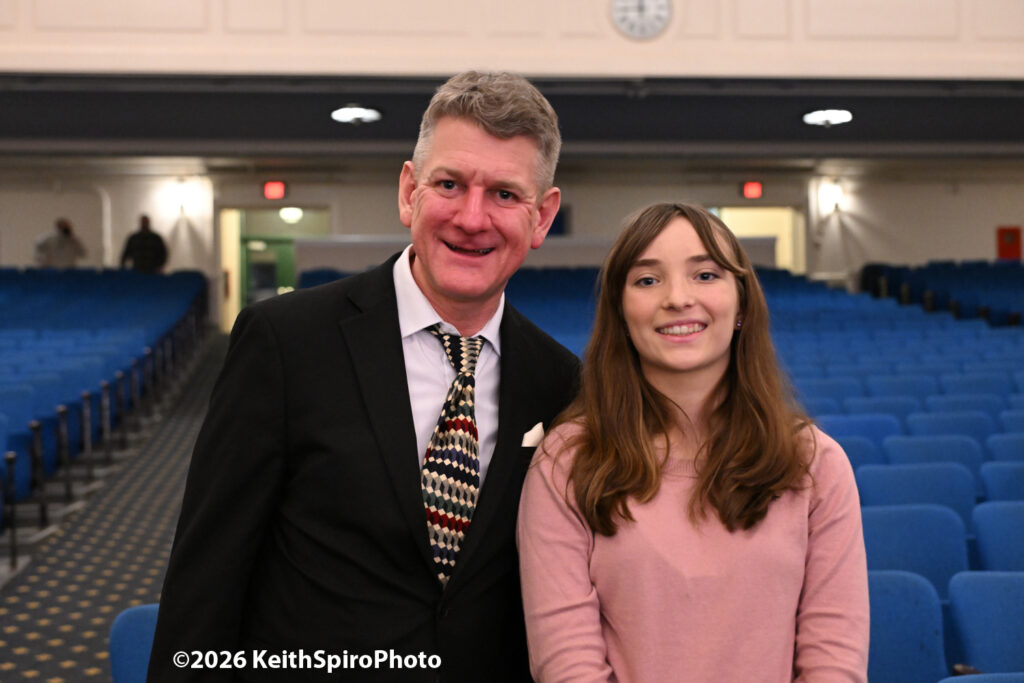
The Chamber Concert featuring Symphony NH musicians was a real treat. InkLink’s student reporter Faye Jones was excited enough about the format that she brought two music peers with her. All three seemed to enjoy the concert and the musical conversations among the musicians in each piece.
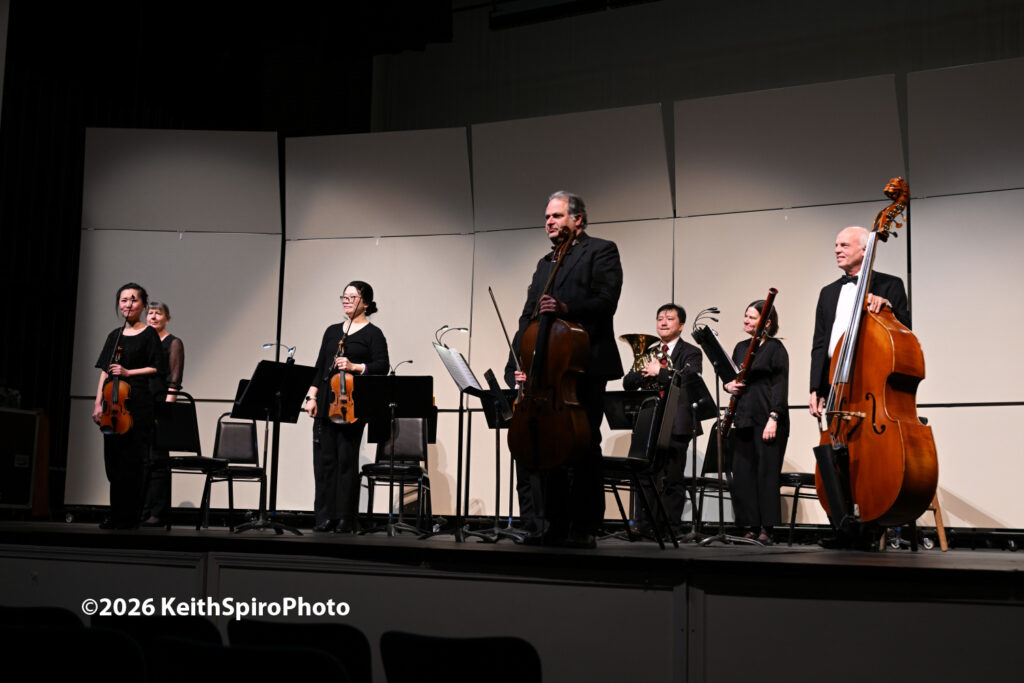
Richard Watson, Principal trumpet, spoke enthusiastically to the audience about chamber ensembles and the cues musicians use to signal direction or change in the absence of a conductor. Volker Nahrmann, Principal Contrabass, a native of Hamburg Germany spoke warmly of his connection to Brahms whose father was also a contrabass player. Sally Merriman spoke for the reeds and the magic of these deep connections between musicians and composers carried to the audience.
Symphony NH concludes this season with one last concert this Friday April 18th at the Keefe Auditorium. New Hampshire Passions led by Music Director Finalist Tian Hui Ng will be an eye opener from Deep Forest to Deep Space. Don’t miss it. We all need to support live arts events. The arts are instrumental in bringing and keeping our communities strong and connected.
Faye Jones, a student at the Nashua Community Music School is this season’s InkLink News intern writing reviews of Symphony New Hampshire programs for us.
SymphonyNH and InkLink News are collaborating on a season long sponsorship of a student musician to attend concerts and share their thoughts and reactions to each experience. Today, Faye Jones offers her musician’s sensibilities and observations about each of the pieces in the recent Chamber Concert program.
Chamber Music Concert featuring Symphony NH musicians. A concert review by Nashua music student and Inkubator intern Faye Jones.
Chamber Concert – The Ensembles
NASHUA, NH – This was the opportunity for different sections of the orchestra to shine. Each piece had an introduction by one of the musicians in the ensemble, be it reeds, brass or strings.
The Pieces
Fanfare from La Peri Paul Dukas
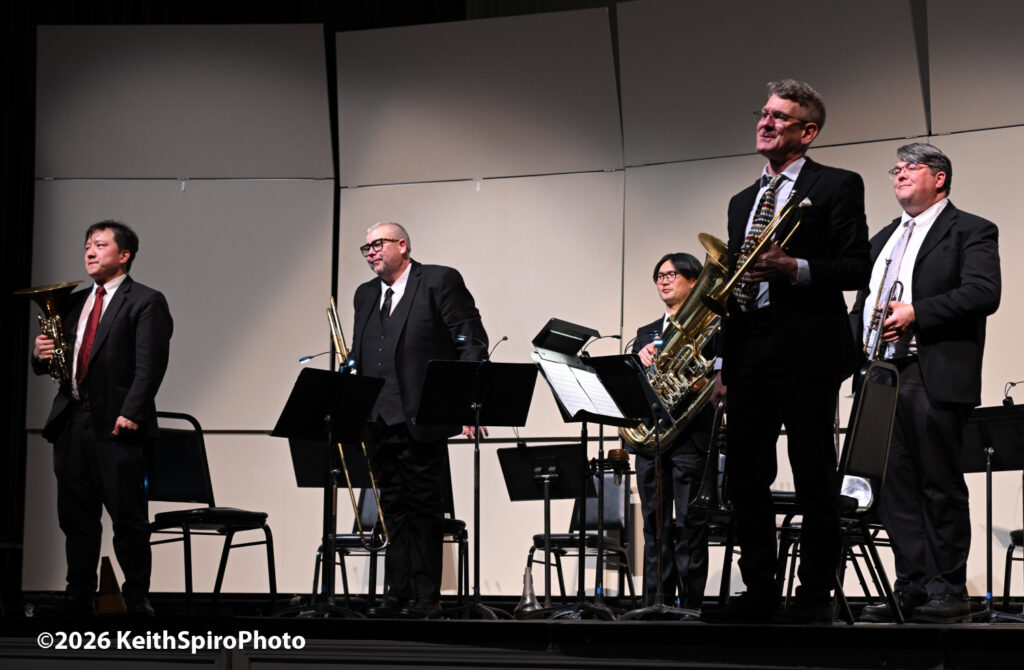
Beginning with a brass ensemble, the concert started the night out strong with a burst of bright energy. The fanfare was short, but still carried multiple different themes. In the middle the dynamics softened and gradually grew to sound similar to its theme from the very beginning of the piece. Along with that, the musicians playing the piece were well in tune to what was happening in the music, they all moved with one another well. Especially during the crescendo, the timing felt perfect amongst all of the musicians on stage.
Serenade for Winds, KV .375 Wolfgang Mozart
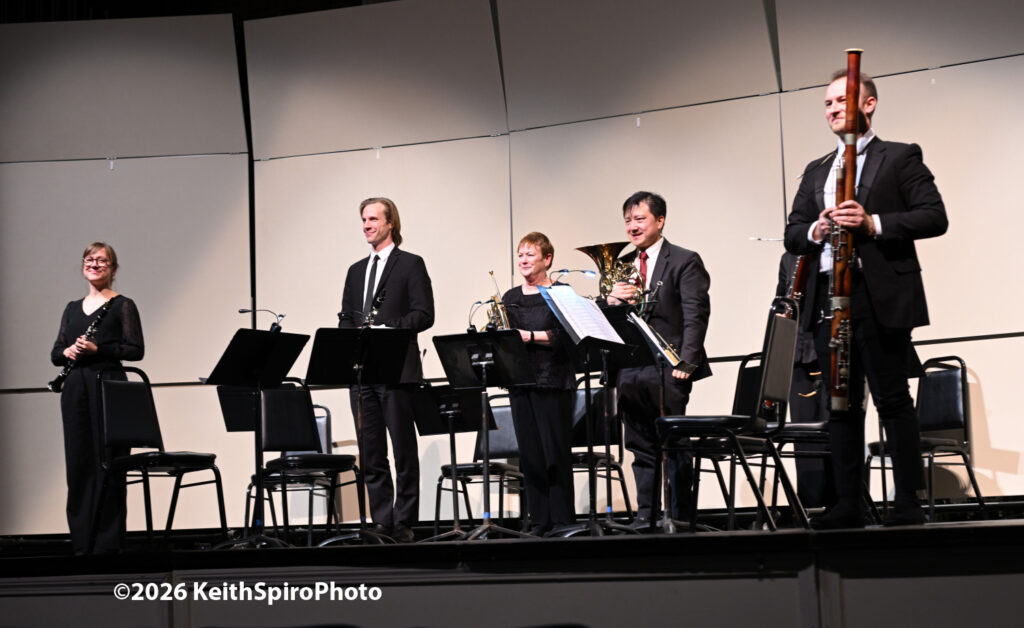
The first thing I noticed when the musicians began playing this was how warm the sound was. Everyone playing together carried a beautifully soft tone that brought out the voice of every instrument. The beginning of the piece carried such an expressive tone but still really brought out the mood of the major chords.
The piece began to louden and soften throughout each phrase, the brass and wind blending especially in these moving parts was really impressive, and the french horns added such a rich layer to the music whilst blending along with the winds beautifully. Right after this, the piece introduced lines for the upper winds that flew up and down the scale; the musicians did well with keeping these fast moving lines light and buoyant. The serenade would repeat these themes a few times, then getting louder before abruptly resolving into a softer, beautiful ending.
String Quintet in G Minor K.516 Wolfgang Mozart
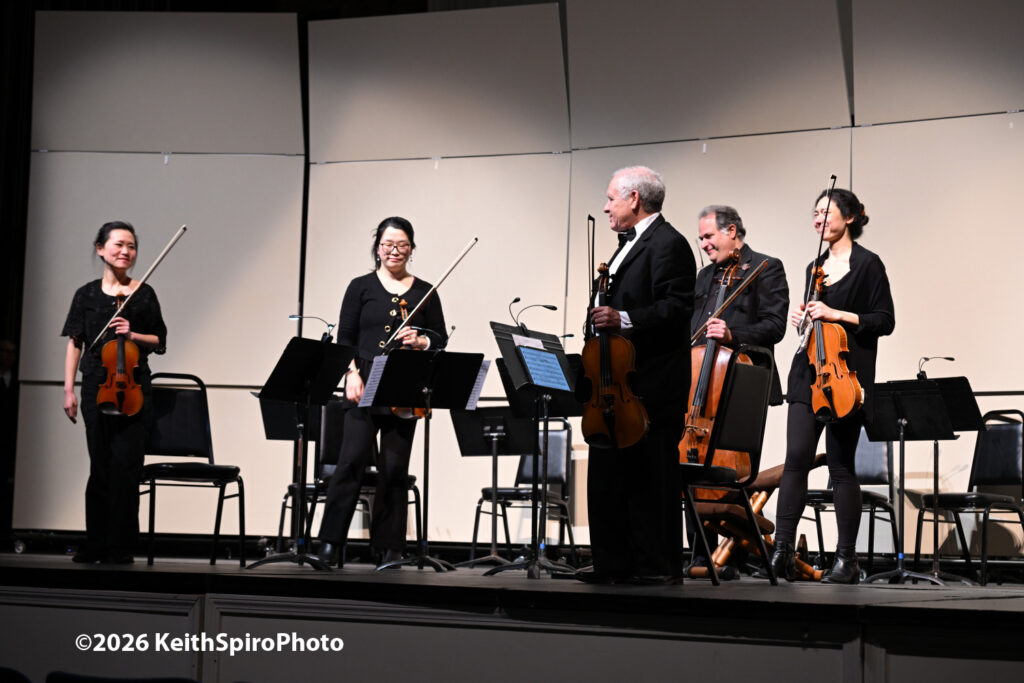
This piece began with a very ominous tone. The music stayed in this mysterious feel until switching to the much faster paced allegro. Also, the addition of the extra viola added a lot to the middle voicing and still felt balanced among the high and low voices, and that was very prominent from the first measure. The violins had many faced paced descending runs while being backed by the lower instruments.
This theme repeats for a bit before moving onto something slightly different, the changes in dynamics were changing rapidly and dramatically, the musicians on stage did a wonderful job with both the quickness and how much they changed said dynamics. Once again the theme would change slightly again, it was similar sounding, but the dynamic changes were a long accented note in the lower voices, accompanied by descending runs by the upper voices that would both decrescendo and repeat this in the next bar.
Variations on a Theme by Haydn Johannes Brahms
This piece was an intriguing collection of variations based on a single theme. The piece contained eight variations along with a finale. The first theme contained a lot of notes that were very accented. The musicians did a very good job at making accented notes intense and powerful, but not over the top.
The following themes differed from each other a lot, the second one felt more intense and very bright. This theme seemed to stretch the dynamics throughout each phrase a bit more than other variations. Proceeding that was the third variation, which was faster and even more intense in the beginning, but slowed down towards the end. Afterwards was the fourth variation, the musicians carried a very warm tone throughout this entire piece however it really shined in this movement. Being much less intense than movements prior, it was a fast and drastic change of tone that the musicians did beautifully. The fifth variation sounded similar to the fourth, the notes felt very grounded and the dynamics had a lot of stretch throughout each phrase.
The next movement takes a dramatic turn in the other direction, the phrases are much more jumpy and the individual notes are much shorter and faster. The seventh variation sounds slightly similar to the sixth, it has a bit more of the grounded feel, but it is more powerful than jumpy. Oftentimes in this variation, a phrase would begin very loud and have a slight descent in dynamics throughout the phrase.
For the eighth variation, it contained a slower, more grand feel than the previous two movements. Another drastic switch in the overall tone that the musicians on stage did very well with. In this variation I noticed there was a lot of support in the lower voices that added a lot to the piece. In the final variation the low voices began the piece and the others were soon added. The tuba was very prominent throughout the entirety of this movement, and brought a very interesting change that wasn’t seen to this extent in any of the previous variations.
Three Sea Shanties for Wind Quintet Malcolm Arnold
The first sea shanty is written to depict a drunken sailor, it begins with the high winds in a quick and jumpy melody, before adding the others to make the overall tone feel more weighted. The bassoon player had a soloistic section of this piece that was wonderfully done and blended so beautifully with the other winds.
The second piece begins with a beautiful melody for the french horn, which is soon picked up by the higher winds. The musicians played every note of this song so elegantly, the tone quality was truly wonderful. They truly brought this slower calm music to life.
For the third and final sea shanty, it begins as a complete turn from the previous one. It immediately begins energetically and fast paced. The piece contained many switching themes, it would occasionally feel very tense before reintroducing the much jumpier theme that the song began with, and ending with a few short quick notes.
Serenade No. 1 Johannes Brahms
One of the most intriguing parts of this piece was the beginning, the french horn was loud and powerful from the very start. It added so much to the bright energy of the movement. The entire movement felt so intense, grand, and just bursting with energy. The french horn was very prominent throughout the entire piece while still being very balanced with the intensity of the other musicians. Everyone’s balance was especially impressive throughout this portion of the movement.
In the next movement, it begins with a lighter feel. There were a lot of quick runs in the violin section throughout the piece that were complemented well by the support of the lower voices. Another thing I noticed was that I could clearly hear the lower voices throughout the entire piece, I could pick out the double bass amongst the instrumentation. The balancing to pull this off was phenomenal. This movement had a lot of fast paced lines paired with dramatic changes in dynamics, along with that, near the ending of the movement, everything slowed down, in order to grow in volume to its original louder, grand feel to end the entire piece.
Tickets are available here for the final spring concert:
April 18th New Hampshire Passions · Tianhui Ng, Music Director Finalist
Faye Jones is a junior at Nashua High School North. She is an aspiring musician who looks forward to studying music education in college. She is involved in her school’s music program and very passionate about her role as one of the drum majors for the Nashua North Titans marching band. She also loves to play in the school jazz band. On top of this, she has been learning to play the double bass for Upbeat Youth Orchestra. Outside of the musical world, Faye has recently earned her first-degree black belt in American Kenpo. Some of her other interests include painting, skateboarding, and spending time with friends and family at the beach.
The Inkubator program is aimed at nurturing and growing New Hampshire’s local journalism ecosystem – support for educators, opportunities for students and pathways for future journalists, artists and creators. And beyond that, we want to engage our community in this process because together, we rise. Click here to make a tax-deductible contribution to the Inkubator. Want to see Ink Link deliver community news to your town? We’d like that, too – and we can do it with your support. Ask us how.