
MANCHESTER, NH – In considering the future of Manchester, the city’s zoning ordinances are key to how it all takes shape. Will there be more green space? Will developers be incentivized to build high-density housing in places where it’s most needed? Will Manchester continue to grow in such a way that natural resources are protected?
These are just some of the considerations on the table as city planners seek the public’s ideas for revising the existing Zoning Ordinance – the regulations on the book that deal with how city land is used and developed.
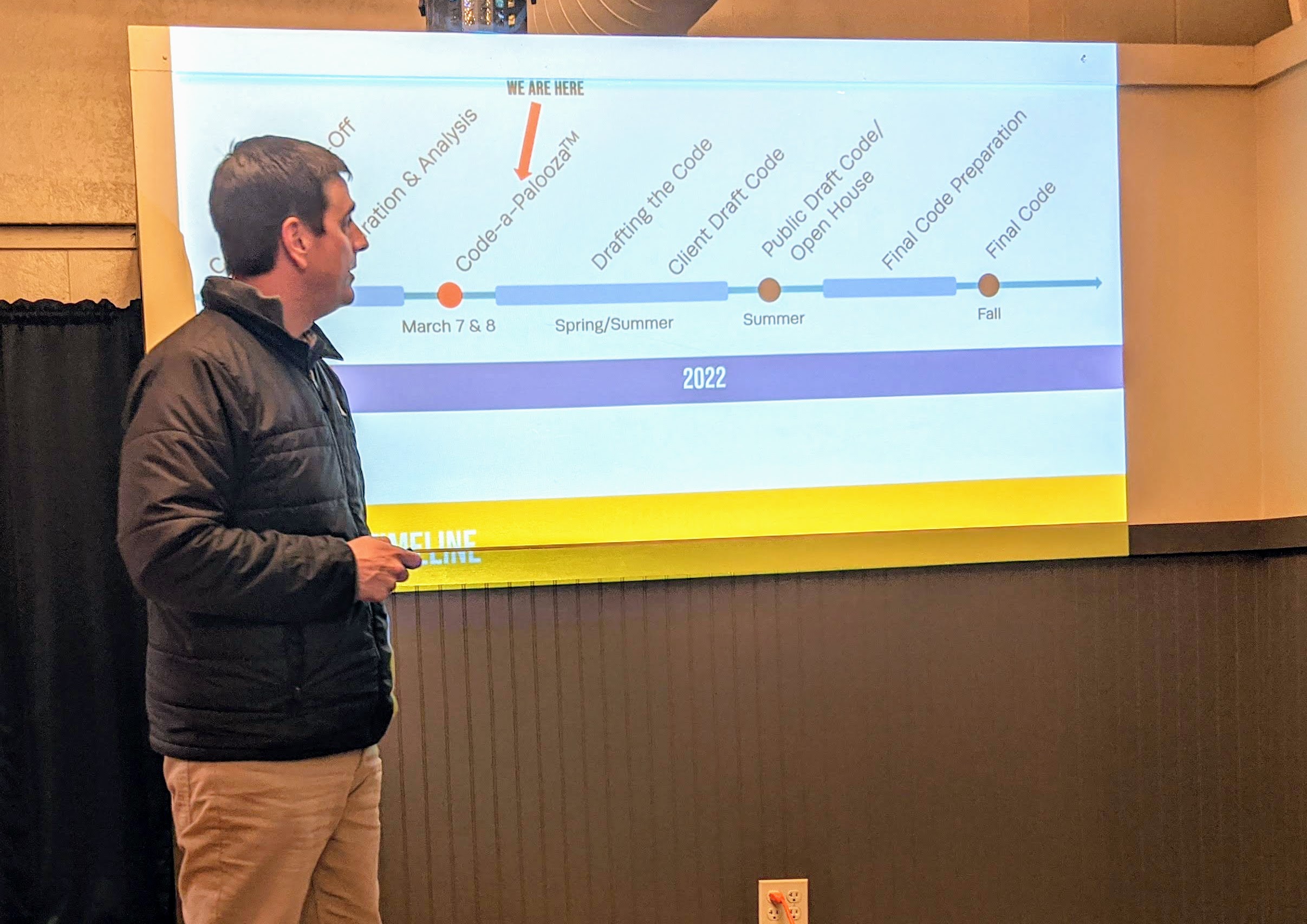
The two-day “code-a-palooza'” conversation is being led by Brian Wright, founder and principal of Town Planning & Urban Design Collaborative, which specializes in helping to develop “new urbanist” master plans for cities like Manchester.
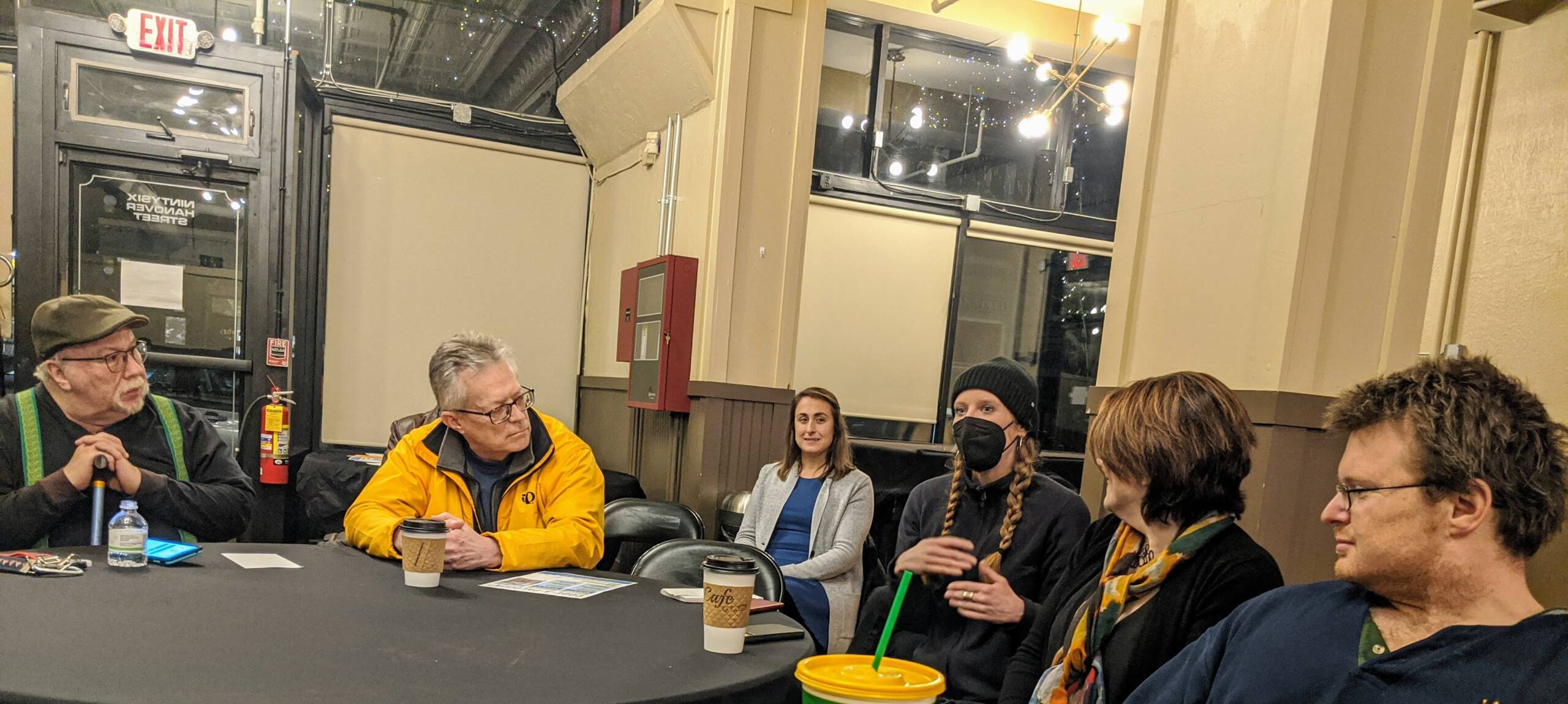
A group of about two-dozen gathered – including employees of the city’s Planning Department and two city officials, Alderwoman-At-Large June Trisciani and Ward 4 Alderman Christine Fajardo – for the second of two meetings held Tuesday at the Palace Theatre’s Spotlight Room. After a brief presentation by Wright, the group discussed a range of issues including the need for more connected green space, “activated alleys” which can expand public spaces and enliven downtowns, incentivizing environmental sustainability through initiatives such as composting, rainwater collection, wastewater management, solar energy and a better recycling system.
“To me, sustainability means we can put a glass jar over Manchester and we’ll be OK,” said Kate Marquis, who went on to explain that having everything the city needs – from recreation options including skiing and public skating to disc golf, hiking trails and river access – is important. “I wouldn’t want to lose that, even as we add more housing,” she said.
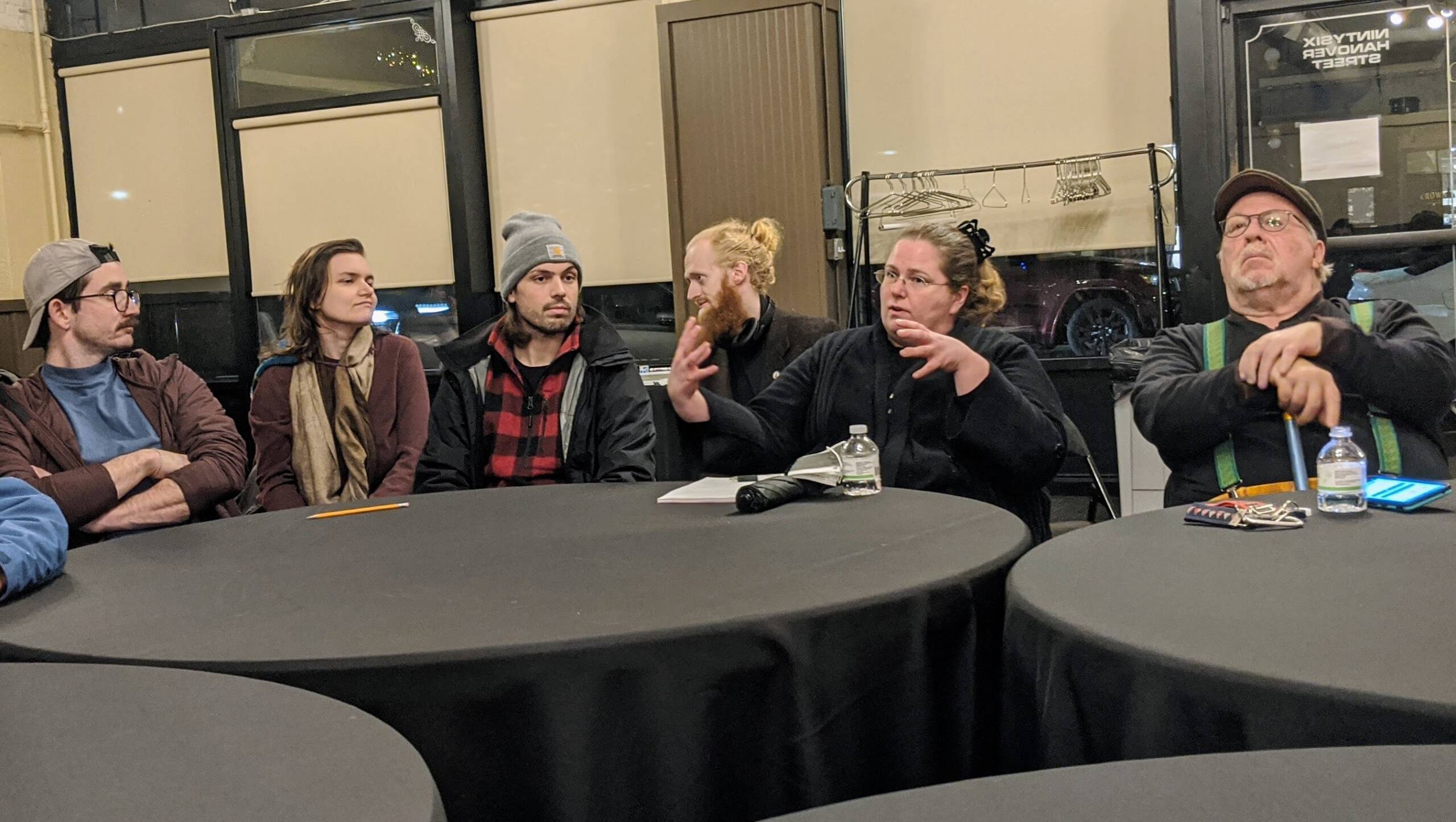
Wright pushed back a little on the glass jar metaphor by pointing out that one thing missing from under the jar would be a renewable food supply, and pointed to the kind of zoning his company assisted Burlington, VT, in mapping out. “They were growing 10 percent of their food within the downtown – maybe more,” Wright said.
And while nobody is suggesting there be an actual glass jar placed over the city, the idea of sustainability, which was the topic of the evening discussion, would take into account things like how to maximize green space requirements for new developments. Rather than having small, somewhat useless patches of greenspace because they’re required, why not consider a system like carbon tax credits, an idea pitched by Greg Powers.
“Right now the way zoning ordinances work is that you have a certain number of parking spaces or you get a variance. Similar to green space, if the requirement is for ‘x’ amount of it, you either build it or you get a variance – and if you get the variance, in exchange, we’ll charge you an amount that goes to Parks and Rec. That way you shift the green space from a disconnected patchwork to where you can create a green space more people can have access to,” Powers said.
Brenda Noiseux pointed out that one major shift that’s happened since COVID-19 is more companies are allowing employees to work from home, meaning they can choose where they want to live rather than having to move to where a company operates.
Her realization has been that the city no longer has to focus zoning solely on attracting a certain kind of business.
“We also now have to focus on people and what they’re looking for when moving to a city,” Noiseux said.
Wright agreed with that assessment, noting that the city’s proposed Master Plan is focused on innovation as a cornerstone for everything to come in future Manchester.
“They are the companies that worry about what employees think about where they live and ‘is this a cool place?’ There’s something to be said about the sociability of getting out and about,” Wright said.
Building capacity for the “cool factor” is just one objective of “character zones,” a way of planning that relies on the desired character of a neighborhood rather than strictly on land use. As identified during the Master-plan-a-palooza (which preceded this week’s code-a-palooza), the identified character zones are:
- CZ-1: Natural Character Zone –This zone consists of lands approximating or reverting to a wilderness condition, including land that has high scenic, habitat or environmental value and lands unsuitable for settlement due to topography, hydrology or vegetation.
- CZ-2: Rural Character Zone – This zone consists of sparsely settled lands in open or cultivated states, including forests, marshes and agricultural land. Typical buildings are farmhouses, agricultural, buildings, cabins and villas. Thoroughfares have no curb with open draining and naturalistic plantings with an obvious rural character.
- CZ-3L: SUBURBAN (Large Lot) Character Zone –This zone consists exclusively of low density residential areas in which the detached single-family house is the only building type. Most of the conventional suburban subdivisions built after the 1930s and ’40s are found in this zone. Lots are often wider than they are deep with medium to deep front setbacks and medium to wide side setbacks. The connected thoroughfare network may be curvilinear, typically with curbs and sidewalks, naturalistic or regularly spaced tree plantings, creating medium to large, irregularly shaped blocks that can respond to natural conditions.
- CZ-3: SUBURBAN Character Zone – This zone consists of primarily of single family detached residential areas in which the house is the predominant building type. It has medium front setbacks and medium side setbacks. Its thoroughfares typically have curbs and typically include sidewalks and street trees, and form medium to large blocks.
- CZ-4: General Urban Character Zone This is the most varied zone consisting of medium density areas that have a wide mix of small to medium neighborhood-scale building types. While it is predominately residential, it also includes retail, office and commercial uses. It has medium, shallow or no front setbacks and narrow to medium side setbacks. It has varied street and frontage plantings that include hardscaped and landscaped areas. Streets include sidewalks of varying widths, and regularly spaced street trees that define medium-sized blocks.
- CZ-5: Urban Center Character Zone – This zone consists of higher density mixed-use buildings that accommodate retail, office, rowhouse and residential uses. It has a tight network of streets, wide sidewalks, steady street tree planting and buildings set close to the sidewalks.
- CZ-6: Urban Core Character Zone – This zone consists of the highest density and height, with the greatest variety of uses. It may have larger blocks circumscribed by thoroughfares that have steady street tree plantings in tree grates. Large-scale buildings are set close to wide sidewalks.
- CV-CS: Civic Space Zone –This zone is assigned to areas designated for Civic purposes. These may be Open Space of one or more Civic Space Types, as well as sites dedicated to buildings and structures needed for institutional civic purposes, such as town halls, post offices, libraries, meeting halls, churches or community centers.
- SD: Special District Zone – This zone is assigned to areas that, because of their intrinsic size, function, or configuration, cannot conform to the requirements of any Character Zone or combination of zones. This includes uses such as hospitals, university campuses, and airports.
[Click chart below to enlarge]
“As people are capturing time back in their life they would’ve been commuting, maybe in contemplating a new park, the city is thinking about what are the needs and wants of people beyond it being a cool place to be – how will you shift and adjust those lifestyle changes – even something as simple as making sure there’s nothing in the zoning code that prevents home-based business,” Wright said.
Patrick Long (“no relation to Alderman Long”) said that he commutes two or three days a week to Boston and bought a home “literally as close to where the train station will be.” Yet, he is still 6/10 of a mile away.
“As we have more commuters, and the train is better than driving to Boston, we should look at allowing denser housing and transit-oriented development and make sure people who don’t live in that specific area still have an easy time of getting to the train station,” Long said.
Ultimately the goal of updating the city’s zoning ordinance is to create more flexibility for living and working while providing a clear and enforceable guide for developers and residents alike.
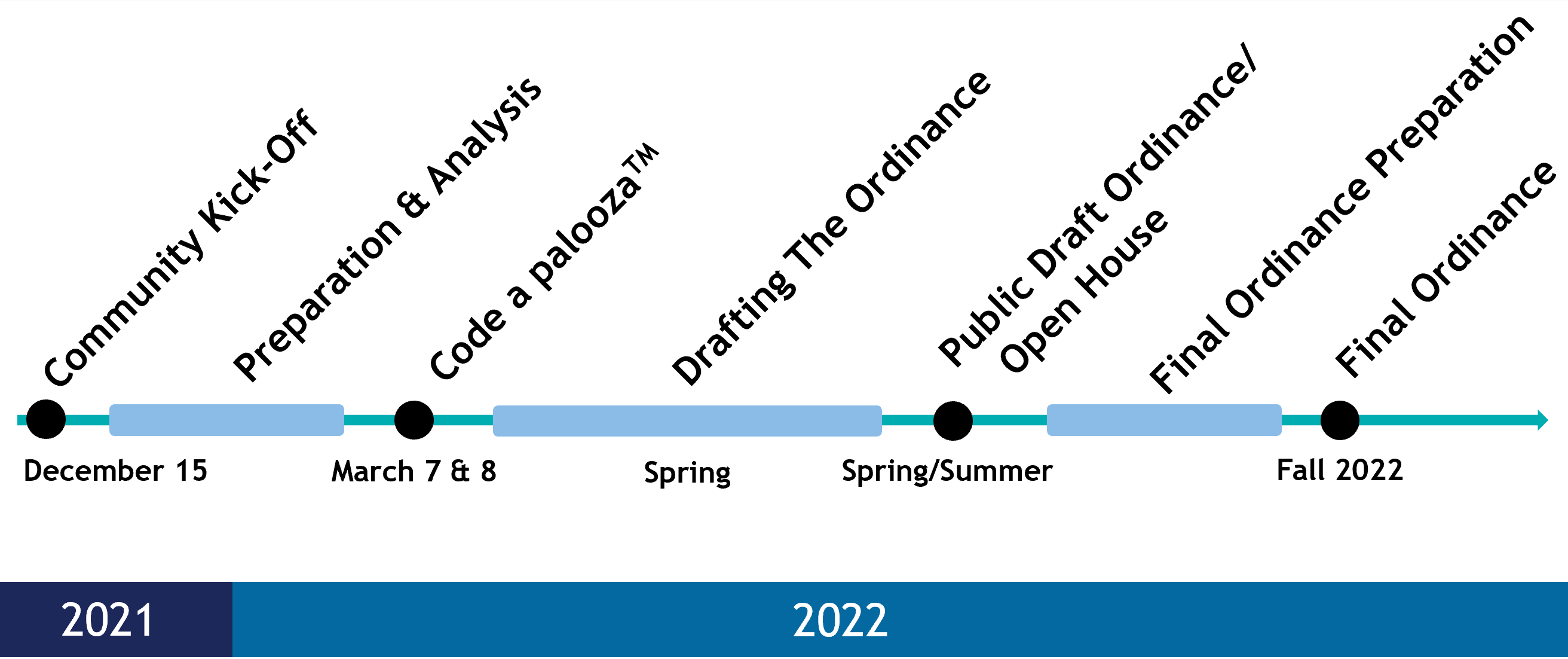
Code-a-palooza continues March 8 with two meetings – 12-1 p.m. Character and Housing; and 6-7 p.m., Closing Presentation.
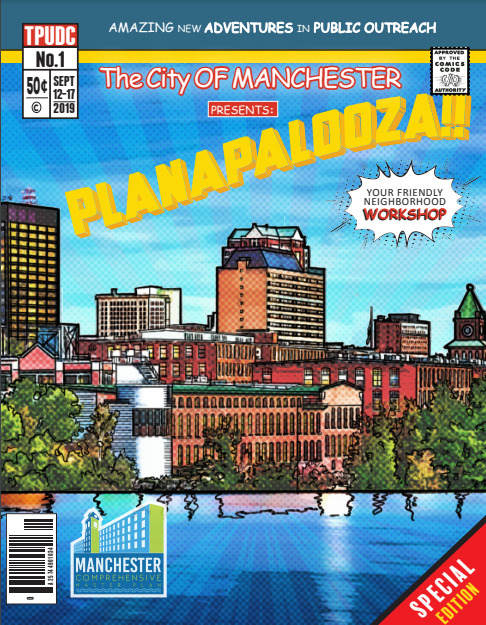 Why Code-a-palooza?
In August of 2021, the Manchester Planning Board adopted the 2021 Manchester Master Plan, which lays out the City’s goals for future development. To make those goals a reality, one of the Master Plan’s main recommendations was to update the Manchester Zoning Ordinance and other regulations that deal with land use and development. The City is following that recommendation by creating a land-use code. The code will assemble in one document as many local laws concerning land use as possible. An important part of drafting the code will be a year-long process of amending the Manchester Zoning Ordinance to bring it more in line with what today’s residents and businesses want for the Queen City.
Code-a-Palooza is a public design studio, where City staff and consultants from Town Planning and Urban Design Collaborative will be working on the new Manchester Land Use Code during “open studio” time from 9 a.m. to 7 p.m., including two formal meetings each day. Roundtable discussions held on both days are designed to include the public to ask questions and learn more about particular aspects of the plan. A closing presentation will be made on March 8 at 6 p.m. The public is invited to drop by to talk about what is important to them in Manchester’s built environment. Topics of interest include housing, bike lanes, sidewalks, parks, accessory dwelling units, streets, architecture, traffic, or anything else related to zoning and planning.
Although the Master Plan incorporates the results of a robust campaign of public engagement, the City will be soliciting further comments from the public, as well as elected and appointed officials, to inform the drafting of the code. To comment on what you think should be in the new Manchester Land Use Code, please send an e-mail to LUC@manchesternh.gov.
Bookmark and review the city’s proposed Master Plan – it’s 244-pages long so it will take you a while to digest. Here’s the link.