

BEDFORD, NH – A dispute over whether two newer homes belong in Bedford’s Historic District—and whether the town followed proper procedures in passing the amendment to remove them—prompted a rehearing April 22 before the Bedford Town Council.
Zoning Amendment #9 removed two homes built after 2018 from Bedford’s Historic District, where properties are typically subject to stricter oversight to preserve historical character. During the meeting James Dumont, who spoke as an abutter of the properties in question, challenged the move, arguing the process may have violated state law and could set a precedent for future removals.
Testimonies were heard from both the petitioners of the rehearing, as well as the legal counsel of the two residents whose homes were removed from the district. Ultimately, the council decided to deny the request for a revote in a 6-0 decision.
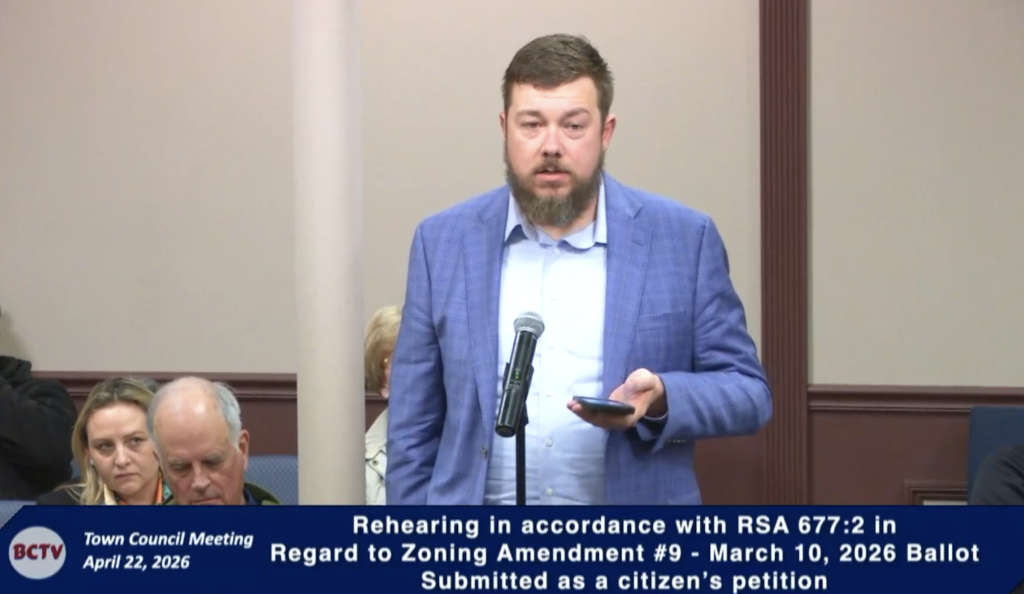
Dumont opened the rehearing airing his grievances over the amendment. The issue, he said, was not that the voters had made a mistake, but that the process of deciding on and presenting this amendment to voters had not followed New Hampshire law. His overall goal in bringing this issue to the council was to improve these processes.
Dumont had three main grievances: the lack of careful thought by the Planning Board in voting to support this amendment, the lack of communication to residents in the Historic District, and the possibility that this amendment entailed spot zoning.
In the issue of the Planning Board, Dumont stated that there was a lack of communication between the Historic District Committee (HDC) and the Planning Board on their recommendation. The HDC voted against removing the two homes from the district in a 4-1 vote. This was communicated to the Planning Board via a liaison, who apparently shared their own opinion on the matter, rather than conveying that of the HDC, without making a distinction between the two. The Planning Board ended up voting 4-1 in support of the bill, contrary to the HDC’s recommendation.
Dumont also noted that he had never received notice of the rezoning. The lack of communication with residents was cited as being noncompliant with RSA 675:7, which states that “if a proposed amendment to a zoning ordinance would change a boundary of a zoning district and the change would affect 100 or fewer properties, notice of a public hearing on the amendment shall be sent by first class mail to the owners of each affected property.” Although the number of affected was less than one hundred, Dumont said that he never received notice.
Dumont’s final grievance was in the possibility that this rezoning constituted spot zoning, which he defined as rezoning for private benefit rather than to reflect the town’s overall goals. Since this rezoning included just two properties, there was not a larger purpose that Dumont saw for it.
Dumont then received questions from councilors to further explain the issue. Clarifying his role, Dumont explained that he is an abutter to the removed properties, and did not want them removed for the integrity of the historical district. When questioned further by Councilor Michael Strand in his interest in the rezoning, Council Chair Phil Greazzo cautioned that this rehearing was only to hear the facts of the case, not to ascertain the background.
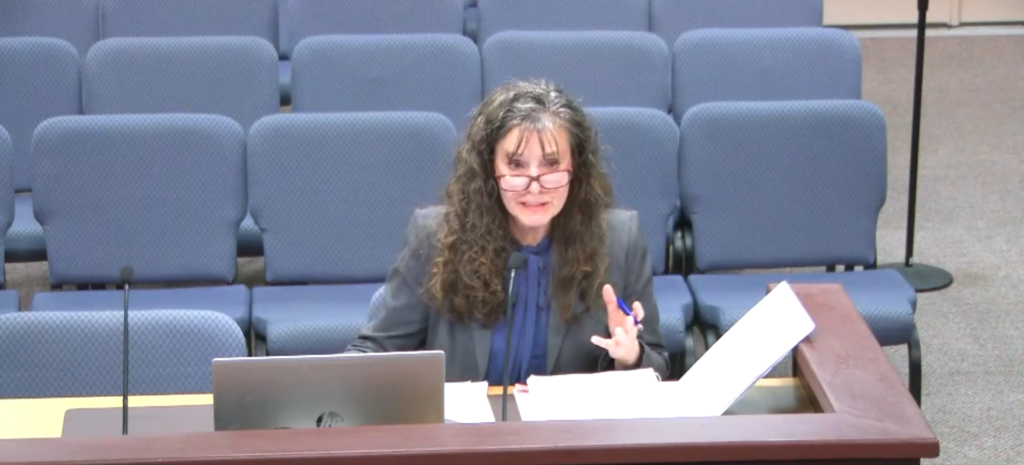
The next to speak was Attorney Laura Gandia, representing the residents of the properties removed by this amendment, Frank Robinson of 324 Wallace Rd and Pat and Jerry MacMonagle of 320 Wallace Rd, who did not want this amendment put to a revote.
Gandia began by refuting the structural components of Dumont’s argument. Early in Dumont’s speech, he stated that his main goal in holding the rehearing was to improve town processes, not to take action of a revote. This rehearing, however, was held under RSA 677:2, which outlines that the only action a town council can take is to call a special town meeting and have a revote. Since the only action that could be taken under the statute was one which Dumont was not attempting to initiate, Gandia argued that the point of the rehearing was moot. Additionally, she stated, RSA 677:2 only allows for an order or a decision to be repealed, not a procedural defect.
Gandia also questioned Dumont’s role as an abutter to the affected properties. In 2025, a new definition of abutter was adopted under RSA 672:3, which defined the status of an abutter as someone whose property is within fifty lines of the property in question, as determined by connecting perpendicular lines. Passing out a map to the councilors, Gandia showed that Dumont’s property was not technically abutting the properties removed in the rezoning.
Gandia then began to refute the validity of each of Dumont’s grievances. Referencing the opportunity for testimony at the Planning Board meeting, Gandia argued that the Planning Board was able to hear residents’ and the Historic District Committee’s opinions. The HDC, Gandia also pointed out, is an advisory committee- it is legal and not unheard of for the Planning Board to disagree with their decision. Thus, Gandia argued that the Planning Board’s decision was well considered, and that what may have been miscommunication does not necessarily mean voters were misinformed.
In the matter of communication with residents, Gandia opined that the town had actually communicated more than they were required to, not less. Under RSA 675:7, if a zoning amendment were affecting less than one hundred properties, the town would have to give notice by first-class mail to each affected property. In the overlay, the district constituted 165 affected properties, but the town still sent notice to the two owners of the homes which were to be removed from the historic district. Since these were the only properties affected, even amidst a grouping of more than one hundred properties, Gandia said that the town carried out this communication effectively.
Finally, Gandia addressed the idea of spot zoning, explaining the cause for this specific rezoning. These two homes removed from the district were built in 2018, and thus did not fit the ‘historical’ moniker of being more than fifty years old. This rezoning, Gandia argued, was not a random act, but rather to release newer homes from the rules and regulations of historic homes.
Having laid out her rebuttal to Dumont and the legality of the rehearing, Gandia closed with informing the council that their only decision now was whether or not to “undermine the will of the voters and have a new special election at the cost of the taxpayers”.
After these two main sides were shared, a few other residents came up from each side and shared their opinions. Those who were in support of Dumont shared concerns of a lack of communication for abutters and worry for what precedent this could possibly set for the Bedford Historical District. Those in support of the two residents of the non-historic houses shared their confidence in the processes which Dumont had criticized.
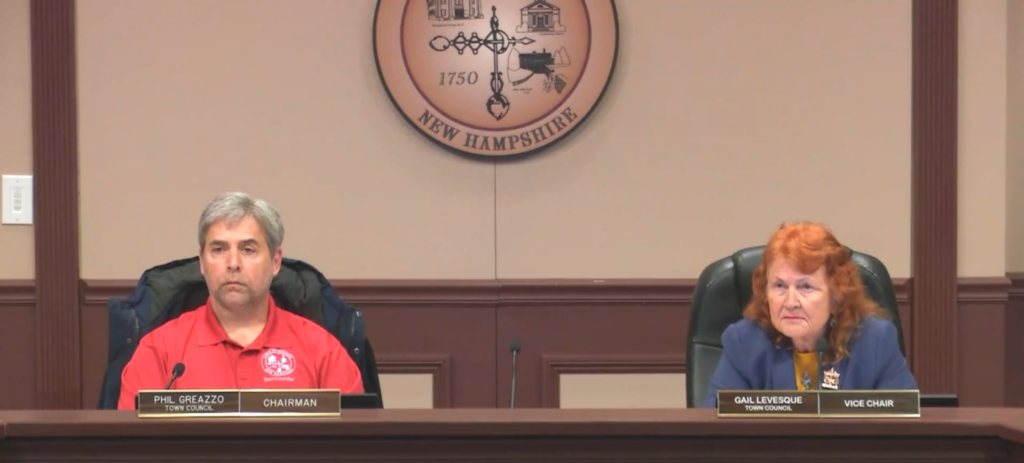
The council then ended the time for public comment and discussed amongst themselves. Council Vicd Chair Gail Levesque was concerned about the possible erosion of the historic district, but also questioned the importance of the procedural defects Dumont had expounded upon. As a Planning Board’s decision is merely shown above a ballot, Levesque predicted that voters had most likely been presented with the idea that newer houses should be removed from the historical district and voted off of common sense, the Planning Board’s support being a minimal factor.
Councilor Strand agreed that this issue clearly had to do with the letter vs. the spirit of the law, and that there were possible issues to this change in the historic district. However, he noted that he didn’t see a legal basis to overturn the amendment by holding a special meeting. Councilor Greazzo concurred.
A motion was made by Councilor Levesque for the Town Council to deny the request for a revote/ special meeting. Councilor Laura Fahey seconded the motion, and the revote was denied in a unanimous 6-0 vote.
In closing the issue, the council noted that they understood the preparation that had gone into this rehearing, and appreciated the passion on both sides.
Isabella Kifer is part of the Granite State News Collaborative’s Civic Documenter program.