
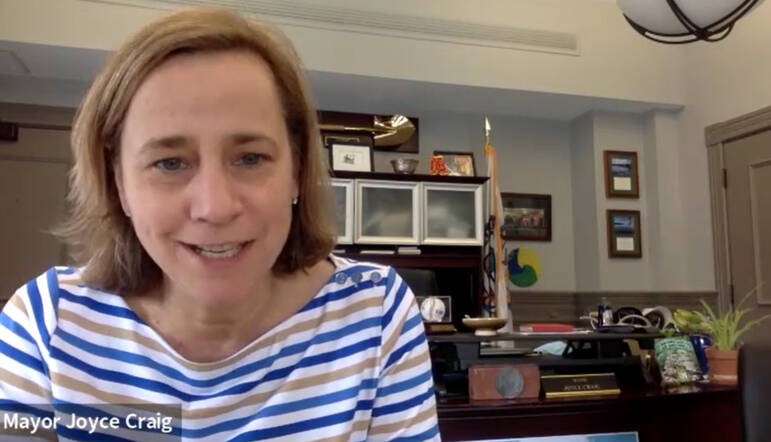
MANCHESTER, N.H. – On Thursday, Manchester Mayor Joyce Craig joined Manchester Public Works Deputy Director Tim Clougherty and New Hampshire State Representative Matt Wilhelm (D-Manchester) in an event to voice their support in the advancement of $550 billion for clean energy investments that passed the U.S. House of Representatives in November, but has stalled in the U.S. Senate.
That money was pared down from what eventually became the Infrastructure Investment and Jobs Act that was signed into law last year.
Craig and Wilhelm pointed to the new solar array launched last year in Manchester as evidence to the importance of investment in clean energy and the jobs that can be created from that investment.
“In Manchester, we’re continuing to invest in clean energy practices, including our recently-completed work on our 3.3 megawatt solar array, now the largest in the state. It’s imperative Congress pass a bill that makes bold investments needed to tackle the climate crisis and make it easier for communities to transition to clean energy,” said Craig. “I want to thank our federal delegation for their past support on clean energy. By continuing to support clean energy growth and investments, we’ll continue to improve public health and create long standing economic opportunities for all Granite Staters.”
“Projects like the Manchester solar array and the potential for a NH Civilian Climate Corps (CCC) are programs that our economy needs to create a sustainable energy future and high-quality jobs for New Hampshire families,” said Willhelm. “The process of transition to clean energy generation will create tens of thousands of jobs here in New Hampshire, and the CCC is a good start for our young people to serve their community in that transition. But, to really take hold of that opportunity, we need this critical federal funding. We’re counting on our leaders in Washington to deliver results on this package and secure this transformative investment in climate, clean energy, and high-paying, family-sustaining jobs.”
The event was sponsored by the NH Union of Concerned Scientists.