
Nancy Wilson talks eating sardines, emulating The Beatles, putting Heart on the musical map and their upcoming SNHU Arena show + and what’s in store for 2026.
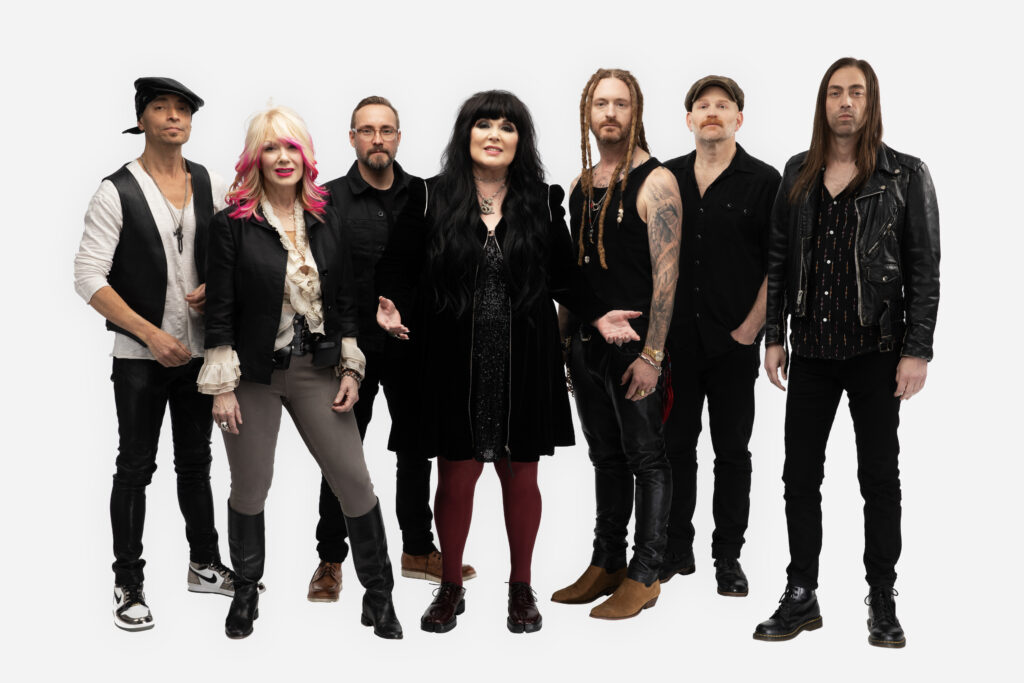
MANCHESTER, NH – Since the ‘70s, the effect Seattle rock legends Heart have had on music is undeniable. With hits like “Magic Man,” “Crazy on You,” “Barracuda,” and “What About Love,” among others, the band led by sisters Nancy and Ann Wilson, who each play a variety of instruments ranging from guitar to flute to autoharp to piano and keyboards with the latter on lead vocals, have a knack for exhibiting a dynamic approach.
This has garnered them well-documented acclaim for their live performances, and folks around Manchester will have the opportunity to experience it. This is because the Wilsons and their band are going to be turning up the volume at the SNHU Arena on December 10. The show starts at 7:30 p.m. with arena rockers Starship, featuring Mickey Thomas, opening up the evening.
Nancy and I had a talk ahead of the festivities about a legendary ‘60s rock act having a massive influence on her and her sister, a new influx of women in rock music, and how everything is on the table going into next year.
*Never buy from third-party sellers
Rob Duguay: Heart has been known for having a blend of hard rock, heavy metal and folk music into their sound, so when you and your sister, Ann, were going up, how were you exposed to this diverse array of styles? Did you grow up with your parents always playing vinyl records on a turntable? Also, what would you say made you both realize that you wanted to be rock musicians?
Nancy Wilson: Well, you kind of nailed it, you guessed right. We had a lot of music in our household growing up, everything from opera to Ray Charles and Aretha Franklin to jazz and blues, and even classical music. We were all in choirs, we all played ukuleles and stuff, and even the extended family of aunts, uncles and grandparents would all chime in and sing songs together, so we kind of came by the whole aspect of being a musician from being musical in our family. Then when we were little kids, we saw The Beatles on “The Ed Sullivan Show,” like a lot of people in our generation. It was the calling, it was the lightning bolt that called you to the nearest music store to immediately make sure you had a guitar in your hands.
We were just hell bent on becoming guitar players like The Beatles, forming groups like The Beatles, singing harmony parts like The Beatles, and learning every chord to every Beatles song that existed by heart, without reading music necessarily, just by ear. We just decided that we were going to be The Beatles, not trying to be the girlfriends. We were not yet aware of any real sexual identity at that point in our lives because I was maybe 9 years old at the time, so I wasn’t a person yet, I was just a kid. Ann was 12 , and we were just like, “Let’s be The Beatles!,” so that’s kind of the whole trajectory where it all got going with all of the musical DNA that we already had from our family. We were just naturals at the job of music, and we’ve had a few regular jobs, but mainly, we’ve only ever done music for our life’s work.
RD: Very cool, that’s awesome.
NW: Yeah, not a lot of people can say that.
RD: Absolutely, not a lot of people can. You and Ann got to see The Beatles play in Seattle during a tour they did of the United States, right? What was that like seeing them as a kid?
NW: Yeah, we saw them at the Seattle Center, and it was during the World’s Fair a couple years after we got to Seattle. They were famous before they even came to town, they were already famous when they landed from England. I remember getting every teenage magazine at the store because we had to learn everything about them and we heard their songs on the radio, so we were superfans, but we were also musicians who had a band already when they came to play Seattle. We wore matching uniforms that our mom actually sewed that matched The Beatles’ uniforms (laughs), so when we went to the show to see them, we had outfits just like theirs. We were really courageously musical about going to see The Beatles while hoping they would see us wearing the same clothes as them, but it was really an amazing experience back in 1966 when people had flash cameras.
Every time one piece of equipment got carried up and out into the middle of the arena, there was a round stage at the center, especially Ringo’s kick drum that had The Beatles logo on it, the place lit up like it was daytime because every flashbulb was going off and off and off and off at the same time. When The Beatles finally came out, the collective scream was like white noise, completely loud white noise, for a long time. For the entire 30 minutes that they played, it was like an ocean of white noise where it would get louder and then a little bit softer, then louder again and softer, so you could barely hear the music the entire time, but we were taking notes, we were not just screaming fans because we were serious musicians. (laughs) We were too cool to scream, I guess.
RD: I get that, you wanted to study the craft. With a couple brief hiatuses, Heart has been a fixture in the rock music spectrum since 1973, so what would you say has been the biggest credit to the band’s longevity? Not many bands can say that they’ve been around for roughly 5 decades.
NW: I know for a fact that earning your sea legs when you’re going to be a sailor, you travel the sea, and we did a lot of hard work, a lot of playing clubs, and a million hours of rehearsing. Learning how to write, learning how to play live, learning how to sing in a loud, cacophonous club stage and how to not suck, basically. How to be good and how to be confident, so we did all the work, the travel, and we paid the dues, as they say. We ate sardines [laughs], it was the big college try when you’re in your early to mid-20s, and you’re made out of rubber, so you can burn the candle at both ends during those years, and we seriously burned our candle while getting seriously confident with the craft. By the time we made our first album in ‘75 with “Dreamboat Annie” in Vancouver, we were really good, and I had been sitting in with the band, but I officially joined the year the album came out.
I worked on the album with them and we took the album out on tour while going to radio stations in a rental car to meet the DJs and work the record. We physically drove around to meet the program directors at these radio stations, so we really did the hard work. If you’ve ever seen a movie called “Coal Miner’s Daughter,” it was kind of like that.
RD: Yeah, the movie about Loretta Lynn starring Sissy Spacek.
NW: There’s the scene where she goes to the radio stations, she sweet talks the DJ and stuff like that, so we did it old school in a hard working kind of way. The first album, region by region, did really well, and by the end of 1975, it was going up the charts and by the following year, we had already toured the entire globe while playing around 200 shows. Then we had to make another album quickly, so we were a classic case of rock & roll 101, from the baby boom generation anyway.
RD: The past 15 years has seen a new generation of women getting into rock music in various capacities, either as a lead vocalist, an instrumentalist of some sort, or even as record producers. A good amount of them view Heart as an influence, so what are your thoughts on having this particular impact and what is the best advice you can give to a female musician who is making their way either as a solo artist or as part of a band?
NW: My take on the whole thing is that it’s really about time because a lot of women have been kind of conditioned to feel like they don’t belong in a band or they’re not supposed to be playing guitar because it’ll ruin your fingernails or something. I just really applaud these young women who are coming up these days. I know some of these guys and I really love their songwriting, like Chappell Roan. “Pink Pony Club” has an ideally perfect structure songwriting-wise and it’s a perfect song. I’m also impressed with Lucy Dacus and I love Phoebe Bridgers, there’s a lot of really cool girls coming up these days in music and my advice to them is don’t be pressured to be something you’re not. If you want to come off like a glam goddess, then do it to the hills. Chappell Roan goes beyond with her imaging, she’s completely a gorgeous and theatrical creature, almost like a cartoon, and she’s super talented too.
I think it’s a hard road and to catch the zeitgeist like Chappell Roan did is almost an anomaly. A lot of girls will have a much harder time getting their competence together and finding out what their caricature is in music so they’re not going to sound like every other wispy girl singing a little folk song. There’s a lot of similar sounding girls and guys out there, and even bands out there, but I think it’s just great with what’s happening because there’s more and more coming up. I just say more power to them all, it’s a great direction for the culture when more women are stepping forward as creative spirits and leading the arts like that.
RD: I have to agree. Being from the West Coast, what are your thoughts on coming up to perform in New Hampshire at the SNHU Arena? Have New England audiences ever stood out to you in any particular way?
NW: In different areas of the country, there’s a certain character in the areas you visit. In the South, there’s a certain southern character and they’ve always loved Heart, especially Texas and the Deep South. Even if we’re kind of uppity women in the culture tube, they still appreciate us while letting us be who we are. Up in New England and New Hampshire, we come from the Northwest, so we know about cold weather and the kind of college-town feeling that happens in those cozy, small towns. It’s a really great audience because people are intelligent and they come through a lens of listening to the lyrics, they’re not so much of a party audience as they are a listening audience.
Everywhere we go, there’s a character, like in Canada. During spring in Canada, you’ll find some of the sweetest audiences ever because a lot of people don’t even try to bear the weather to try and get up there in the first place, unless it’s during the summer. I love that part of the world, I feel akin to it.
RD: That’s understandable, especially with you being from the Seattle area and there being a temperate climatee. Looking forward to next year, are there any plans for Heart to make a new record, or do you have any plans for another solo album? I know you’ve been putting out a few different solo records over the past few years.
NW: Right now, we’re in deep discussions about 2026 and how to get the landscape of the year together. We’ve kind of been doing the similar thing for the last year or so, even though we had a big postponement because of Ann’s health issue, which is now resolved and we’re back on the track again.
RD: Glad to hear that.
NW: Yeah, she’s doing great and it’s really fun doing shows right now. I think 2026 is going to be an important victory lap year for Heart, and it’s probably going to take us to Europe, but I can’t exactly spell it out in particular because there are four or five scenarios that are on the table. We’re trying to figure out the combination of schedules and how it’s gonna pan out for next year, but we’ll be out there, for sure. As far as an album goes, me and Ryan Waters do writing together, and Ann and the other guys have already recorded another solo album for her stuff, but we’ve started talking about putting some stuff together as Heart. Her band is called Tripsitter and I have a couple of different bands with Ryan, but anyway, long story short, I’ve got some new songs going for maybe a duet thing, but I don’t know if they’re Heart songs exactly.
I got some exciting songs coming in that could be Heart songs, or I could get a duet thing going with Chappell Roan or somebody like Lucy Dacus as well. Every possibility is wide open right now, and as you can see, no real concise answer, but all possibilities are on the table.