
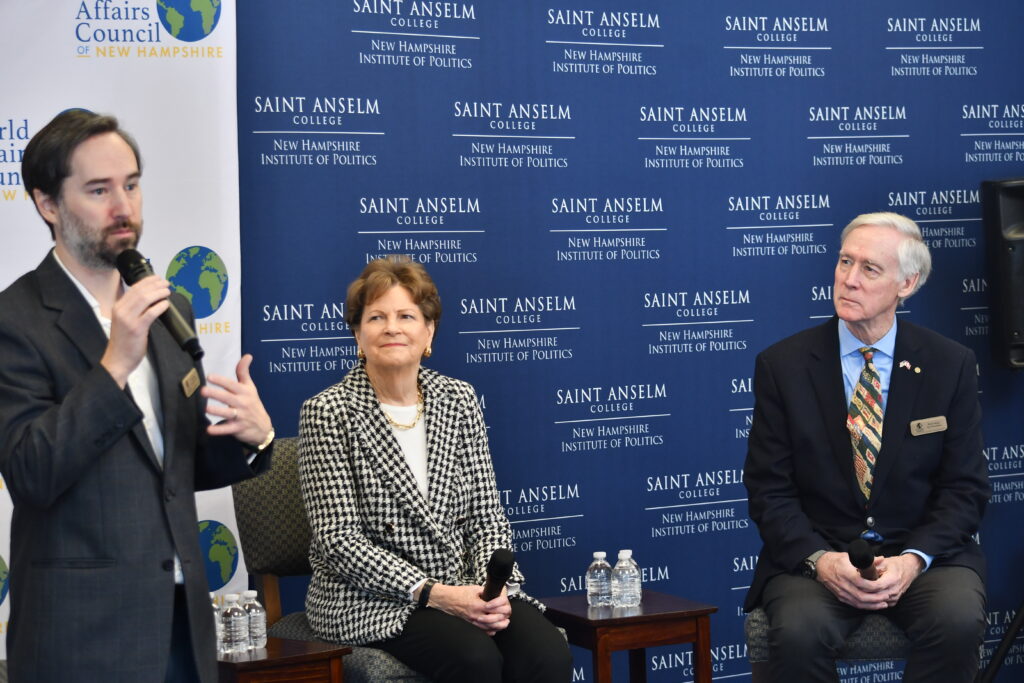
GOFFSTOWN, N.H. – Recently, Donald Trump has strained America’s relations with its European allies over various issues, perhaps most notably his threats to annex Greenland. On Friday, Feb. 6 at the New Hampshire Institute of Politics at Saint Anselm College, U.S. Senator Jeanne Shaheen (D-NH) and former U.S. Ambassador to Denmark Richard Swett joined an event examining the effects of Trump’s Greenland policies on international relations.
Hosted by the World Affairs Council of New Hampshire, Shaheen and Swett thoroughly agreed with one another, that Trump’s approach as president toward Greenland has significantly damaged the United States.
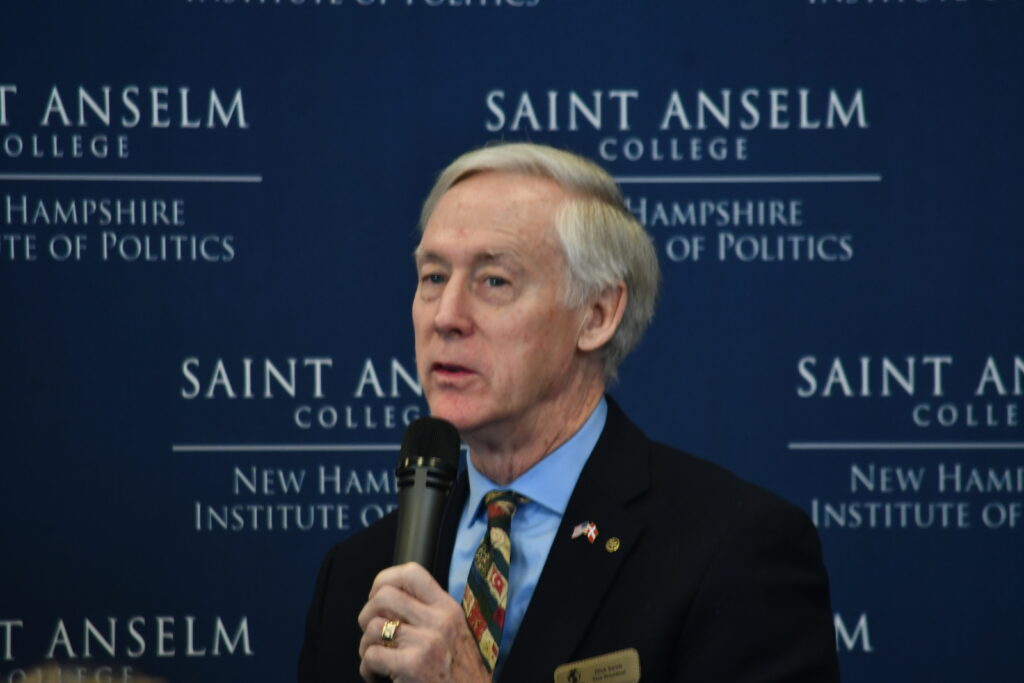
Swett noted that while Trump’s attempts for the U.S. to purchase Greenland began in 2019, they were not the first time America has attempted to purchase Greenland from the Kingdom of Denmark. U.S. Secretary of State William Seward attempted to make a deal for the island in the 1860s, eventually instead giving an offer to Russia for the purchase of Alaska once Greenland could not be obtained. An attempt in 1910 eventually ended up in the transformation of the Danish West Indies into the U.S. Virgin Islands and another attempt by Harry Truman in 1951 led to a North Atlantic Treaty Alliance (NATO)-focused agreement that allowed a U.S. military presence in Greenland.
While these attempts did not result in the annexation of Greenland by the United States, they didn’t result in damage to relations between Denmark and the U.S. That has not been the case according to Swett, who said that colleagues in Denmark have expressed confusion and fear over the Trump administration’s actions. Swett said that Trump’s “maximalist” negotiation approach – to begin with an extreme position that is unlikely to be accepted so an eventual middle ground will be moved closer to that extreme position – does not work in the world of diplomacy.
“If you question the credibility of a position, that impacts the trust between both parties,” said Swett. “You have to establish trust while also being unrelenting.”
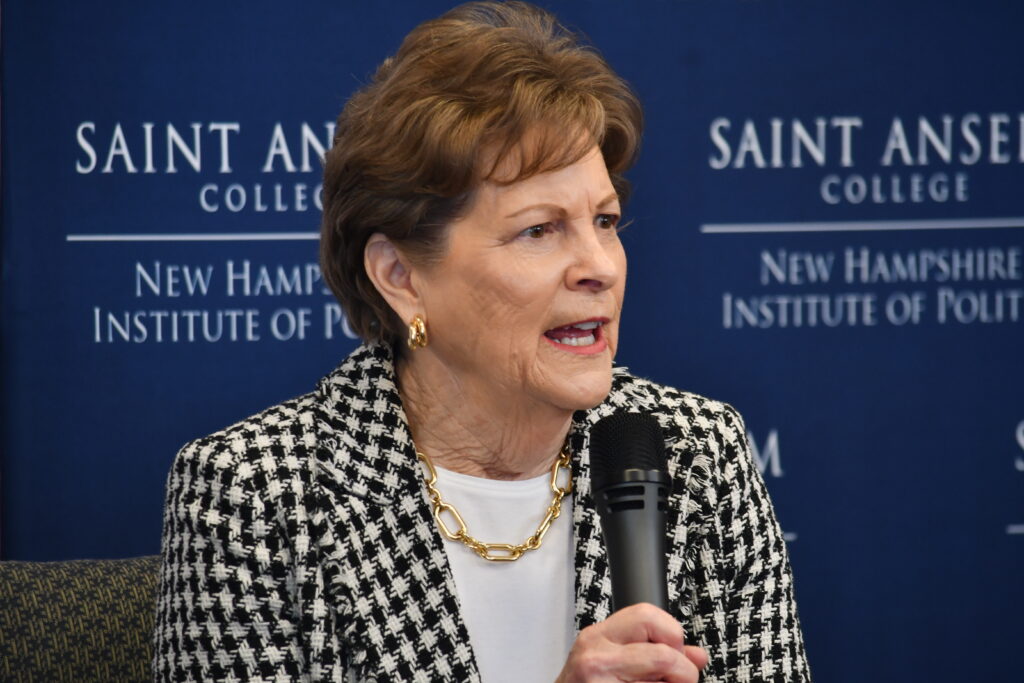
Shaheen, who is the ranking member of the U.S. Senate Committee on Foreign Relations, said that she has heard comparable concerns from Danish leaders and has tried to reassure Denmark that it still has a strong relationship with much of America and that Denmark is an important part of NATO.
In terms of Trump’s actions, however, Shaheen said that she is far more cynical, stating that the belief among influencers in Washington is that Trump’s behavior is intended to distract from issues like the rising cost of living and the Epstein Files.
Shaheen stated that there was relief that Trump ruled out a military invasion of Greenland, noting her statements at a trip last month to the University of Copenhagen where she speculated on the aftermath if an American invasion did occur.
“As (Danish Prime Minister Mette Fredricksen) has said, an American military takeover of Greenland would threaten NATO as we know it. And even short of that, just the suggestion that the U.S. would take Greenland by force does real damage to America’s national security. It erodes decades of hard-won confidence among allies and weakens the sense of security that comes with it,” said Shaheen at the event in Copenhagen.
However, she also noted that the impact of Trump’s words should not be underestimated and that the only real winners from Trump’s actions were America’s enemies.
“We shouldn’t underplay how significant the fallout from this is,” she said during Friday’s event.
Both Swett and Shaheen agreed that it would likely take years, if not longer, to rebuild trust with allies following Trump’s actions regarding Greenland. Shaheen also stated that Trump’s refusal to nominate U.S. ambassadors to several European countries is also likely to likely to hamper America’s ability to rebuild trust with its allies.
Additionally, there was agreement between Shaheen and Swett that Trump’s reasons for the takeover, challenging military interference from American adversaries and access to rare earth minerals, could have been accomplished without an invasion given the 1951 agreement.
Shaheen was asked what normal people can do to have an impact on Trump’s actions. She replied that in addition to changes in the stock market, Trump also alters his actions due to polls and personal interactions with elected officials, so she urged people to contact their local, state and federal elected officials and ask them to convey their thoughts to Trump.
“It doesn’t just matter what happens at the top, but also at the bottom. The grassroots make an incredible difference. If we like it, we should speak up. If we don’t like it, we should also speak up,” she said.
A video of the event is available on the World Affairs Council of New Hampshire website.