
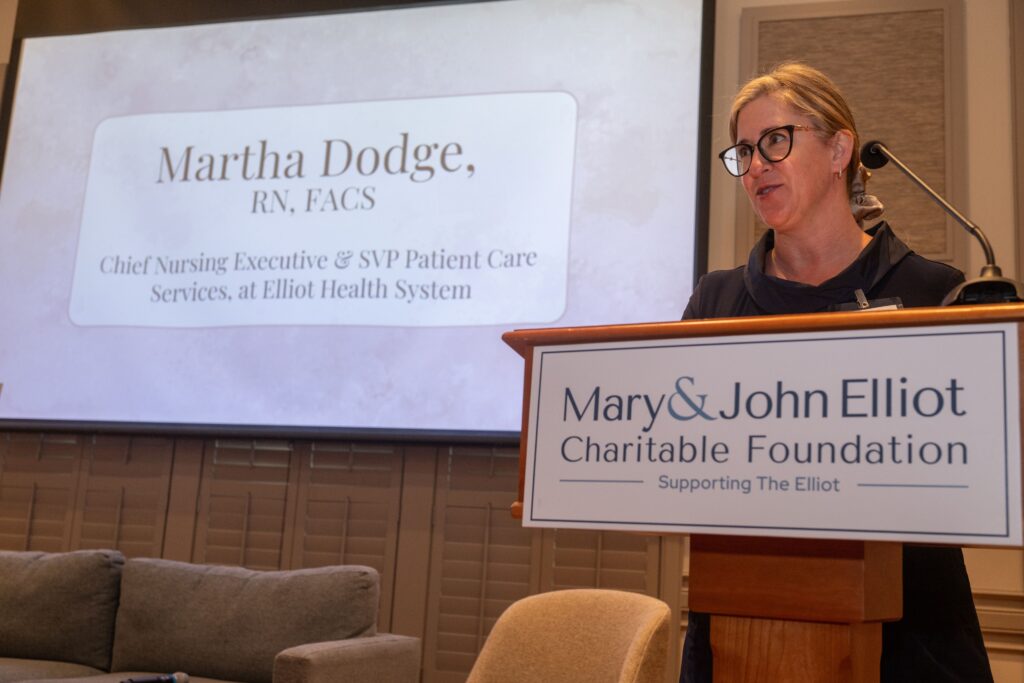
MANCHESTER, NH – Women are living longer, asking more questions and — finally — becoming the focus of their own healthcare.
But according to Martha Dodge, chief nursing executive and senior vice president of patient care services at Elliot Health System, there’s still a critical gap between what women experience and what they know.
That gap — and how to close it — was at the heart of a recent Women’s Leadership and Health Breakfast hosted by The Mary & John Elliot Charitable Foundation, where more than 200 attendees gathered to hear from local medical experts and business leaders.
For Dodge, the message was clear: women need to start putting themselves on their own priority list.
“Women are caregivers. We take care of everyone else,” she said. “This was about them getting what they need and taking care of themselves.”
One of the biggest misconceptions discussed at the event may also be the most dangerous.
“Women don’t know this, but the number one killer of women is heart disease — not cancer,” Dodge said.
While breast cancer awareness has grown significantly — and survival rates continue to improve — heart disease remains the leading cause of death among women.
Part of the problem is recognition.
Symptoms in women often don’t match the textbook warning signs many people expect. Instead of sudden, crushing chest pain, women may experience more subtle indicators like arm discomfort, jaw pain or fatigue — symptoms that are easier to dismiss or misinterpret.
Dodge, who has spent more than 30 years in healthcare, said the industry is only now beginning to fully understand how differently disease presents in women.
“Women’s health wasn’t a thing 30 years ago,” she said.
Historically, much medical research was conducted on men — with findings later applied to women. That’s changing, and Dodge believes the shift will have lasting impact.
“We’re finally realizing we have to look at women differently,” she said. “That’s going to change everything.”
Another major focus of the discussion: menopause and hormone replacement therapy (HRT).
For decades, many women avoided HRT due to fears tied to a widely misunderstood study. Now, as new research emerges, those assumptions are being revisited.
“We’re hearing the number-one reason people are coming in is to talk to their providers about hormone replacement therapy,” Dodge said.
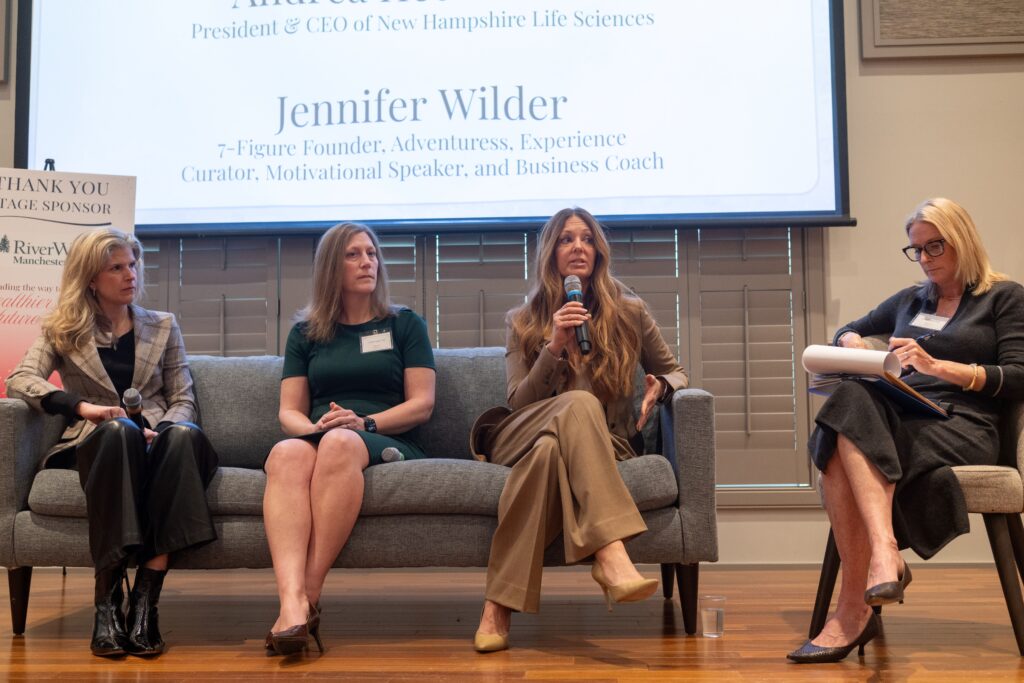
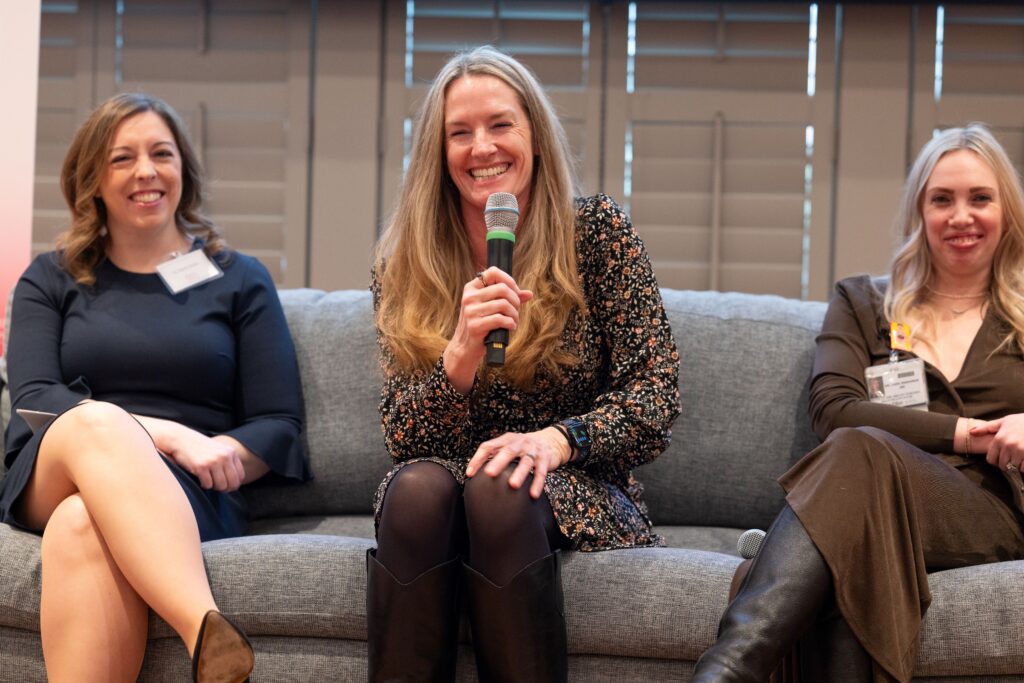
Dr. Carrie Decato Ayers, anesthesiologist at Amoskeag Anesthesia and Elliot Hospital and owner of six Playa Bowls locations across New Hampshire Jennifer Wilder, founder of Laney & Lu, Palette, and Ginger Fox Baker, panel moderator Lynn Faherty Zimmerman, owner and publisher of Greet Bedford and Greet Windham. Courtesy Photo
She said women are increasingly seeking help for symptoms that were once rarely discussed — not just hot flashes, but sleep disruption, mood changes, skin issues and impacts on relationships.
“There’s all kinds of symptoms… not just hot flashes,” she said.
The renewed conversation reflects a broader cultural shift — one where women are more willing to advocate for their health and quality of life.
Despite growing awareness, Dodge said too many women still delay care — often until symptoms become serious.
That trend worsened during the COVID-19 pandemic, when routine screenings were postponed or skipped altogether.
“We’re seeing people come in with more advanced disease because they missed screenings,” she said.
From mammograms to colonoscopies to routine labs, early detection remains one of the most effective tools — yet one of the most underused.
While medical advances continue, Dodge emphasized that some of the most important health tools are also the simplest.
“If you could prioritize anything, it’s sleep,” she said, adding that exercise is equally critical.
Both play a significant role in physical health, mental well-being and disease prevention — yet are often sacrificed in the demands of daily life.
Access to care remains another challenge — particularly for younger or self-employed individuals who may lack consistent insurance coverage.
As a result, some are turning to urgent care, emergency departments or even online sources instead of building relationships with primary care providers.
“We’re seeing people using the emergency department for primary care,” Dodge said.
Healthcare systems, she said, are trying to adapt — through options like virtual visits and remote monitoring — but there’s no replacement for a trusted provider who understands a patient’s history over time.
“Our VirtualER is doing great, and I can’t recommend it enough… a lot of those visits can be handled right there — they can send you for labs or X-rays and follow up without you ever having to go to the emergency department,” Dodge said.
At its core, Dodge said, the message of the event — and the moment in healthcare — comes down to empowerment.
Women are asking more questions. Research is evolving. Conversations that were once taboo are now front and center.
The next step is action.
“I hope people left thinking, ‘I’m going to do something different,’” she said.
Whether that means scheduling a screening, getting better sleep or simply paying closer attention to symptoms, Dodge’s advice is straightforward:
Take care of yourself — not last, but now.