
Publisher’s Note: Minnesota Stories are being shared with members of Granite State News Collaborative via Twin City News Wire.
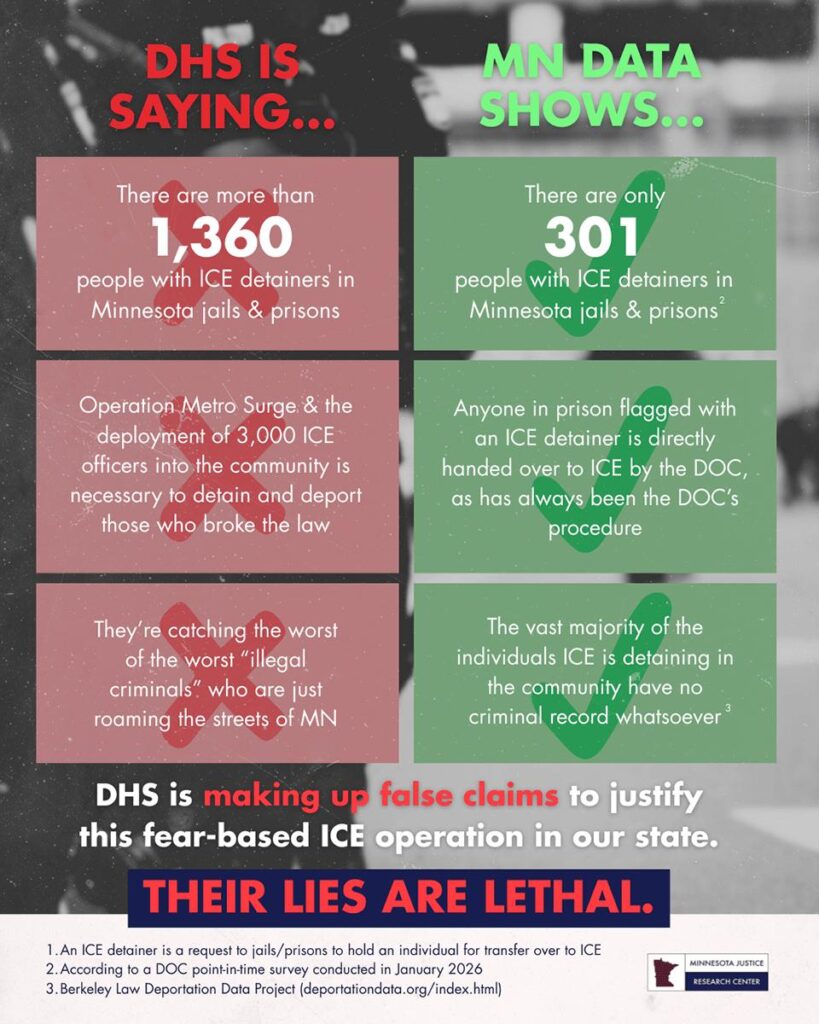
MINNEAPOLIS, MN – Amidst a surge of Immigrations and Customs Enforcement (ICE) activity across the Twin Cities, stoking statewide fear as thousands of Department of Homeland Security (DHS) agents conduct militarized raids and make illegal stops and arrests in an unprecedented immigration operation, Minnesotans have come together to stand with its immigrant community.
Since ‘Operation Metro Surge’ began in December, faith groups, community organizations and families have stepped up to support immigrant neighbors whose daily lives have been upended by ICE, collecting and sharing resources and offering protection and care in whatever ways they can — as Minnesota’s immigrants have been doing all along.
Immigrants have shaped Minnesota’s diverse communities in innumerable ways — spreading joy, being in solidarity and remaining resilient in the face of hate. As Jen Kilps wrote for Religion News Service, our home is shared.
By the Numbers
Minnesota’s immigrant community represents a significant portion of the state’s population, as well as the total population of immigrants living in the U.S. Using 2023 data, the American Immigration Council estimated that close to 500,000 immigrants were residing in Minnesota, representing 8.4 percent of the state’s population. The Immigration Research Initiative ranks Minnesota 23rd on a list of all 50 states for immigrant percent of population.
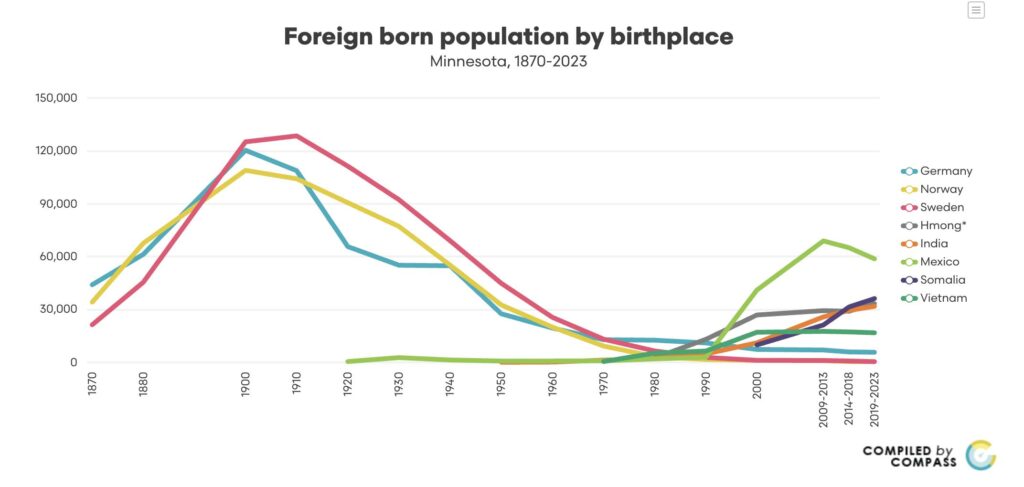
Some of the top countries of origin for Minnesota’s immigrants include Mexico, Somalia, India, Laos, and Ethiopia. While Mexicans remain the largest immigrant group in Minnesota, Minnesota Compass says that over the past decade, the number of Mexican immigrants living in the state has dropped. Minnesota’s Somali population, the second largest immigrant population group in the state, is the largest in the country. Minnesota’s Hmong population — including many immigrants from Laos — is one of the largest in the country.
Massive immigration from Scandanavian countries in particular populated Minnesota in the earliest days. Mexicans in particular keep numbers up for economic growth and business supports.
Who Is Authorized and Protected From Deportation?
The term ‘unauthorized immigrant’ is widely used among researchers and policy analysts to refer to any non-citizen who is living in the U.S. without legal status. The unauthorized immigrant population is generally made up of individuals who have entered the country without inspection, or who have overstayed a legal visa, and those referred to as ‘undocumented immigrants’ — another common label that emphasizes a lack of certain immigration papers authorizing their stay.
Immigrants who are legally authorized to enter, stay, and work in the U.S. include green card holders, naturalized citizens, previously unauthorized immigrants who were later granted legal residence under the 1986 Immigration Reform and Control Act, and temporary residents with specific work and student visas.
An individual may also receive temporary permission to stay in the U.S. if they are seeking asylum. This form of protection is offered to those who meet the international legal definition of a refugee — someone who has been forced to flee their country due to persecution or fear of persecution, war, or violence, according to the U.N. Refugee Agency.
Importantly, those who have applied for asylum and await a ruling are not considered legal residents, but they cannot be deported while their claim is still pending. In June 2023, there were 2.6 million asylum applicants living in the U.S.
Many unauthorized immigrants may hold other specific immigration statuses that protect them from deportation. These permissions, allowing individuals to live or work in the U.S., include but are not limited to Temporary Protected Status (TPS) for those who cannot return to their home country because of civil unrest, violence or environmental disasters, Deferred Action for Childhood Arrivals (DACA), and humanitarian parole.
As of 2023, there were an estimated 37.8 million lawful immigrants living in the U.S., representing 73 percent of the country’s total foreign-born population, according to the Pew Research Center. Of its 14 million unauthorized immigrants, roughly 6 million had been granted some protection and 8 million had no protection.
In Minnesota, there were an estimated 80,400 unauthorized immigrants, roughly 16.7 percent of the state’s total immigrant population, as of 2023, according to the American Immigration Council. Unauthorized immigrants made up around 1.4 percent of Minnesota’s entire population of over 5 million.
How Minnesota’s Immigration Patterns Have Changed
Immigration has long been part of Minnesota’s history and identity as a state. Like much of the country, its first large group of immigrants arrived from Europe in the mid-1800s through the early 1900s.
By the 1890s, 40 percent of the state’s population was foreign-born, compared to 11 percent of the U.S.’s total population.
Around this time, Minnesota also began welcoming a number of Asian immigrants, with the arrival of the first Chinese immigrants in the 1870s, who had left the West Coast to escape racial violence and bigotry. Some Japanese immigrants relocated to the state after the bombing of Pearl Harbor in 1941. After the fall of American-supported governments in Cambodia, Laos, and South Vietnam in the 1970s, a huge wave of individuals from those countries fled their countries and came to the U.S. as refugees, many of them Hmong.
At the beginning of the 20th century, Minnesota also became home to a significant number of Latino immigrants. These were mostly migrant workers from Mexico or Texas, who came in search of economic opportunities and largely settled in neighborhoods in Minneapolis and Saint Paul, especially East Side’s Swede Hollow.
Somali refugees started arriving in the U.S. in the early 1990s, to escape the civil war in their home country, which broke out after the collapse of the Somali government. Since then, Minneapolis’s Cedar-Riverside neighborhood has become home for much of the state’s Somali population.
Throughout the end of the 20th and early 21st century, Minnesota’s immigrant community has continued to diversify in its ethnic makeup.
How Mass Deportation Impacts the State
Making up about 11 percent of Minnesota’s workforce, immigrants represent close to 10 percent of the state’s entrepreneurs. They also account for sizable shares of many of Minnesota’s top industries, including transportation and warehousing (16.1 percent); manufacturing (15.7 percent); professional, scientific, administrative and waste services (12.1 percent); health care and social assistance (11.7 percent) and construction (10.2 percent).
Many also work on farms, in restaurants, in cleaning and janitorial services, as nail technicians, and across many other sectors and spaces. Immigrants are an essential part of Minnesota’s labor force, and the loss of a significant number of workers poses threats to the state’s economy.
Minnesota already has a relatively low percentage of unemployed workers — with a 3.3 percent unemployment rate in late 2024, compared to a national average of 4 percent; removing a large number of immigrants from the workforce will increase challenges for business needs.
Immigrants also collectively hold substantial spending power as consumers. In 2022, Minnesota’s unauthorized immigrant population alone paid an estimated $222 million in state and local taxes.