
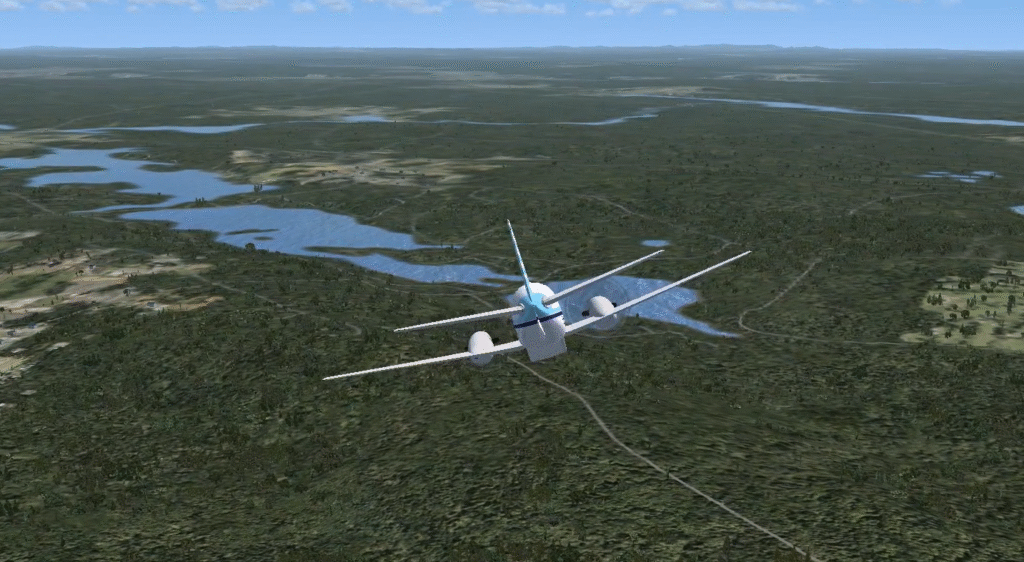
MANCHESTER, NH – A faulty horizontal stabilizer rod – the part of an airplane that keeps it from pitching downward uncontrollably – was the cause of a 2023 Maine crash of a Manchester-based airplane that killed its two pilots.
The twin-engine Beechcraft C99 belonging to air freight company Wiggins Airways was too damaged in the crash to do a functional test, but an examination of the part in question showed it had become detached at an unknown point in time, and the pilots likely wouldn’t have been aware of the issue until the crash.
The pilots’ controls were in the proper operating positions, according to the report, meaning that it was nothing they did that caused the plane to go in seeming seconds from normal operation to plummeting into the woods in central Maine on a clear summer late afternoon.
“The horizontal stabilizer trim was likely near the full-nose-down position at impact,” the final report of the National Transportation Safety Board investigation into the accident said. The report was concluded in August and posted online last month.

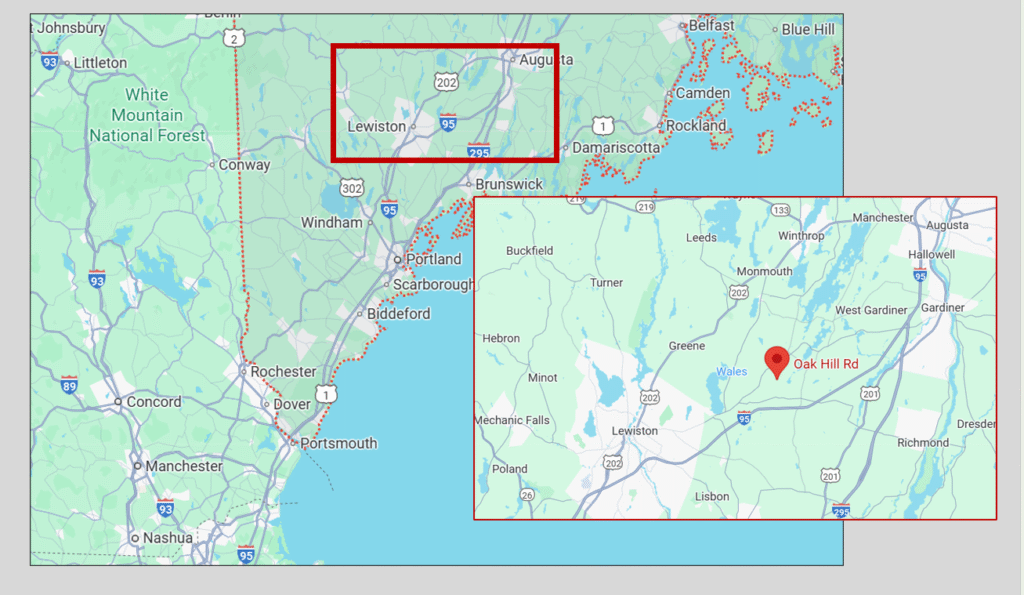
Pilots James Shepard-Kegl, 69, of North Yarmouth, Maine, and Jumaaine Omari Stanley Melville, 37, of St. Petersburg, Florida, were killed in the Aug. 22, 2023, crash in the woods of Wales, Maine, about 10 miles from the Auburn, Maine, airport.
Shepard-Kegl was an experienced pilot, with 14,700 hours logged as of a year ago, and had worked for Wiggins Airways for several years. Melville was newly hired and on his third training flight, and had 1,302 hours of flight time, according to the NTSB report.

The two flew for Wiggins, which has regular freight-hauling flights between the Manchester-Boston Regional Airport and the Lewiston-Auburn Municipal Airport, in Auburn, Maine.
“The highly fragmented wreckage was indicative of a high-energy impact,” the report said. “The engines and propellers were separated during the impact sequence and showed evidence of operation at high power.”
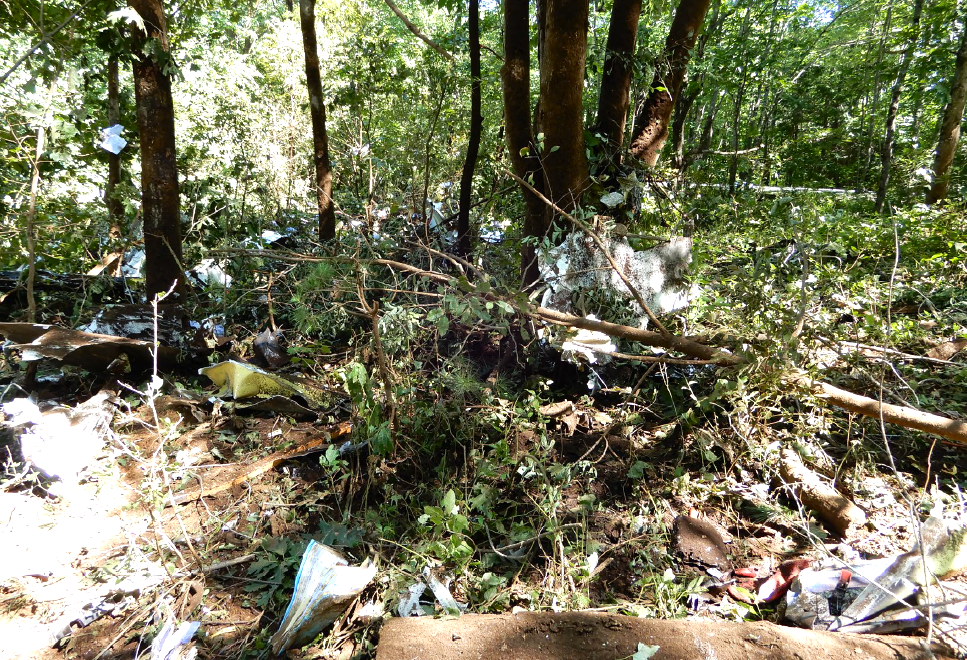
The wreckage path was about 424 feet long and about 100 feet wide. Photos of the site show scattered pieces of twisted metal among the woods, little of it recognizable.
The last maintenance on the horizontal stabilizer trim was in February 2020, when the horizontal stabilizer actuator was removed and replaced, according to the report.
Wiggins Airways leased the plane from UAS Transervices Inc. of Boca Raton, Florida, according to the NTSB.
The NTSB is an independent federal agency that investigates every civil aviation accident in the U.S., as well as other transportation accidents. It determines the probable cause of accidents and issues safety recommendations aimed at preventing future occurrences. It does not assign fault or blame, but its charge is to conduct a fact-finding investigation.
A disconnected rod
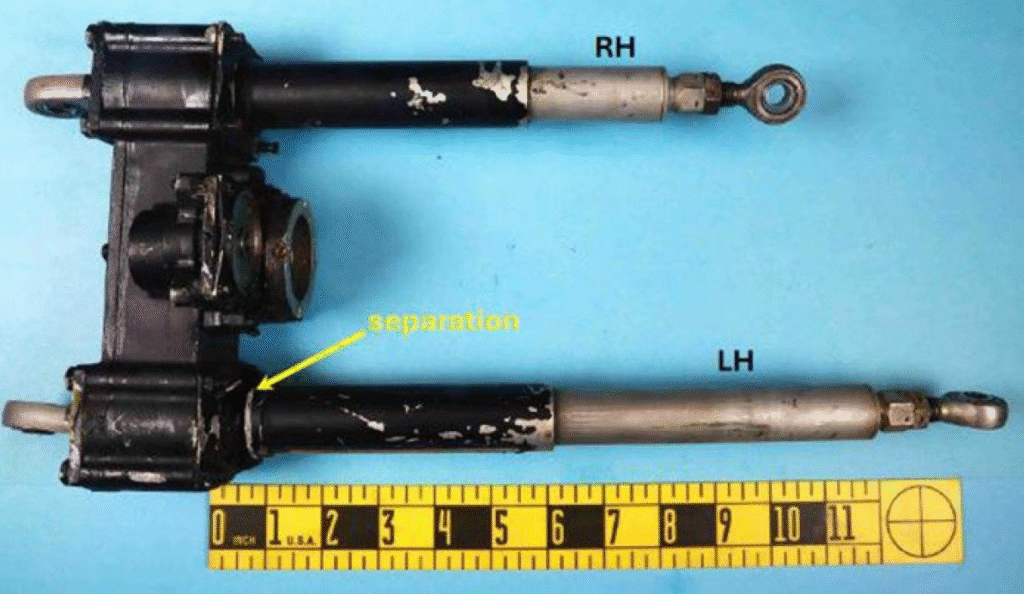
The horizontal stabilizer trim in a Beechcraft C99 is driven by two cylinder rods in the back of the plane’s fuselage. The investigation found that one of the rods was disconnected, but it hadn’t happened during the impact of the crash. The connecting bolt, nut and washers weren’t found in the wreckage, even though all other pieces of the airplane were. Examination of the rod with the missing pieces also showed it hadn’t broken during the crash in a way that would’ve ejected those pieces away from the site. The nuts, bolts and washers of the other rod, though it broke in the crash, were intact.
The missing hardware also secured the control rod to the motion-indicating gearbox that provided the pilots with aural and visual indications of the movement of the stabilizer and its takeoff position. Since the gearbox was disconnected, the pilots would have been missing the information they needed that the equipment was not in its correct position, the report said. The gearbox was just an indicator, it didn’t control the stabilizers in any way.
“The horizontal stabilizer trim was likely near the full-nose-down position at impact,” it said.
“Although either actuator cylinder rod was capable of independently operating the stabilizer trim, the airplane manufacturer considered operation with only one cylinder rod a ‘limited emergency operation’ mode,” the report said. It said that the manufacturer didn’t know how long this model of airplane could operate in that mode, or what the effects of operating in that mode for any length of time would be. The investigation, too, couldn’t determine the effects of the pitch trim operating with only one cylinder rod attached for an undetermined, but possibly extended, duration, the report said.
A safety-conscious trainer
Steve Parsons, chief pilot at Wiggins Airways, told investigators that Shepard-Kegl was safety conscious, and “always looking for safer ways to do things.” He was a mentor to other pilots and helped design a new checklist for the C-99, the report said.
Parsons said that Shepard-Kegl was Melville’s training captain, and they always tried to have the trainee fly with the same training captain throughout training.
A preliminary report on the crash released by the NTSB said that the plane missed its approach to the Auburn airport, but the final report said that the missed approach was part of the training exercise.
With Melville at the controls, the plane conducted a missed approach to the Auburn airport, then went into a holding pattern at 3,000 feet “consistent with a normal training profile,” the report said.
But as the airplane was completing the first turn in the holding pattern, it pitched over and accelerated, then dropped into the woods, nose down, at an airspeed exceeding 250 knots, which is about 288 mph.
There was no distress call – the crew was not communicating with air traffic control at the time, which they weren’t required to do, according to the report.
The plane had arrived in Auburn from Manchester at 8:06 a.m. Tuesday, Aug. 22, the day of the crash, after a 30-minute flight. The airplane’s last previous flight was Monday, Aug. 21, from Manchester to Auburn, taking off at 6:35 p.m., landing at 7:04 p.m., then returning to Manchester at 7:33 p.m. and landing at 8 p.m. No issues with the plane were reported.
The report said its last inspection was two days before the crash.
The area where the plane crashed is largely rural and forested, with some farms and lakes. It’s halfway between Lewiston-Auburn and Maine’s capital city, Augusta.
Witnessing the crash
The airplane crashed at 5:41 p.m., 32 minutes after it took off from the Auburn airport. On its approach back to the airport after a flight that looped southwest, it descended to 531 feet and slowed to 140 mph as it neared the airport nine minutes before the crash. It then performed the missed-approach exercise and ascended, picking up speed, and entered a holding pattern.
“As the airplane was completing the first turn in the holding pattern, it pitched over and accelerated,” the report said. “The airplane impacted wooded terrain in a nose-down attitude in excess of 20 degrees.”
The accident site was partially cleared of timber, but most of the wreckage was “in dense forest,” the report said. The airplane first hit the tops of 50-foot oak trees at coordinates 44.16407, -70.00038. It then hit soft soil about 140 feet from the first tree strikes.
The moments before the crash and the impact were witnessed from both the air and the ground.
Minutes before the crash, as the plane was in its holding pattern, a flight instructor in another plane, a Beech C23, was practicing maneuvers with another pilot. They saw an airplane flying in their direction at about the same altitude, then make an abrupt turn to their right. They described the encounter to the NTSB as a near miss.
The report determined the two planes came withing about 250 vertical feet of each other, but it didn’t appear to have any relation to the crash, which happened a few minutes later.
A resident of Buker Road in Litchfield, Maine, about three miles from the crash site, was outside his home when he saw the airplane overhead. It appeared to be turning and he watched it for about 15 seconds.
“Everything sounded OK,” he said. But moments later, as he was getting ready to start his tractor, he heard a loud bang. He didn’t see the crash, which was out of view, but he had no doubt what he’d heard.
“Something hit the ground really hard,” he thought at the moment.
He wrote in his statement that up until the crash, the engine sound was constant, there was no sputtering from the engine.
A certified pilot who lives in Wales, nearer the crash site, saw the plane go down.
He was working on a project in his driveway when he heard, then saw, the airplane go by overhead, then come back around, heading north at an altitude he estimated to be 3,000-4,000 feet.
He said the engines sounded “every smooth.” He watched it go over his house and then looked away for a few seconds.
“When I looked back at the plane it was now in a steep dive heading towards Oak Hill,” he wrote in his statement to the NTSB. “From that moment on I didn’t see any change in its course or attitude. As it went down the wings were level and the engines still sounded smooth.”
He said that at first, when it disappeared behind the trees on Oak Hill, he thought it might have gone behind the hill and would reappear.
“Instead after a few seconds I heard a loud boom,” he said. “I stood there in shock staring at Oak Hill not wanting to believe what I just saw. After about 30 seconds I called 911 and reported the crash.”
He said when he called 911 he couldn’t provide the address of the crash, but told the dispatcher he thought it was in Litchfield, near Jimmy Pond. He later found out it was actually closer, in Wales, about a mile and a half from his house.
He said he wrote his statement with a heavy heart.