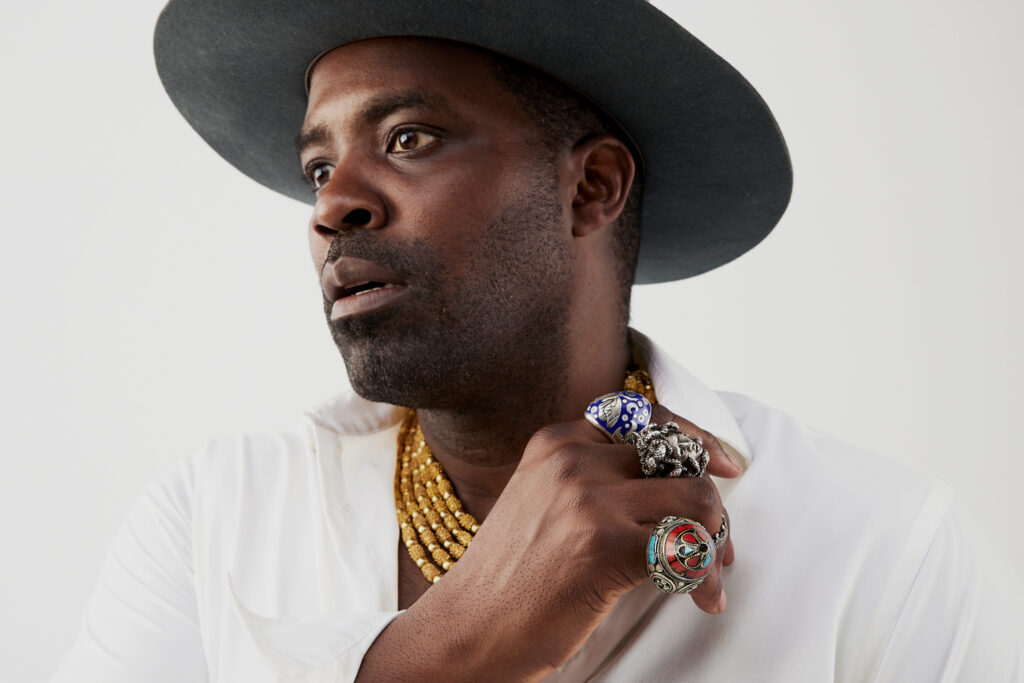
PORTSMOUTH, NH – There are certain musicians who use a style as their artistic base, but they branch off of it in a variety of directions. It’s a unique way of pushing the envelope, even though it can be polarizing among the purists and enthusiasts. When it comes to blues, Emanuel Casablanca is doing this in his own way while possessing a stellar array of tunes.
On February 5, folks who find their way to The Press Room in Portsmouth will get to experience this when he takes the intimate stage. Psychedelic blues act Lee & Dr. G are going to be opening the show starting at 7 p.m.
Casablanca and I had a talk ahead of his performance about putting out two albums last year, having a diverse range of influences, and gaining traction in the New England region.
- Website: The Press Room | Bar + Restaurant | Live Music in Portsmouth
- Venue Address: 77 Daniel Street, Portsmouth, NH 03801
- Tickets: Emanuel Casablanca w/ Lee & Dr. G | PortsmouthNH Tickets
Below: Jubilee by Emanuel Casablanca
Rob Duguay: 2025 was a very prolific year for you with you putting out two full-length records, “Hollywood Forever” and “Jubilee,” so what was the experience like making these two albums? Were they done during the same session or were they done on separate occasions?
Emanuel Casablanca: They were done at two completely different times. “Hollywood Forever” was done in pieces while “Jubilee” is part of a bigger story. Those songs along with my next album, which is coming out in May, are a collection of songs that I recorded around 12 years ago. I was in the studio with my producer, we were going through these songs, and we decided to make two albums. “Jubilee” is more blues-rock where I was really heavily inspired by Jack White and what he’s doing at Third Man Records, and the other one is more of a blues, soul, R&B kind of record, but again, those songs are over a decade old. The upcoming album has 31 songs on it, so it’s very robust, but both this one and “Jubilee” are kind of like my origin story.
RD: Very cool. You grew up in Brooklyn, and your mother was a music teacher, so how much of an effect has she had on you as a musician? I’ve read that you’re influenced by a variety of different genres of music while playing blues, so did your mom have a major role in that stylistic diversity while you were growing up?
EC: Musically, that’s where it all began, but the influence more so came from doing the opposite of what my mom was teaching me. My mother was a classically trained gospel pianist and vocalist, so her style was very strict. I got into basketball when I was really, really young, so music wasn’t even on my radar until after I was out of college and everything. That’s when I kind of reverted back to the stuff that she wouldn’t let me do, which was specifically the guitar and drums. I was playing violin, piano, and trumpet, so she’s definitely a great inspiration and she’s my hero when it comes to music, and those influences definitely helped me push forward.
RD: You just mentioned that you played basketball until college, so do you still follow the sport? Do you watch the NBA and are you a fan of a certain team?
EC: I did for a while because I knew people who were playing either in college, the NBA, or overseas or whatever, but my age group is aging out, I don’t know anybody playing anymore so I don’t really watch.
RD: Which position were you when you played basketball?
EC: In prep school, I played power forward and small forward, and in college, I played point guard.
RD: You attended Morehouse College in Atlanta, Georgia ,where you studied business finance, so what made you want to pursue that major? Was it something where you wanted to have some job security after you graduated, or was it something different?
EC: The business school at Morehouse is a very popular business school in this country, so I transferred there my sophomore year after I quit playing basketball. I had lost my scholarship and Bank of America pretty much funded the school, and it’s called the “Center for Black Entrepreneurship” now if I’m not mistaken. There’s also a plethora of other banks involved like JPMorganChase among others, so the program was less business finance and more business investment banking or corporate finance. To be completely honest, I had no idea what I wanted to do so I just kind of went along with the flow, studied finance and did the Wall Street thing my first year out of college. It sucked, so I left and I started working in the fashion business, which is how I segued into the event space.
I was doing events for a while like “Fashion Week,” and from that, I went back to school to study journalism while I was still working in the fashion business. I then met a woman who offered me an opportunity to work in philanthropy and I started working in the nonprofit sector, which is when I got involved with the “Gridiron Gala” for the United Way of New York City, a lot of experiential marketing events, and activations for nonprofits. That’s why you see a lot of my tours partially benefit nonprofits in order to raise money for them, I’m actually going to be performing at Jamey’s in Lansdowne, Pennsylvania on July 4 to support a few veterans associations.
RD: That’s fantastic. Over the past couple of years, you’ve been described in the media as an “Outlaw Blues Musician” and you’ve also described yourself as “The Bad Boy of Blues.” With having blues as your creative foundation, how do you view yourself as an artist in an overall sense? When it comes to how you view your approach to music, how do you describe it?
EC: I’m very much a follower in the sense that I’m heavily influenced by what I see and what I listen to. As I said previously, during the making of “Jubilee,” I was listening to a lot of Jack White and people have even come up to me asking if I’ve ever listened to him, and I’ve told them that’s where the heavy influence came from. I like a lot of different genres of music and a lot of different forms of the blues, so that’s what comes out when I write and I work on my stuff. I know with some of the bluesheads, all they’re listening to is blues music all day and all night, and when they perform or they play, that’s what’s coming out. For me, I do listen to a lot of the blues, but I also listen to a lot of country, a lot of hip hop, and a lot of jazz and singer-songwriter stuff.
I love a lot of ‘60s female girl pop like Patti LaBelle, The Tonettes, The Marvelettes, The Ronettes, and The Supremes. I listen to all of that, and you’re gonna get a little bit of all of it when I write, record and perform. I forget who printed it first that I was an “Outlaw Blues Guitarist,” but I guess it’s because I’m somewhat living outside of the laws of what blues music is supposed to be. It’s not necessarily intentional, it’s just what comes out.
RD: I think that’s a great approach to have. You got this show coming up at The Press Room, so what are your thoughts on coming up to New England?
EC: I’m looking forward to coming to New Hampshire and I’m really trying to break into the New England area. I’ve played the region only a handful of times, and I’ve never played New Hampshire, so I’m looking forward to it.