
 I’m setting aside my Charlie Chaplin verbally funny walk this month to look at something more serious.
The North American bird population declined by three billion birds between 1970 and 2020 scientists say. Researchers working in a protected forest in New Hampshire found that the number of beetles there had fallen more than 80 percent since the mid-1970s, while the bugs’ diversity has dropped by nearly 40 percent. The staid New York Times noted an “insect Armageddon” with losses in the quintillions. Birds need insects. Georgetown University’s bird researcher and conservationist Dr. Peter Marra says, “You don’t publish a paper on the loss of three billion birds and go back to your day job.”
“Man is part of the whole shebang,” author John Steinbeck noted. Tips on how people can help birds will follow in this article.
The State of New Hampshire’s Birds: A Conservation Guide was updated in 2020. It notes 193 species of birds in New Hampshire with 81 decreasing, 61 increasing, 50 remaining stable, and not enough data to report on the remainder. Loss of habitat, including habitat in other states the birds migrate to, can mean deep losses to the species now in decline. The New Hampshire Wildlife Action Plan identifies 60 species of birds in need of great conservation.
Project Manager Pamela Hunt, Ph.D. and Senior Biologist in Avian Conservation for New Hampshire’s Audubon Society, sees New Hampshire’s bird population in “slight decline” though we’re seeing an increase in both birds of prey and waterfowl.
It’s a fragile mix as birds are also pollinators as well as eaters of insects. “The whole ecosystem is skewered without birds doing all these different things, “ Hunt said in a NHPR interview.
A deeper look at three common New Hampshire backyard feeders will hopefully provide personality for our fine feathered friends.
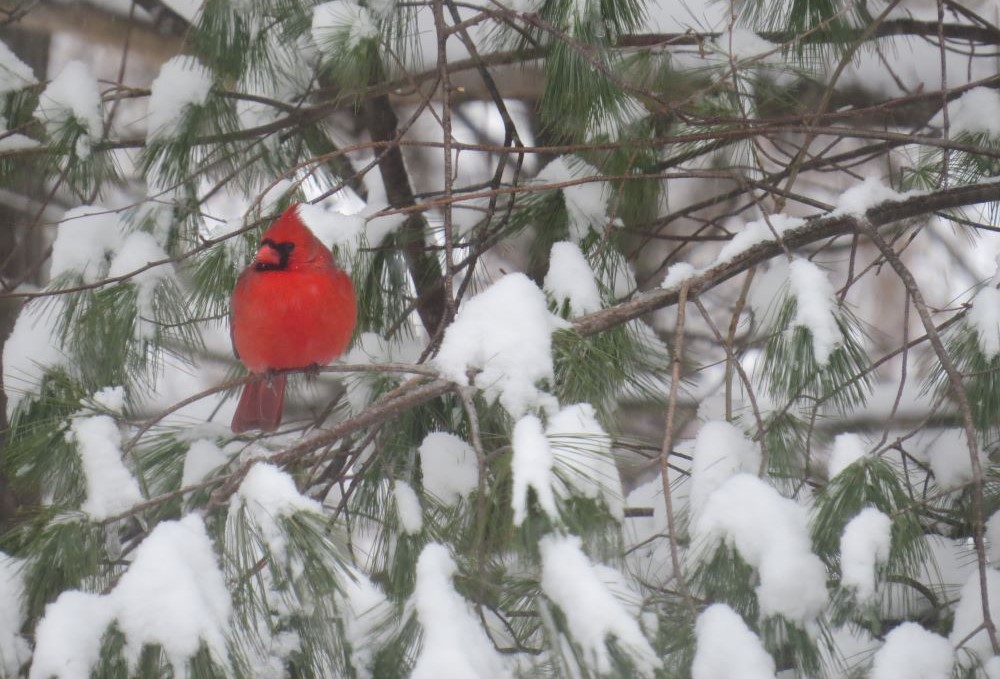
The Northern Cardinal stays in New Hampshire year-round and actually spends his or her entire life within one mile of where he was hatched. The male is bright red with his crest an indicator to other birds of his mood. The female has a light olive body with red and red-orange highlights. The species is largely monogamous though males can wander. The species has been increasing .33 percent annually and nationally since 1966. “Cardinals prefer sunflower seeds and the cover of light shrubs,” Hunt explained of the largely suburban bird. Spruce, pine and maple trees can also provide needed cover. Peanut butter millet is favorite treat.
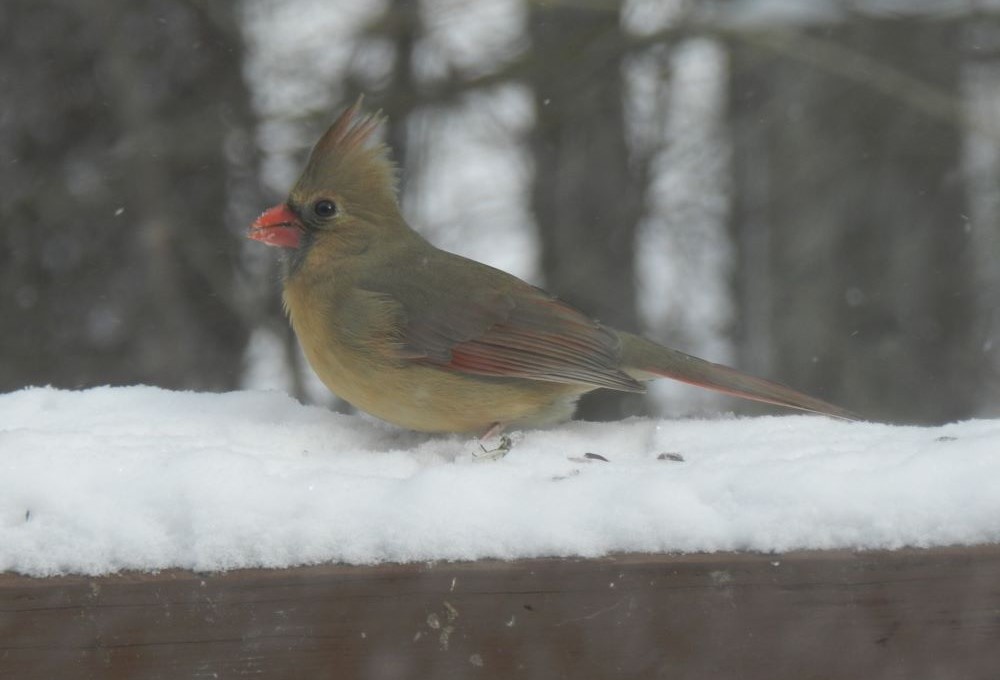
Hatchling cardinals are given the heave-ho after one week in the nest though the male then takes on feeding duties. Before nesting the male tries to impress a potential mate with his procuring skills, bringing her seeds that they then may share. The species has 16 songs, the most common being a “ti-ti-ti-ti-TI-TI-Ti” and a pair can sing a duet.
Cardinals can have two broods a year and their lifespan is about three years. Interesting factoid: a group of cardinals is called a radiance.
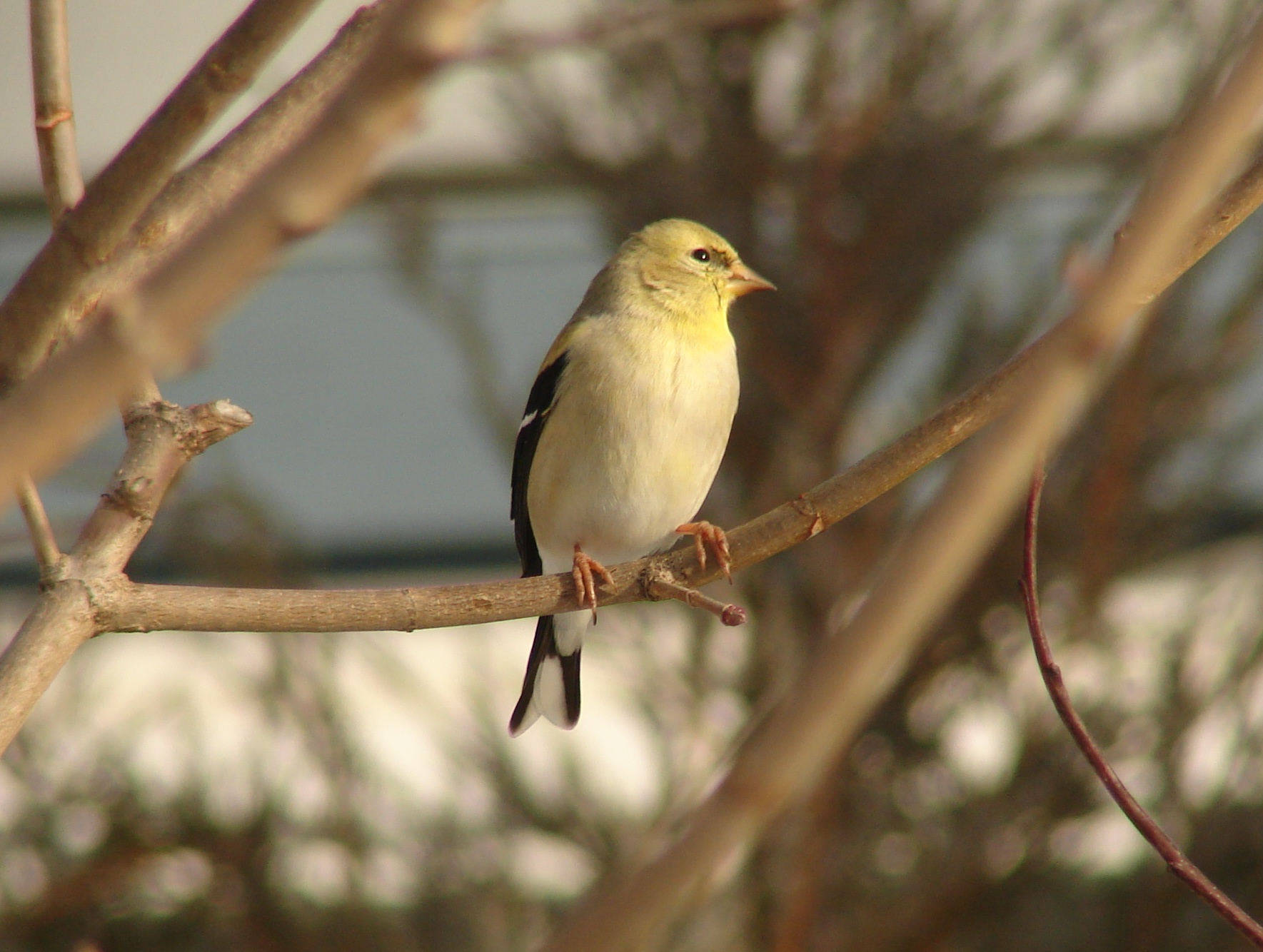
The American Goldfinch can’t be missed in the summer because of his bright yellow feathers and black cap and black wing feathers. The female lacks the cap. He’s a smallish bird and molts in both late winter and late summer, briefly changing to a more subdued yellow.
The male does special acrobatic flights to impress his potential suitor. Goldfinches are late nesters in July and August though their appearance here is a sign of spring. The New Jersey state bird is among the most melodious and would rather sing than fight. His friend-seeking call sounds like a high-pitched “po-ta-to chip.”
Goldfinches shun insects for thistle and nyger. Look for a finch feeding frenzy at your feeder as a sign of an approaching storm.
Female finches incubate the eggs but the male takes over child-rearing duties of the fledglings.
Wild thistle, dandelions and milkweed are all attractive as food sources. Consider hanging a ball of cotton in your backyard come June. The finches use it for nest building.
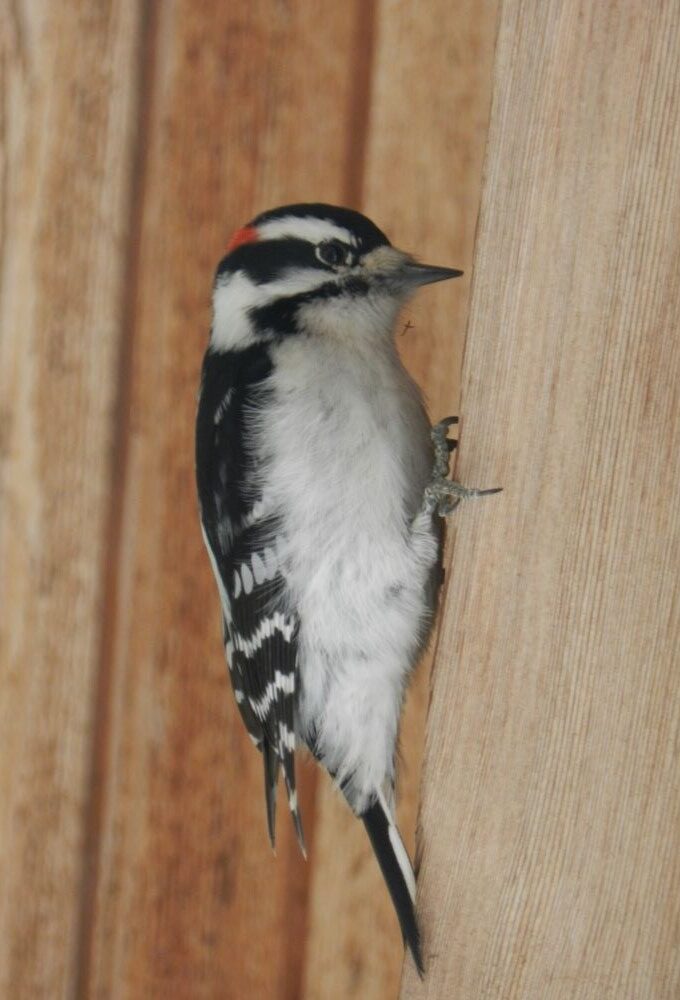
The Downy Woodpecker is the most common woodpecker in the Eastern states. It’s smallish at about six inches with the male having a red cap that the female lacks. His tail feathers show white dots on a black background and black dots on white feathers. A white blaze runs down his back. The markings are similar to those of the Hairy Woodpecker but he checks in at about nine inches.
Woodpeckers are insect eaters, boring into trees. Their work suppresses bark beetle infestation. They can make noise while boring but their unmistakably loud rat-a-tat-tat is called drumming and is a territorial call.
Suet, peanuts and peanut butter are preferred snacks.
Native Americans view woodpeckers as hard workers and brave.
Thank yous go out to Dr. Hunt and LesleytheBirdNerd.com
Helping Birds:
- Climate change and habitat loss are the two big-picture factors. Seashore habitat loss is particularly harmful. Consider where you build.
- Cats are an invasive species. Make yours an indoor cat.
- Window and building strikes take a heavy toll. Keep lights off at night in unused rooms. Put a decal or strip on your windows.
- Help the Audubon Society with its annual February bird count, https://www.nhaudubon.org/education/birds-and-birding/backyard-winter-bird-survey/

You can send fan mail to John Angelo at timelywriter@hotmail.com