

This story was originally published by fellow Granite State News Collaborative partner NHPR.org on March 19.
From the minute she wakes up, Chelie Beaupre is thinking about grocery shopping.
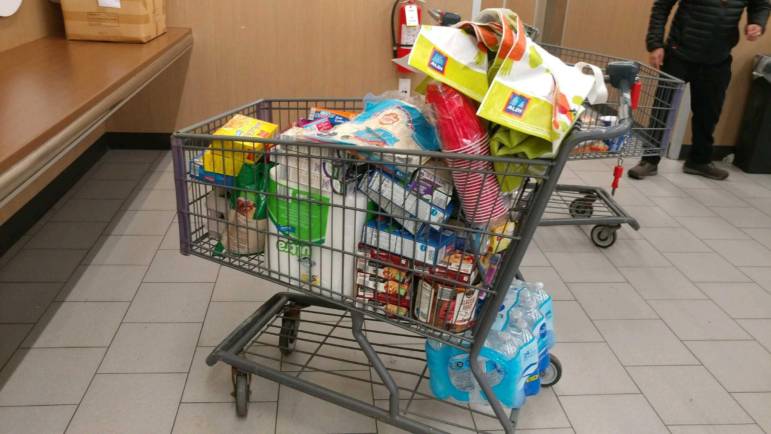
She’s been working 7 days a week, 12 hours a day for the past two weeks – getting groceries for a growing list of customers in the Manchester area who are using Instacart, an app that people can use for same-day grocery deliveries.
“My job used to be very easy,” Beaupre said on the phone, after finishing one delivery and driving back to BJ’s for another trip.
Before the coronavirus pandemic, she was primarily delivering groceries to elderly people, but with more people staying home and away from potentially crowded places, she says the orders are now non-stop.
Instacart offers a “contactless” delivery. That means Beaupre’s customers can request that she leave the groceries at their doorstep, and she’ll text them once they’re dropped off.
As soon as she’s done with that, she has four or five more orders waiting for her on the Instacart app.
She’s also been texting practically nonstop with her customers in the last couple of days.
Will pinto beans work instead of black beans?
How about bella mushrooms instead of oyster?
Beaupre says it’s been hard to find flour, pasta, beans and of course, toilet paper, during some of her grocery runs. So when she can’t find the exact item someone has listed, she’ll try to find an appropriate substitute.
Sometimes her customers don’t get back to her and then don’t like the substitution she’s made.
“But at this point, something is better than nothing,” she said.
How is our food supply chain? Why all the empty shelves?
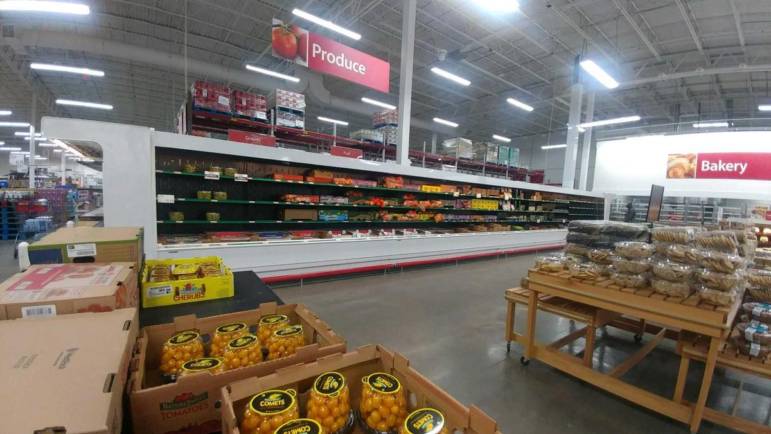
The pictures of empty bread, pasta, bean, and toilet paper shelves (not to mention hand sanitizer, bleach or cleaning wipes) at grocery stores in New Hampshire have made the rounds on social media, with many people posting in community Facebook groups asking where they can find these products.
“Clearly with the virus, we’re seeing a tremendous increase in demand from our shoppers,” said Paul Guidone, the interim general manager of the Hanover Food Co-op, which has four grocery stores in the Upper Valley.
“The food supply chain in the United States is healthy so this is not a supply issue,” said Ericka Dodge, an external communications manager for Hannaford, a regional grocery store chain. “The challenge is getting product delivered and on store shelves at a speed that matches this extraordinary demand. We’re also searching widely for new sources of supplies.”
And while some stores may see empty shelves or less of a particular item, it’s not because there’s an issue with the actual supply of food.
“Our warehouses are definitely faced with the challenges of this coronavirus, and we have experienced some delays,” said Bruce Follet, who works as the director of business operations at the Hanover Co-op stores.
He says this happens because warehouses are getting inundated with orders, and like most other businesses, have a certain number of people on staff to handle all the orders coming in.
“They only have so much capacity on their trucks,” he said. “And demand is higher than the volume that they can meet right now.”
Follett says the Co-op places orders multiple times a day with various vendors.
“So if there are runs on specific products, we have reaction times that will enable us to get product quicker than what you’ll see in a conventional grocery store,” he said.
Follett says he thinks part of the problem is that people are panic buying, especially when they see empty shelves.
“People go into kind of hibernation mode, if you will, and start to buy extra.”
But there’s also a geographic dimension to this. In more rural parts of the state, people may have fewer options of where to get food, says Jess Carson, a professor of public policy at UNH.
“And if they have fewer choices, and those shelves are being wiped out more quickly at their local grocery stores, they may not have an alternative place to shop,” she said.
Some grocery stores are looking for other ways to help. The Hanover Food Co-op, as well as regional grocery chains like Market Basket and Price Chopper, are offering earlier shopping hours specifically for people who might be more at risk for contracting COVID-19, including the elderly and those who are immunocompromised. The hope is that if fewer people are in the store together at that time, their risk of exposure will go down.
How are food pantries holding up?
At the Haven, in White River Junction, VT, Michael Redmond and his staff say they’ve seen an uptick in people using their food pantry this week.
On a normal day, 40 to 60 people visit their food pantry. But Redmond says this week he’s seen a big uptick. 105 people on Monday, 81 on Tuesday and 77 people on Wednesday, with 10 new families.
“I think the experience that many people might have had in grocery stores, lines and shortages, that’s in people’s minds,” Redmond said.
And while it may be taking a while for stores to get some of their supplies in, Redmond said, overall, he thinks the Haven is in a good spot to continue serving the community.
He says the Haven partners with Hannaford and the Hanover Food Co-op, and picks up supplies from the Vermont Food Bank a few times a week.
Those partnerships have been stable, although Redmond says they’ve received less bread than usual.
The Haven serves residents on both the New Hampshire and Vermont sides of the Upper Valley and operates like a small grocery store.
To limit person-to-person contact, volunteers are putting together boxes of produce, bread and some pantry staples, ranging from pasta to tuna to wholegrain rice that people can pick up.
Instead of the usual community breakfast or lunch, they’ve started providing takeout boxes.
Redmond says the Haven has a wishlist for donated items, but he says people should first consider a monetary donation to their local food banks, to help them purchase what they need.
 These stories are being shared by partners in The Granite State News Collaborative. For more information visit collaborativenh.org.