
MOVIE REVIEW
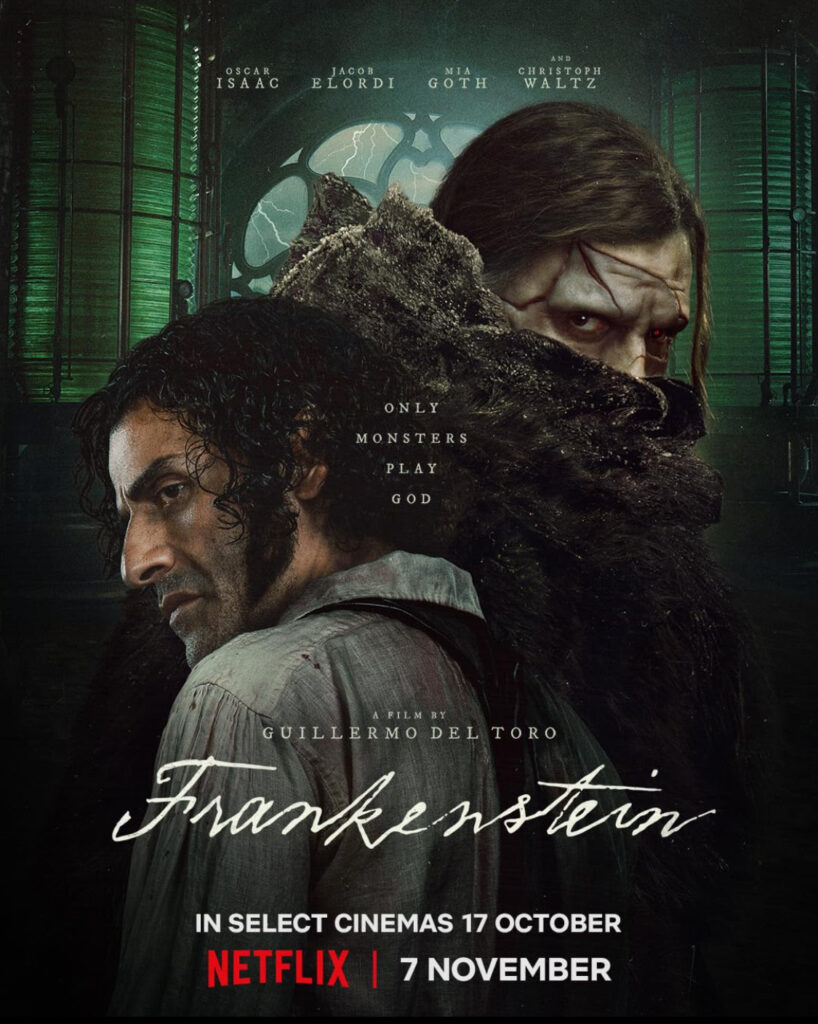

A reboot of Frankenstein, directed by Guillermo del Toro, hit Netflix this month. After living in his mind for years, del Toro’s masterful reimagining of this classic sci-fi horror film finally came to life. In his take, Mary Shelley’s 1818 Gothic novel gets reanimated in a way that marries both Shelley’s poetic vision and del Toro’s distinctly dark style of filmmaking.
I jumped blindly into del Toro’s world of Frankenstein and was immediately absorbed by its artistry. Visually, the film stays true to its Gothic science- fiction roots. And although del Toro’s monster is not green like the classic trope, subtle, sickly green lighting used throughout the film honors the macabre tone of the classic story.
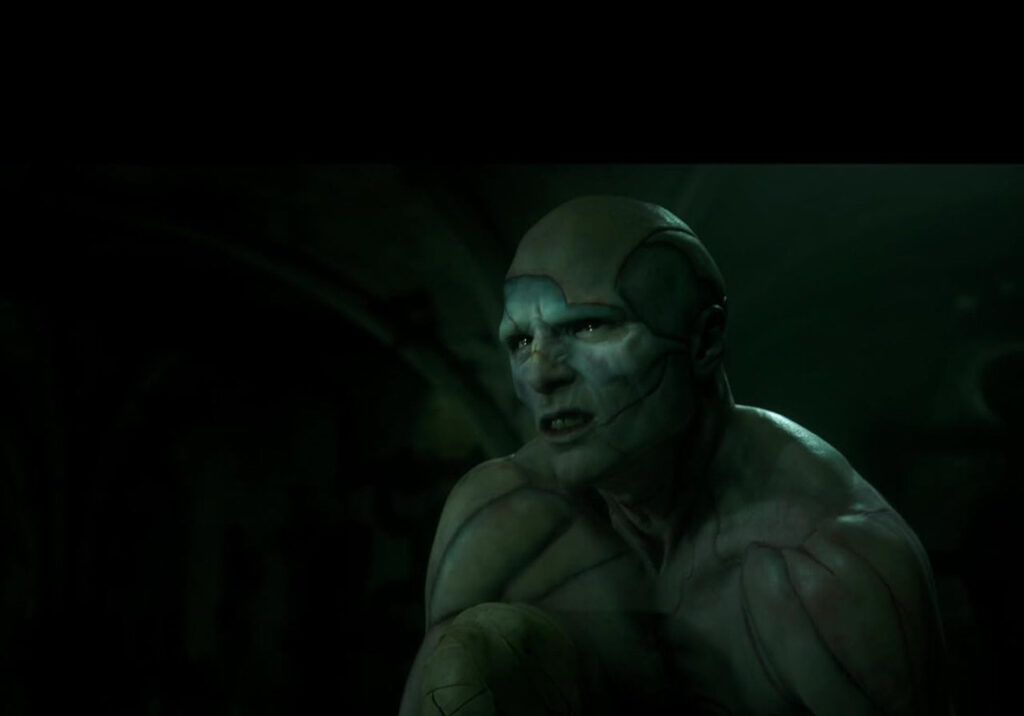
Del Toro’s fantastical world-building emerges from the true-to-life landscapes Shelley expertly crafts in her book. Fantasy and realism collide and diverge in the same way that Victor’s and the monster’s stories overlap and split off throughout the film. It’s through this contrast and resulting conflict that Frankenstein’s monster comes to life within a backdrop of magical realism that underscores the painful reality of his supernatural existence.
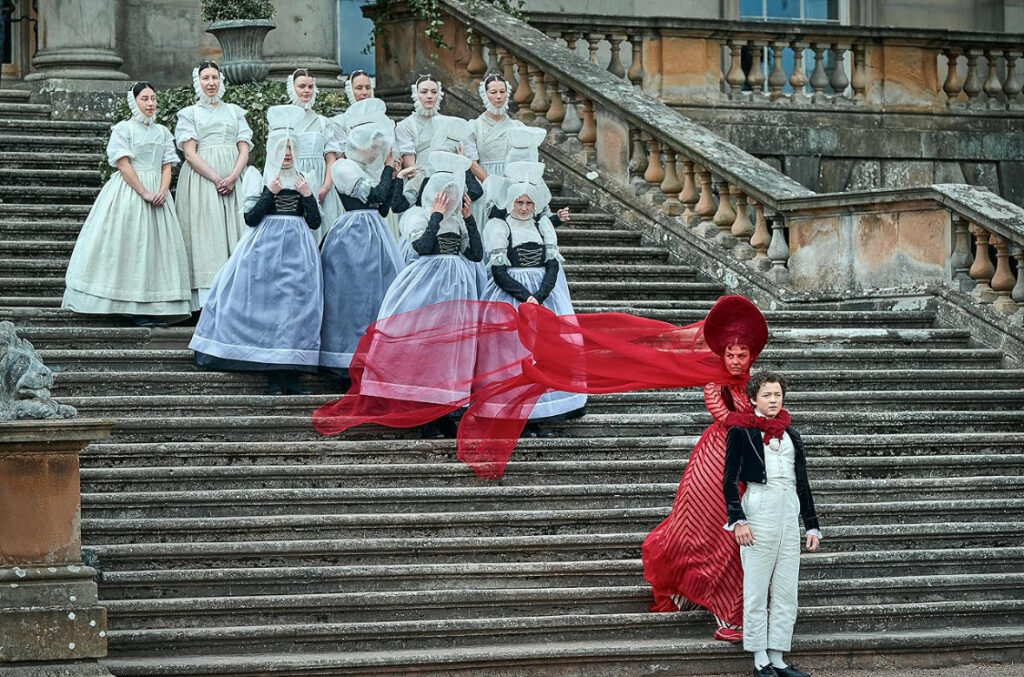
Contrasting vibrant hues used throughout the film, like red and white, symbolize the contrasting themes of life and death, innocence and knowledge, nature and science, and brutality and humanity, woven throughout the story. The costumes are even works of art in and of themselves, with custom-made designs and certain colors assigned to specific characters as added sublayers of symbolism. The film’s complex set designs also add to the intricacy of the movie, sucking the viewer deeply into del Toro’s dark fantasy from the start.
The story is told in two parts – first from Victor Frankenstein’s viewpoint, and then from the monster’s perspective. The result? A hauntingly beautiful examination of life and death; existence and identity; morality and humanity from dueling points of view.
In the first part of the film, Victor Frankenstein, played by Oscar Isaac – accomplished actor and del Toro’s longtime friend – tells his origin story. We find out that Victor’s father, a successful surgeon who was absent for most of his childhood, abused him and his mother. To cope, Victor and his mother lean on each other for support and comfort. Tragedy strikes when, in giving life to his younger brother, William, Victor’s mother dies. There are parallel themes of guilt and grief in the book, believed to be based on Shelley’s own experience with losing her mother who died in childbirth.
When his mother dies, Victor blames his father, yet spends his school years studying the human body under his tutelage. He eventually masters the science of surgery and in an attempt to control the forces of life and death, Victor sets out on a quest to create life from the dead.
In his quest, we watch as Victor meticulously pieces together the strongest body parts from the best corpses he can get his hands on. His creation’s unnatural body is sutured together to the whimsical soundtrack of composer Alexandre Desplat’s score of upbeat violins. This eerily stark contrast is meant to provoke a strong reaction to the morbid scenery. Desplat’s musical contradiction over the gruesome imagery of bone-saws and blood, foreshadows Victor’s doomed desire to find enlightenment through the misguided marriage of scientific advancement and supernatural intervention.
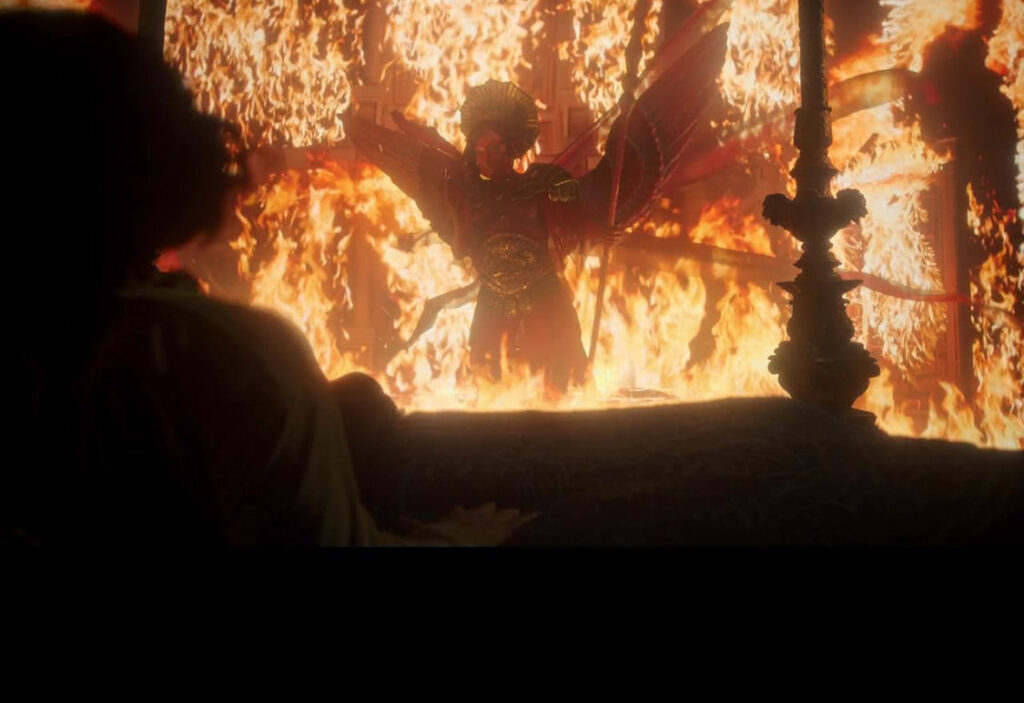
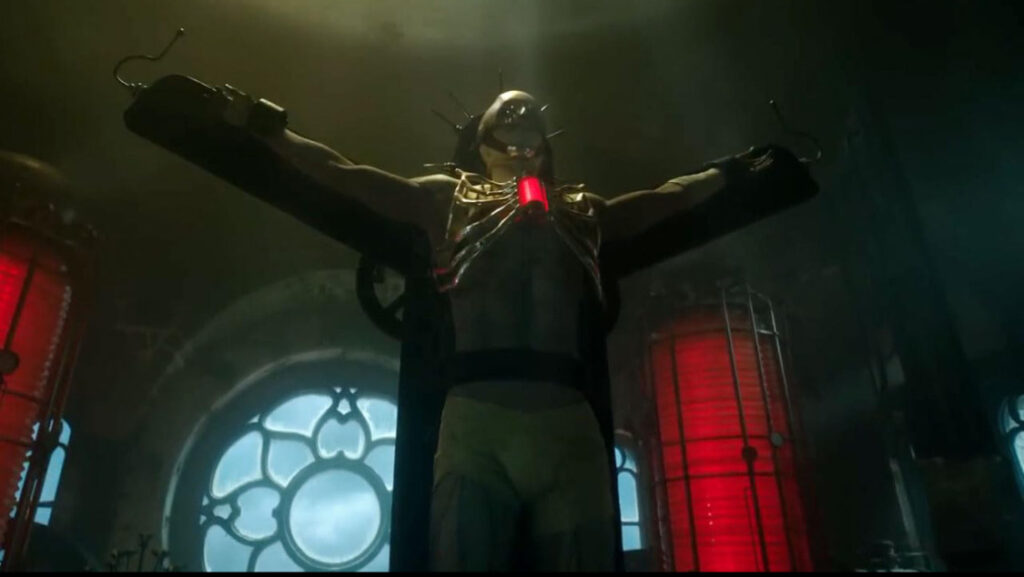
In a series of both natural and unnatural events, he reanimates the patchwork corpse with the help of a lightning storm, science, and the Dark Angel of Death who visits him in his dreams.
I was born anew that night. I had a vision. I saw, for the first time… the Dark Angel.
And it made me a promise.
I would have command over the forces of life and death.
I would become every ounce the surgeon my father was.
I would surpass him in ambition and in reach.
The vision was so clear.
With no background knowledge of the film, I was pleasantly surprised to realize that Jacob Elordi was cast in the infamous role of Frankenstein’s monster. Masked in layers of expertly gory studio makeup, the conventionally attractive Elordi is not immediately recognizable.
Drawing inspiration from his relationships with his own father and son, del Toro depicts a dysfunctional father-son relationship between Victor and the monster that mirrors Victor’s relationship with his own abusive father. As Victor attempts to teach the newborn Elordi-monster in the same brutal way his father taught him, he ends up frustrated. At first the monster’s only word is “Victor,” which he repeats over and over again. The more he says it, the more Victor resents the monster. His believed failure to create intelligent life drives Victor’s self-hatred, which he projects onto the monster, and his hubris causes him to treat the monster like an unwanted son.
Everything was new to him.
Warmth, cold, light, darkness.
And I was there to mold him.
I never considered what would come after creation.
And having reached the edge of the earth, there was no horizon left.
The achievement felt unnatural.
Void of meaning.
And this troubled me so.
It’s Elizabeth, the fiancee of Victor’s brother, William – played by Mia Goth – who brings out the best in the monster. Elizabeth’s sweet nature opposes Victor’s brutal treatment of his creation. While Victor’s self-centered shame leads him to hide the monster away from the world, Elizabeth sees the monster as an autonomous being that should be free to live his life just like all living creatures. Throughout the film, Elizabeth primarily wears green patterns meant to mimic those found in nature. This symbolizes her belief in the power of nature, standing in direct opposition to Victor, primarily costumed in red, and his quest for scientific advancement.
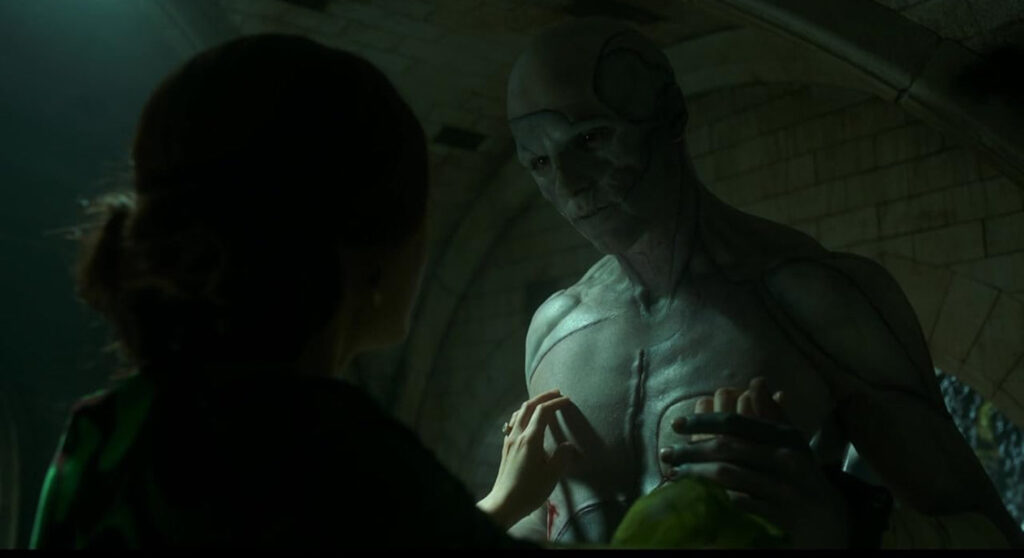
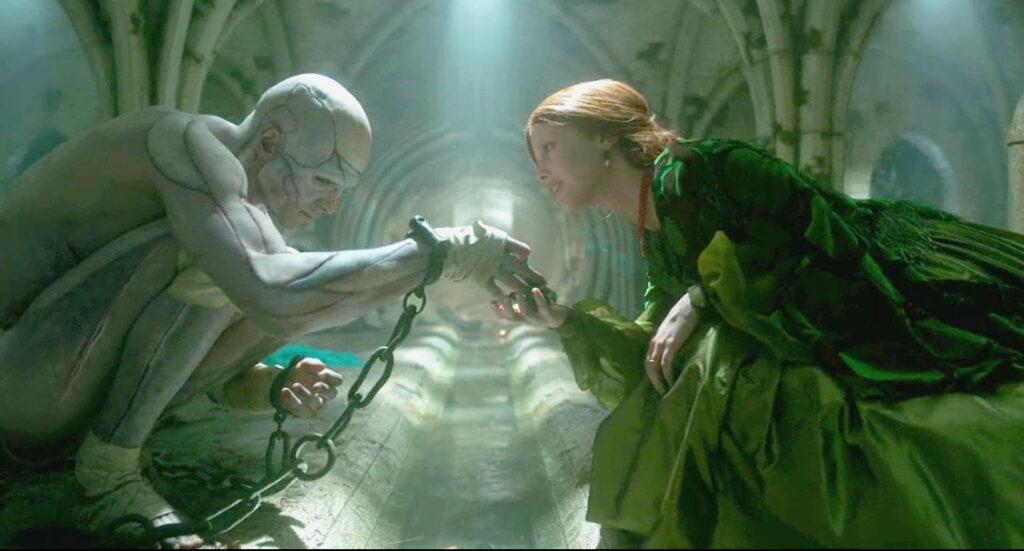
It’s through Elizabeth’s loving nurturing that the monster begins to acquire language and independent thought. And it’s because of this enlightenment that he eventually breaks free of the chains of his abusive early life, in the same way Victor breaks free from his own father through his education, driven by his love for his mother. Of note, Goth portrays both Elizabeth and Victor’s mother in the film.
With del Toro’s expert direction, Elordi’s awkward yet elegant movements and soft spoken demeanor provide a stark contrast to the stereotypical Frankenstein’s monster. While previous depictions of the monster are stiff, jerky and inarticulate, Elordi’s monster slowly learns to walk, talk, think and feel like a natural-born human the longer he’s alive. Elizabeth grows to love the monster’s gentle demeanor, as she sees how the monster’s pureness of heart contrasts with Victor’s brutality, and the brutal nature of man in general. However, Victor’s jealousy eventually leads to her demise.
As time goes on and he learns more about the world around him and the origins of his unnatural existence, the monster slowly becomes more and more enlightened. At the same time, he becomes more disillusioned with life. The monster’s growing awareness of his damned existence parallels Victor’s own awareness of his doomed attempt at controlling life and death. Unlike Victor, the monster understands that love and death are what give life meaning and realizes that he doesn’t want to live without companionship, viewing his immortality as a curse.
Victor’s downfall ultimately comes because of his god complex. While Victor regards the monster as his unnatural masterpiece, he cannot separate his own sense of failure from his creation. Victor cannot bear to let go of control over the monster and comes to the conclusion that the only way to atone for his actions is to kill the monster – and himself – in the process. But he finds he is unable to control his ungodly creation and in his pursuit of killing the monster, Victor becomes injured and must face his immortality.
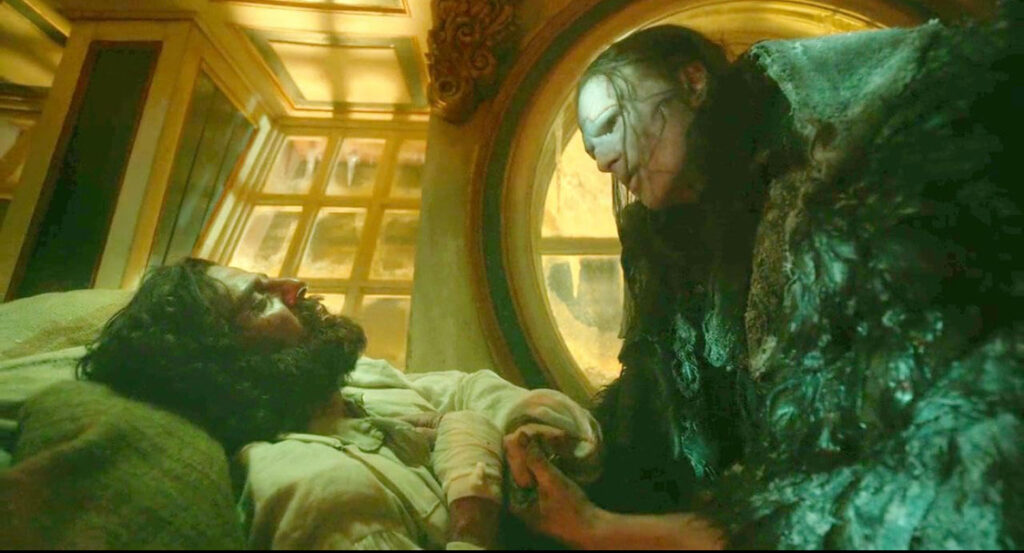
Conversely, Victor’s creation cannot die a natural death, as his existence is unnatural, and he is therefore damned to live on forever. As Victor is dying, the monster grieves his one final connection to humanity in his creator, notes the fleeting nature of life, and acknowledges the reality of his lonely existence:
You will go now, creator.
Fade away.
It will all be but a brief moment.
My birth. My grief.
Your loss.
I will not be punished.
Nor absolved.
What hope I had, what rage…
It is all nothing.
The tide that brought me here now comes to take you away.
Leaving me stranded.
In the end, Victor’s only salvation is to beg his monster for forgiveness and to reaffirm to him his only purpose in life:
Forgive me.
My son.
And if you have it in your heart, forgive yourself into existence.
If death is not to be, then consider this, my son.
While you are alive,
what recourse do you have but to live?
Live.
The story ends with Frankenstein’s monster walking off into the endless horizon, his face toward the early morning sun, bathed in the light of a new day. And finally, a quote appears on screen – del Toro’s nod to English Romantic poet Lord Byron, whose house Shelley was visiting when she wrote the original draft of Frankenstein. It fittingly ends the film with the bittersweet promise:
The heart will break and yet brokenly live on.
Del Toro has said that he sees the film, Frankenstein, as his unnatural masterpiece. It seems to me that he has indeed reached the peak of filmmaking with this movie. But unlike Victor’s doomed fate, let’s hope there are more directorial masterpieces on the horizon for this master filmmaker.
Reach Jules Robidoux at julesinklink@gmail.com