
WASHINGTON, D.C. – There are few things as burned into Alia Hayes’ memory as the sound of her son’s struggle to breathe.
Her son, Burton, has asthma, and one of the worst nights of that “dreaded dangerous sound” came three years ago and rang the alarm for what became a frightening trip to the hospital.
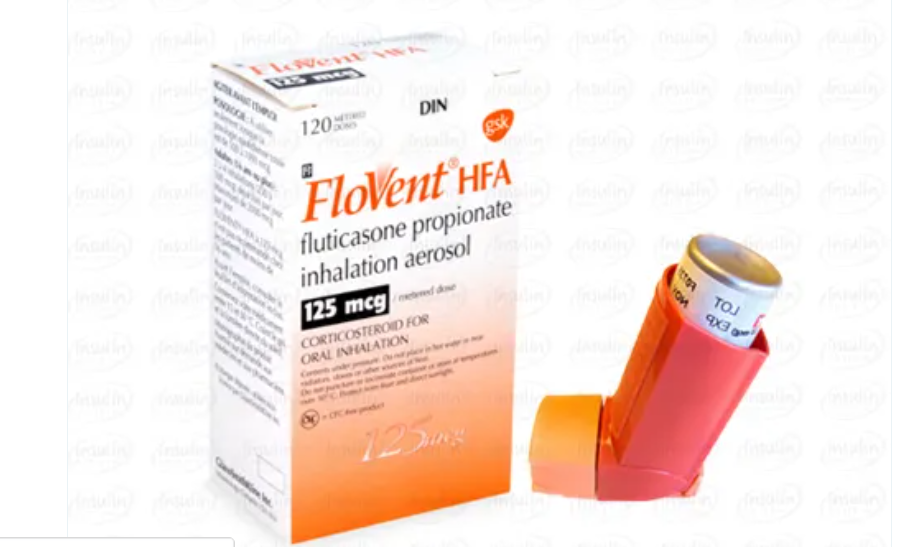
It didn’t have to happen. The family had used the Flovent HFA inhaler, produced by GlaxoSmithKline, to manage both of their children’s asthma for years. When GSK announced in 2023 that it was taking the inhaler off the market at the end of the year, Hayes decided to be proactive and find a substitute.
That’s what brought them to the hospital that night – nothing worked as well as Flovent for her son. The inhaler for 20 years was the most-prescribed asthma inhaler for children because of effectiveness, ease of use and almost universal acceptance by insurance.
Hayes said Monday that it’s frustrating that her son’s traumatic, life-threatening struggle to breathe wasn’t because of choices she made as a parent, but because of a pharmaceutical company’s greed.
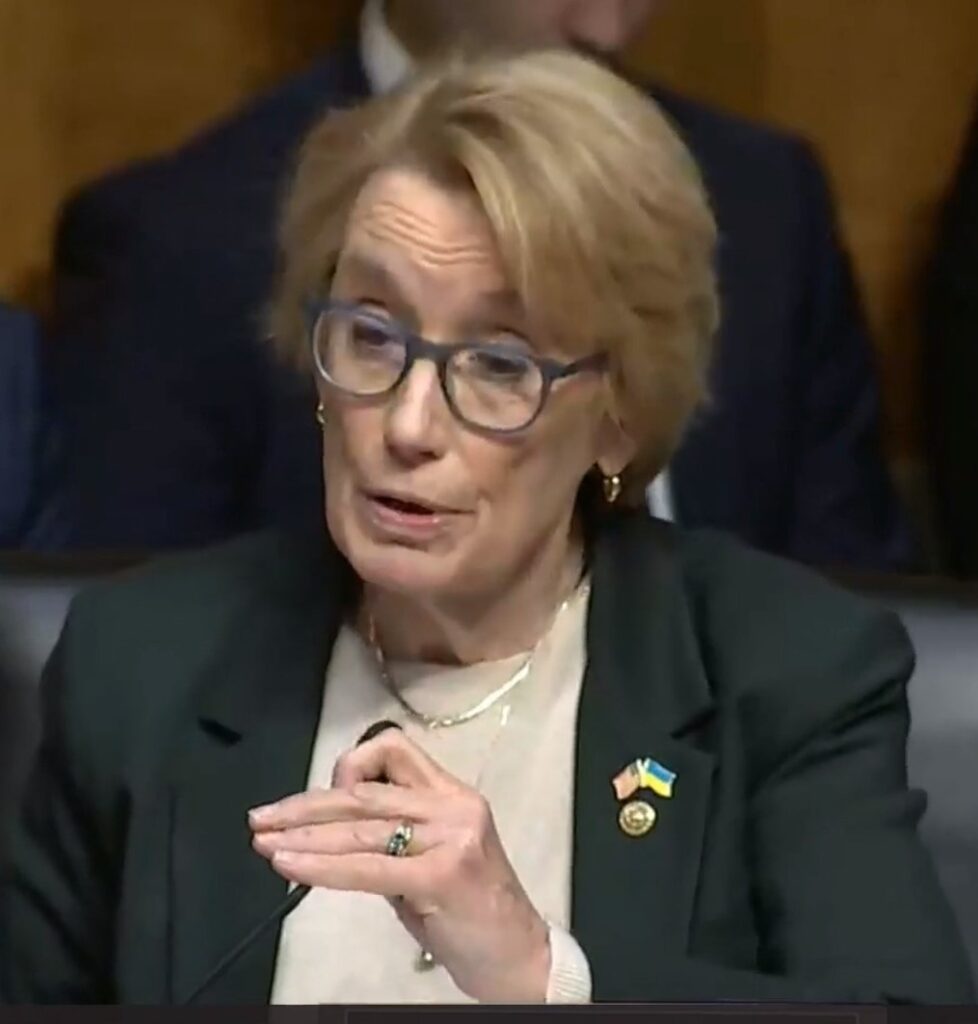
“Asthma shouldn’t be landing children in the hospital simply because GSK wants to line its pockets instead of making ethical choices,” Hayes said at a news conference hosted by U.S. Sen. Maggie Hassan, D-N.H.
Hassan at the Monday morning news conference said that a year-long investigation found that GSK, after creating a monopoly in the market, deliberately pulled the product to avoid paying Medicaid penalties for unwarranted price hikes. The investigation results were released Monday by Hassan, ranking member of the Senate Finance Subcommittee on Health Care, in a report titled “Manufactured Crisis: By Discontinuing Asthma Inhaler, GSK Profited While Children Suffered.”
On March 3, the FDA approved what is considered the first true generic version of Flovent HFA – a fluticasone propionate inhalation aerosol for maintenance treatment of asthma as prophylactic therapy for children 4 and older, manufactured by Glenmark Specialty SA.
Hassan said that result is because of the pressure that parents like Hayes and Larkin, clinicians, and others put on GSK since it pulled Flovent HFA from the market on Jan. 1, 2024, and replaced it with a generic version that was more expensive, difficult to access and harder for children to use.
Hassan said that talking to parents and clinicians over the past several years, “What I heard is disruption that was far more than an inconvenience,” she said, but actual harm to children and working families. Kids got sicker, medication was more expensive and heard to come by.
“Not only is it obviously really bad for kids, but really disruptive for working families,” she said Monday.
Childhood asthma is a major cause of missed school days for patients and missed workdays for parents, according to the report. Overall, childhood asthma costs the U.S. health care system an estimated $6 billion a year.
It affects almost 25 million Americans, 4.6 million of whom are children, according to the FDA, with an estimated 10 million asthma attacks a year. Some 3,500 children and adults die each year from asthma.
‘Life-threatening medical challenges’
GSK had manufactured Flovent HFA, the most commonly used asthma inhaler by children in the U.S., since 2004. After steady price increases that exceeded inflation, the company was ordered to pay rebates to Medicaid. Instead, GSK pulled the inhaler off the market, replacing it with a more costly “copycat” product, which allowed it to take advantage of a loophole that allow it to avoid paying $367.6 million in penalties in 2024.
The new product was made by GSK in an exclusive agreement with Prasco Laboratories, and it became the only available similar alternative to Flovent HFA in 2024, Hassan’s report says. Over the years, GSK had gained more patents “thereby ensuring that no low-cost generic competition could receive FDA approval and reach patients,” the report says.
“GSK’s actions led to life-threatening medical challenges and cost and access issues for families across the United States,” according to the report.
The new fluticasone propionate product, though touted as identical to Flovent HFA, was more expensive, frequently unavailable, often required insurance pre-authorization that Flovent didn’t, and was more difficult for children to use, Hassan said. The younger a child with asthma is, the more limited their options as far as medication and inhalers go, and there were few available on the market that children too young for many other asthma products could use.
GSK had offered rebates and discounts for Flovent HFA that significantly reduced its list price and out-of-pocket costs for patients. GSK and Prasco did not offer the discounts and rebates for the new product, “meaning that in practice, the authorized generic is more costly than Flovent HFA.” That led to major insurers and pharmacy benefit managers to delay or deny coverage, the investigation found.
According to a study published in October 2024, patients who had been prescribed fluticasone propionate — the active ingredient in Flovent HFA — had a 17.5% increase in asthma-related hospitalizations in the three months after the discontinuation of Flovent products and a 24.1% increase in the following three months compared to the corresponding quarters in 2022 and 2023, the report found.
It also found that only about 50% of privately insured patients get coverage for the product that replaced Flovent HFA without prior authorization, compared to about 75% for the original Flovent.
Dr. Ashley Saint-Fleur, a pediatric pulmonologist and researcher at Boston Children’s Hospital, found in a survey of more than 200 clinicians across the country, that providers “were significantly affected across the board,” with bureaucratic red tape and difficulties getting the inhaler.
A similar survey of parents whose children had used Flovent HFA found more ER visits and co-pays they couldn’t afford, which often led to them trying to stretch out the medication. This led to sick kids, some of whom ended up in intensive care.
“No family should have to risk their child’s health because medication is unreliable or unaffordable,” St. Fleur said.
The survey by Saint-Fleur and Dr. Greg Sawicki of clinicians and patients found:
- 93% of clinicians reported that discontinuation of Flovent HFA had a moderate (37%) or severe (56%) impact on their practices, including difficulty finding an age-appropriate alternative for their patient, dealing with more insurance red tape, unavailability of alternatives at pharmacies, increased frequency of calls from parents with emergencies and more.
- 78% of parents reported that their child switched to another medication following the discontinuation of Flovent.
- 36% of parents reported at least some difficulty in paying for alternative medication for their children.
- More than 30% experienced at least some difficulty in getting insurance to cover the new medication.
- 30% of parents reported one or more instances of their children taking oral steroids. Long-term use of this medication or use at higher doses can result in high blood pressure or increased blood sugar levels, among other side effects
- 27.3% had higher out-of-pocket costs;
- 18.2% reported worsening day-to-day symptoms in their children;
- 18.2% reported missed school days;
- 18% of parents reported one or more urgent care or ER visit in the past year.
- 12% of parents reported one or more hospitalizations in the past year.
One New Hampshire parent was quoted in the report saying that they had to travel for three hours, round-trip, to find a pharmacy that could fill a script for a replacement medication, and they’d experienced gaps between the last dose of the previous and when they could get the new none.
“Most recently we were told by several pharmacies that they wouldn’t be able to fill it for a month,” the parent, whose name wasn’t provided, said. “Thankfully we did find one left at a pharmacy 45 minutes away.”
Jackie Larkin, of Media, Pennsylvania, had an experience similar to Alia Hayes’, when they had to abruptly find a Flovent substitute for their 3-year-old when the inhaler was taken off the market. Like many Flovent patients cited in the report, the family was taken by surprise by the abrupt disappearance of the medication.
Larkin’s son’s health deteriorated as the family struggled to pay the $200 a month co-pay.
“You don’t think this is going to touch your own house,” Larkin said. “Money should not be more important than the lives of our children.”
Scrapping Flovent avoided $367.6M in penalties
According to the report, GSK avoided paying what would’ve been an estimated $367.6 million in penalties to Medicaid in 2024 by discontinuing Flovent HFA. The American Rescue Plan Act of 2021 lifted the cap on penalties drug companies were required to pay for price increases that are higher than the rate of inflation. The penalties calculate the difference between the current price of a drug and its price at its launch date, adjusted for inflation.
GSK increased the price of Flovent HFA by nearly 50% between 2014 and 2023. Prices in general rose about 31% during that period, which meant hundreds of millions in penalties. So, GSK stopped producing Flovent instead of paying.
Medicaid spent a net estimate of $551.8 million on the new version in 2024, the report said. GSK, meanwhile, reported total sales of approximately $40.1 billion that year “and also appears to continue to receive significant revenue from the authorized generic version under its agreement with Prasco,” the report says.
In May 2024, after hearing from parents and clinicians about the issue, Hassan asked GSK to restore Flovent HFA to the market and work with Prasco to lower the price for the copycat version,.
“After GSK declined this request, and amid ongoing inhaler access challenges as described by doctors and families,” Hassan launched the investigation that resulted in Monday’s report. That included requests to GSK and Prasco in June 2025 seeking detailed information on the ongoing contractual financial relationship between the companies, revenue received through the relationship, and analyses of the market for the branded and authorized generic drugs, among other materials.
GSK and Prasco “provided limited written responses” July 31, GSK briefed Hassan’s staff on Dec. 9, the report says.
“GSK specifically acknowledged to Subcommittee staff the role of the American Rescue Plan Act in its decision to discontinue Flovent products,” the report says.
The company touted that it prioritized patient access to the authorized generic and that it was “encouraged by the broad coverage and affordability of the [authorized generic],” but also acknowledged the drop off in insurance coverage.
Both GSK and Prasco did not “produce materials that would have clarified their contractual financial relationship regarding the authorized generic version of Flovent HFA and related revenue the companies have received,” the report says.
Hassan said Monday the legislation to close the loophole GSK took advantage of is still in the works, but it will make it more difficult for companies like GSK to game the system.
She said more details will become available as it develops, that they want to do it thoughtfully and make sure it achieves its purpose..
“We want to make sure pharma understands they cannot price gouge and get away with it,” she said. “We need to make sure these drugs are available to people.”