
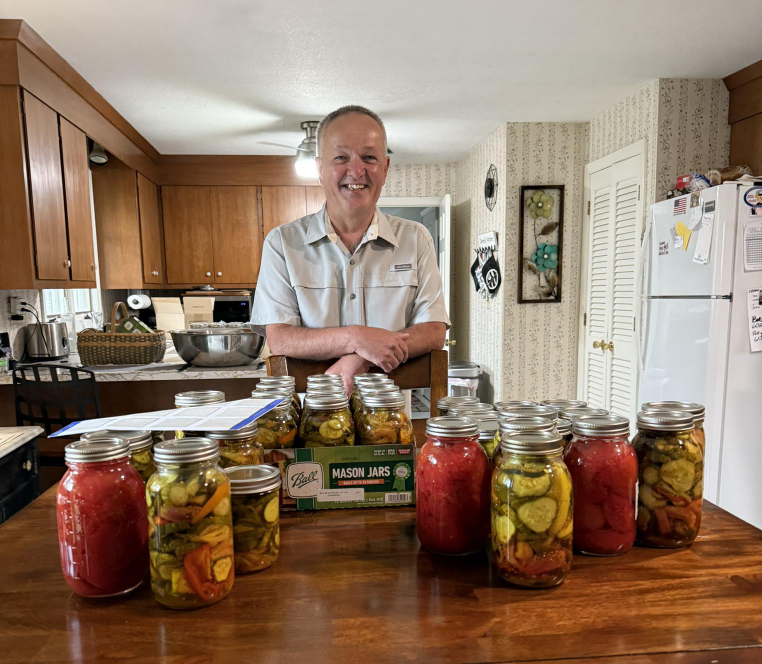
MANCHESTER, N.H. – Manchester may soon see a new policy on pickles (and other food items made in homes that are distributed to the general public.)
At the Sept. 2 Manchester Board of Mayor and Aldermen meeting, the board agreed to request a review of Chapter 117 in Manchester’s Code of Ordinances, the portion of the code relating to food service establishments.
The request followed controversy around Manchester resident Daniel Mowery, who was issued a cease-and-desist letter by the City of Manchester Health Department regarding the distribution of his homemade pickles.
Manchester Mayor Jay Ruais noted that Chapter 117 has not been modified since 1969 with several members of the board agreeing with Ruais that a review is overdue following extensive attention following Mowery’s situation.
Ward 7 Alderman Ross Terrio agreed to the review but stated that homemade pickles were likely not a major public health risk, noting that the review could provide more insight on updating procedures for more potentially dangerous foods.
Manchester is one of 15 communities in New Hampshire exempted from RSA 143-A:5, which exempts food service operations making less than $20,000 in annual gross sales, also known as homestead food operations from health safety licensing requirements provided that certain food safety requirements are already met.
Alderman At-Large Joseph Kelly Levasseur and Ward 6 Alderman Crissy Kantor stated that the city should remove its own health safety standards and align itself with the state law, believing that the more stringent standards in Manchester dissuade the creation of home-based businesses in Manchester.
“I’m here watching the power of government beating on some guy making pickles,” said Levasseur.
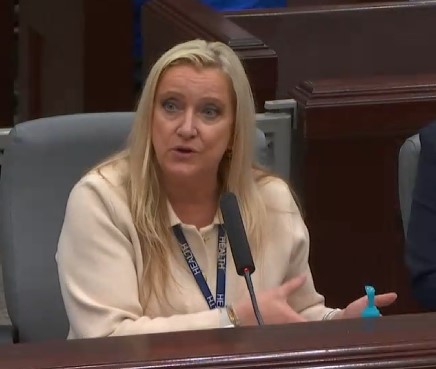
Manchester Health Department Director Anna Thomas said that the 15 communities make up approximately 45 percent of the state’s population as their more densely populated areas create different challenges for public health compared to other more rural parts of the state.
She also noted an instance in a kindergarten and another instance with pulled pork being brought from Manchester to Bedford where food safety standards were not followed and several people got sick.
It was also noted several times during discussion between Thomas and the board that the Health Department cannot ignore requests to investigate potential health code violations and providing oversight in situations where people are producing food and then serving it to the general public.
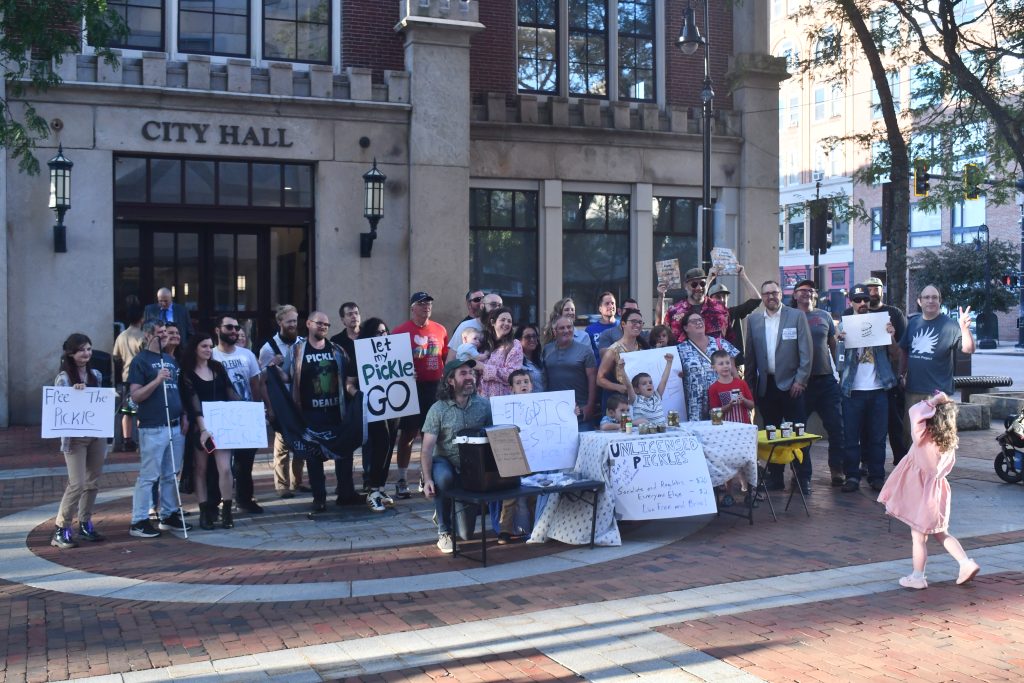
Prior to the meeting, a group of protesters advocating for the city to align with the state’s homestead food law held an event outside of City Hall where they sold homemade pickles and other items.
Manchester resident Jeremy Kauffman organized the event after feeling disturbed over the cease and desist letter that was sent to Mowery.
Kauffman said that the cost related to permits and the potential need to use commercial kitchen space for individuals seeking to sell a small amount of homemade food is daunting and unnecessary.
“If you don’t want buy someone’s homemade pickles, you can be very safe from them by just not buying them,” said Kaufmann. “We simply think that people should be allowed the choice to buy or receive other people’s homemade pickles.”
The review of Chapter 117 will be initiated by the Manchester Board of Mayor and Aldermen’s Committee on Public Safety, Health and Traffic, which next meets in early October.