
HOOKSETT, N.H. – As spring approaches, Hooksett voters are set to decide upon sewer upgrades that supporters say could help attract and retain businesses in what has become an important part of the town’s economy.
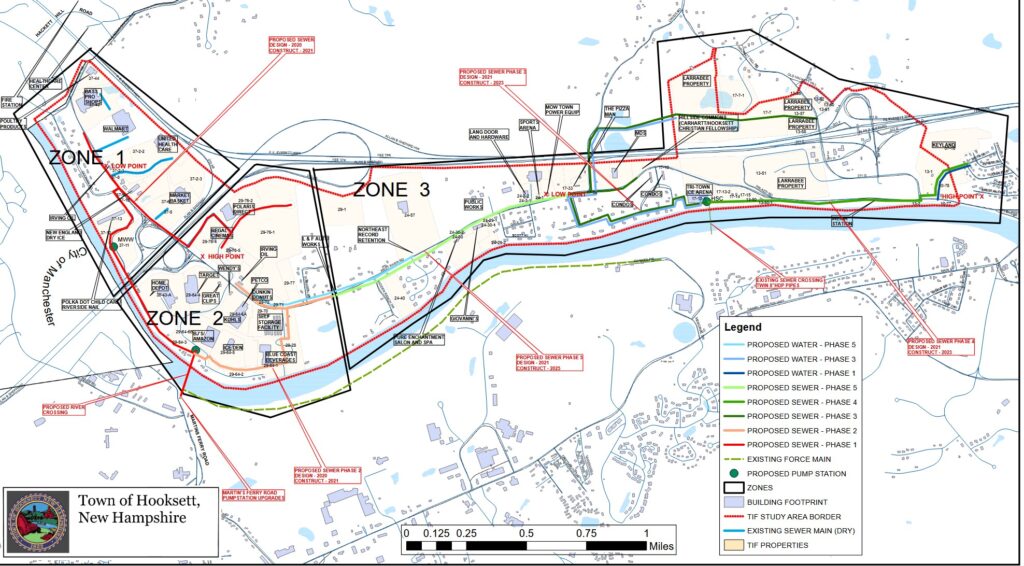
The upgrades are part of the first phase in a series of sewer and water expansions along the Route 3A corridor from the Manchester border and Exit 10 on I-93 up to Exit 11 believed to be a crucial selling point for many businesses that might not otherwise be interested in the area. In particular, the upgrades focus on upgrading a pumping station on the east side of the Merrimack River at Martin’s Ferry, a proposed pumping station on Kimball Drive and infrastructure connecting the two pumping stations, connecting the town’s properties to the west of the river with existing sewer infrastructure.
These upgrades are expected to cost $12.5 million, with $2.1 million coming from the Hooksett Sewer Commission and no more than $9.54 million from bonding. The rest of the $12.5 million, a total of $860,000 would come from revenues already accrued through a tax increment financing (TIF) district established along the Route 3A corridor in 2017.
TIF districts are a tool municipalities can use that takes new tax revenue created by a specific infrastructure upgrade benefiting a particular area to pay off the upgrade rather than having taxpayers not directly benefitting from the upgrade from footing the bill. Under New Hampshire law, municipalities are limited in how long TIF districts can exist and how much of a municipality can be covered by a TIF district, and once the upgrade is paid off, the district is dissolved.
In addition to the $860,000 that would be put toward the cost of the sewer upgrades, the $12.5 million warrant article before voters also would take an additional $240,000 in funds raised or appropriated from higher property values in the TIF district to pay off the first year of debt service of the $9.54 million in bonding, with all subsequent repayment of what’s left of the bonds coming from further TIF district revenues.
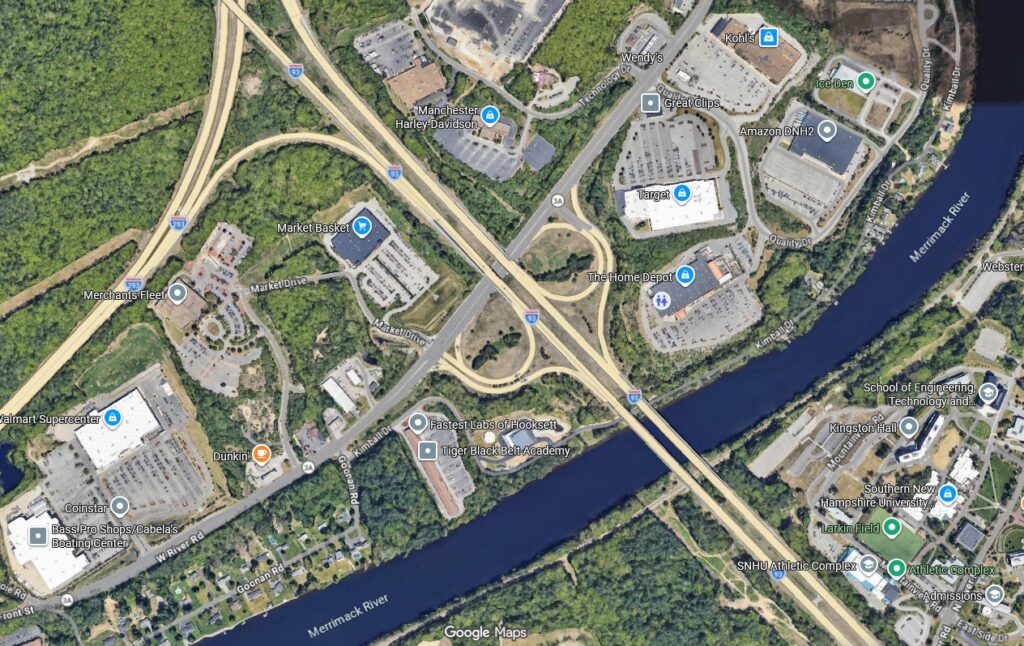
This is not the first TIF district in the area, with an earlier TIF district created in 2001 to create infrastructure near Exit 10 that ultimately attracted Target, Market Basket, and other larger commercial businesses in the 3A corridor. The upgrades were paid off in 2013, dissolving that TIF district.
Hooksett Economic Development Committee Chair Anthony Poole says that developing the upgrades through a unified plan rather than piecemeal projects is much less costly for taxpayers and the increased land values from the sewer upgrades for the commercial and industrial properties in the area could shift tax burden from other residential parts of town in addition to luring new jobs to Hooksett.
“This ($12.5 million) is important for Hooksett because it provides infrastructure improvements that could bring more business to Hooksett,” he said. “We want to see more growth on that side of the river, it’s underutilized.”
Poole also confirmed through personal discussions with businesses in the area that the lack of sewerage has hurt their businesses. He was told that the Dunkin’ Donuts is reticent to expand given that the acidic impact of coffee deteriorates the lining of septic systems quicker than most other liquids, but they’re not alone. Poole was told that Target has had to replace its septic system several times since 2000, at $10,000 with each replacement. Additionally, the lack of sewerage has made the Bass Pro Shop along the 3A corridor the only Bass Pro Shop in America without a restaurant according to town officials.
A comparable warrant article asking for $10 million went before voters last year and lost by a vote of 903 to 1152, short of the 3/5ths required to pass. This year’s warrant article was recommended by the Hooksett Town Council by a vote of 4-2 and recommended 9-0 by the Hooksett Budget Committee.
Polls will be open at David R. Cawley Middle School on Tuesday, March 10 from 6 a.m. to 7 p.m.