
WHERE ARE THEY NOW?
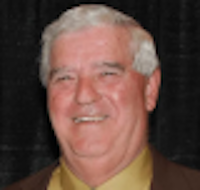
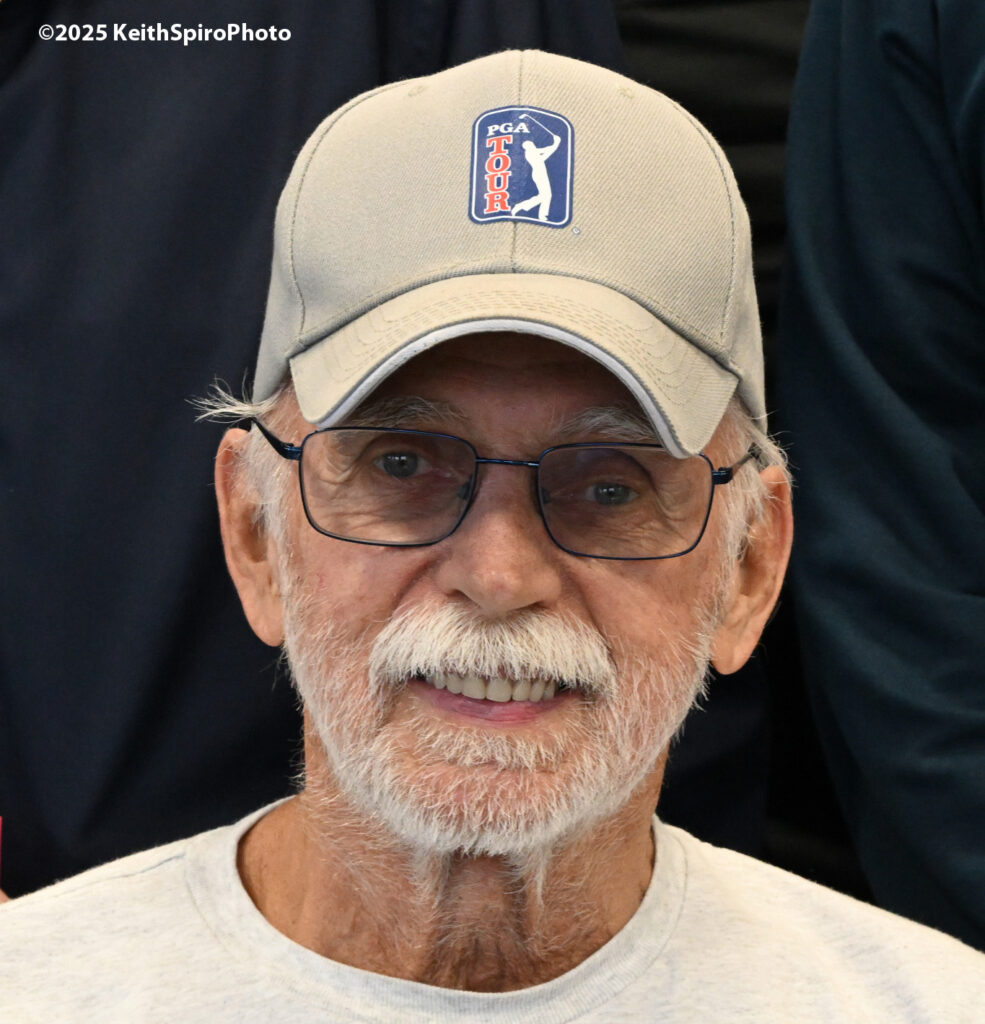
Don Beleski
RELATED STORY: “I” On Sports. The Who, What, When, Where, and Why of Ink Link’s newest feature
Due to the number of seasons that he has coached over his career, his “story” has been divided into two parts. The first segment covers his playing days and his years involved in coaching baseball.
In Part 2, in addition to his years coaching football and basketball, you will be made aware of the amazing total number of seasons that Don has been a mentor to the youths of Manchester and around the state.
“A lot of people I don’t think really knew what I was all about. I hope that maybe this will help them understand some of the things I did and why I did them.” That was one of the last statements made to me by Don Beleski, the subject of this issue’s “Where Are They Now?” – but it’s the one I want to begin with.
Why? Because as successful as he was…and he was successful, very successful, the majority of people never got to know him. Really know him.
As stern as he was – and often he was very stern; as loud as he was, and often he was very loud; as intense as he was, and often he was very intense; as competitive as he was, and he was always competitive, that’s not how he began his life in sports, first as a player, then as a coach.
As a child growing up in one of Manchester‘s toughest neighborhoods, the inner city near
Sheridan-Emmett Park, Don, as he described himself, “was a nervous kid with absolutely no confidence and, after my folks split when I was 10, with no direction in my life.”
Enter Arthur Whittemore, a name familiar to those in Manchester’s “field” of education.
“That man changed my life. If it wasn’t for him, I don’t know where I’d be today,” said Don.
“Though I have four brothers and a sister, I’m the only one who ever played sports. I used to hang out at Sheridan-Emmett everyday from morning ‘til night, playing baseball, softball, even horseshoes – anything competitive. Though I always played with the older kids, I still lacked confidence. I never thought I was good enough for organized sports.“Mr. Whittemore, a 7th grade teacher at my first school, Maynard Elementary, told me that if I was good enough to play with the guys at Sheridan-Emmett, I was good enough to start playing organized sports, and that‘s exactly what I did. That’s when a sense of direction entered my life, all because of Mr. Whittemore. I‘ll never forget him and I‘ll forever be grateful.”
By the way, a number of those “older kids” Don referred to went on to become stellar athletes, coaches, umpires/referees, and/or athletic directors themselves, some of Manchester’s best – George Smith, Denny Smith, Dickie Cronin, Bill Lally, Bobby Healy, Jack McCarthy, and Frankie Harlan.
HIS PLAYING DAYS
Other than the pick-up baseball and basketball experiences at Sheriden-Emmett (which some would argue offered a lot better training than anything gained from many “organized” leagues that kids play in today), Don’s first uniform was provided by the Babe Ruth League as a player with Jason Jewelers. Once in high school, and finally out of his once self-imposed shell, Don went on to letter in four different sports at Manchester Central: baseball, basketball, football, and track.
Though he was small in stature, he had a cannon for an arm and possessed tremendous speed. How strong was the arm? It provided him with one of his rare moments of embarrassment in organized sports.
“I was playing for Central’s varsity and we were at our home field, Livingston
Park. The opposing team had a runner on third with one out when the batter hit a shot out to me that I tracked down in deep left-center and fired to the plate to try to keep the runner from scoring and get a possible double-play. Instead, the ball left my hand and sailed not over the catcher’s head, but over the entire screened backstop. I didn‘t just overthrow the plate and our catcher, I overthrew everything!”
And his speed?
I doubt there’s anyone who followed high school sports in Manchester during the early ’60s that doesn’t remember the name Darryl Buck. While most know the diminutive halfback from Memorial High School for his explosiveness and cutting ability on the football field, few knew the strength of his throwing arm as well as his speed in the outfield and on the base paths in baseball. Both Darryl and Don went on to play for legendary American Legion baseball coach, John “Jumbo” Reilly, where each patrolled the outfield. Late in his coaching career, Jumbo pulled Don aside to share a special memory and provide Don with one of the proudest moments in his entire playing career.
“Coach Reilly said he was once asked, ‘Of all the players you’ve ever coached, who was the fastest?’ He said that he told the inquisitor, ‘The two quickest kids that ever played for Sweeney Post were Darryl Buck and Don Beleski.’ When pressed to select the quicker of the two, Jumbo answered ‘Beleski’.”
Tough to imagine someone faster than “Bucky,” but, according to one of Manchester’s most famous coaches and who had seen a stable of fleet-footed “horses” come through his program, Don was – and few, if any, would doubt Jumbo’s word. One thing’s for sure, if the two were ever to have raced each other back then, it would have drawn a standing-room-only crowd.
Beleski was a halfback for the Little Green and also a member of the kick-receiving squad and that latter “duty“ provided him with the answer to my question, “Which team or athlete did you most enjoy playing against?”
“I loved to play Bishop Bradley because they were always so good back then. This may seem a little crazy, but I liked playing against perhaps their greatest player, Lou Kerouac (who went on to a professional career with the Colts, Eagles, Falcons, and Giants). He did their kick-offs and my greatest memory is, as a freshman kick receiver, taking one of his booming shots in the end zone and starting to run it out only to be met by the behemoth himself. He was so big that no one wanted or dared to block him so it seemed like he always had a free path to the ball carrier – and, in this particular case, that was ME.
He hit me so hard, it knocked me back about 20 yards. I fumbled, obviously, and the crowd sat in silence as they waited for some sign of life from my newly created Raggedy Andy-like body as it lay on the turf. After a few moments, I suddenly jumped up and ran to the sideline feeling like I had just been stopped by the newest engine from Lionel Trains. Not a great experience for me, but certainly one I‘ve never forgotten.”
Beleski’s high school baseball career was played under the watchful eye of another coaching legend in Manchester, Wally Tafe Sr. In fact, it was Coach Tafe that convinced Don to become a switch-hitter.
“I threw lefty, but hit right-handed. During my sophomore year, Coach asked me to hit from the left side of the plate. After making solid contact with a few pitches, Coach Tafe looked at me and said ‘You’re a natural,’ and from that day on I became a switch-hitter.”
Beleski continued:
When asked who the most influential coach he ever played for was, he didn’t hesitate in coming up with an answer – except he had four of them: Jumbo Reilly and Wally Tafe Sr. (baseball), Nick Gabardina (football), and Dick Healy (track and basketball). As to the “why?” he answered, “All four of these men taught me what sports were all about and what they could do for a person. I had the highest respect for each of them.”
HIS COACHING YEARS
His high school days coming to a close in 1959, he headed off to St. Anselm College, but his stay there was brief…only one semester. “My step-dad got sick and my family could no longer afford for me to continue so I had to drop out.”
That unfortunate experience eventually led to a positive one. As a 16 year-old sophomore, Don had begun working part-time at the Manchester Boys Club. Still working there in 1959, the athletic director at the time was drafted into the military and the job opened up as a result. Earle Girroir, associate director of the MBC, hired Don as an interim AD, and, because he did such an impressive job, offered him a permanent position as AD, which Beleski took. He remained there for eight years “until the job was no longer financially feasible. I really loved the job, but I couldn‘t afford to stay.”
BASEBALL
Though his career as a coach began at age 16 as mentor of the Lions, a “majors” club at
Manchester Central Little League, it wasn’t until his departure from the Boys Club, where he also served as coach of the basketball All-Star team, that his involvement shifted into high gear. “Bob Crowley, a science teacher from Central High, was also coaching in Central Little League and he got me involved.”
“My greatest memory from that time was beating South Little League, 2-1, for the city
championship, with Joey Healy and Pete Kamviras leading the way. I stayed at Central for five years then went to South, joining Al Lemire. It was there, as head coach of Odd Fellows with Phil Plentzas, that I went up against some of the greatest coaching names in Manchester LL baseball: Hugh Dickson (White Stag), Matty Dobbins (Temple Foo and where he first saw Steve Balboni), and Charlie Bedakian (Knights of Columbus).
“You might remember a couple kids that played for Phil and me – Lenny Couture and Ron Beaurivage.” (Writer’s note: I definitely do…both played for Memorial when I
coached there back in the late ’60s/early ’70s and they were EXCELLENT ballplayers; probably the result of the “fundamentals” taught by you guys when they were with OF!)
From there, Don went on to the Manchester Pony League where he coached Sanders for two years. His most memorable experience there? “I had the first pick in the draft and I passed on Mike Pstragowski, instead opting for Steve DeGrandmaison. Though I knew Mike was a heck of a pitcher, I picked Steve because I thought he was a better all-around ballplayer. He could play more positions – and play them well.”
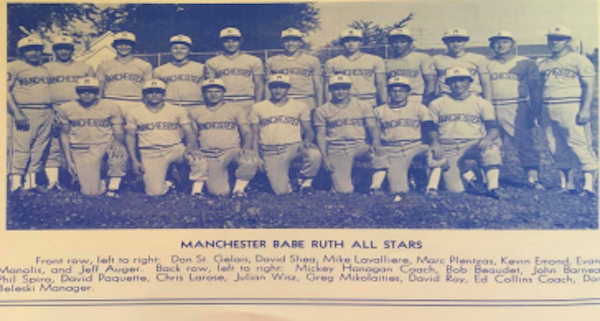
In 1967, Don took his coaching talents to the Manchester Babe Ruth League accepting the
position as head of the Elks. Remember, at this time there was no 13 year-old Lebel League. Player ages on a single Ruth team ranged from 13 to 15.
In 1968, Beleski was selected as an assistant coach of the All-Star team managed by talented Wayne Thompson and assisted by now Manchester Babe Ruth coaching legend, Mickey HaNnigan and they made it all the way to the finals as the only remaining undefeated team in that year’s World Series. However, their good fortune was to end there as they ended up losing to Louisiana twice on the final day, 2-0 and 4-2 in extra innings.
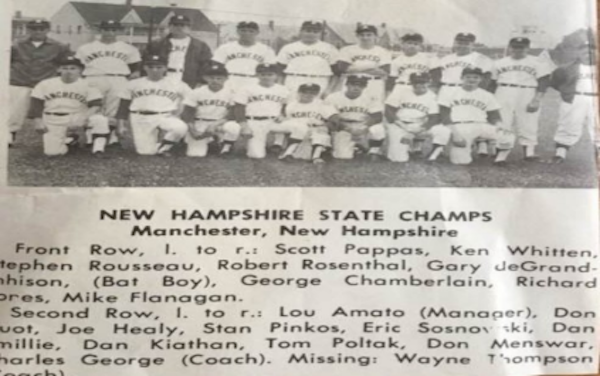
In 1976, with Beleski now as manager and more-than-ably assisted by Hannigan and the skilled and dedicated mentor, Eddie Collins, the luck of the Manchester Babe Ruth League would change, this time returning from Pueblo, Colorado, as the World Series Champions. No ’Ruth fans from that era will forget that Manchester club, down by two (7-5) in the last inning of the semi-finals, with two on and two outs – and a two-strike count on the clean-up hitter, Dave Roy.
As reported by well-known radio/TV broadcaster, Bob Lobel, the next pitch was crushed for a 3-run homer, giving the Queen City club a heart-stopping 8-7 walk-off victory.Manchester, again, as in ‘67, the only remaining undefeated team, now needed just one more win to secure the title. The first game ended as a 1-0 loss for hard-luck pitcher Greg LaRose. The second game followed an hour later with one of Manchester’s greatest baseball players, Mike Lavalliere, leading the way. Not only was he pitching his third game of the series, but he also topped that feat by hitting a three-run homer to beat Hawaii, 9-4, finally bringing home the Babe Ruth League’s most coveted prize.
And according to Don, “Other than Stamford, Connecticut, which won it all during the first three years of the 13-15 year-old division’s existence, we’re the only other team from New England to ever win the Babe Ruth World Series over the past 53 years. I still have a bat signed by every player and coach from that team. That was a remarkable year and a phenomenal ball club.”
During his tenure as a Babe Ruth coach, Don took a three-year “sabbatical” of sorts to join Jumbo Reilly on the staff of Sweeney Post #2. And, by the way, during his spare time, he also served as head coach of the Trinity Pioneers varsity baseball team in ‘78.
In 1984, he returned to the Manchester Babe Ruth League, this time as head coach of Kiwanis and led his club to the league title, beating Indian Head 2-1. That team included well-known players like John Schiavone, Billy Rockwell, Brian Pouliot, Sean McDonough, and Bryn Doyle. One year later, Beleski’s tenure with the MBRL and baseball in general came to an end. Not that I need to remind you, but Don also coached football and basketball.
(That’s all for PART 1. Continue reading tomorrow.)
Ted Menswar Jr. is a life-long resident of the Queen City and a retired member of the English Department of Memorial High School who has been involved in local sports for 70 years as a player, a coach, a mentor and a fan. He can be reached at tedmenswar@outlook.com