(And the Responsibility of the Boards of Directors, the coaches and parents)

Author’s Note: I want to make one very important fact clear that I failed to do within the content of Part 1 of the story on Manchester’s Youth Baseball and Softball Programs that ran yesterday in the Sports Section of MIL.
I am in no way dissatisfied with the coaching that has been done by Head Coach Rachele Hedge who is being assisted by her dad, David.
In fact, my thoughts and opinions are just the opposite.
After all my years in baseball, I know good coaching when I see it. And I can assure you, City AD Christine Pariseau Telge, made the correct decision when she hired them.
They are both extremely skilled and, most importantly, both know how to TEACH softball.
My concern was spawned by the almost complete disappearance of the low-cost feeder systems that would provide coverage of the basics of the sport, including pitching as young athletes began their careers.
When its existence was in full force, it eliminated the need for the high school softball coaching staff to start from scratch to be sure their athletes were properly educated and ready to face viable competition.
And in softball (as with baseball), major concentration always needed to be spent on the pitchers.
If the feeder systems failed to do that, a coaching staffs’ problem is magnified and in some cases, dramatically so.
Because I don’t want the present staff to become discouraged to the point where they would consider leaving, and knowing how important a strong pitching staff is to making a successful season not only possible, but a reality, I “butted” in by putting my feelings in print, Rachele and Dave, I assure you that all I wanted to do is help you, your staff, your team, and, obviously , your pitchers.
I apologize for anything I’ve said (verbally or in print) or done that angered or upset you.
From now on, I’ll stick to writing my stories and watching your games from my reclining chair.
Sincerely,
Ted Menswar Jr.
Part 2
OK – Back to Baseball
While I realize the demographics here have changed – a lot – I’m still having a difficult time accepting the fact that its impact, its significance in the Queen City, may be coming to a sad conclusion.
Manchester has always been referred to as a “hot bed” of baseball. Its history has included Gill Stadium, the best known public baseball field in New Hampshire.
The Queen City also has had a significant number of state championship teams at all levels, from Little League to American Legion, as well as several teams that have played for a regional or national title.
It has hosted local, state, and regional tournaments at various levels, and even has hosted Babe Ruth and American Legion World Series.
But that was then and this is now.
From Little League to American Legion, baseball in the Queen City has changed, and in some cases, dramatically.
I’m a member of the NH Dunk-N-Diamonds, a group of men whose lives have been spent coaching and/or officiating 11 different sports in NH, and were concerned about the declining participation in baseball in Manchester.
In an attempt to resolve seven “deadly” problems that we believe are killing interest in baseball, we used a “problem/solution” approach to discuss the issue. These are the changes we’d like to suggest to the Boards of Directors of the city baseball leagues – from LL to American Legion.
PROBLEM #1: Baseball’s boring.
Solution:
- Increase the coaching staff’s skills by utilizing the extreme number of instructional resources available.
- Have coaches formulate more creative practices that will involve all players throughout each practice.
- If all players are continually involved in a variety of timed drills, practices will move smoothly and quickly with the result being little time for boredom.
PROBLEM #2: Lack of playing time – especially in Little League
Solution:
- Allowing all players to hit (still 3 outs per half-inning) and permitting coaches to substitute freely will result in team members spending more time on the field than on the bench.
- The best way to improve players’ skills is by giving them more time on the field rather than on the bench.
PROBLEM #3: Too much emphasis on winning.
Solution:
- If coaches are more pre-occupied with winning, then they will usually play their best players for as long as is permitted.
- Many will likely play their subs only because they have to.
- Though the players may be young, they aren’t stupid.
- If they perceive a coach to be more interested in winning games than in teaching the less capable players the skills necessary to become better players – the “fire” inside is quickly extinguished and the desire to continue to participate dies with it.
PROBLEM #4: Coaches and adults vocally hammering away on the kids.
Baseball is a tough sport to play. Learning how to catch, throw, and hit is not easy – and to do each well is even more difficult. Too many coaches and parents seem to forget that fact, particularly if the sport came easy to them. A surprising number of coaches believe it’s OK to yell at their players and/or point out every little mistake a player makes – and no player enjoys being embarrassed in front of peers.
Solution:
- When critiquing the play of a player, be constructive, not destructive.
- If you, as a coach or parent have nothing positive to say, then say nothing.
PROBLEM #5: Lack of parental support.
Solution:
- Attend as many games as possible and praise or encourage the kids.
- Parents – work on a player’s weakness at home.
- Most important…shut off your cell phones or tablets and pay attention to the game!
PROBLEM #6: All-Star teams.
Many believe that the leagues in the past were set up for one purpose only – to put together an All Star team. Once the All Stars were selected, all the attention was focused on them. To the remaining players, and that’s the definite majority, once All Star competition began, it seemed that everything else in the league took a back seat – and, in Little League, that still included competing for the city championship.
Solution:
- Unfortunately, this problem still exists and the attention given by ESPN hasn’t helped.
- The original intent of the people who started Little League and Babe Ruth League baseball was to give kids something to do during the summer.
- Bring the focus back to the original intent.
PROBLEM #7: Because many adults have been so pre-occupied with using their players as “chess” pieces in their desire to win, the game no longer belongs to the kids.
Solution:
- The game is not about you, it’s about the player’s you’re mentoring.
- Look at the game through the eyes of the child and make it fun again.
- After spending the majority of our lives playing, coaching, and/or umpiring baseball, we assure you that we’ve “been there, done that”.
- Based on our combined personal experiences, we believe that resolving these specific problems will lead to an increased interest in baseball on the part of both players and parents.
PROBLEM: Displeasure with personal performance.
Once a player starts sitting the bench as a result of a lack of performance on the field, the interest in the sport usually dies and the player then will look to other things to occupy the time previously devoted to baseball.
Solution:
- Give every player the same amount of attention and instruction.
- Increased playing time will also help.
- If necessary, ask a knowledgeable friend to join a practice or two.
North Little League has combined with Hooksett; South Little League has combined with West to form Manchester NH Little League; East is now Cal Ripken Baseball; and Central remains as the only city team still singularly affiliated with Little League.
The Ray Lebel League no longer exists and the Tom Woodlock Babe Ruth League, which produced a World Series Champion, is a shell of what it once was. The Post 79 and Jutras Post American Legions Senior baseball programs also no longer exist.
Only Manchester Pony League baseball and Henry J. Sweeney Post #2 American Legion baseball remain unchanged.
Though AAU baseball is available, it is costly and requires a considerable amount of travel.
Lastly, I’ll be blunt.
As a Board of Directors:
Your job is to provide the athletes who participate in your league with the best coaching available at all levels.
As a Coach:
Your “job: is to make the player better than when he or she came to you. If you can’t do that, find something else to occupy your time.
As a Parent:
Your “job” is to be supportive and not critical – both and off the field.
Remember, baseball is one of the most difficult sports to play, especially trying to hit a round ball with a round bat, and particularly if it’s thrown at great speed and/or with great movement.
Remember, if you got 3 hits out of ten at bats, that means you failed seven out of ten times, but are still considered a very successful .300 hitter. To get 4 hits out of ten at bats, you’d be a .400 super hitter.
If you’re wondering how long it’s been since a Major League Baseball player hit .400 – it’s over 84 years – the last one being Ted Williams of the Boston Red Sox!
For those of you who remember, thanks to the help provided by a Queen City icon – Tommy Ameen – here are a few pitchers who were “All Star” pitchers during their days:
- Central LL: Joe Healy, Lenny Pappas
- East LL: Fern Ornalas, Danny Ryan, Brant Menswar
- North LL: Mike Pstragowsi, Peter Foye, Carmen Giampetruzzi
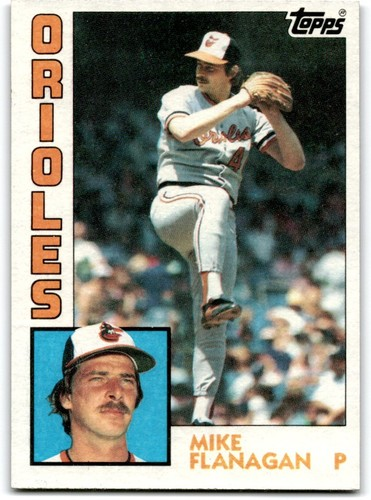
- South LL: Mike Flanagan, Ron Beaurivage, Jack Chandonnet
- West LL: Henry Lemieux, Chris LaRose, George Reischer
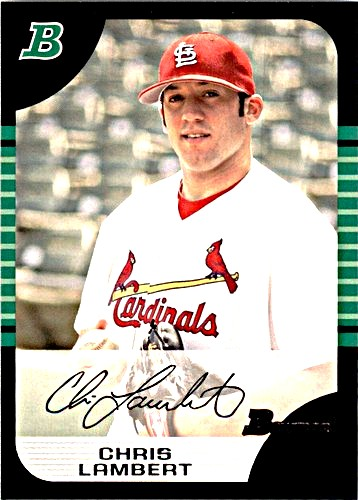
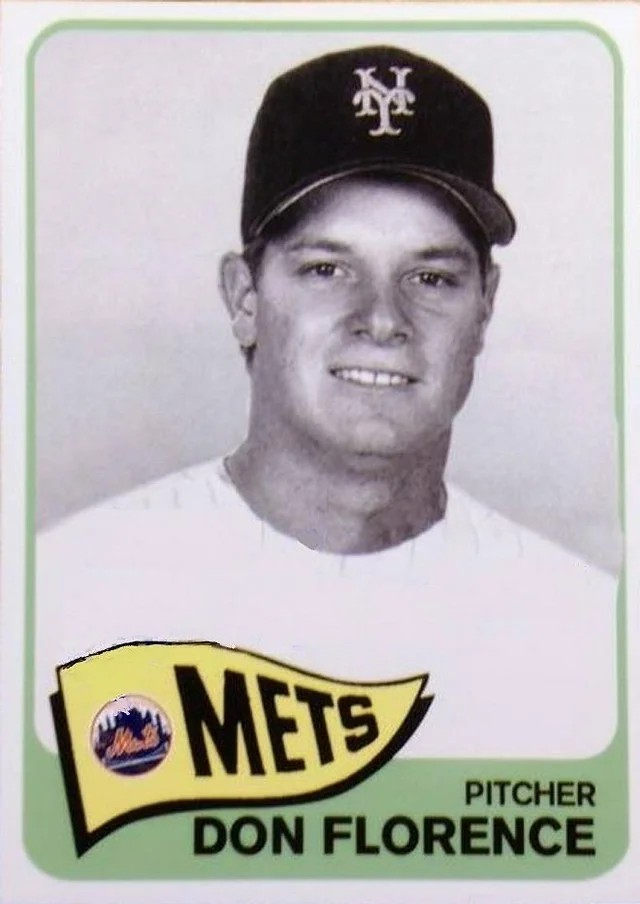
Attached are the baseball cards of several baseball players from Manchester who made it to MLB. I know they had great coaching because I knew their coaches.