
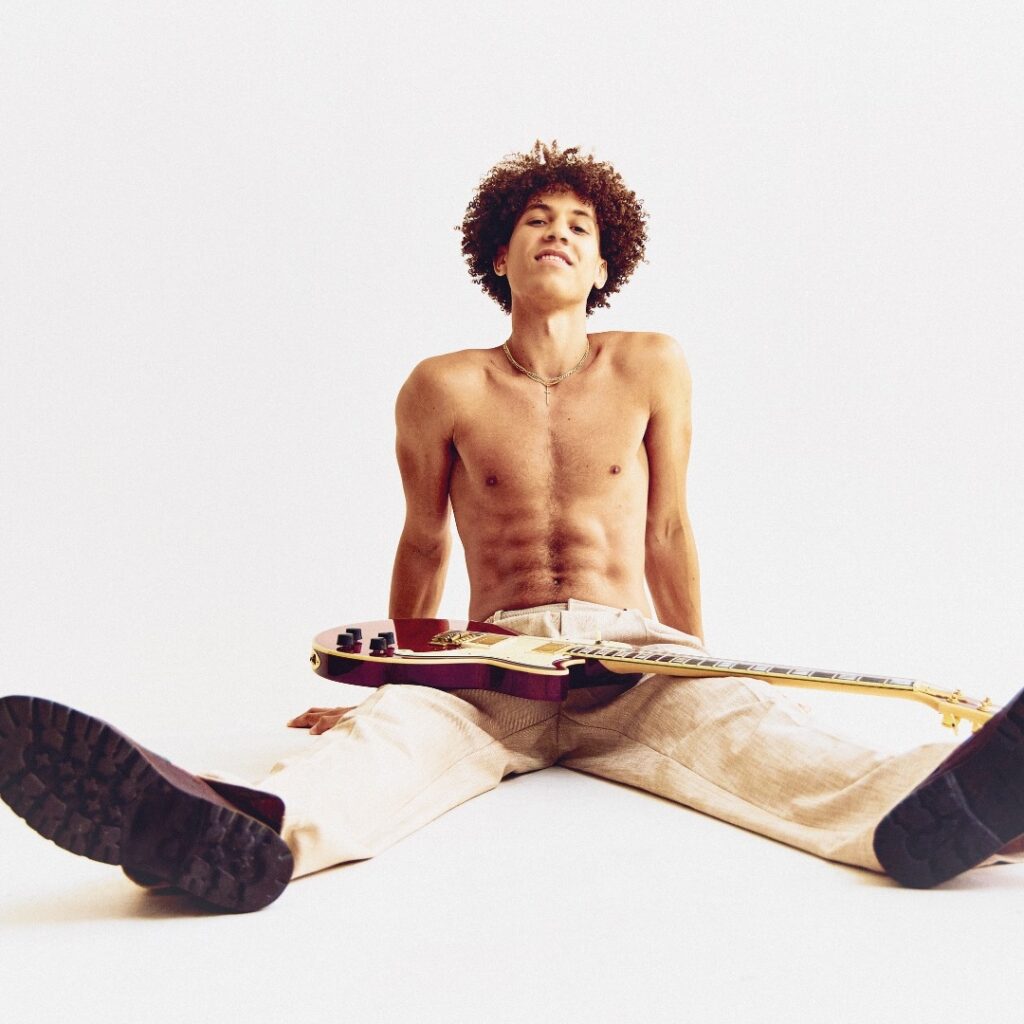
PORTSMOUTH, NH – Getting his nickname from exhibiting a frenetic approach, Brandon “Taz” Niederauer is beyond his years when it comes to talent, technique, and overall vision with guitar. Possessing a stylistic fusion of blues, soul, R&B, and rock, this kid from Long Island has performed on a variety of television shows including “The Late Show with Stephen Colbert” and “Good Morning America.” He’s also shared the stage with the likes of Stevie Nicks, Buddy Guy, Lady Gaga, and Gregg Allman to name a few.
On March 8, folks in Portsmouth and the surrounding areas will get to witness the talents of “Taz” in person when he takes the stage at Jimmy’s Jazz & Blues Club. Starting at 7:30pm, the show is taking place as part of the closing night of “Hear & There,” a weekend-long event shining a light on live music around the Seacoast region.
Niederauer and I had a talk ahead of his performance about some new material he has coming out, attending an illustrious Ivy League institution, and how he loves the way live music brings a community together.
Rob Duguay: Since last year, you’ve been releasing a series of singles with your most recent one being “Hold On ‘Til We Make It,” which came out a couple weeks ago. What was the making of the single like, and when it comes to this creative output you’re having, do you feel that releasing singles are going to be the way for you going forward, or are these tunes you’ve released so far going to be part of a record of some sort?
Taz Niederauer: “Hold On ‘Til We Make It” was started during my first batch of sessions ever in Los Angeles when I was about 16. It had a variety of different names and different versions, but there was something about the melody that I could never get over, so it literally took years of workshopping, abandoning the idea, and coming back to it before I finally was like, “Alright, we have to get it right.” I re-wrote it when I was around 19 or 20, and it’s the song that we have, which is basically this mellow pop ballad with a rolling guitar solo that I’m super proud of. Also, the singles that are being released will eventually culminate in an album that’ll be out later in the year.
RD: You’re in your early 20s, and today’s streaming age is pretty much geared toward your generation and demographic. From your point of view as a musician, what are your thoughts on streaming? A lot of the older artists are kind of divided about it.
TN: There’s definitely advantages and disadvantages. People are more apt to discover new music because of things like Spotify playlists or generated radio on platforms like Apple Music where it’ll recommend certain bands and musicians for you. There’s also the access to all of the songs in the world for one fee, which is cool and it incentivizes people to look for more music as opposed to only buying CDs from artists they like. However, the artists obviously make less money, which is a downside, so there’s definitely a double-edged sword in that way. I don’t know which side I’m on, but the one thing is it’s really a pain for smaller artists because the days of going to play in a 250 capacity venue and selling 50 CDs or something for 10 or 15 dollars a piece are over, so it kind of just redefines the monetary landscape involving studio recorded music.
RD: I couldn’t agree more. Are you still attending Yale University? I read that you were studying economics there.
TN: I graduated.
RD: Congratulations. What was the experience like for you at Yale? Usually when you hear about a musician going to school, it’s usually to further their studies and their craft rather than pursuing a completely different field.
TN: While I was touring as a kid, my parents always made sure that I was doing well in school or else I wouldn’t be able to tour. Then by the time my junior year rolled around, I had so many extracurriculars from playing music coupled with good grades, so my mom encouraged me to swing for the fences and go for all these big colleges. I didn’t think it was gonna work, but it did, so I got into Yale. I got into some really good programs for music and other colleges like NYU, but I decided to go to Yale because it’s a once in a lifetime experience and I’ve always wanted to be amongst those elites. I don’t come from an elite background, and I never had any connections, not even in the music industry, when I started.
It’s not like anyone I know is a crazy businessman, and I went to a random public school, so I didn’t have a path laid out for me. When I had this opportunity, I knew I couldn’t pass it up because music has always been my escape. I felt like if I went to music college and I was doing a bunch of stuff that I didn’t want to do, not practicing related, but if the curriculum was geared a certain way, then I would lose the spark.
RD: I get that perspective. When it comes to your studies in economics, has that had any effect on you pertaining to the business end of your music career with managing your finances and stuff like that?
TN: Yeah. The entire thesis of the economics department at Yale, if I had to put something on it, is that the economy is run by people, and people have issues such as imperfect choice. A lot of the economics that I learned was grounded in behavioral economics, which is a pretty new field. That coupled with some personal finance and run of the mill corporate finance classes, it helped train my brain on what to look for on the monetary side of this whole operation. Everyone is trying to get every nickel and dime they can while also staying true to themselves, and you just have to line it up while making sure that you’re doing right with your money. ‘
RD: This upcoming show you have at Jimmy’s Jazz & Blues Club is part of a unique event called “Hear & There” where there’s all of these different shows happening in venues throughout the Seacoast area of New Hampshire and Maine. It’s kind of like a festival, but it’s also kind of not because it’s not happening in a centralized location, it’s taking place in a variety of places. When it comes to being part of an event like this, what are your thoughts?
TN: Every chance I get to play, I never take it for granted. I love being part of these types of events where even if it’s not a traditional festival, bringing a community together where people are going to see live music has always been the best experience for me. I’m glad that people are still buying into that idea and I plan on furthering that for the rest of my career in any way that I can.
RD: When you have a community centered around music or any sort of art form, it gets better and more visible with more people becoming attracted to it. Going along with that record you mentioned earlier that’s supposed to be due out later this year, what can you say about the current status of it without giving too much away? Is there a name for it or is there an exact release date?
TN: I have a name, but I can’t say what it is yet because of forces that are out of my control. However, there will be more singles, for sure, but I’m just really excited that 2026 is finally the year that I’m putting out this record. I’ve been talking in other interviews about wanting to put out music for the longest time, but I haven’t until now because I didn’t know what I wanted my voice to sound like or the type of music I wanted to make. I didn’t know what my sound was, so from 16 to now, it feels like I’ve really been chipping away at this iceberg with a toothpick while trying to find what I want to be. That’s what every person from 16 to 22, or even to 25 is doing, they’re trying to figure out who they want to be in the world and no one really has any answers.
I’m super, super picky with the type of music I want to make, and I’m glad that I didn’t just put out a record at 15 for the fun of it because I probably would have put out something I frankly wouldn’t have liked at this point in my life. The influences that had a mark on me are not the same things that I believe in now, and also, my writing was in its infancy, and it still was for a lot of this project. I was able to refine it as I grew older and I’ve had some of these songs for two or three years, which I’m still proud of, so I think they’ll last the test of time for me.