
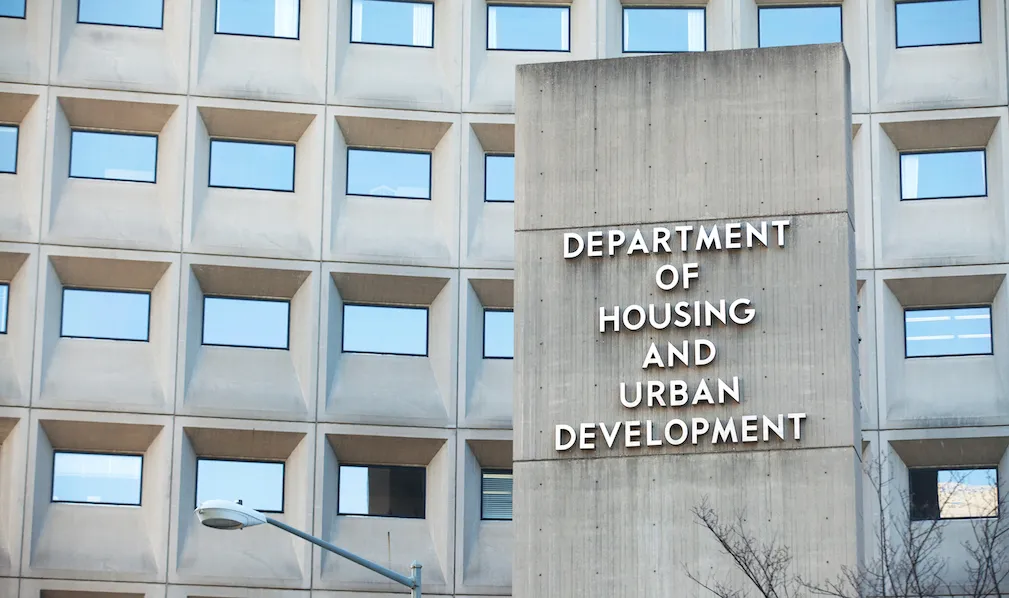
CONCORD, NH – One key federal budget issue that has yet to be resolved are possible cuts that would severely reduce or eliminate programs that awarded millions to New Hampshire last year to help ease the housing crisis and homelessness.
While health care has gotten most of the attention as congressional budget talks ground to a halt this week, resulting in the government shutdown, housing could also take a big hit. Differing FY 2026 federal budget proposals may reduce funding for U.S. Department of Housing and Urban Development as much as 44%, with the aim of reducing rental assistance and eliminating programs that help develop affordable housing and reduce homelessness.
The impasse over the budget over the past month has stalled any agreement on what would happen to the 51-year-old Community Development Block Grant program, which awarded New Hampshire $12.7 million in 2024. The $3.3 billion CDBG program is one of HUD’s biggest resources for communities.
The House proposal keeps the CDBG program at current levels, the Senate proposes cutting it by $200 million. The Trump administration has proposed eliminating the CDBG program altogether.
Without resolution on a budget by the end of the fiscal year Monday, the government is in a shutdown. Congress must agree on a budget or agree to a temporary continuing budget resolution in order to fund the government until a budget is agreed upon.
Funding the federal government and its programs is legally up to Congress, and, technically, the budget Congress will eventually pass will fund programs at HUD and other departments. But Trump has found ways to eliminate programs he doesn’t like by redirecting money or other means. While it’s not legal, it takes court action to reinstate the legal purpose of the money.

On Tuesday, the HUD homepage had in large letters on a bright red background: “The Radical Left in Congress shut down the government. HUD will use available resources to help Americans in need.” Yet, HUD Secretary Scott Turner earlier this year testified in favor of the administration’s proposed 44% reduction to the department’s budget.
As Congress moves to hammer out a budget and end the shutdown, it’s not clear what proposals will be affected. Here are what budget proposals may mean for housing and homelessness in New Hampshire:
A longer wait for rental assistance in NH
The Trump administration has proposed that $26.7 billion be eliminated from HUD’s budget by combining five programs that provide different types of rental assistance – Tenant-Based Rental Assistance (the Housing Choice Voucher program), Public Housing, Project-Based Rental Assistance, Housing for the Elderly, and Housing for Persons with Disabilities – into one, the State Rental Assistance Block Grant.
While neither House or Senate budget bills as they stand now combine the five programs, both reduce the Housing Choice Voucher program by as much as 43%.
The funding decreases would reduce New Hampshire’s vouchers by between 500 to 800 households, representing 900 to 1,500 people, the Center for Budget Policy Priorities estimates. The lower numbers are the Senate’s proposal, the higher are the House’s.
The federal Housing Choice Voucher program supports very-low and low-income households by paying a portion of their rent and utilities, directly to the landlord. Households must have a qualifying income to get the help. The program is administered through the New Hampshire Housing Authority.
At the end of last year, there was a waiting list of 11,800 to get into New Hampshire’s program, and the average wait time to get a voucher is six to eight years, according to NH Housing’s 2024 Annual Report.
The budget proposal calls for states to prioritize “elderly and disabled” voucher recipients, but New Hampshire’s program already does that – 78% of those who were supported with housing vouchers in 2024 were older than 65 or had a disability, with the remaining 22% of vouchers going to individuals and families.
The average income of New Hampshire voucher recipients is $19,260.
The median rent for a two-bedroom apartment in New Hampshire is $1,833, according to the most recent New Hampshire Residential Rental Cost Survey Report, released last year. Housing is considered unaffordable if it costs, including utilities, more than 30% of income. The rental report found that only 13% of rental units statewide are considered affordable by someone who makes the state median income of $56,814. Median means that half make less, half more.
The CBPP said that losing rental assistance has long-range negative affects on children, in particular.
“The benefits of rental assistance for children go well beyond the near-term benefits of reducing homelessness and housing instability, research shows,” the CBPP said. “Children whose families were randomly assigned to receive rental assistance have been found to be less likely than those in unassisted families in a control group to be placed in foster care or to experience behavioral and sleep problems and more likely to exhibit prosocial behaviors like offering to help others and treating younger children kindly. Young children whose families use vouchers to move to low-poverty neighborhoods are more likely to attend college and earn more as adults, with the benefit growing the longer they remain in their new neighborhood.”
Nationally, the House bill could result in as many as 411,000 fewer people receiving housing vouchers, and the Senate bill 243,300 fewer people.
The Senate budget proposal says the HUD cuts will “empower HUD to refocus housing assistance to promote self-sufficiency.” The proposal, though, eliminates self-sufficiency programs.
These include:
- The Family Self-Sufficiency program, which provides financial and employment coaching to participants who work. As their earned income increases, deposits are made into an escrow account that they can use after they complete the program.
- Jobs-Plus Pilot, which promotes employment and economic self-sufficiency for residents of public housing by providing employment services, community support for work, and a rent break for earned income, helping to remove disincentives to working.
- Resident Opportunity and Self-Sufficiency Program, which connects residents of public housing with supportive services and activities for economic and housing self-sufficiency.
“Policymakers seeking to support work could do so most effectively by expanding rental assistance and taking a range of other steps — such as expanding access to affordable child care and scaling up proven training programs — that focus on helping people find and keep jobs and adequately support their families,” the CBPP said.
Two-year assistance limit is not in budget proposals
The Trump administration also proposed to limit rental assistance to two years, but that’s not included in either the House or Senate bill.
If it were to happen outside of what Congress passes, and withstood court challenges, the move would put more than 3 million people nationwide, more than half of them children, at risk of eviction and homelessness, according to the CBPP.
In New Hampshire, it would result in a loss of housing support to about 7,400 New Hampshire residents, 3,800 of them children, the CBPP estimated. New Hampshire households who get housing vouchers are in the program an average of 113 months.
The CBPP report said that “rigorous research” shows that time limits on receiving rental assistance increases homelessness and puts an added burden on administrators of programs.
“Placing a rigid time limit on rental assistance ignores the realities of the housing and labor markets people with low incomes face,” the CBPP said. “Rents are simply too high for many people — including most low-paid workers — to afford. Fewer than half of all workers earn wages that would be high enough to afford rent for a modest one-bedroom home if they worked 40 hours a week.”
Economic development programs take a hit
Trump’s proposed budget cuts $4.7 billion from HUD by eliminating programs that support economic development in cites and towns and incentive housing development, including the Community Development Block Program. The House budget, so far, maintains the program at its current levels, while the Senate cuts it by $200 million.
Similar to the housing voucher proposals, the administration has hinted that it may find ways to eliminate or reduce these programs if Congress doesn’t.
Created in 1974, the program provides grants to states to administer, sticking to the program’s requirements, but according to their needs
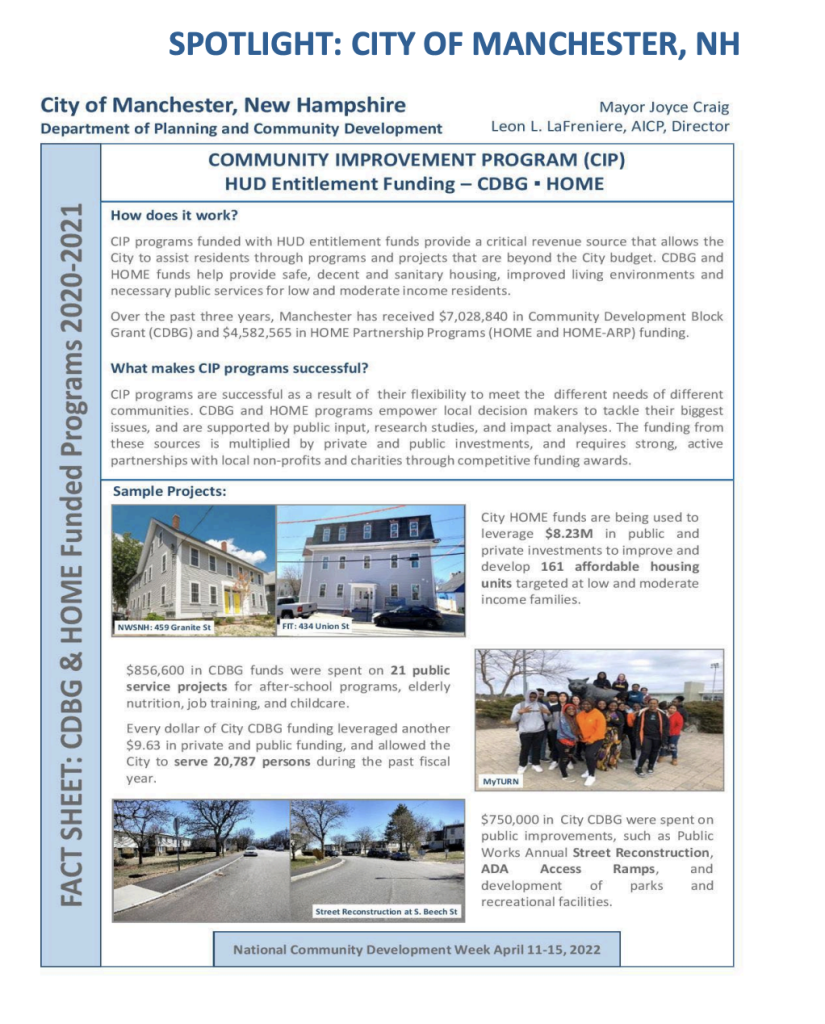
Last year, New Hampshire received $12,694,278 in CDBG money, which funded NH Community Development Finance Authority grants, as well as went directly to cities and towns for revitalization and economic development programs.
Some of the other programs that the administration proposal slated for elimination, and that could still be reduced or done away with, combined with CDBG to bring more than $30 million to the state last year. In jeopardy are:
- Continuum of Care, from which the state received $12, 838,362 in grants that went to organization that provide housing assistance and supportive services for people experiencing homelessness, including Manchester’s Families in Transition and Nashua’s Harbor Homes housing programs.
- HOME Investment Partnerships, which provide money to state and local governments to create and preserve affordable housing. The funding use is flexible, allowing communities to address specific needs, such as financing construction, acquisition, or rehabilitation of affordable rental and homeownership units, or providing direct rental assistance to qualifying household
- Pathways to Removing Obstacles to Housing program, which provides grants to address barriers in planning, infrastructure, development, and preservation that can get in the way of creating housing.
- Fair Housing Initiatives Program, which provides funding to private nonprofit fair housing organizations to combat housing discrimination.
- The budget also eliminates programs aimed at long-term support for people experiencing homelessness, including, Permanent Supportive Housing, Youth Homelessness Demonstration Program, Housing Opportunities for Persons with AIDS, and the National Homeless Data Analysis Project.
The UNLOCK Act solution?
In early September, Rep. Sam Liccardo, a California Democrat, and Rep. Mike Flood, a Nebraska Republican, introduced the Unleashing Needed Local Options to Construct and Keep Housing [UNLOCK] Act.
The bill calls for relaxing federal restrictions on how CDBG money can be used in order to incentivize housing construction, but it hasn’t been officially written yet and the specifics of what is being proposed haven’t been made public.
Liccardo said, “As mayor of San Jose, I saw firsthand how cities are forced to face the brunt of the housing crisis without the federal money to match the magnitude. Easing restrictions on municipalities’ use of CDBG funds will help us meet our communities’ growing needs faster.”
Flood said the measure would also help communities in Nebraska. “The CDBG program has long been an important tool for Nebraska cities to fund important local projects. This targeted legislation would give communities across the state the flexibility to use CDBG dollars to directly address housing supply needs.”
The bill has backing from the U.S. Conference of Mayors, National Association of Counties, National League of Cities and other national housing organizations.
The bill itself, though, which as passed to the House Committee on Financial Services after being introduced, would still rely on funding for the CDBG program authorized by Congress in the FY 2026 budget.