
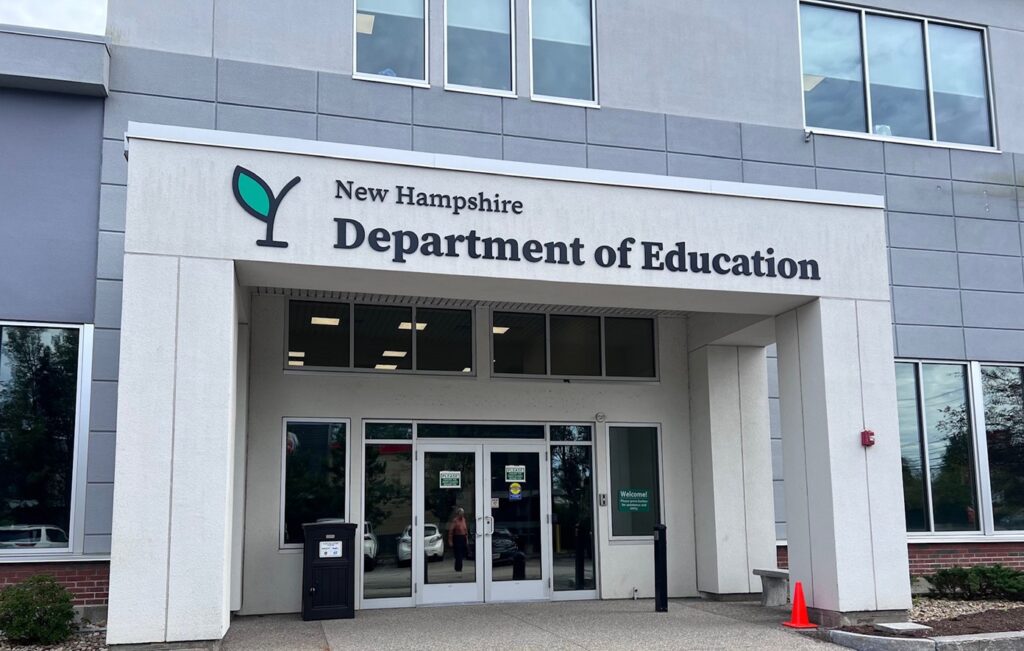
CONCORD, NH — The New Hampshire Department of Education (NHED) on Friday released its official statewide student enrollment data for the fall of 2025, showing a continued decline in student enrollment throughout the past several decades.
According to the new data, there are now 160,323 students enrolled in New Hampshire public and public charter schools compared to 162,660 at the start of the 2024-2025 school year. For comparison, there were more than 205,000 students enrolled in New Hampshire public and public charter schools 20 years ago during the 2005-2006 school year.
This shift in enrollment aligns with long-term demographic changes, including a smaller school-age population driven by declining birth rates, which have fallen from about 14,000 annually in the early 2000s to roughly 11,000-12,000 annually today.
“New Hampshire’s public schools are navigating a continued decline in student enrollment,” said Commissioner of Education Caitlin D. Davis. “These shifts may require school districts to make thoughtful adjustments as they work to prepare and finalize their budgets in March for the next school year. The Department will continue to support school leaders as they respond to enrollment changes and work with their taxpayers to understand the impacts of these changes on local budgets.”
Alongside the official enrollment report, NHED also released State adequacy aid estimates for the 2026-2027 school year, which highlight the State’s continued investment in public education. Per-pupil State adequacy funding is projected to reach its highest level ever, accompanied by increased support for special education to a record level under the budget signed into law by Governor Kelly Ayotte this summer.
The current State adequacy formula was largely agreed upon by a bipartisan Legislature in the 2023 biennial budget, with new fiscal disparity grants added this year to support municipalities with the lowest property values per pupil. Districts receive a base adequacy grant for students who attend their schools, with higher differentials for students with disabilities, free and reduced lunch, and English language learners. Extraordinary needs grants, also included in the formula, provide grants to districts with the lowest property values and the highest percentage of students in poverty. The State average grant per pupil is approximately $7,100, with Claremont slated to receive an estimated $13,443 per pupil, Berlin receiving $14,469 per pupil, Newport $14,419 per pupil, Franklin $12,312 per pupil, and Manchester $11,029 per pupil.
Each year on November 15, NHED releases State adequacy aid estimates to help districts prepare their budgets for the following year. Today’s release provides the FY 2027 State adequacy estimates for districts to use in developing their 2026-2027 budgets, which voters will consider in March 2026.
New Hampshire Education Funding by the Numbers:
- Per-pupil estimated State adequacy is at an all-time high with an average of $7,132 – a more than 30% increase over the last 10 years.
- The State will also invest a record $49.9 million in special education – a more than 130% increase from 10 years ago.
- Next year’s overall State adequacy funding estimates reflect the continued trend of declining student enrollment statewide, a lower percentage of students eligible for free and reduced lunch, and higher property values.