
MANCHESTER, N.H. – Just over 30 percent of Manchester School District students missed at least 10 percent of the 2024-’25 School Year, leading district leaders to discuss strategies moving forward with the Manchester Board of School Committee Student Conduct Committee on lowering absentee rates.
The ten percent threshold, or 18 school days during a school year, is defined as “chronic absenteeism” by the U.S. Department of Education, was most severe within Manchester’s public high schools where 37 percent of students hit that mark during the previous school year. The national average is 28 percent. Manchester’s public elementary schools chronic absenteeism rate was 21 percent and the middle schools were 27 percent during the same time period.
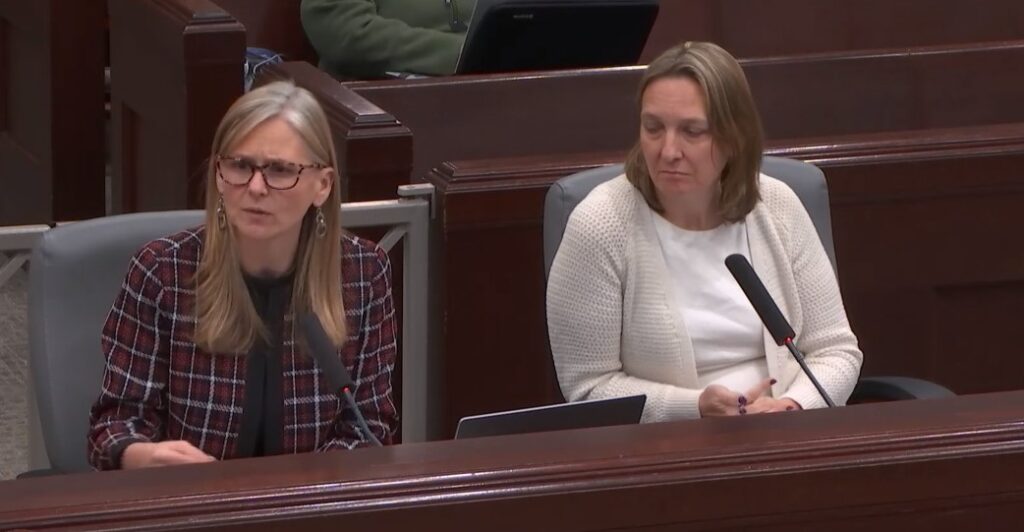
“Chronic absenteeism is not just a school issue — it’s a community issue,” Manchester School District Assistant Superintendent of Operations and High Schools Kelly Espinola told committee members during the Jan. 21 meeting. “When students are not in school, learning is disrupted, and the effects ripple beyond the individual student.”
District officials emphasized that chronic absenteeism differs from truancy, which focuses only on unexcused absences and already requires intervention systems under state law. However, excused absences such as illness or family obligations can have the same academic impact when they accumulate, according to the presentation given by Espinola and Manchester School District Director of Comprehensive School Counseling Joyce Lewis.
Data presented to the committee showed that students who are chronically absent are less likely to read on grade level by third grade and are four times more likely to drop out of high school. High absenteeism also affects classmates, lowering overall reading and math performance.
Espinola and Lewis told the committee that the district has set a goal of reducing chronic absenteeism to 25 percent by the end of this school year, and the key to reaching that goal is outreach with students in what they call “the moveable middle.” These students in the movable middle missed between 11 and 20 percent of school days, and the two administrators felt that proactive interventions could take these students out of chronic absenteeism.
In order to limit absences from this group and other students, the plan will have district officials reach out to families after three absences using phone calls, emails and translated messages. Families are contacted again at 10 absences, with the tone of communication revised to be less threatening and more collaborative.
Espinola and Lewis told the committee that the district has also provided school leaders with attendance toolkits, standardized outreach scripts and regular data reviews. Attendance teams will also meet weekly to monitor trends and refer students to the district’s Multi-Tiered System of Supports for Behavior, or MTSS-B, when barriers to attendance emerge.
“We’ve adjusted our letters to be softer and to open the door for families to work with us,” Espinola said. “The goal is to bring families in, not push them away.”
Members of the committee appreciated the emphasis on building relationships through outreach and stressed that automated and text-based communications would be less effective than person-to-person messages from teachers, principals and school counselors.
Espinola informed the committee that monthly updates would be provided to the Board of School Committee moving forward, particularly regarding data with the movable middle. There was also a warning that changes in grant funding could impact efforts to address the issue.