
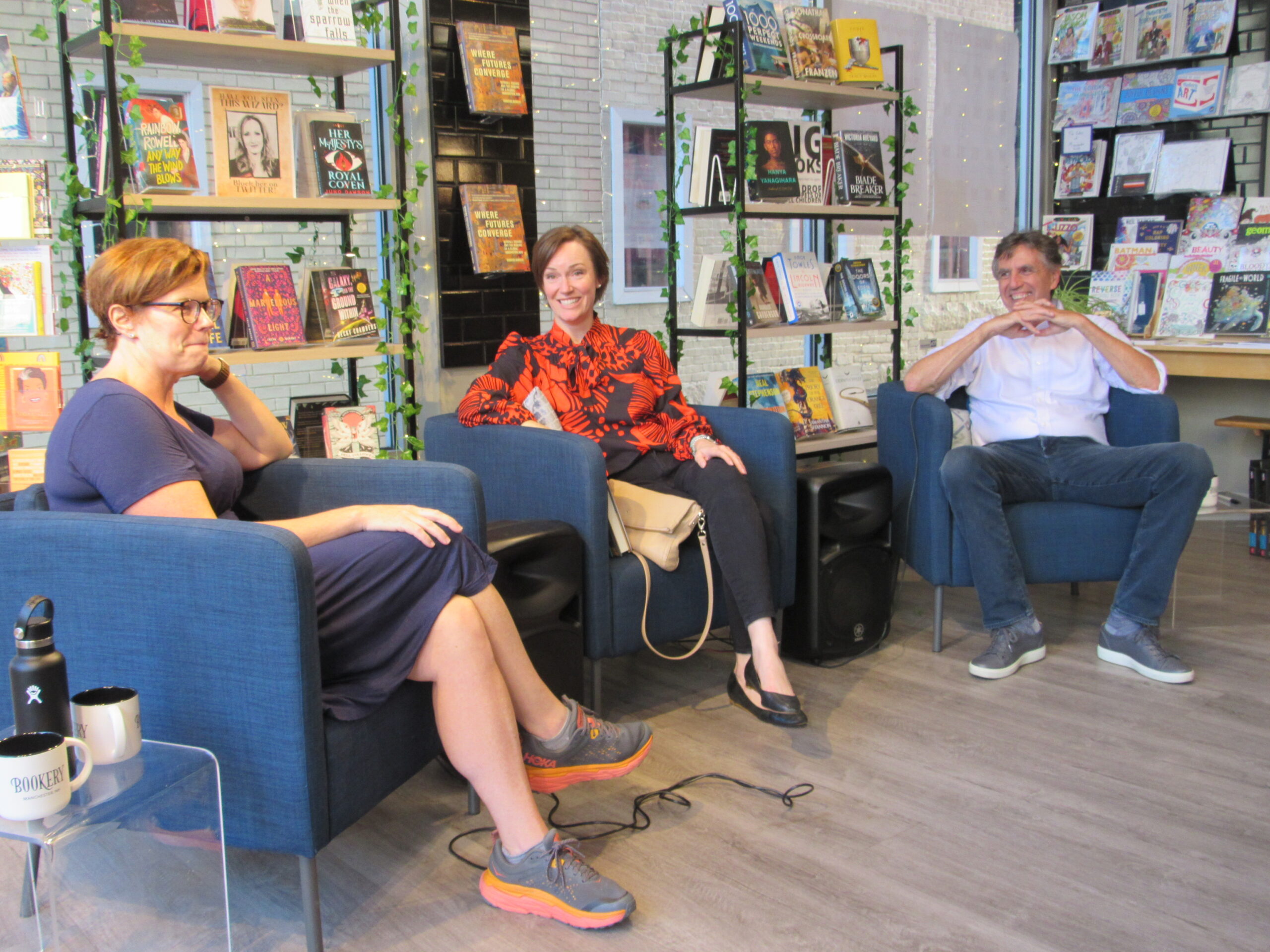
MANCHESTER, NH – Liz Hitchcock, founder of Bookery in downtown Manchester, hosted fellow entrepreneurs Robert Buderi and C.A. Webb Wednesday night in a presentation titled “Building an Innovative Community: Lessons from Kendall Square.”
There were two major takeaways from the conversation: 1. It takes time to build community, and 2. To build a community, the entire community has to buy into the idea.
Buderi, the author of Where Futures Converge: Kendall Square and the Making of a Global Innovation Hub, looked back 20 years to what he called “a wasteland” in Cambridge, Massachusetts, and had some sobering advice: “It’s a decades- if not centuries-long process to turn these places around.”
Webb, one of the driving forces of the Kendall Square Association and an entrepreneurial leader, echoed Buderi: “It doesn’t take 10 years. It doesn’t take 20 years…How do we take special DNA here and amplify it?”
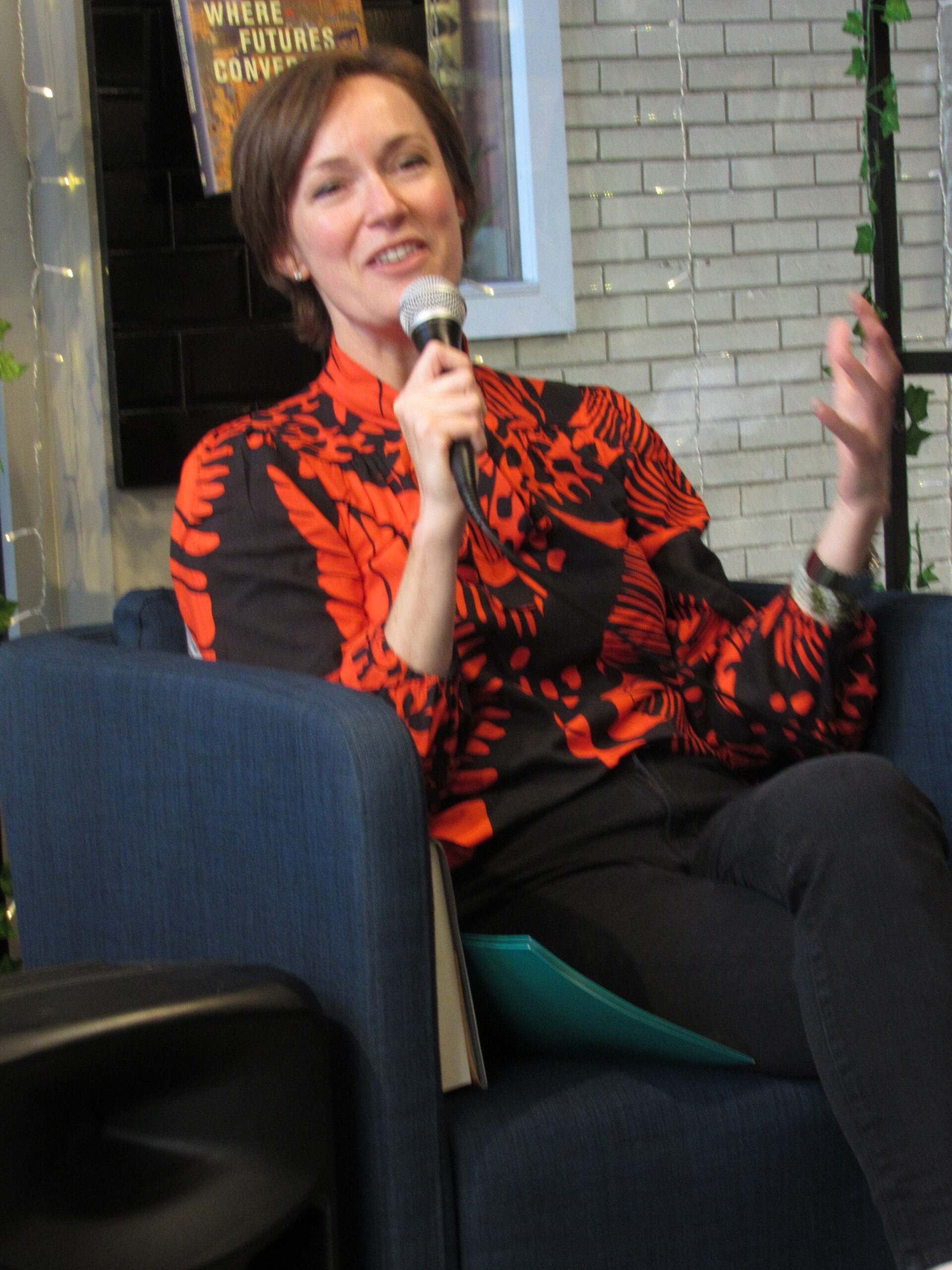
She recalled as recently as 2008, when technology dwarfed retail as “the tumbleweed era.” According to Buderi, weekend nights are still dark for restaurants and retail as tech workers are gone.
Hitchcock pointed out the innovative solution Concord is trying as on Mondays, Concord New Hampshire’s dark day, food trucks are allowed in spaces in front of closed restaurants.
Hitchcock interjected that Manchester’s Millyard district has gone from making shoes and textiles to making organs at United Therapeutics. Special DNA, indeed.
Buderi, the founder of Xconomy, a national business and technology website, pointed out that Kendall Square has the advantage of being innovation-driven for 200 years with Elias Howe, the inventor of the sewing machine, a resident, and home to a major manufacturer of railway cars.
Cambridge and Kendall Square have had other historic advantages, though it wasn’t until after World War II that the Massachusetts Institute of Technology and other colleges and universities became heavily important.
Still, the speakers agreed that technology or educational institutions alone weren’t the driving force behind the Square’s rejuvenation, but rather community involvement with contributions from all sectors. From a zoning and legal perspective, construction is encouraged to prioritize independent retail.
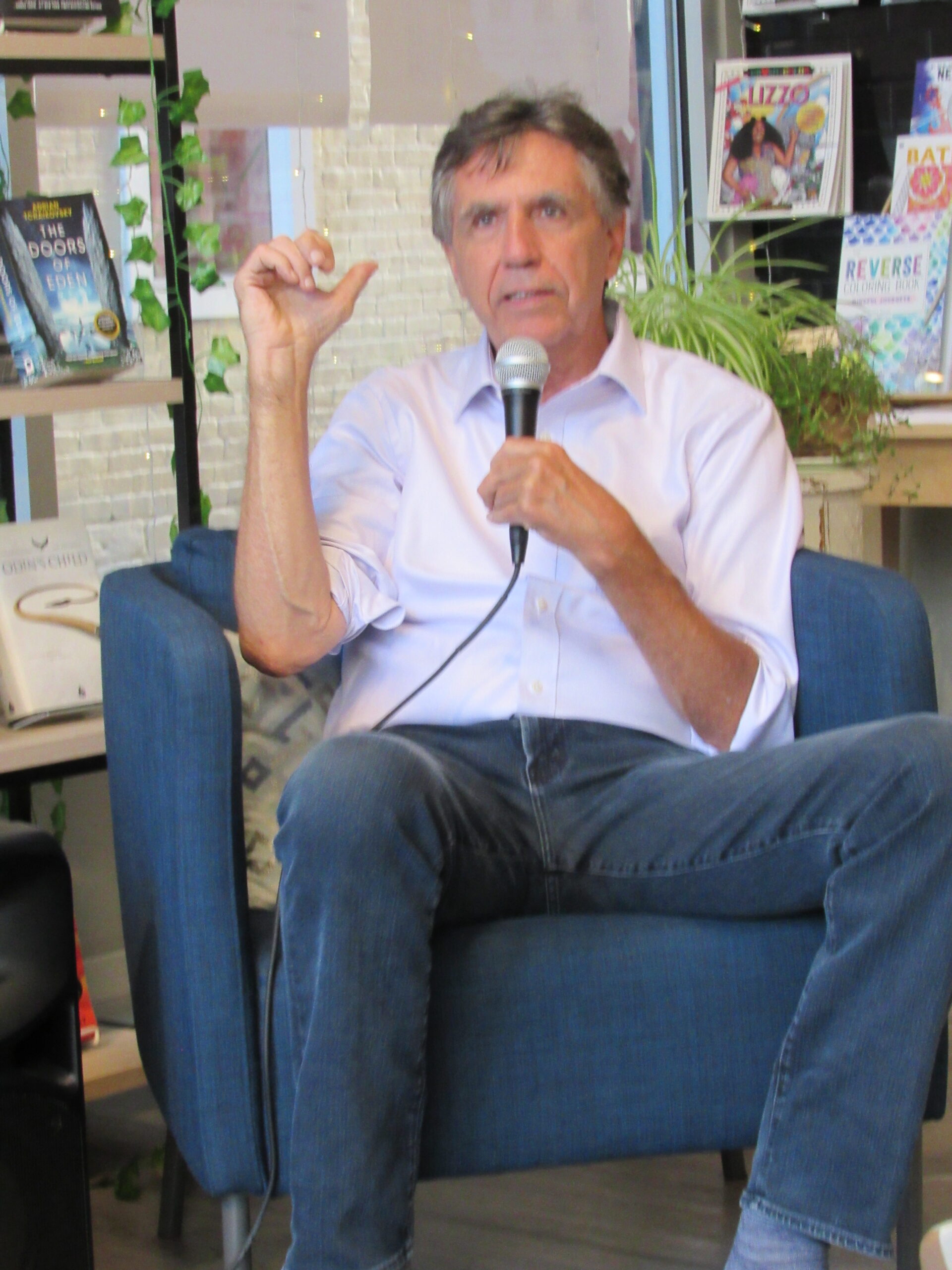
Hitchcock pointed out how vital this is to Manchester where much of existing construction offers spaces too small for major stores and too large for Mom and Pop stores. Buderi pointed out Manchester’s advantage here, however, as The Millyard is already built and Kendall Square had more initial construction to do.
“A start-up ecosystem is like a forest,” Webb added. “You need your old growth and you need your saplings.”
Buderi pointed out Kendall Square’s innovative space zoning. Fifteen percent of new retail space has to be independents, start-ups and non-profits. If fifteen percent is tagged for below market rate, fifteen percent can go at market rate and this thirty percent won’t cut into the planner’s initial 100 percent of projected building use. The thirty percent is add-on.
Transportation was an eye-opening theme. Webb referred to parking space to the detriment of green or walking space as “warehousing pieces of metal.” “It’s not all about ‘If you build it, they will come,’ “she said.
Still, imagine a Manchester where bike lanes were cleared of snow first, sidewalks second and roadways third, as Kendall Square does, or where a voluntary tax businesses pay would fund street outreach workers to work with the unhoused population.
Kendall Square isn’t perfect. Webb noted that it’s still a business district and not a neighborhood. “You need capital brought into a bigger vision,” she concluded.
It begs the question of what is Manchester’s bigger vision?