
MANCHESTER, NH — By many accounts, New Hampshire sits at ground zero for the nation’s opioid misuse crisis with a crippling daily impact upon the state’s population. The rise in drug use, addiction and overdoses has put an increasing strain on area health care providers, social service agencies and the community at large.
That’s the bad news.
The better news is that thanks to innovative collaborations and a growing network of like-minded partners, tangible improvements are under way across the state — and in Manchester in particular.
Health care leaders representing a broad range of organizations gathered July 18 at a forum convened by the Manchester Health Department to discuss specific efforts toward not only addressing the opioid issue at hand, but also prevention efforts and programs. Moderator Scott Spradling referred to the panelists as “the state’s thought leaders and doers,” saying the goal of the event was to share what is working, what is needed and what may lie ahead for the Granite State.
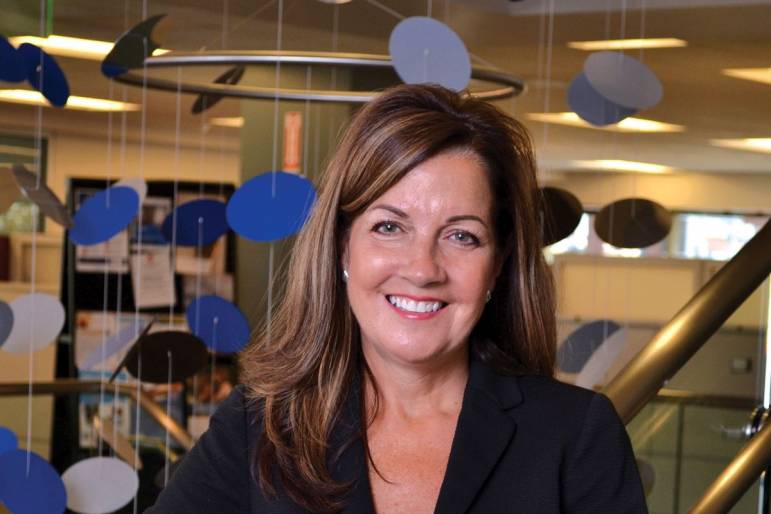
Anthem Blue Cross and Blue Shield President and CEO Lisa Guertin kicked off the hour-long event by describing the two-tiered approach the state’s largest health insurer has employed – working to support “the full spectrum of treatment options” for its members and working closely with the medical community on preventative strategies, including an initiative with the NH Medical Society to provide training and information on alternate forms of pain management. “Our goal is to people on a path to recovery and help them stay there,” she said.
Dr. Joe Pepe, M.D., President and CEO of Catholic Medical Center shared emergency room intake data from his hospital, which shows an alarming spike in fentanyl overdoes — a 400 percent increase — over the past five years. “This issue belongs to all of us,” he said. Pepe described multiple efforts his hospital is part of, including initiatives to support expectant mothers who are drug-dependent, and the CMC serving as a resource hospital for Manchester’s nationally known “Safe Station” program.
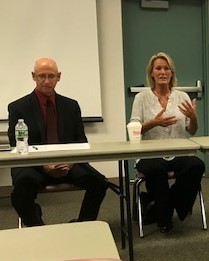
The audience of about 45 people also heard from Cheryl Wilkie, COO of the Farnum Center, New Hampshire’s largest alcohol and drug treatment facility. Wilkie stated that critical partnerships have been a healthy path forward to treat those in need of services.
“Anthem has been a wonderful supporter of ours,” Wilkie said, lauding the leadership of Guertin and Anthem’s Medical Director, Richard Lafleur, M.D., in supporting authorizations for treatment and other services. “Our goal is to the provide humane and dignified care for our patients,” she added.
Wilkie was also blunt in her assessment of local needs and state needs, a sentiment echoed by others in the room. She said that low rates of Medicaid reimbursement for treatment — about $150 a day — and the state’s shortage of providers were among stumbling blocks, as was the ever-shifting rules, regulations and edicts from the federal government around care.
Rik Cornell has worked in the mental health community for over 40 years and acknowledges he has “seen a lot of changes,” over that time. A licensed social worker who serves as COO and Vice President of the Mental Health Center of Greater Manchester, he says that one important distinction is how the relationship between behavioral health issues and addiction has evolved. He said it used to be that those two conditions were viewed separately and as a result, providers often jostled over treatment plans. That has changed for the better he says. “I’ve never seen collaboration like it is now.”
Cornell views stigma of addiction or mental illness as an impediment to those in need of treatment and said that anxiety and depression were among the primary reasons people tend to self-medicate. “It’s hard when one has to admit they have a problem,” he said.
Despite the many challenges facing the community, Jenny O’Higgins from Makin’ it Happen says there are opportunities. She cited her organization’s work in training youth and teens as peer educators to have frank discussions with other kids about drugs and alcohol. The goal is to create resilient youth who feel empowered.
Peter Jenelle, who leads Network4Health, credits cross-agency collaboration and “passionate leadership which is not giving up” as critical elements in the opioid fight. “We have to figure this out,” he said. He added that his organization seeks to organize and improve the way care is delivered to Medicaid recipients in the state.

Guertin also noted a paradigm shift as it related to the insurance environment, saying that providers in the past were often measured on quality standards, including patient satisfaction, which may have contributed to over-prescribing of pain medicine.
Now in addition to participating in programs that focus on non-narcotic pain management, Anthem has instituted a policy in which some of their members on opioids must use a single pharmacy, so as to prevent potential pharmacy hopping. The Anthem Charitable Foundation has also donated $75,000 to Manchester’ Safe Station program, which includes outreach and education to local schools as a form of early intervention.
While the meeting was at times a mix of sobering and uplifting news, the panelists all spoke of a new unity that didn’t previously exist. Wilkie noted that 15 years ago, “it was hard to find people to collaborate with. That’s not the case anymore, we all want to help.”

Love local? Sign up for the InkLink FREE daily eNews and never miss another thing!