

Navigating New Hampshire’s Urban Paths
“The Manchester bus is comfortable, safe, and clean. People often wonder where to start—how to buy a bus pass, plan a route, or even where to wait for the bus. The Bus Buddy Program can help you learn how to ride the bus and make it a smooth, easy experience.”
—Liliana Vornehm, Assistant Planner, Southern New Hampshire Planning Comission (SNHPC)
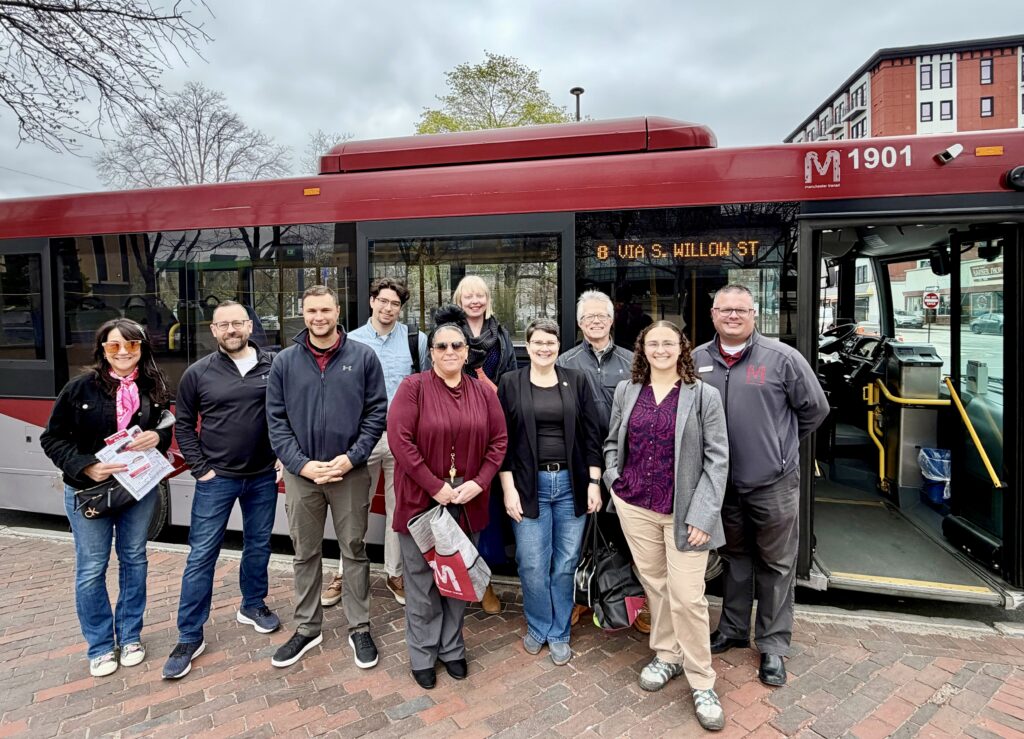
On a Wednesday in late April I joined a small group that had a tour of Manchester’s bus system and the Bus Buddy rider education system. It was a fun and eye-opening experience. Let’s go!
Intro
Our tour was given by the Manchester Transit Authority (MTA) together with the Southern New Hampshire Planning Commission, or SNHPC.
In Manchester, all city buses are operated by the MTA. They also:
- operate a website and a mobile app
- provide transit for local university students (funded by those universities)
- operate some routes in other nearby towns
- charter a local trolley
- provide pick-up at your door for those with qualifying disabilities.
Ticket Info
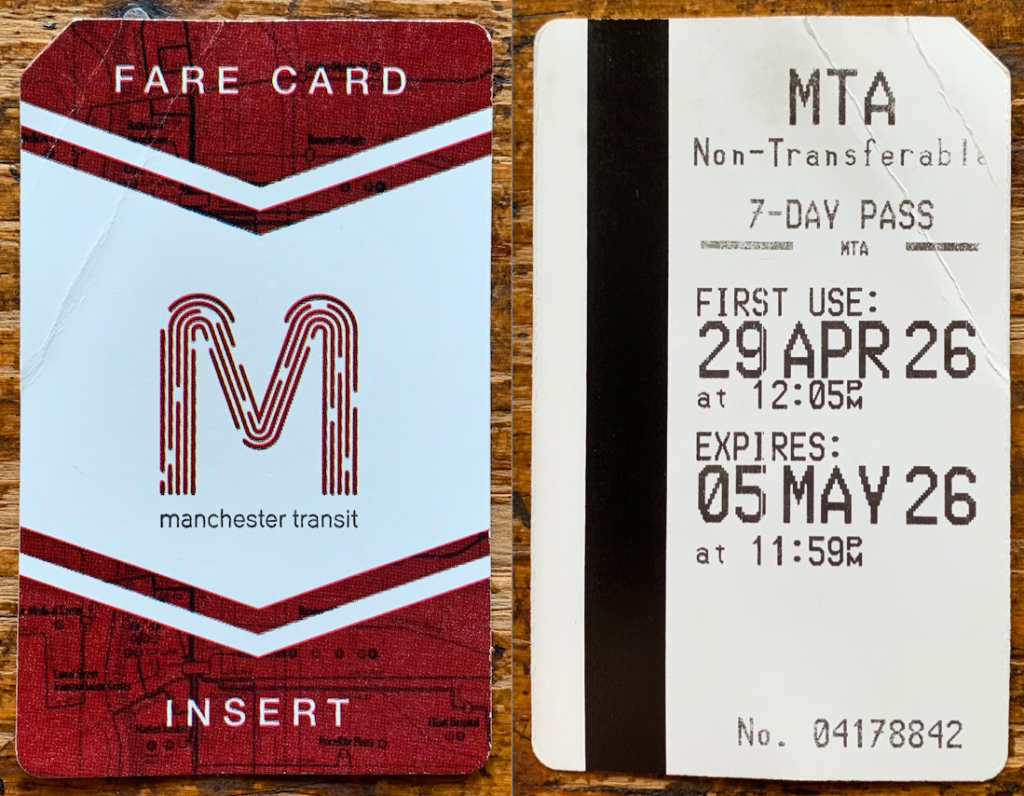
To ride the bus you need either cash fare or a ticket, aka a fare card, aka a bus pass, like the one shown above. When you get on the bus, you insert it in a machine much like a credit card reader.
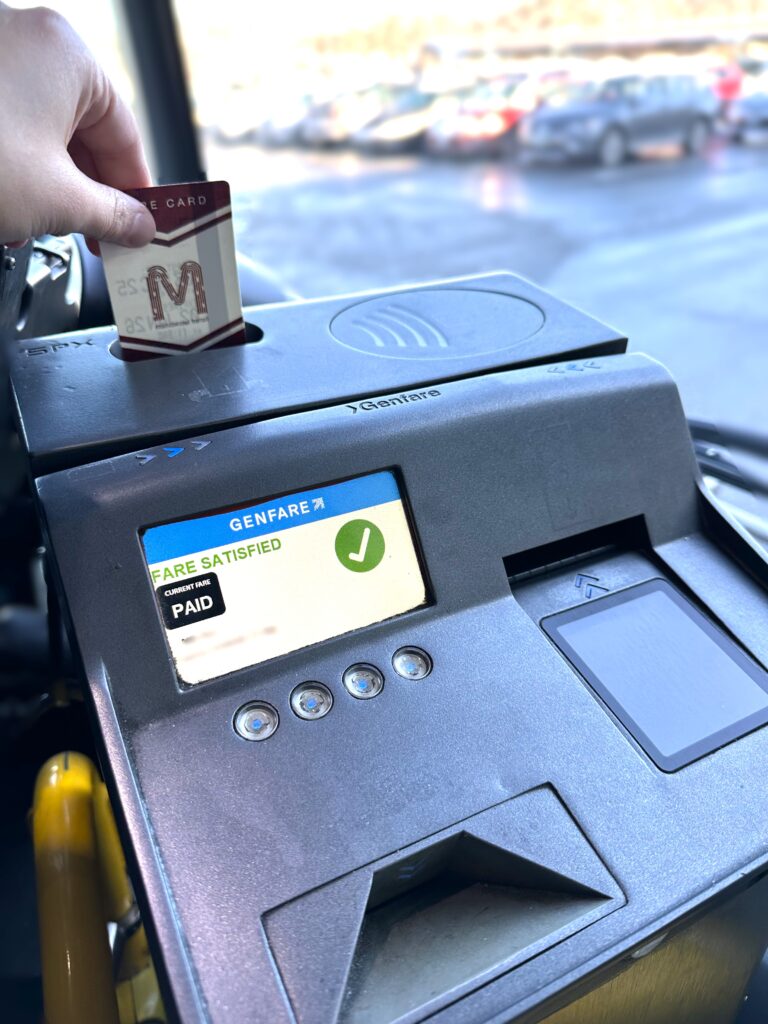
The machine scans a magnetic stripe on the ticket’s back, imprints the time of first use & expiration date on the back, then gives the ticket back to you.
But first you have to buy a ticket. You can do that in three ways:
- Right after stepping onto the bus, provided you have cash. Credit cards and debit cards are not accepted on the bus. Cash only.
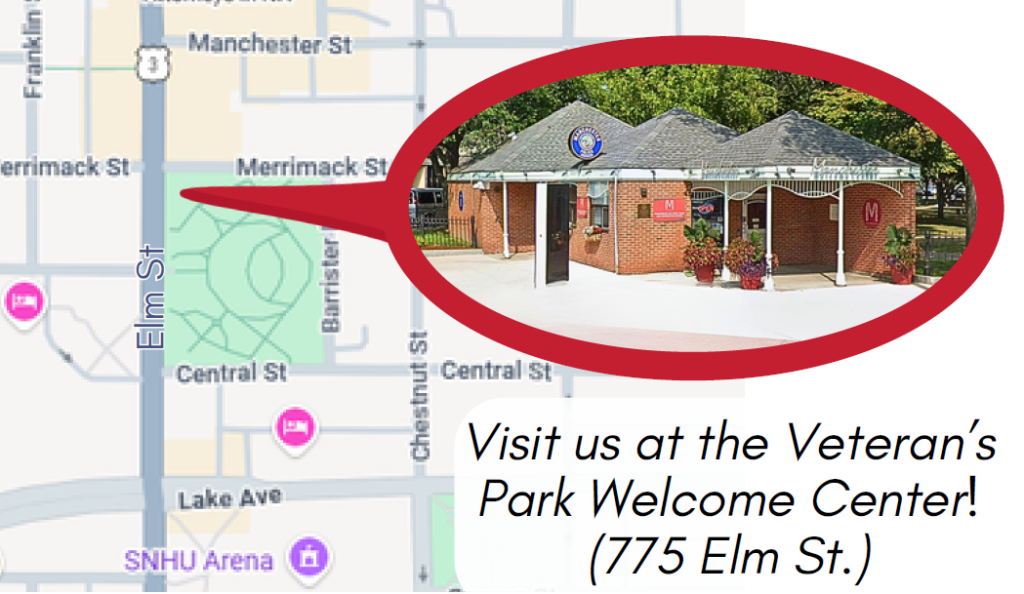
- At the Welcome Center, the little brick building at corner of Veterans Park, and they take cash or credit.
- Using the MTA mobile app. See www.mtabus.org/mobile-apps for more info. You’ll have to configure the app and enter your credit card information. After you’ve bought a ticket in the app, it will display a QR code on your mobile device screen, which can be read by the bus as you board.
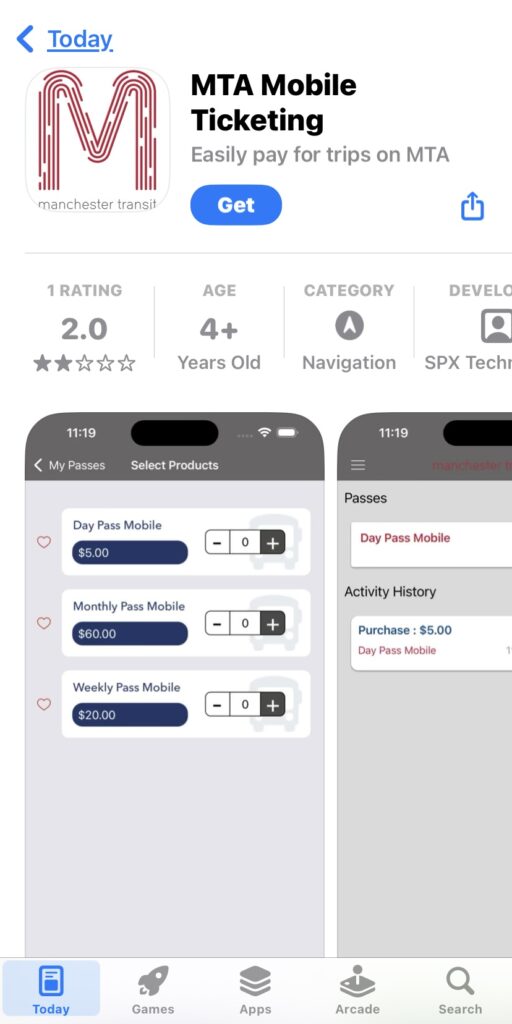
After their first use, tickets are time stamped on the back. If not used within one year of purchase, they expire. The clock on their valid period of use does not start until they are first used. For example, if you buy a 7-day pass on Monday, but don’t use it until Friday, the it will remain valid until the following Friday. (However if you buy a ticket on the bus, the system will assume you’re going to use it immediately, even if you step right off, and the ticket’s clock will start running right away.)
Discounts: Tickets are HALF PRICE for passengers over 65 or those who have a Medicare ID.
If you are interested in trying out the bus system or learning more about it, contact the MTA and let them know. They can give out free week-long passes to let people learn the system.
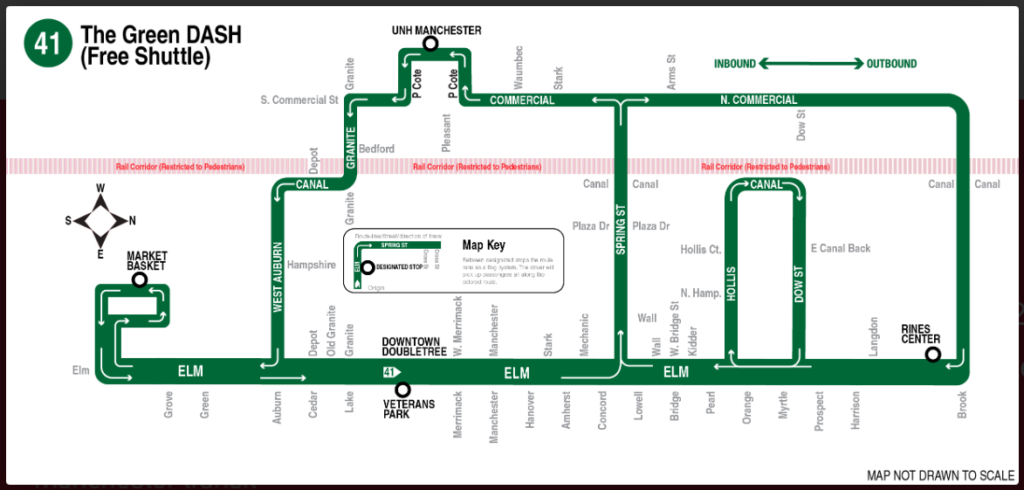
The downtown circulating bus called The Green Dash is FREE at all times, no ticket required.
Fares, or Ticket Prices
Some notes:
- Passengers must deposit cash into the bus’s farebox.
- The farebox does not give cash change. However, an MTA fare card will be issued by the farebox (in lieu of change) for a future ride.
- Bus operators cannot make change and are prohibited from handling your fare.
- Day passes are valid on all MTA routes for the duration of the day.
- The MTA is not responsible for lost or stolen tickets or monthly passes.
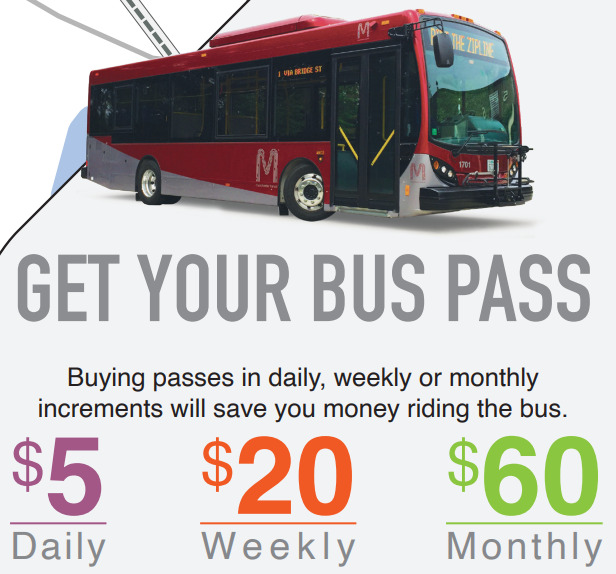
The fares:
- Single ride on any fixed route — $2
- Day pass (incl. Concord/Nashua/Salem to M) — $5
- Weekly pass (7 days) — $20
- Monthly pass (31 days) — $60 / Students K-12 – $45
- NOTE: All prices shown are cut in half for passengers 65 years old or older and those with a Medicare or MTA Half-Fare ID card.
MTA also provides curb-to-curb demand-response transportation services in Chester, Derry, Hampstead, Londonderry, and Salem. This service is known as CART, for Cooperative Alliance for Regional Transportation. For CART transportation services in the five listed towns, rides are:
- $2 per adult passenger per trip
- $1 for children aged 5-15
- free for children under 5
Drivers do not carry cash and cannot make change.
The downtown circulating bus called The Green Dash is FREE at all times.
Bus Features
Every bus is wheelchair & mobility device accessible. At the front it will have a fold out ramp or wheelchair lift. These devices are not only for wheelchairs, also for strollers or other mobility devices.
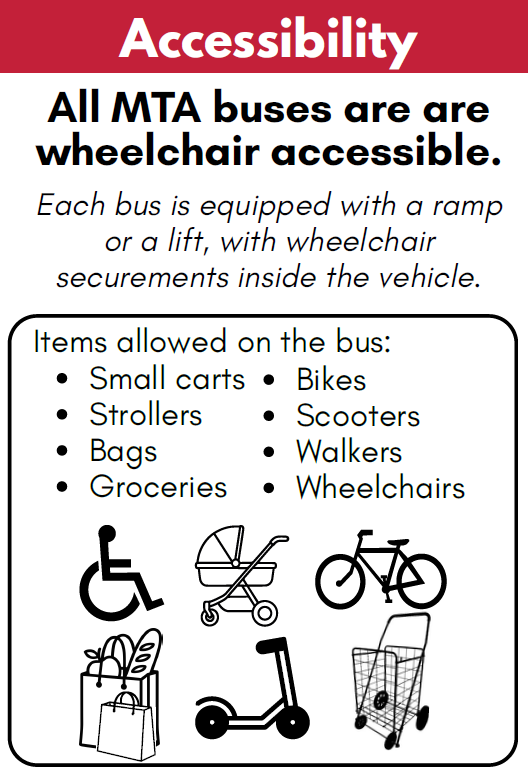
How much baggage is allowed on a city bus? Some rumors say there’s a two-bag limit. But that’s not true; there is no such limit. As long as you can carry it in one trip, you can bring it on the bus.
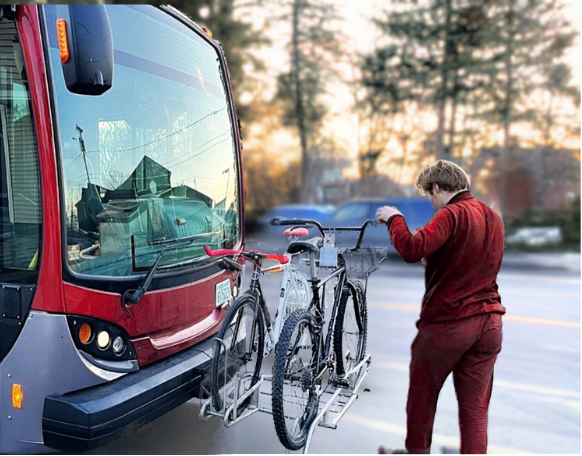
Every bus has a bike rack with capacity for two bikes. This includes the buses that go to Nashua, Salem, and Concord. E-bikes are allowed, and E-bike batteries can be removed and carried onto the bus if desired. In the last 15 years only one bike has fallen off these racks. Note that extremely fat tires may not fit on these carriers.
The buses operate on a “flag down” policy. Each bus will stop at designated spots marked with a sign. If you’re on a route, but not at a designated stop, you can wave to flag down a bus, and it will stop at the nearest safe spot to let you on. Once you’re aboard, you can pull the overhead cord, or press the red stop button, to signal the driver to let you off as soon as possible. And when boarding, you can tell the driver where you want off, such as, “At Walmart,” or “At Union & Webster.”
Every driver is now protected by a firm plastic barrier to offer them some physical security, also featuring a splash barrier put in place during the pandemic for their health protection.
Each bus contains seven cameras to enhance the security of the driver, of passengers, and of other people near the bus. Outward facing cameras have been used by police investigating nearby traffic crashes. These cameras include:
- 1 on windshield facing out
- 1 on back
- 1 on windshield facing in
- 1 on driver
- 1 on door
- 2 on ceiling looking down
The camera near the driver also includes a microphone to capture audio.
The bus we rode was a New Flyer Industries MiDi, 30 feet long, a perfect size for MDA. It holds 27 passengers. Some seats fold up to make room for wheelchairs or large items. Future buses are expected to be made by Gillig.
Online Tools
The MTA website contain information about almost everything mentioned in this article: tickets, buses, maps & routes, schedules, security.
Maps & Routes
Outside of Manchester, the highest ridership is in Derry, Londonderry, and Hooksett.
When you need to plan a route to get from your location to your destination, you can use:
- Paper Maps
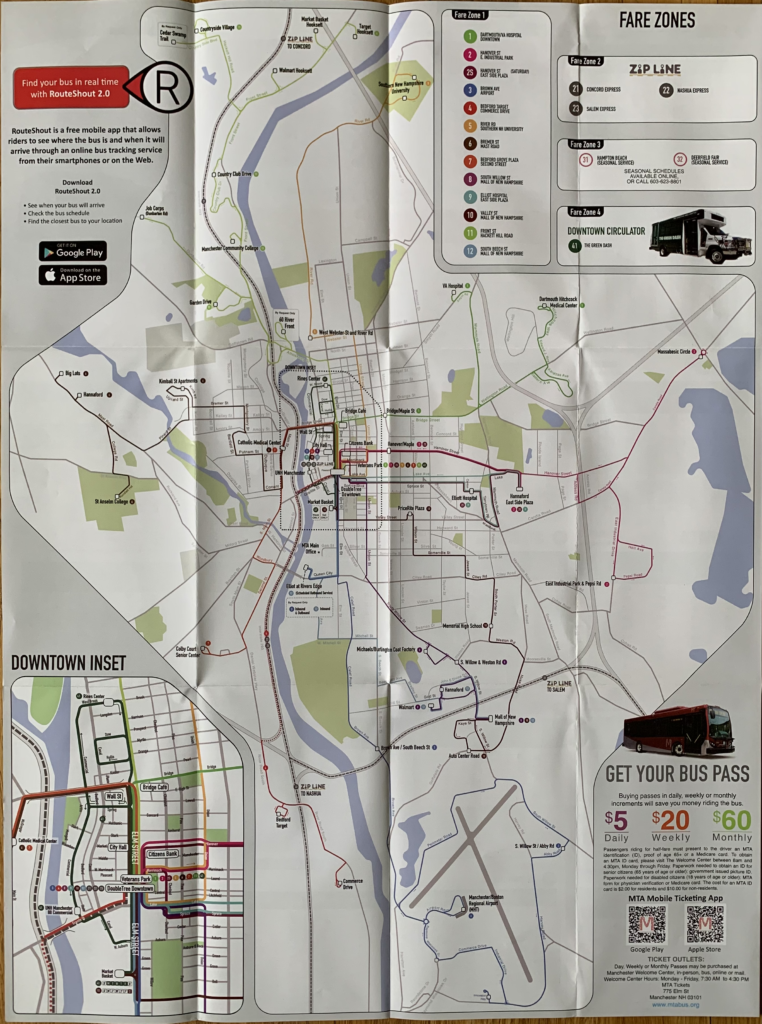
- PDF or on-line maps:
These can always be accessed at the MTA’s website here. - Google Maps
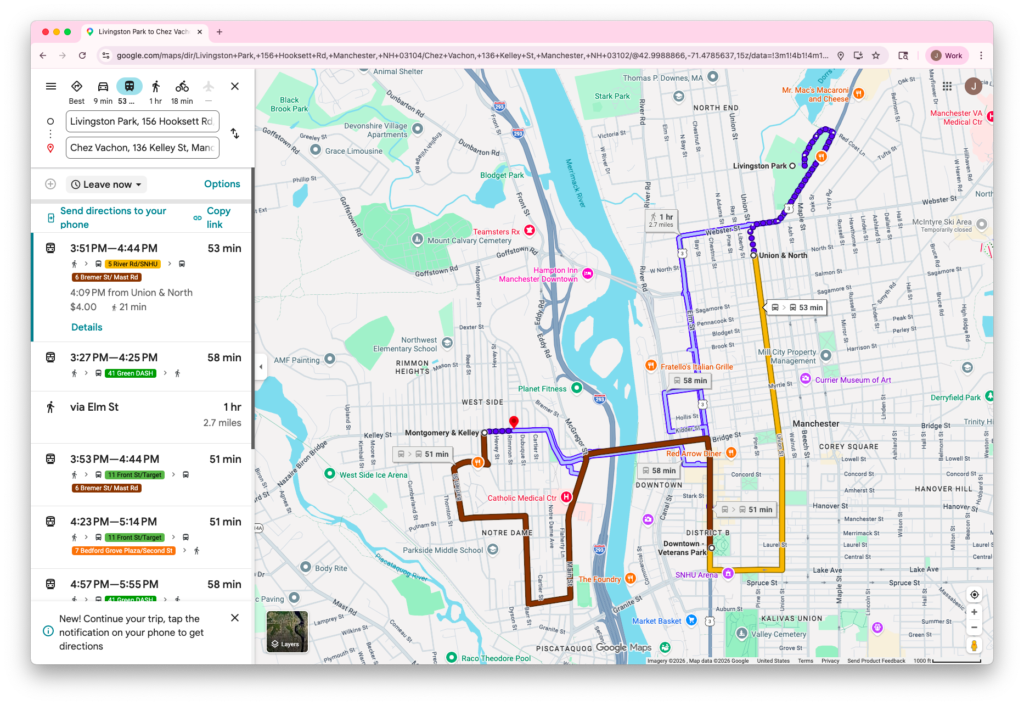
Google Maps can be a little confusing because of the enormous about of information it displays, but it can also save you a lot of effort because it does almost all the work for you. You tell it where you are, and where you want to go, and it will tell you where to catch the bus, where to transfer, etc. You can use it on a computer, or on your phone or tablet.
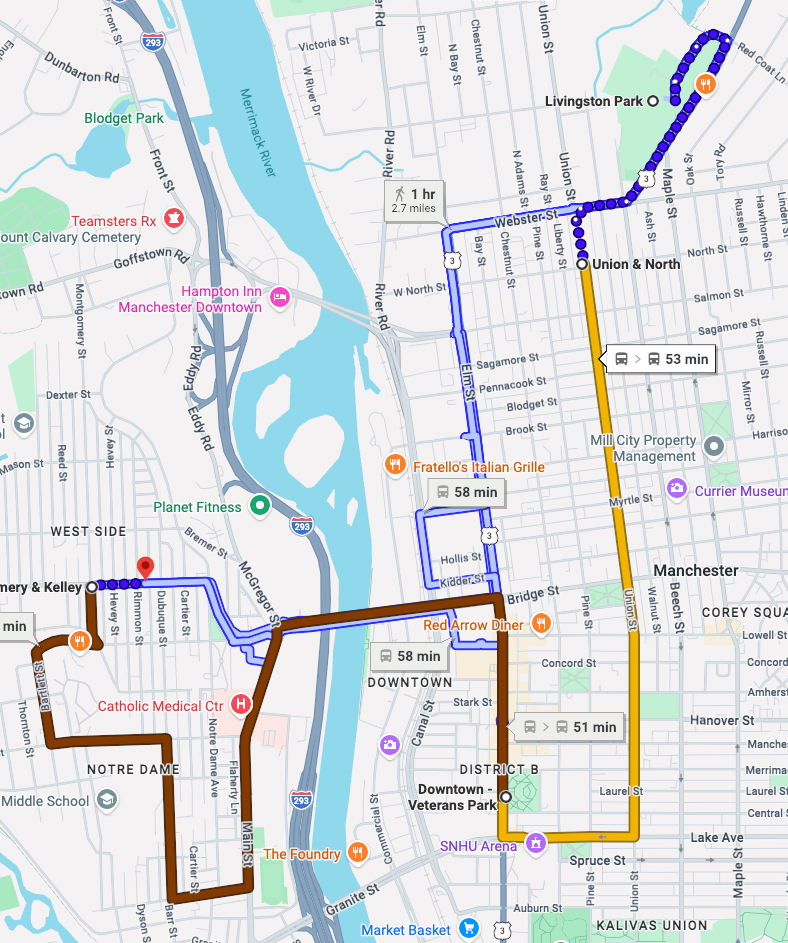
The ALWAYS-FREE downtown circulating bus called The Green Dash always follows the same route, shown below.
Days & Times
More frequent buses increase usability enormously, but obviously cost more for the additional buses and fuel. MTA frequently examines their schedules to optimize their offerings.
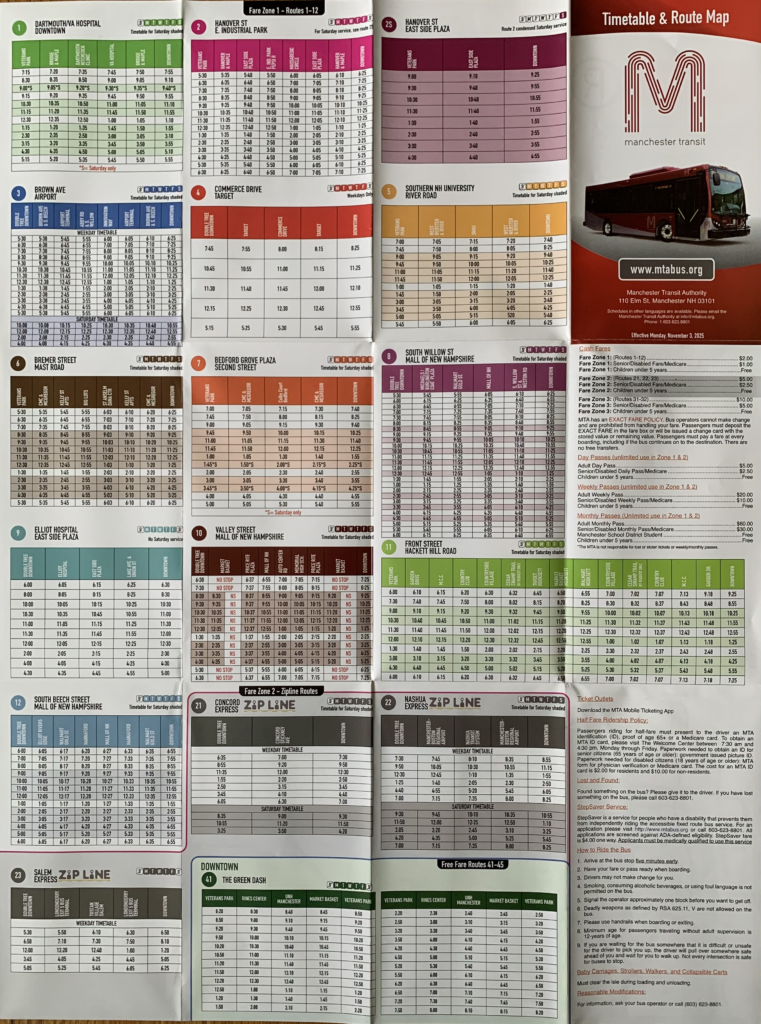
Most buses run every day except Sunday, but there are exceptions. On the timetable, for each route, there is a “weekdays in service” section near the top right, which will display which days are used for that bus. Examples are shown below.



Some routes run less frequently on Saturdays, and are indicated on schedules by a distinct color.
The Green Dash, which is an ALWAYS FREE downtown circulating bus, runs only on Monday thru Friday.
If you need to transfer to a different bus, but your current bus is running late, your driver can call ahead and request that your next bus wait up to five minutes for your arrival.
Public Perceptions
Some folk who’ve never ridden the MTA buses are nervous to try it. This is quite understandable. A big fear is: “What if I get lost?” That question would naturally occur to almost anyone. Another is, “I don’t even know how to begin.” Hopefully this article will help with some of those questions.
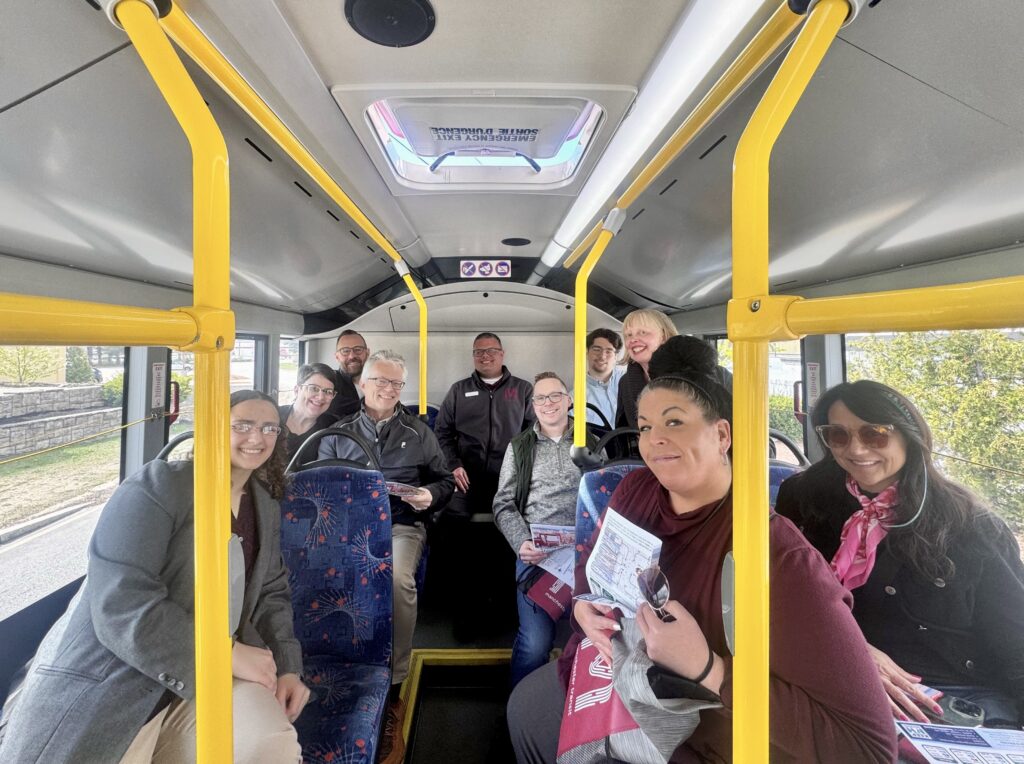
There are also some misperceptions, like that the buses are dirty. Let me reassure you, the bus that we rode was quite clean. I was very comfortable, as were, in my perception, all the members of our group. We rode for over an hour, during which other passengers boarded and departed, and all other passenger were well behaved.
You can always ask questions of the driver. They are trained to be helpful. But what if there are language barriers? Every MTA bus has an iPad at the front equipped with Google Translate, to help communicate with the driver regardless of the passenger’s language. I once used that software when outside the U.S. and I was amazed how well it worked.
Security
MTA has security staff which provide several services, including drug and alcohol oversight for staff. All MTA staff are randomly drug tested.
Bus drivers are not police, but are empowered to intervene if necessary, as anyone might with a public interaction on a sidewalk. Nor are they school bus drivers; they are not managing passengers’ behavior. In some situations they may call supervisors who may then call police. Police have on occasion physically carried an unruly passenger off the bus.
Mobility Manager
Ben Herbert is the Regional Mobility Manager for the area shown in the map.
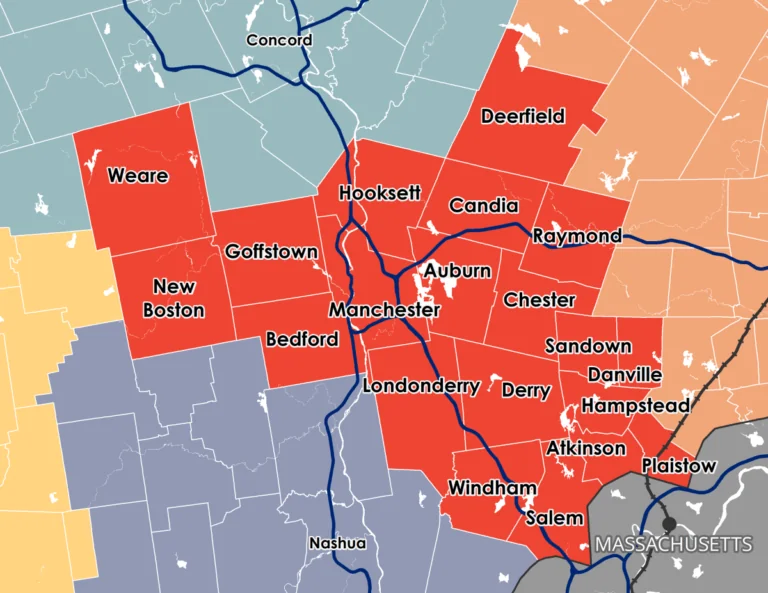
Mobility Management is a transportation strategy that prioritizes customer needs, and the meeting of these needs through coordination. It is an evolving concept that aims to improve specialized transportation for traditionally underserved populations.
Ben works directly with individuals to connect them to transportation services that get them where they need to go, while also working with providers to expand transportation access to those in need.
If you are in need of transportation, or looking to get involved in the mobility management network, reach out to Ben at bherbert@snhpc.org or call 603-669-4664 ext. 308.
Read more about Mobility Management here.
Ridership Numbers
Like most city bus services, MTA gets some of its funds from the Federal government. Those funds are calculated in a way that is influenced by ridership. The more riders, the more funds come in.
Local universities also pay the MTA to provide transportation to their students. The students receive a pass from their university that allows them to ride the bus. Southern New Hampshire University, UNH Manchester, and Manchester Community College use the service.
Approximately 1,500 to 2,000 local K-12 school students use the MTA buses to get to and from school. This includes both public and private school students. They ride free with a student ID.
Riders’ Main Purposes
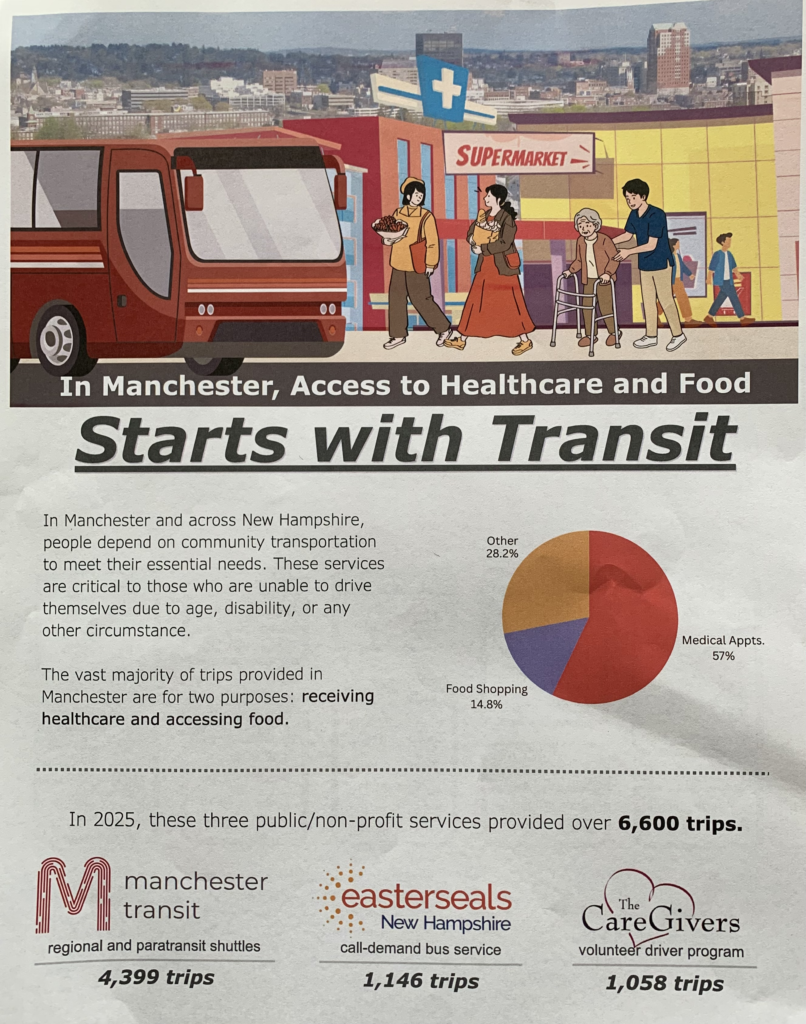
There are several other transit services provided in Manchester outside of the fixed-route bus system. This includes the regional MTA shuttles for Goffstown and Hooksett, the StepSaver paratransit service, the call-ahead transportation provided by Easterseals, and the volunteer driver program of The Caregiver (through Catholic Charities NH).
Date from these services indicate that access to medical care accounts for 57% of all rides. Food shopping accounts for another 14.8%. All other reasons add up to 28.2% of rides.
Destinations
Most frequent destinations during recent months have included:
- Brady Sullivan Tower
- Wall Street Tower
- Catholic Medical Center
- Market Basket
- Elliot Rivers Edge
- Elliot Hospital
- Veterans Administration Hospital
- Dartmouth Hitchcock
- East Side Plaza (Hannaford)
- Walmart
A recurring pattern is that “transit brings people to healthcare and healthcare brings the demand for transit.” Similar patterns are seen in Londonderry and Salem.
Beyond City Buses
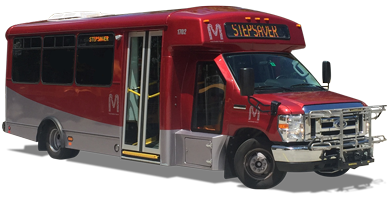
In addition to the city buses, MTA also operates the StepSaver call-ahead bus. The StepSaver is an origin-to-destination shared-ride transportation service in Manchester offered by the MTA as required under the Americans with Disabilities Act (ADA) of 1990. This program assists individuals with disabilities who are unable to use the regular fixed-route bus service. Call MTA at (603) 623-8801 (Opt. 2) for more info. To use this service an application must be completed, submitted, and approved. The process may take a few days.
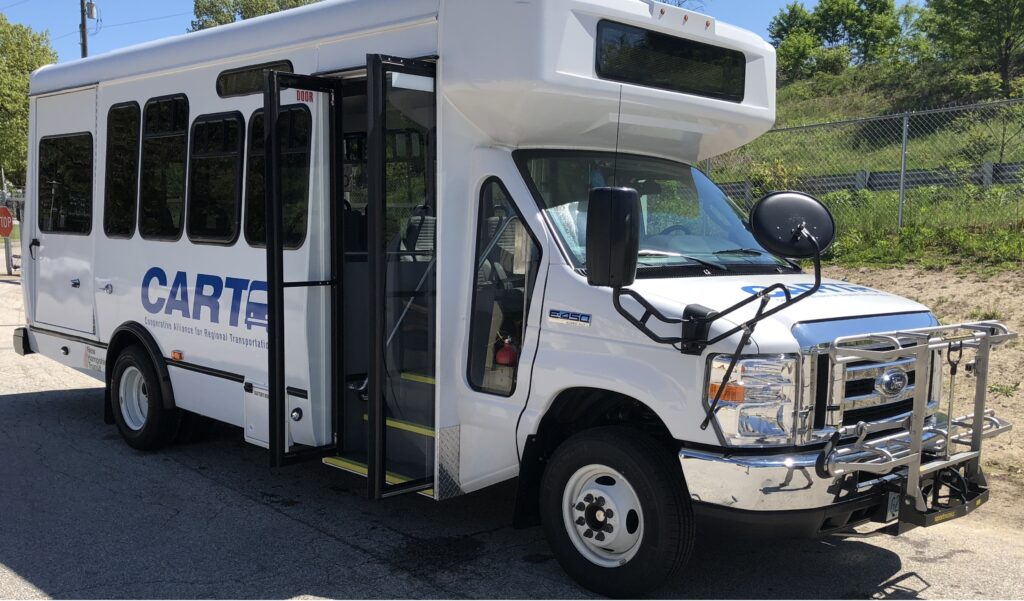
As mentioned earlier, MTA also provides curb-to-curb demand-response transportation services in Chester, Derry, Hampstead, Londonderry, and Salem. This service is known as CART, for Cooperative Alliance for Regional Transportation. Rides may be requested by calling 603-623-8801; opt. #2 between the hours of 6:30 am and 7:00 pm. When calling, please have the following information ready:
- Name,
- age,
- phone number,
- specific travel request,
- any additional mobility accomodations (walker, wheelchair, etc.)
Other options for transportation can be obtained by contacting Regional Mobility Manager Ben Herbert, at 603-669-4664 or bherbert@snhpc.org.
In 2025, besides MTA, transit for essential services (medical care and food) can be provided by Easterseals call-demand bus service, or by The CareGivers volunteer driver program. Together with MTA they provided 6600 trips in Manchester delivering people to 250 distinct destinations.
MTA also owns a trolly, which it charters to bring in additional funds.
Bus Buddy Program
The Bus Buddy Program is a collaboration between the Manchester Transit Authority and the Southern NH Planning Commission. The Bus Buddy Program works with community organizations to teach their staff and clients how to ride the bus, and is currently working with Easterseals and the Cashin Senior Activity Center. If you are part of an organization that is interested in learning more about the bus, reach out to Liliana Vornehm (SNHPC Assistant Planner and Bus Buddy Program Coordinator) at 603-669-4664 or lvornehm@snhpc.org. If you are an individual looking to learn more about transportation options, reach out to Ben Herbert, Mobility Manager, 603-669-4664 or bherbert@snhpc.org.
Tidbits
Counting cash is labor-intensive and must be done each week.
Fare boxes on each bus are expensive, approx. $20,000 per box, and frequently need repair.
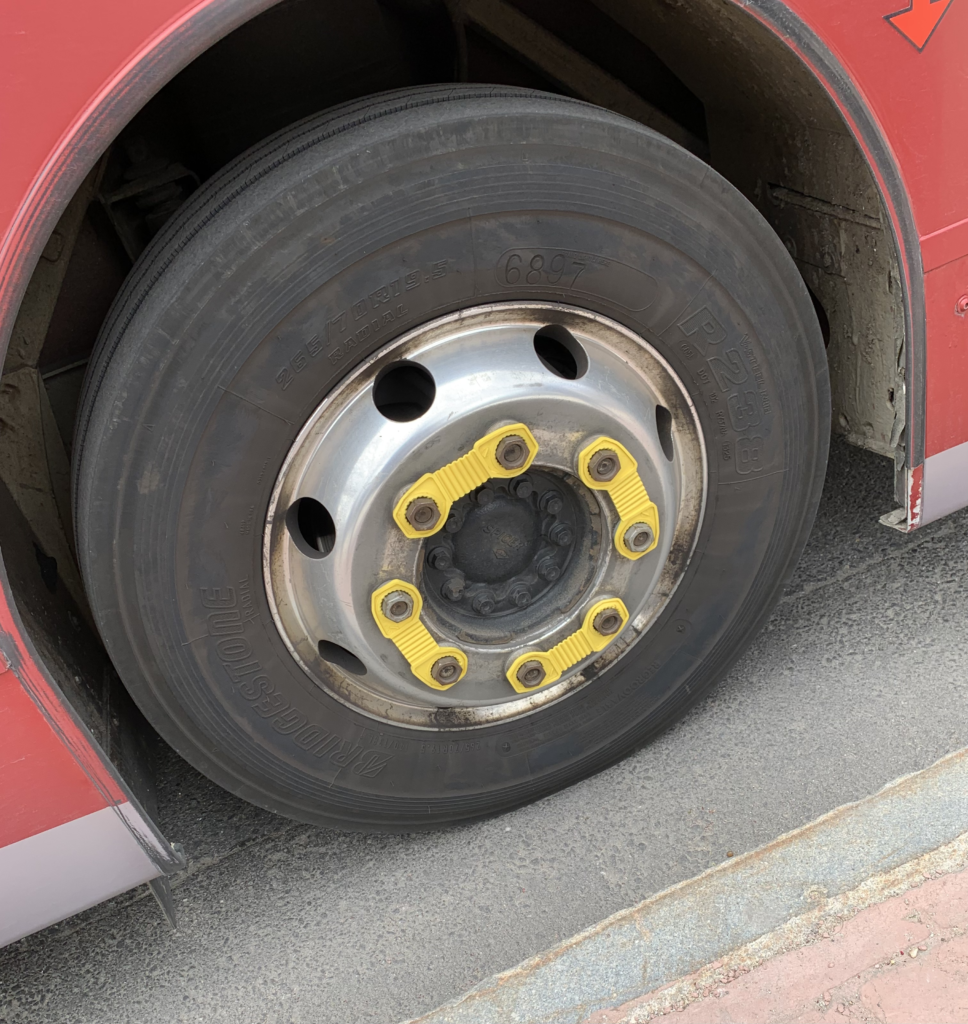
Bus wheels have recently been fitted with devices to ensure lug nuts do not come off, even if they become loose. They are seen in yellow in the photo.
Nashua
Nashua has a similar offering in their Travel Training Program.
Contact Info
The MTA is at:
110 Elm Street, Manchester, NH, 03101-2799
The Welcome Center (ticket booth) is at:
775 Elm St., Manchester, NH, 03101
Phone: (603) 623-8801
Fax: (603) 626-4512
Hearing Impaired: (800) 735-2964 or 711
Other Contacts
Liliana Vornehm, Assistant Planner
603-669-4664
lvornehm@snhpc.org
Benjamin Herbert, Mobility Manager
603-669-4664
bherbert@snhpc.org
Tracey Whitehead, Regional Service Coordinator
603-623-8801 x.5167
twhitehead@mtabus.org
Ryan Renauld-Smith, Assistant Director
603-623-8801 x.5152
rsmith@mtabus.org
Call for Input
We very much want to hear from you! Do you have any questions or concerns? What topics would you We very much want to hear from you! Send your feedback our way and we’ll get on it! We want to ensure this column meets your needs.
Stay safe and have fun out there!
Note: The author is a member of the board of the Bike Walk Alliance of New Hampshire, but the views expressed in this article are his own.