
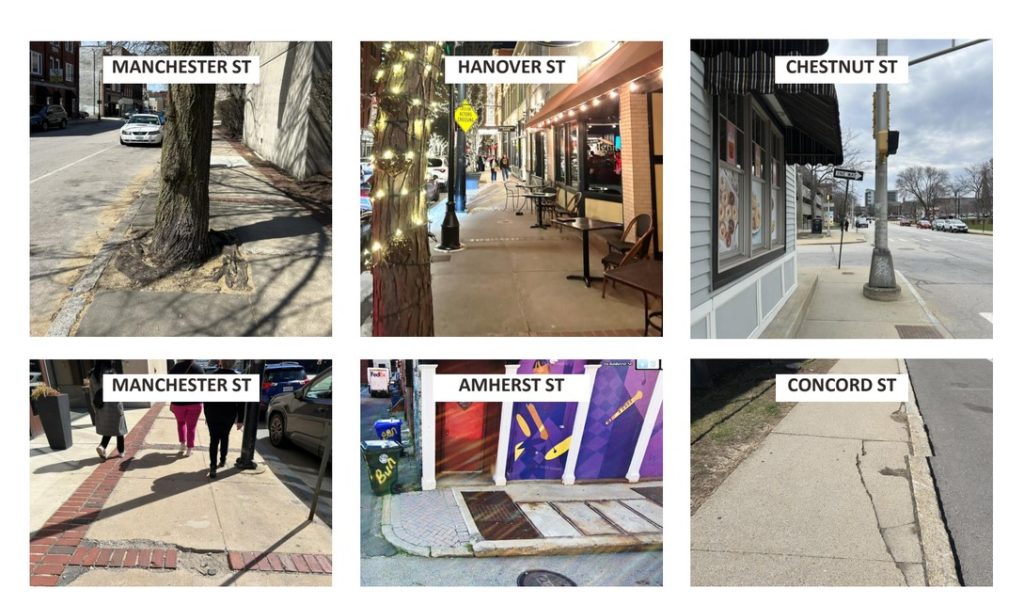
MANCHESTER, N.H. – One could say that the sidewalks in downtown Manchester were hot enough to fry an egg on Tuesday and, on Tuesday evening, local residents gathered at the Rex Theatre to share ideas on how to fix local sidewalks so they could fry eggs on them the next time it got this hot…or, maybe just to make it easier to walk on them.
The public hearing was the first official part of a process aimed at disseminating money from a congressionally directed grant for sidewalk renovation, although a charette held by Plan NH on behalf of the city earlier this year aimed to gather ideas that would facilitate the process.
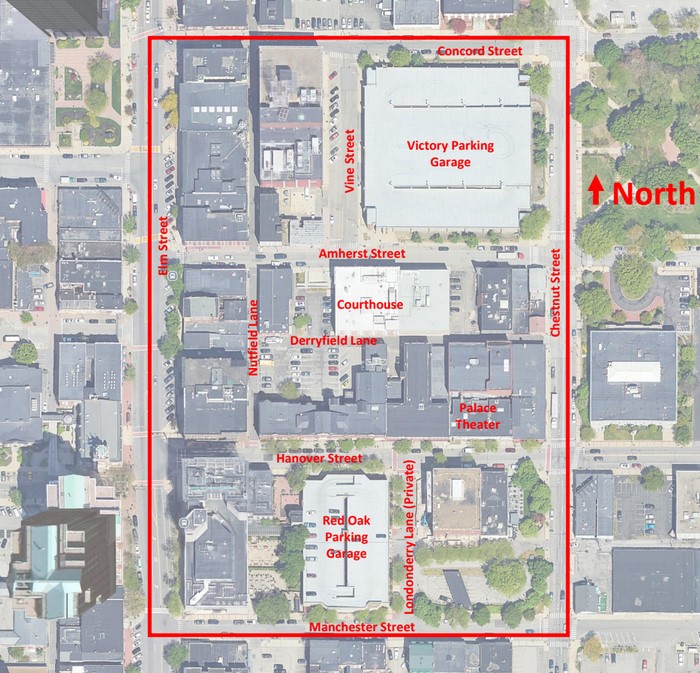
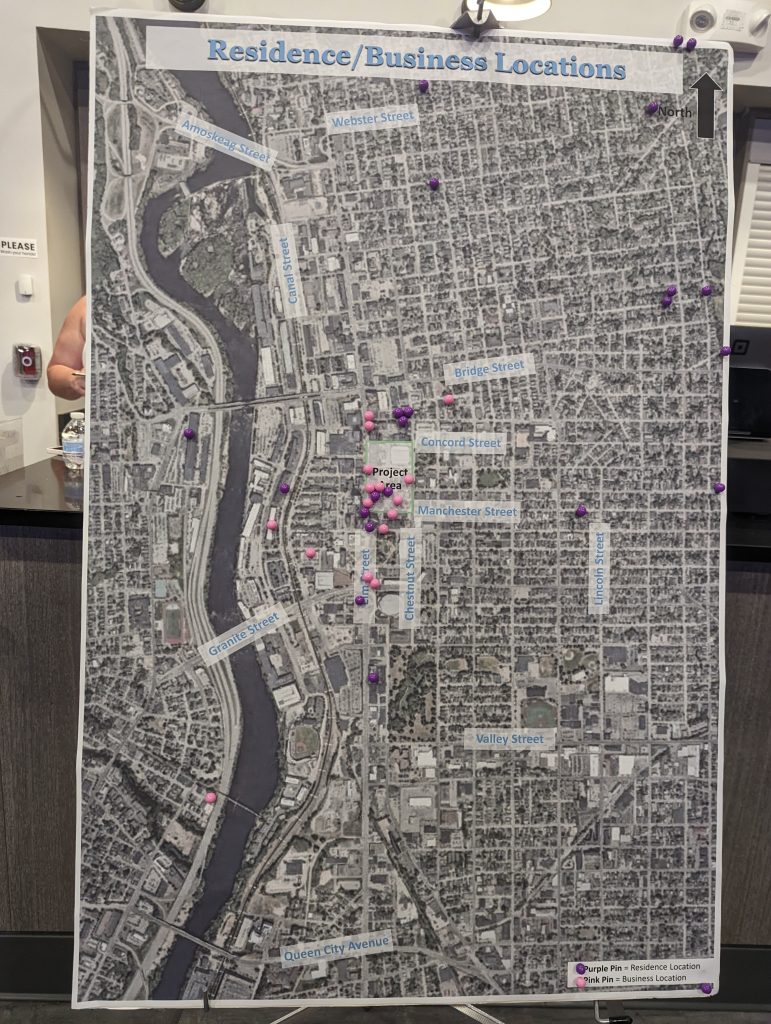
The $1.875 million congressionally directed grant, a matching grant with the city putting up 20 percent of that amount for the rest coming in federal dollars, is specified to renovate sidewalks within an area of the downtown once known as the Arts District: roughly a rectangular area bounded by Concord Street in the north, Manchester Street in the south, Elm Street in the west and Chestnut Street in the east.
Since the amount of renovation or rehabilitation to sidewalks in that area would be limited given the amount of the grant, the public input process is designed to focus in on the highest priority sidewalk or sidewalk-related infrastructure needs that could be serviced by the grant.
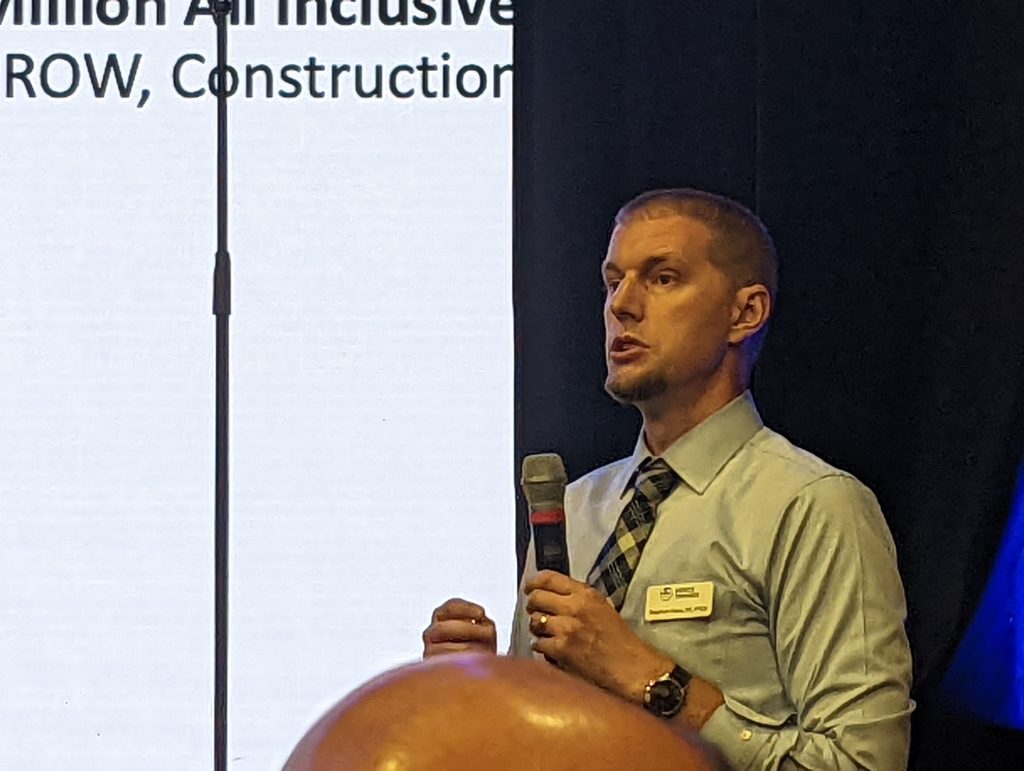
Following details on the process itself by Steve Haas, an engineer with Hoyle Tanner and Associates, members of the audience provided general thoughts, ranging from greater Americans with Disabilities Act (ADA) enhancements for the area’s sidewalks to flashing signs to slow down motorists to alternatives for trees when it comes to providing shade.
In the discussion, there was also an expectation that any new construction would likely emulate the “pressed-brick concrete” style found in the recent renovation of Veterans’ Park’s sidewalk along Elm Street. There were also ideas outside the scope of the process such as possibly transforming Hanover Street from Chestnut Street to Elm Street into a pedestrian thoroughfare or pursuing the renovation of a certain area in a way that it could become a “showcase” serving as a template to draw in more grant money for its emulation elsewhere in the city.
Haas was pleased with the breadth and volume of comments provided by the audience.
“The turnout was way bigger than expected and the Rex was a great venue,” he said. “We appreciate everyone who’s willing to offer a comment and provide information on existing concerns as we take the next step and come up with improvement alternatives.”
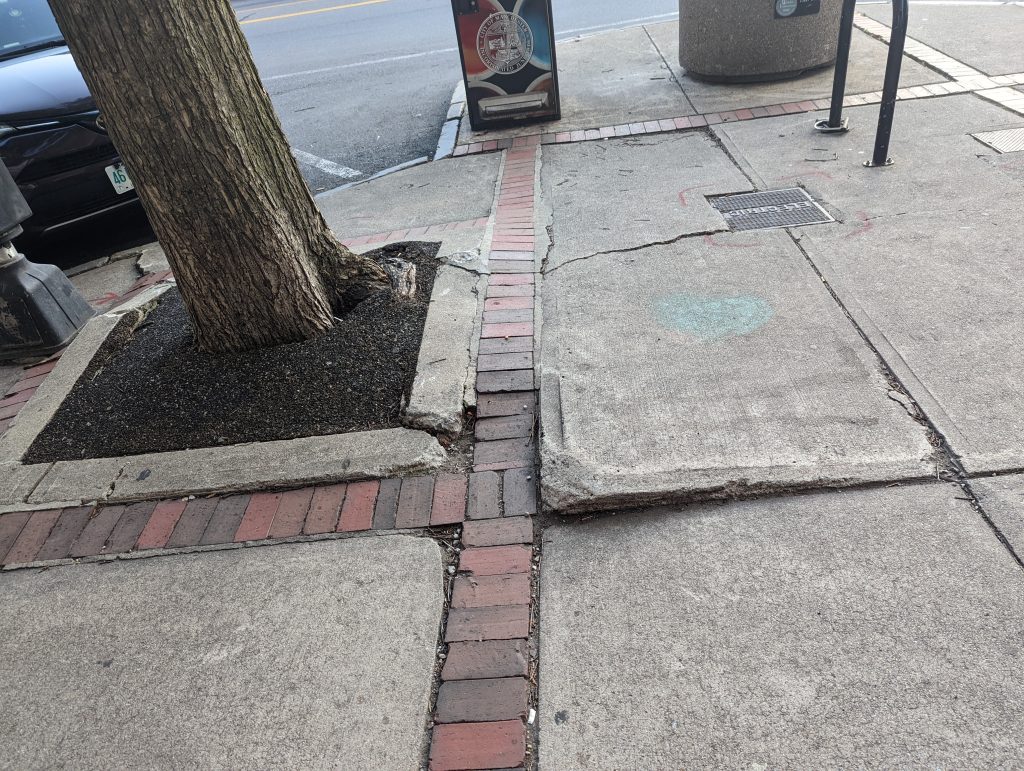
Alex Hawk, one of the discussion participants, doesn’t live downtown. He travelled across the river from the Mills at West to join the discussion. However, he is no stranger to pedestrian issues and hopes that the focus of the grant funding can be put toward Elm Street, particularly deterioration at the corner of Elm and Amherst Street, just a few hundred feet away from the Rex Theatre.
“I ride a scooter around the city and I’ve seen these issues first hand, especially the ADA issues,” said Hawk. “I’d love to see a focus on Elm Street, but (deteriorated sidewalks are) a problem wherever you go in the city.”
Judi Window is the co-owner of Diz’s, a restaurant on Elm Street just outside of the Arts District zone. A veteran of efforts to beautify and enhance downtown aesthetics, Window said that it would be fairly simple to complete wayfinding standardization efforts since earlier discussions have completed about “90 percent of the work” in her view. She also hopes that any construction efforts can come with attached replacement scheduling plans so the city can just replace the sidewalk entirely at some point in the future instead of wasting money on piecemeal spot fixes.
“I thought the discussion was good, any discussion is a good discussion when you’re talking about roads, sidewalks and safety in the heart of downtown,” she said.
Elyza Agosta was one of the participants in the Charette, a very different type of discussion that required a much larger time commitment according to Agosta. Still, at both events she discussed the need to make street layouts downtown friendlier for cyclists, hoping that bike parking at the Victory Garage could be added as part of the final version of the project.
“What I’d love to see is taking back more of the road from cars and just having bigger sidewalks and bumpouts,” she said. “I think Amherst Street is a really good place to start because I think if we can get more people to understand that the Victory Parking Garage has space and its easy and accessible, more people would use it and then walk from there. I really want to see bike parking at Victory as well, it’s hard to find a secure place to come downtown and park your bike.”
Another public meeting is scheduled for a date yet to be determined later in the summer, with a engineering study expected in the fall, project design in 2026 and 2027 and construction either in the fall of 2027 or spring of 2028.
Anyone that was unable to attend the meeting and would like to submit their thoughts can fill out this survey.