
QCAHF – Its Origin and its Demise
By Ted Menswar Jr.
Wanted: Males and/or females
Necessary Characteristics: Go-getter – organized, energetic – thick-skinned, works well under pressure
Salary: None
Job: Chairperson & organizers, Queen City Athletic Hall Of Fame
Apply To: Selection Committee, Queen City Hall Of Fame
Where: Parks & Recreation Department Office, Derryfield Country Club
WRITER’S NOTE: To get the details and to minimize the possibility of error, I wanted to interview the men responsible for creating Manchester‘s Queen City Athletic Hall of Fame. Though the original plan was to meet with the three remaining organizers, only Bill and Frank were able to attend. Clem had experienced a medical emergency earlier and was physically unable to make it. However, we met shortly thereafter so his input would be able to be included in this story.
Because of its importance, I wanted the content to be straight from the horses mouths.
The four “horsemen” of the QCAHF, in alphabetical order, are:
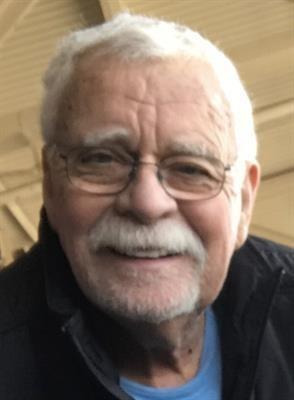
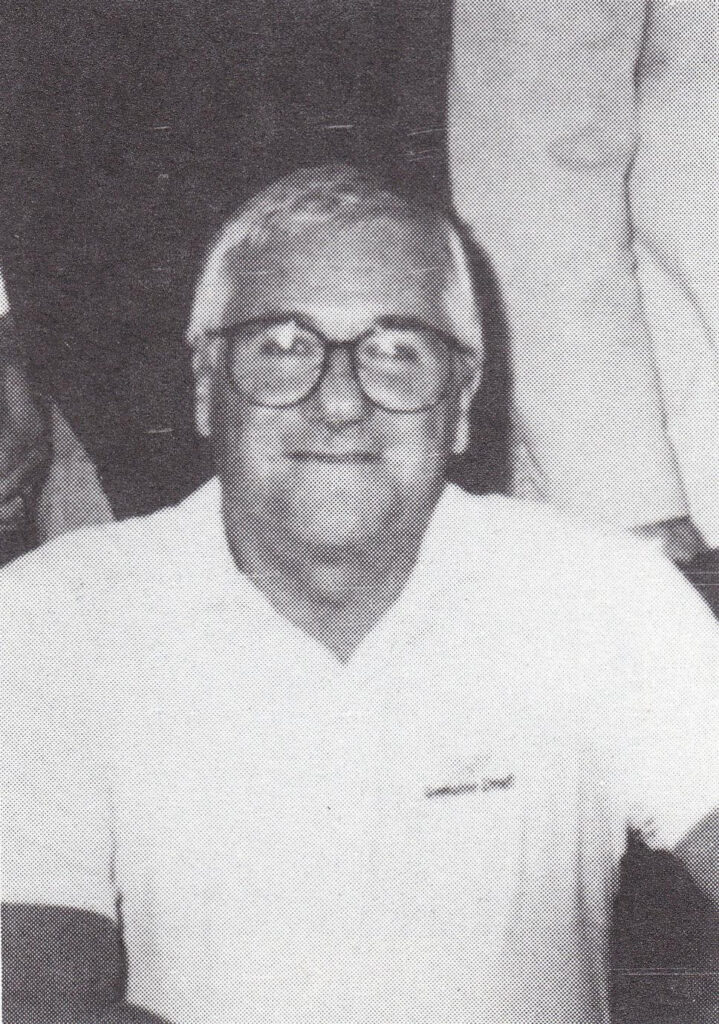
- Bill Allen- Chairperson of the Queen City Athletic Hall of Fame – President of Adjusting Association (Insurance adjustors) – 1137 Elm Street
- Robert “Bo” Dickson- Deceased (1997) – Former president of Amoskeag Beverages in Hooksett
- Frank Harlan- Retired educator – Member of the faculty of Manchester West High School for 28 years – NHIAA basketball official for 12 years and baseball umpire for ten years
- Clem Lemire- Retired – Former Superintendent of the Manchester Parks & Recreation Department and for whom the athletic complex at Memorial High School is named
- While the intent of this story was to provide the reader with the details of the origin and demise of the Queen City Athletic Hall of Fame, each of which is explained within, the article also provided the originators with the opportunity to vent – and they did.
Additionally, since they each would like to see it operating again, the “opening” want ad, though containing a “tinge” of humor, is of totally serious intent.
I’d like to make one thing perfectly clear: In my mind, the Queen City Athletic Hall of Fame is the crown jewel of Manchester’s athletic halls of fame, surpassing those of the three public high schools Central, Memorial, and West, as well as its private high school, Trinity (formerly St. Joe‘s and Bishop Bradley).
While that may be argued, the fact remains that if a person has been inducted into the QCAHF, not only has he or she already become a member of the “like” organization of one of the four schools mentioned (or should be), this person is now recognized as the “cream of the crop,” the “best of the best,” one of the elite.
For example, Dewey Evans, the infamous right-fielder with a cannon for an arm, was a great player for the Boston Red Sox. He is a member of their team hall of fame, but is NOT a member of the National Baseball Hall of Fame at Cooperstown, New York – THE baseball hall of fame. Dewey was really good, but not elite.
Ken Coleman, was the well-known and well-respected TV “voice” of the Boston Red Sox who replaced the legendary Curt Gowdy in that position. Both Coleman and Gowdy were elected to the Sox’ Hall of Fame, but only Gowdy made it into the National Baseball Hall of Fame. Ken was really good, but not elite.
Sam “Bam” Cunningham is the all-time leading rusher in New England Patriots history and set the NFL record for most rushing yards in a season, both feats that caused him to be enshrined in the Patriots Hall of Fame in 2010. However, he is NOT a member of the NFL Hall of Fame at Canton, Ohio – THE football hall of fame. Cunningham was exceptional, but not elite.
Membership in Cooperstown and Canton is reserved for the “elite, ”the top level individuals who have been involved in some way with their respective sports.
And, to me, the QCAHF operates under the same mantra.
Whether it was as a player, a coach, an official, an administrator, or an organizer, an inductee is recognized as one of Manchester’s top individuals, i.e., one of the “elite.”
BIRTH OF THE QCAHF
Talk of a possible Queen City athletic hall of fame actually began in 1988 and was the brainchild of the now-retired Clem and re-emphasized by the now-deceased “Bo,” a superb athlete himself, who, sadly, passed away in 1997 at the age of 59.
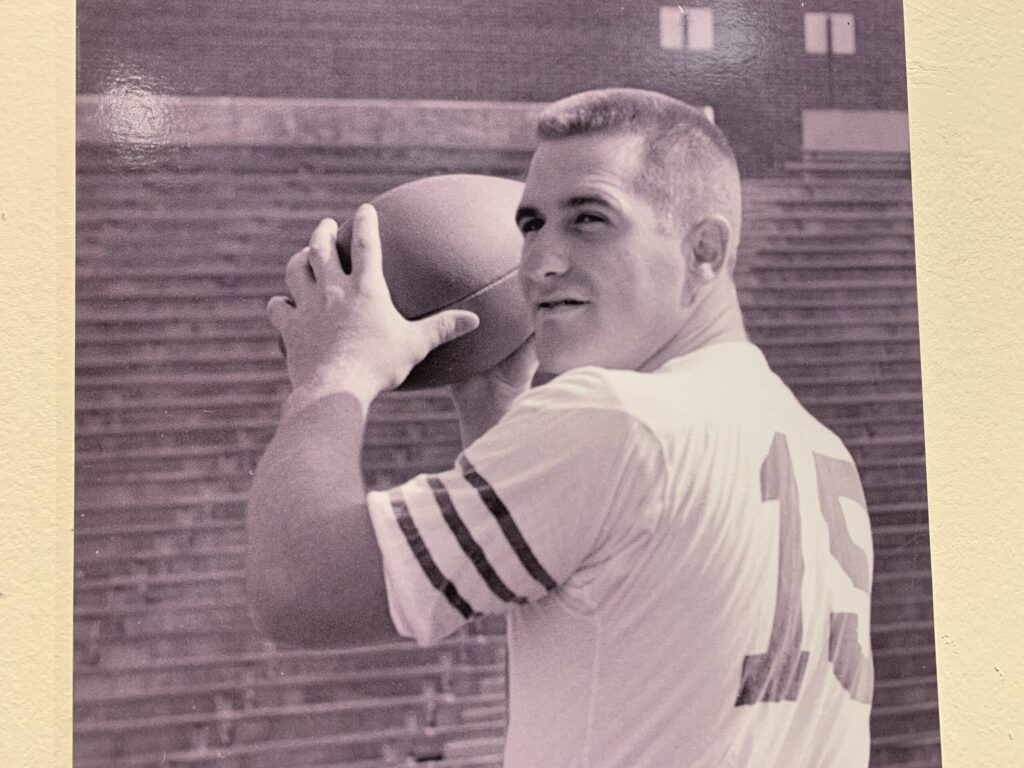
While serving as the Superintendent of Parks and Recreation for the city of Newington, Ct., Clem had initiated a study into the creation of an athletic hall of fame in that city. At just about the same time, the P & R superintendent’s job came open in Manchester and, being born in NH, Clem applied for it. Of the 14 candidates, he was victorious and along with him came his athletic hall of fame idea.
As Clem explained, “One of the main reasons I took the job here was that this city was well known for its athletics. I’ve been an athlete all my life (and the weight bench, treadmill, & stair-stepper in his home that he still uses at 89 say he still is) and I honestly believed that those people who created that history should be recognized for it. That’s why Bill and I started talking about it and it continued with Bo and Frank.”
While at the Derryfield (home of the office of the P & R Department) they exchanged a number of thoughts and ideas concerning its possibility. As explained by Frank, “It was induction time at UNH and Bo, while at the airport in San Francisco, had noticed a number of plaques of infamous athletes from the Golden Gate City who had been inducted into its hall of fame hanging throughout and was extremely impressed. He asked ‘How come Manchester doesn’t have one?’ When Clem made us aware of his original plans for starting one in Connecticut, we combined that with Bo’s question and decided to start one here in Manchester. With the four of us now committed to the project, the conversation centered on how we could possibly get it done.”
THE REASONING BEHIND THE QCAHF
“We had seen all kinds of halls of fame and thought it was a good way to honor some people by enlightening the community about the feats of some great local athletes,” said Frank, whose reasoning was quickly seconded by Bill, who added: “We just thought it would be a nice thing to do. We also wanted to raise some money for scholarships or use the money to improve some athletic facility in the city…maybe something to enhance its appearance. After thinking it through, though, we decided that scholarships would be the easiest way to go because it would be the most significant and most helpful.” Clem explained“Manchester has always had great athletes as part of its history. By creating an athletic hall of fame, these people would be properly recognized. Highlighting the careers of these people from different generations would bring the city together in a way. But doing it properly wouldn’t be easy.”
Frank added, “We quickly realized that we couldn’t do it with just the four guys alone. We’d obviously need help…and lots of it. Among those to come on board was a man who became vital to our success. John Hussey, a writer for the Union Leader, was our ‘voice’. Through his articles, our organization was introduced to the community and our reasoning explained, accompanied by an invitation to anybody who wanted input, anybody who wanted to do some work, to join us.”
Other key “players” came on board, like Jim Schubert, Billy and Toni Pappas, John “Jumbo” Riley, and Lance Williamson, as well as a host of others whose names you will read at the conclusion of this article.
And the task at hand was HUGE with many questions to answer before the first QCAHF inductee was named. Questions like:
- How did we really want to do this?
- How many inductees would we have?
- What would be the criteria for nomination?
- Because of the probability of a large first class, what would be the cut-off point?
- What would be the criteria for entry?
- Where would the ceremony be held?
- How would we raise money to operate it?
And those questions only scratched the surface.
QCAHF – THE GROWING YEARS
As Frank and Bill recalled those days of yesteryear, they answered almost in unison, “There was a lot of discussion of how it would be done.” And, just listening to these two reminisce, boy, was there ever.
The original plans called for a dinner to be held where the QCAHF inductees and their families would be treated. But that would cost money, a lot of money and, according to Bill, getting ads for the book to raise the needed money was the toughest part of it all. “Businesses and individuals, particularly those who are successful, are frequently ‘tapped’ for money to help not-for-profit organizations. Though these ‘contributors’ often wished their pockets were bottomless, there’s only so much coin to go around. While their collective hearts may be in the right place, unfortunately they aren’t always accompanied by their pocketbooks. Realizing that hard fact, we had to look elsewhere for additional venues to produce the needed money.”
Like a “downtown race.”
For years, well-known and popular West High journalism teacher, Joe Sullivan… (Writer’s note: …who, by the way, was also a talented coach, MC, and sports writer, my long-time favorite) professed his desire to have a race down Manchester’s “main drag, ”Elm Street, a thoroughfare which already has its own identity. It’s one of the few main streets in the United States to have two dead ends.
According to Frank, “Joe wanted the participants to start in the north end and continue down Elm until they reached the finish line on South Elm, bearing right just before Jacques Flower Shop, and ending behind the grammar school It was a great idea that resulted in a huge problem the first year it was held.”
Frank continued, “The race started late because of a bus driver, This guy was responsible for taking all of the runners from their gathering place on South Elm where they would leave all their belongings at Bakersville School, and then transport them to north Elm, where they would start the race. Well, he thought he would only have to make one trip. WRONG! There were over a hundred runners so he had to make a number of trips. By the time he was done, the starting time had already been passed. Finally, the starter’s gun sounded and they were off. As the runners neared the inner city they suddenly could hear the unmistakable sound of sirens, fire engine sirens – lots of ’em. And they grew louder and louder as the trucks got closer and closer. Everyone was wondering where the heck the fire was. You guessed it. Elm Street, right smack in the middle of the race route, a location the runners were now quickly approaching. We ended up having to re-route the participants around the fire to get them to the finish line! It was unbelievable. Great first race! And oh, yeah, thanks again for the idea, Joe!”
If that wasn’t eventful enough, the second year of the fundraiser race had a little different twist. Not only did it include runners, it now added rollerbladers, not necessarily a bad idea since more participants would mean more money. However, these “wheeled” runners were a varied group. You‘ll understand what I mean in a moment.
Again, Frank more than adequately described it. “You had to see it to believe it! The people on wheels were doing OK. In fact, they were flying down Elm. That is until they got to the railroad tracks that cross Elm down by Dunkin’ Donuts. The expressions on their faces revealed the skills they individually possessed. The veterans, smiling, jumped over the rails with no problem while the rookies, expressions of horror on their faces, took header after header. While it was funny to watch, a number of them were hurting cookies after they were ‘de-railed‘.”
That money-raising cruise down Elm Street ended a year later, but, to this day, it still brings many a smile to the organizers of the event. And “kudos” to its founder. “Thanks, Joe!”
Ted Menswar Jr. is a life-long resident of the Queen City and a retired member of the English Department of Memorial High School who has been involved in local sports for 70 years as a player, a coach, a mentor and a fan. He can be reached at tedmenswar@outlook.com