
QUEEN CITY CHRONICLES
By Stan Garrity

Manchester’s history isn’t just dates and buildings—it’s people. In this ongoing series, local historian Stan Garrity uncovers the lives, struggles and triumphs that helped shape the Queen City we know today.
MANCHESTER, NH – Ernest Lewis Derriett was born in Concord, New Hampshire, the only child of William Derriett and Ella Banks. William was from Charleston, South Carolina; Ella came to Concord in 1904 with her parents, arriving from the small town of Madison just east of Virginia’s Blue Ridge Mountains. Fifty percent of the town’s population in 1860 were enslaved. One can only imagine how hard Ernie’s early childhood was for him and his family, as newcomers and as Blacks. William held jobs as a cook and a janitor, and Ella was a housewife. The stress of a new child and trying to make ends meet must have been difficult for William and Ella. Their marriage didn’t last long, and after only five years, Ella filed for divorce, in 1915, claiming that William had abandoned her and their son. This must have been a confusing time for 5-year-old Ernie.
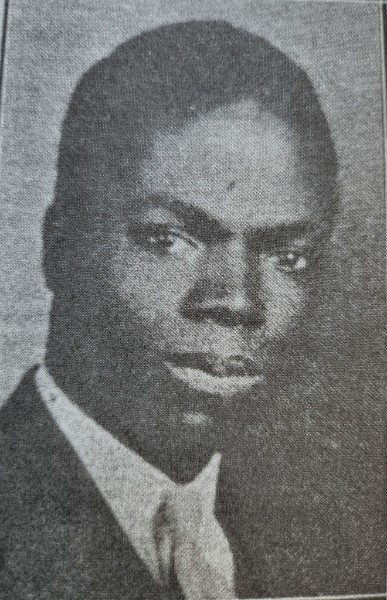
Ella was determined that her son’s life wasn’t going to resemble anything like that of hers and her ancestors. In just four days after her divorce, she remarried, wedding a carriage painter named William Thorne of Manchester. Remarrying quickly was a common practice for single women at that time since it was hard enough for a complete family to get by, never mind a divorced mother with a young child. In 1915 little help existed for people who were in dire straits. Welfare and Social Security didn’t become law until 1935. Food Stamps and other programs didn’t start until after 1935.
From this point forward, Ernie would go by the name of Ernest Thorne. The 5-year-old moved with his new family into an apartment at 27 South Main Street on Manchester’s West Side, in an area known as Granite Square. The neighborhood was primarily the home of blue collar workers who worked in the city’s mills and shoe shops. The small apartment of the Thornes was situated in the rear of a storage building that could hardly be seen from the road behind the former Hotel Merrimack. It was probably poorly insulated, and winters must have been cold and long. Was this the only home that was offered to them because of the color of their skin? Regardless, Ernie would live and grow up here over the next 11 years, in a tightly laid-out neighborhood where there were most likely many kids around for Ernie to play with. He would make his first lasting friendships here in the tightly-knit community.
By 1922 when Ernie was 12 years old, the Thornes moved to 27 Clinton Street, which was adjacent to their first apartment. It was like they didn’t even move and Ernie didn’t have to make new friends, which is something that may have been hard for him as he didn’t look like his neighbors. Again, this apartment was in the rear of the building and housed the Salvation Army. The entire neighborhood has long been razed.
William and Ella were of the Catholic faith and parishioners of St. Raphael Church only a block from where they lived. St. Raphael Church and Grammar School were founded in 1888 by four Benedictine monks who came to Manchester to start a parish to serve the Irish and German immigrants who had settled there.
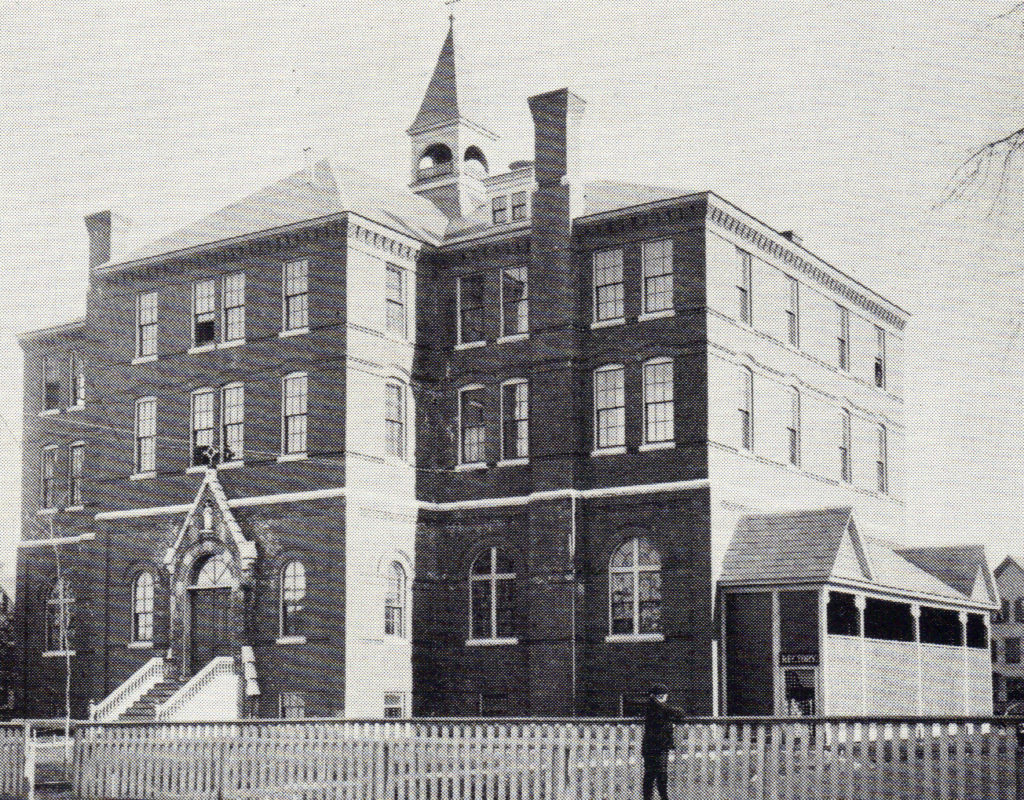
William and Ella enrolled Ernie in the St. Raphael Grammar School as soon as they could. There were public schools close by, but Ella and William chose a school that would support their Catholic faith. As we will find out later in this story, Ella was a determined mother, and she was going to make sure Ernie got an equal chance at a good education. What was Ernie’s day like in a Catholic school where he was the only Black student? History shows that parochial schools were very hard at that time, and there was strict adherence to the rules. If a student was out of line, the matter was quickly solved. The students were taught discipline and respect. They were made to wear matching uniforms that had to be neat and tidy. This showed that one student wasn’t better than the other, which probably benefited young Ernie.
St. Raphael was the only grammar school that Ernie was found to attend, and no records have been discovered of his grades there. In 1926 Ernie graduated with his class of 22 boys and 20 girls. Some of the names of the students he graduated with were O’Leary, Shea, O’Neil, Callahan, Murphy, Kelley, and Quinn, to name a few. Ernie definitely stood out in his class! He would remain friends with many of his classmates throughout his life. Ernie was 16 years old when he graduated from St. Raphael, a little older than he should have been if he had started on time in grade one, but as the records show, he was,”The first Black graduate of St. Raphael Grammar School.” Ernie would stay true to his church and school for the rest of his life.
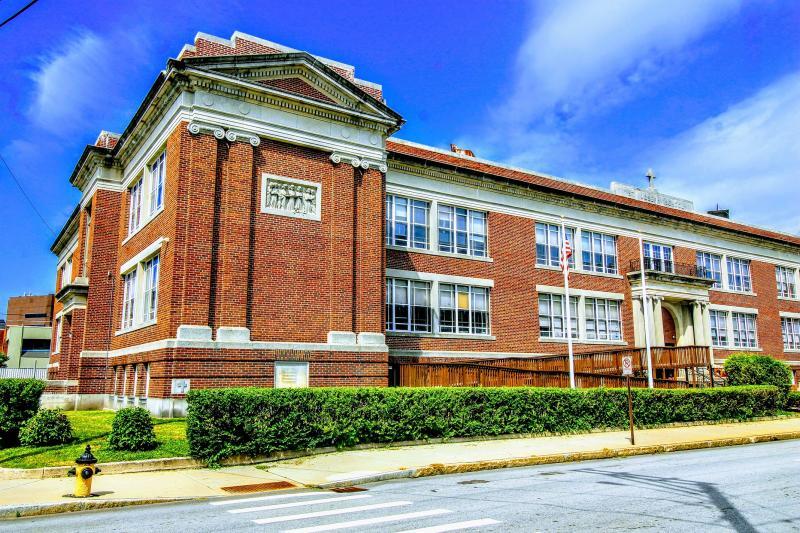
Off to high school! Remaining in the parochial school system, Ernie went to the newly built St. Joseph High School for boys. The girls’ high school was in the same building, but they used a separate entrance, and the classrooms were segregated. The high school, located across the river on the east side, was a mile and a half walk, uphill both ways, a tough walk on a cold winter morning. No school buses existed back then, but the trolley system passed right by Ernie’s home at Granite Square. Maybe he befriended the conductor for a free ride now and then. Ernie’s history tells that he made friends easily.
The first known picture of Ernie was in the St. Joseph High School yearbook for 1927 labeled, “Freshman B. Class of 1930.” He stands in the second row with a bow tie on and a big smile.
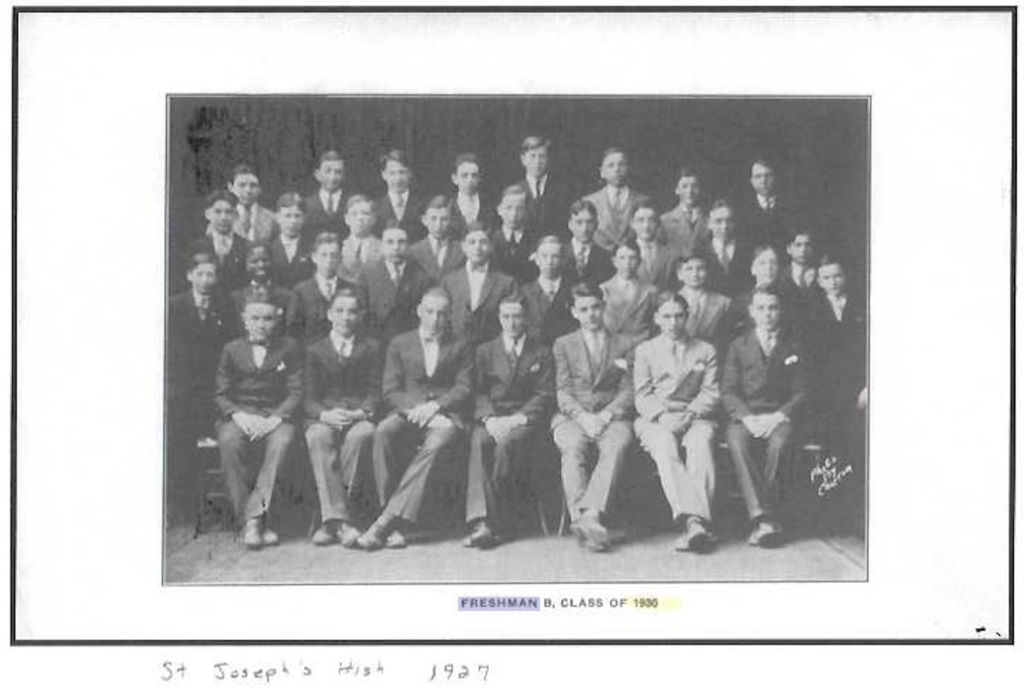
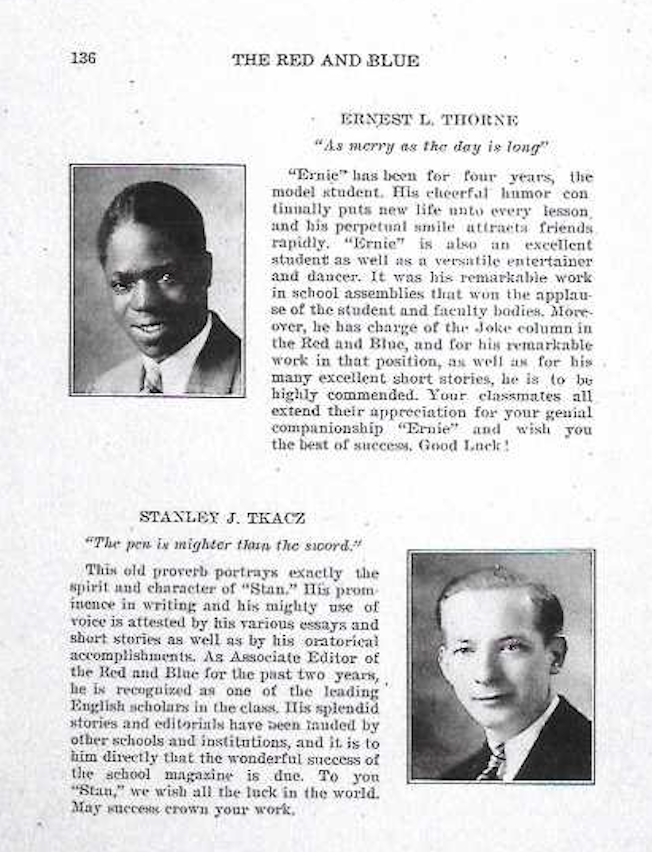
Ernie did well at St. Joseph and excelled in extracurricular activities. He was one of the editors of the school’s newspaper The Red And Blue, and wrote two pages of jokes for his school in the 1930 yearbook. Ernie was also the freshman class secretary and considered excellent in his drawing ability. By the time Ernie had become a senior he had done well and made a lot of friends. His bio in his class yearbook described his time at St. Joseph as follows:
“Ernest L. Thorne.” “As merry as the day is long.” “Ernie has been a model student for four years. His cheerful humor continually puts new life into every lesson, and his perpetual smile attracts friends rapidly. Ernie is an excellent student as well as a versatile entertainer and dancer. It was his remarkable work in school assemblies that won the applause of the student and faculty bodies. Moreover, he was in charge of the joke column for The Red and Blue, and for his remarkable work in that position, as well as for his many short stories, he is to be highly commended. Your classmates all extend their appreciation for your genial companionship and wish you the best wishes of success. Good luck.”
By his senior year Ernie had grown much taller, and in the class picture he now stood in the back row with his class of 18 other men. Until Ernie graduated in 1930, no other persons of color have been found to have graduated from St. Joseph High School.
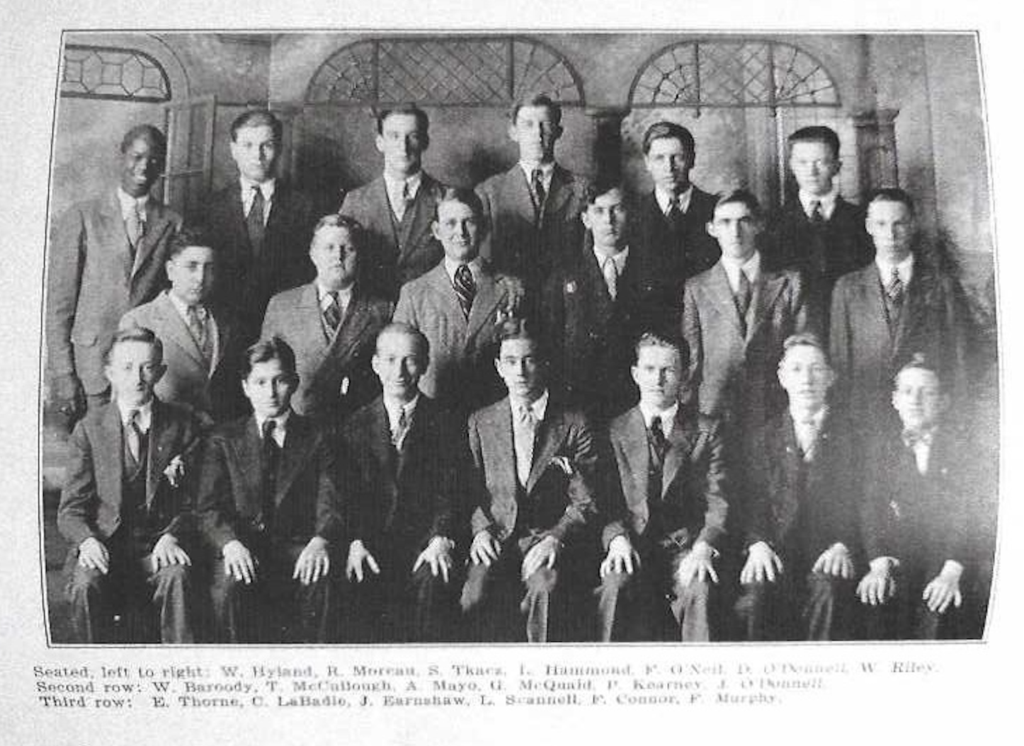
By 1930 the stock market had crashed and “The Great Depression” was in full swing. Families were struggling to make ends meet, but Ella wanted desperately for Ernie to continue his education. She looked toward Saint Anselm College, a Catholic liberal arts school founded in 1889 by Benedictine Monks from New Jersey. Saint Anselm was located at the top of the hill on the Manchester-Goffstown line two miles away.
Ernie’s high school yearbook profile shows that he had the grades and the extracurricular activity needed to be accepted to Saint Anselm, but he and his family did not have the funds required to pay tuition. That didn’t stop Ella. She was going to the college to talk to someone. She decided to walk those two grueling miles to try and convince the monks at the Abbey that her Ernie was qualified and capable of succeeding at Saint Anselm. Whatever Ella had said, it worked. Ernie was accepted to the school with the class of 1934 an a full four-year scholarship.
Ernie didn’t let his mother or the college down and he would earn that scholarship. For his four years at Saint Anselm he was a model student. He studied history, romance languages, and education. He was active in his fraternity, Delta Sigma Mu, serving as secretary and vice president. Again he was an acting reporter for the college newspaper, The Tower, and in 1933 he directed “Amateur Night” and other school productions. He managed all this while losing his step-father, William, to a heart attack, and he also held down a part-time job working as a helper for Willys-Knight Motor Company on Elm Street.
Ernie graduated with his class in 1934. The graduation announcement with individual pictures of the 20 graduates was published in the local newspaper and made no mention of Ernie being the first black graduate of the college. It wasn’t until recently when Saint Anselm was researching the idea to name a scholarship after a Black graduate when they realized that Erinie Thorne was that person.
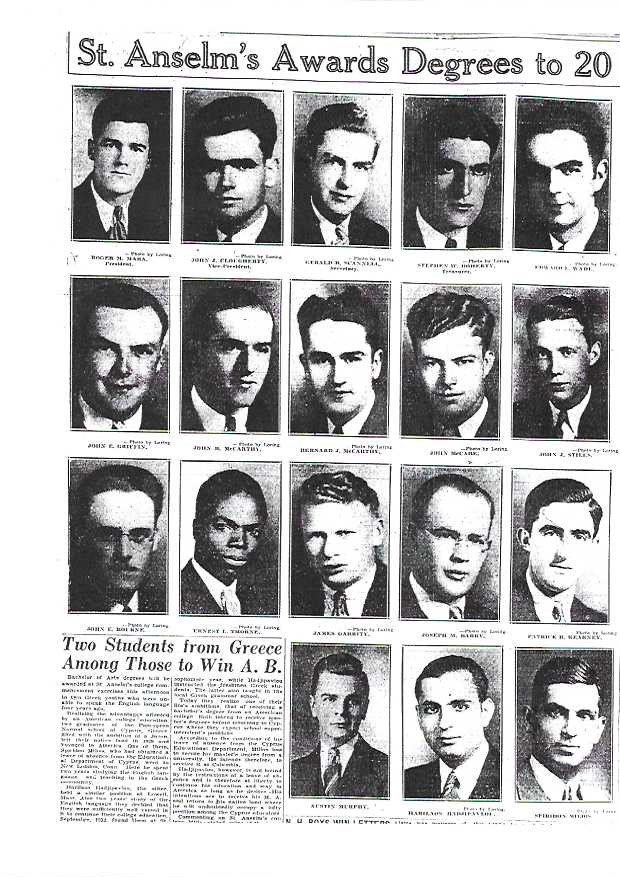
Not too long after Ernie graduated he belonged to the St. Raphael Social Mens Club. The club was one of many in Manchester that were spread throughout the city. Most of the clubs were organized by the nationalities of the city. There were clubs for those of British, Polish, German, French, Greek, and Ukrainian descent, just to name a few. The Raphael club was established for men who were Irish and members of the church. Ernie must have passed the membership application because of his affiliation to St. Raphael Church. I’m pretty sure he wasn’t Irish.
The clubs at that time were a source of entertainment for members and their guests on weekends after their long week of work. The clubs would offer bands and a place to dance and relax and socialize. At times the members club perform entertainment in the form of comedy shows. In March of 1937 Ernie was an actor in a Minstrel Show called “A Night in Miami.” The show was presented at the Ritz Ballroom located on Lowell Street with a capacity of 2,500 patrons. Ernie and six other men performed as End Men for the show. End Men were entertainers at the end of a show that would perform comedy.
In the 1930s Minstrel Shows were often performed by white men and women who would paint their faces with makeup or shoe polish to make themselves look Black. The practice started way back in time and still happens in the 21st century. The question is did this show have actors who performed with Black faces. Nothing was found in the newspapers of what happened that evening but it may have been part of the show.
After Ernie graduated he continued working for several other companies in Manchester. He was a helper and a limousine driver for Roy Prince Motor Company where, at times, he chauffeured the Most Reverend Bishop John B. Peterson. Over time Ernie advanced to parts-manager and clerk for other car dealers in the city. His supervisors always considered him as polite, courteous, and dependable.
Ernie’s last job was as the host and bartender at the hospitality room at the Anheuser Busch Brewery in Merrimack. He probably was a great bartender and told a lot of jokes, coming from the experience he had from writing for his high school yearbook. Ernie retired in 1982 at seventy-two years old when he was living at the new Rev. Raymond Burns Apartments at 55 South Main Street on Manchester’s West Side. Ernie was back in the same neighborhood where he and his family were living sixty-seven years earlier, in 1915.
Ella Thorne died in 1965 after a long battle with stomach cancer. Little could she have known how her perseverance and determination would affect Ernie and future students of color at Saint Anselm. Ella was just looking for an equal treatment for her son, and was willing to make that sacrifice to petition the monks to admit her son to the college. She could have never imagined how important that long walk would be to the Abbey on the hilltop at Saint Anselm’s in 1930.
In 2020 Saint Anselm College along with the help of two of its alumni established the Ernie Thorne ’34 Scholarship Fund for Racial Equality. The scholarship’s purpose is to provide financial and educational aid to underrepresented students from Manchester, southern New Hampshire, and California. The scholarship idea was in response to the deaths of George Floyd and Breonna Taylor in 2020. “More than $100,000 was quickly raised with gifts from Hewlett-Packard, and the monastic community… With the monks of St Anselm’s Abbey designating a gift of $50,000.” I would say Ella and Ernie really got to them!
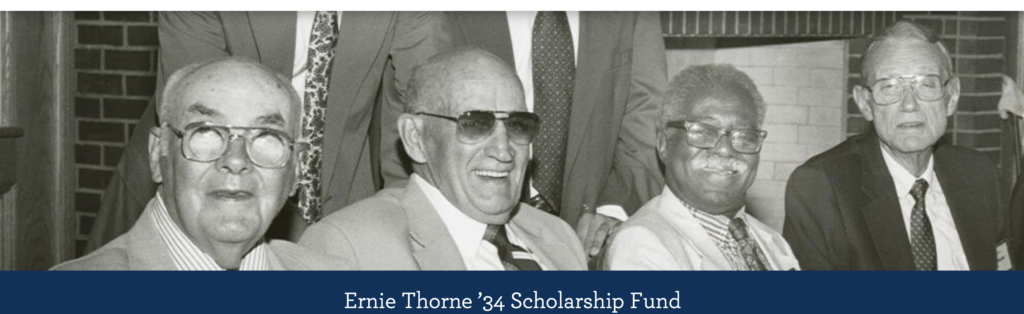
In 2021 the scholarship became reality with Jasmine Marshall, a junior politics major, being awarded the first one. In 2022 the scholarship went to Kumwimba Augustine Thite, a freshman criminal justice major from Concord, New Hampshire. Jasmine Marshall also received the award for a second time.
In 1970, five years after Ella had died, Ernie legally changed his name to Ernest Lewis Thorne. Did Ella tell Ernie the story of his father William Derriett just before she died? After 55 years of carrying the name of Thorne, Ernie must have been bewildered to say the least. Ernie was now living alone for the first time in his life, and had no other family to turn to. He never married or had any children of his own.
On December 21, 1995, Ernie died in his apartment on the seventh floor of the Burns High Rise at 55 South Main Street. One must wonder how many times he looked out his window thinking about what his neighborhood used to look like. The hotel, bowling alley, and firehouse were all gone. The impressive Barr and Clapp building at Granite Square was long gone. And the trolley cars had stopped operating in 1940. Now he saw parking lots, gas stations, and a Dunkin Donuts. He alone probably was the best historian of the area.
His obituary in the newspaper stated that Ernie died in his home; that he was born in Concord, son of William and Ella (Banks) Thorne; and that he had lived in Manchester for most of his life. It also noted that he graduated from Saint Anselm College in 1934. Again there was no mention of Ernie being the first Black graduate of any of the schools he attended. The obituary mentioned that he was the parts manager for Merrimack Street Volvo Garage for many years and he also worked for Roy Prince Auto as a limousine driver. He belonged to the Knights of Columbus and the Holy Name Society. He was active in the Saint Anselm College Alumni Association and was the former vice chairman of the Order of Golden Anselmians. Ernie was also a member of the St. Raphael Men’s Social Club. There were no calling hours, but a memorial Mass was given at St. Raphael Church.
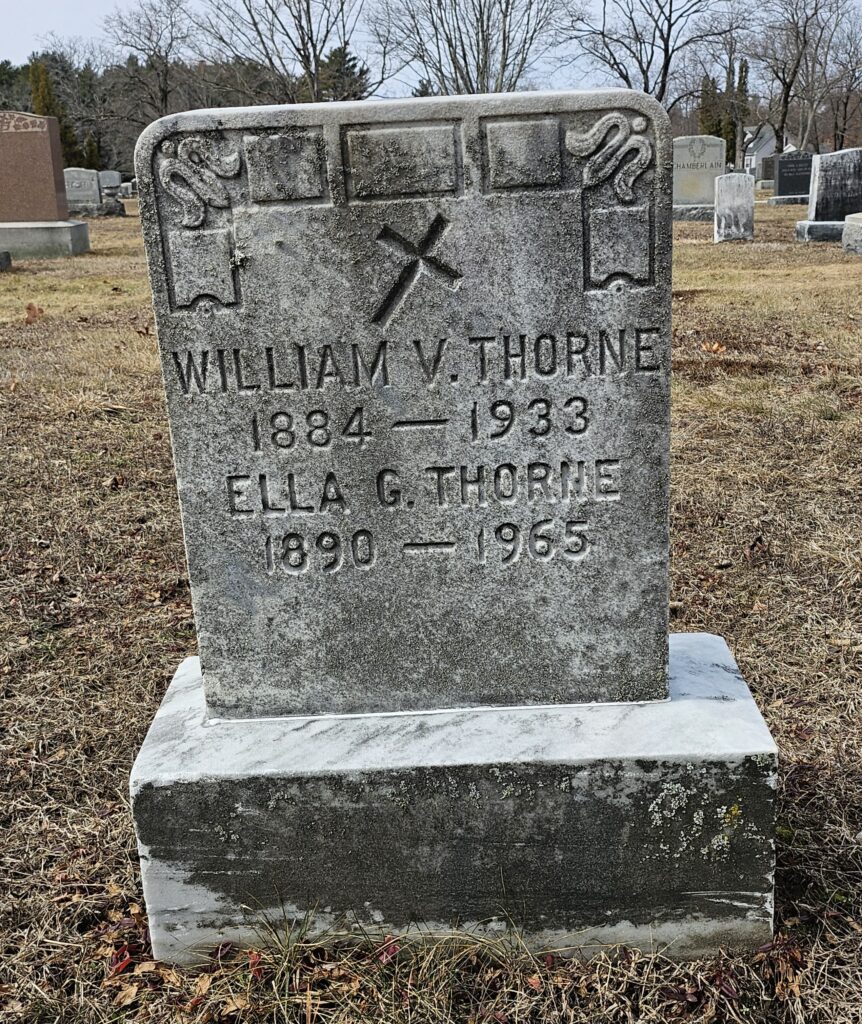
Ernie was buried in St. Joseph’s Cemetery in Bedford alongside William and Ella. He was 85 years old. Sadly, his grave has no marker. Currently efforts are underway to erect an appropriate memorial to recognize Ernie’s legacy of being the first Black graduate of St. Raphael Grammar School, St. Joseph High School, and Saint Anselm College. Not a bad resume for a boy who grew up in the back of a storage shed.
Ernie was always true to his schools. He was involved in all matters at Saint Anselm. He was present at his reunions and he was often seen at sporting events at the college. He made friends easily and was well known in his community. From the Saint Anselm Portraits Magazine of January 5, 2021, former Manchester mayor Sylvio Dupuis once said of him, “Ernie is one of the few people I know who could have a letter addressed to Ernie Thorne Manchester, and it would still be delivered to him.”
Ernie puts his whole heart into the schools he attended that treated him so well, and he would finally get his due recognition with the establishment of a scholarship in his name.
Because of Ernie’s determination, in 2024 Saint Anselm College boasted 34 Black students and 170 students of color out of the 2,094 undergraduates enrolled. This includes students who identify as Black, Hispanic/Latino, Native American/Alaskan Native, Asian, Native Hawaiian/Pacific Islander, and two or more races.
The name of Ernest Lewis Thorne will ring throughout the halls of the college on the hill for eternity.

Stan Garrity was born and raised in Manchester and educated through the Manchester school system. He never left the city, he married and raised his children here. His love of history started with his father, Bernard Garrity Sr., a veteran of World War II and the Korean War when he would often talk about the war and his time growing up in Liverpool England during World War II. Stan spends time digging into the untold history of the city he loves, and recently starting discovering the Black history of Manchester. He is a retired Manchester Fire Captain and serves as chairman of the Manchester Heritage Commission and recently was appointed as Ward 9 school board member.